Dental bridges in Islington: traditional, bonded and implant-supported
Reviewed By
Dr Vishal Patel
BDS Liverpool · MSc Aesthetic & Restorative Dentistry Manchester · GDC 103127 · AACD Member · Invisalign provider for 15 years · Spark, 32Co, Six Month Smiles and Fastbraces provider · Myobrace certified · IFAAS (International Fellowship in Advanced Aesthetic Science) · Facial anatomy & cadaver course, Dr Ali Pirayesh, University of Amsterdam · Harley Academy foundation training in injectable aesthetics · IBSA-trained (Profhilo) · NeoStrata-trained (skin peels) · Lynton Lasers trained, incl. ONDA
Last Updated
October 3, 2026
A bridge replaces one or more missing teeth with a fixed restoration. We choose the type from the health of your neighbouring teeth and bone, not by default.
Dental bridges at Dental & Wellness London in Islington replace missing teeth with a fixed ceramic restoration anchored to neighbouring teeth or to implants. Tooth-supported bridges are planned by Dr Vishal Patel; implant bridges by Dr Rishil Patel. A traditional bridge takes two visits over two to three weeks. Bridges are quoted in writing after assessment; the consultation is £65.
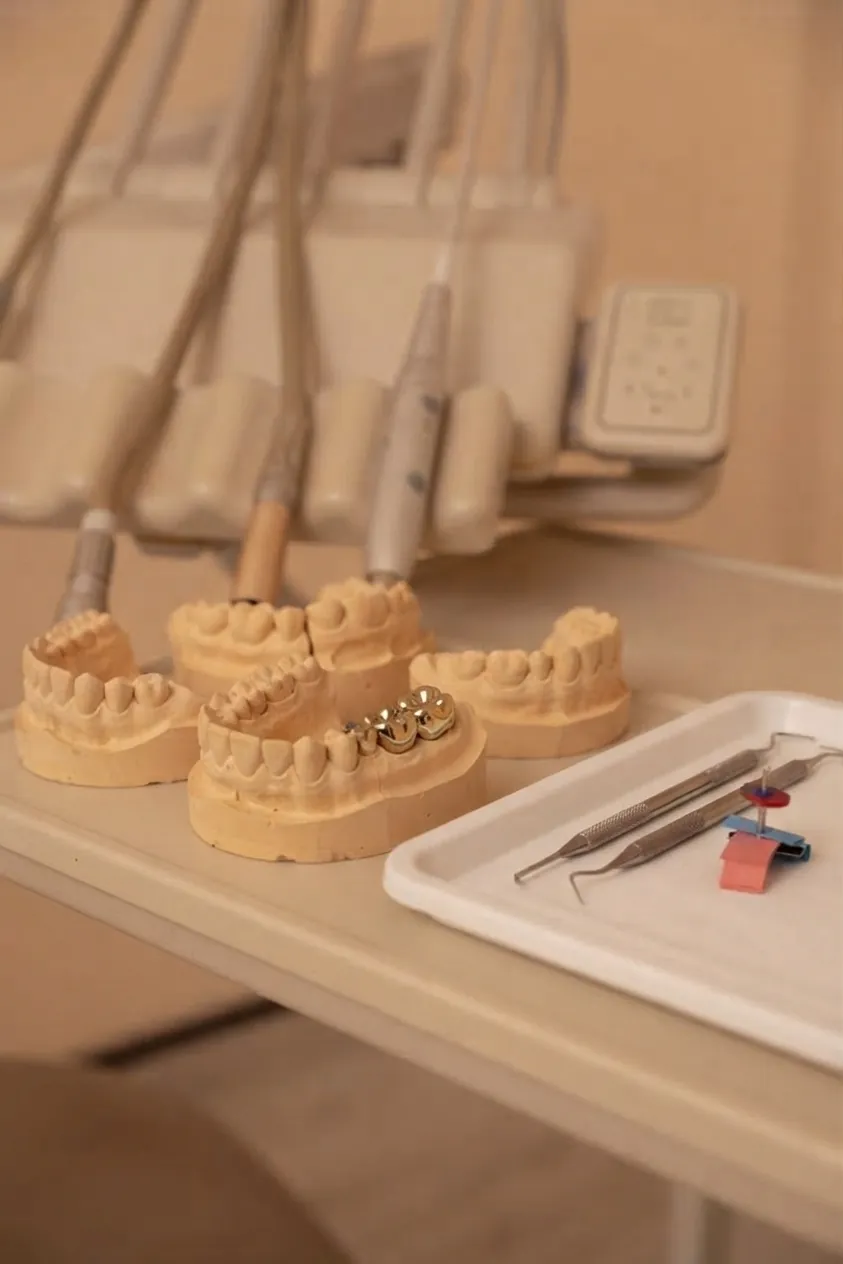
Dental Bridges Islington
- Traditional ceramic bridges (adjacent teeth as supports)
- Implant-supported bridges (more conservative for adjacent teeth)
- Lithium disilicate ceramic — strong and aesthetic
- MSc Aesthetic & Restorative Dentistry case selection
- Quoted in writing after assessment · consultation £65
- 10-15 year typical lifespan with good care
- CAD/CAM digital impression workflow
A gap left by a missing tooth is more than a cosmetic concern. Neighbouring teeth drift, the opposite tooth can over-erupt, and chewing shifts to the other side. Dental bridges at Dental & Wellness London offer a fixed way to close that gap, either by anchoring a replacement tooth to the teeth beside it or by supporting it on implants. This guide to dental bridges Islington patients most often ask about explains the types of bridge, who each suits, how a bridge compares with an implant, the process, aftercare, risks and cost.
What a dental bridge is
A bridge is a fixed restoration that "bridges" a gap. It has two parts: the replacement tooth, called the pontic, and the supports that hold it in place. The supports are either crowns or bonded wings on the neighbouring teeth, or implants placed in the jaw. The bridge is cemented or screwed in and is not removed at home.
Modern bridges are made in a dental laboratory from high-strength ceramic, such as lithium disilicate (often known as Emax), or porcelain bonded to a metal framework, matched to the shade and shape of your own teeth.
Types of dental bridge
Traditional bridge
The teeth either side of the gap are prepared for crowns, and the replacement tooth is joined between them. This is the most established design and works well where the neighbouring teeth already have large fillings or would benefit from crowns in Islington anyway.
Cantilever bridge
The replacement tooth is supported from one side only. This can suit a single front tooth where only one neighbour is a suitable support, and it involves less preparation than a traditional bridge.
Resin-bonded (adhesive) bridge
Sometimes called a Maryland bridge, this uses a thin wing bonded to the back of a neighbouring tooth, with little or no drilling. It is conservative and often used for front teeth, though it can debond and need re-cementing.
Implant-supported bridge
Two or more implants support a bridge spanning several missing teeth. The neighbouring natural teeth are not touched, and the implants help preserve the bone beneath. This route involves surgery and a healing period; see our dental implants Islington page for detail.
Who a bridge suits, and who it does not
Often a good fit
- One or two missing teeth, with strong, healthy teeth either side.
- Neighbouring teeth that already have large fillings or crowns, so preparing them is not a significant loss.
- Patients who want a fixed result rather than a removable denture, without implant surgery.
- Patients for whom implants are unsuitable for medical reasons or bone reasons.
Needs care or a different answer
- Healthy, unfilled neighbouring teeth. Preparing sound teeth for a traditional bridge removes healthy structure, so an implant or an adhesive bridge is usually the better choice.
- Active gum disease or weakened support teeth, which must be treated or assessed first; see gum disease and bleeding gums.
- Long gaps. The more teeth a bridge spans, the greater the load on the supports. Implants or a partial denture may be safer.
- Heavy grinding, which increases the risk of fracture and debonding; see teeth grinding.
Bridge vs implant: the options compared
For a single missing tooth, the question most patients ask is bridge versus implant. Both are fixed. The difference is what they rely on.
- Traditional bridge: no surgery and a shorter timeline, but the neighbouring teeth are prepared, and cleaning under the pontic needs care.
- Adhesive bridge: very conservative, quick and reversible, but less retentive and best suited to front teeth with a light bite.
- Single implant: independent of the neighbouring teeth and helps preserve bone, but involves surgery and three to six months of healing.
- Partial denture: removable, lower cost and easily added to, but less stable; see removable dentures.
Our article on implant vs bridge for one missing tooth sets out the trade-offs in more depth, and the wider range is covered in our tooth replacement guide. We discuss both routes against your own teeth and bone rather than defaulting to one.
The dental bridge process, step by step
- Assessment. We examine the gap, the neighbouring teeth, your gums and your bite, with X-rays, photographs and a digital impression. If an implant bridge is being considered, the bone is assessed too.
- The plan. You receive a written plan setting out the recommended type of bridge, the alternatives and the cost.
- Preparation. For a traditional bridge, the support teeth are shaped under local anaesthetic, an impression is taken and a temporary bridge is fitted the same day.
- Laboratory work. The bridge is made over roughly two to three weeks, with the shade matched to your teeth.
- Fitting. The fit, bite and appearance are checked before the bridge is cemented, and you are shown how to clean under it.
- Implant route. Where implants are used, they are placed first and allowed to heal for three to six months before the bridge is made and fitted.
Results, longevity and aftercare
A well-made bridge restores chewing and closes the gap in a way that looks like natural teeth. Many bridges last ten to fifteen years or more with good care, though results vary and some need repair or replacement sooner, usually because of decay or gum problems at the support teeth.
- Clean under the pontic every day with interdental brushes, superfloss or a water flosser.
- Keep regular check-ups and hygiene visits. Our hygienist in Islington appointments are 30 minutes and focus on the margins where bridges are most vulnerable.
- Wear a night guard if you grind or clench.
- Avoid biting very hard foods directly on the bridge, particularly with adhesive designs.
Risks, and how we reduce them
- Decay at the support teeth. Plaque can collect at the edges of the crowns. Daily cleaning and regular maintenance are the main protection.
- Nerve sensitivity or inflammation after preparing a support tooth, occasionally needing root canal treatment. Conservative preparation reduces the risk.
- Debonding or fracture, more likely with grinding or adhesive bridges, and reduced with careful design and a night guard.
- Gum recession around the pontic, managed by careful shaping of the replacement tooth.
Dental bridges Islington: cost and what is included
The cost of a dental bridge depends on the type, the number of teeth it spans, the material, and whether the support teeth need further work first. For that reason bridges are quoted in writing after assessment, with the plan itemised so that you can compare it with the alternatives.
- Consultation: £65.
- Tooth-supported or adhesive bridge: quoted in writing after assessment.
- Implant-supported bridge: quoted in writing after assessment. For comparison, a single implant is from £2,200, including the crown.
- Finance: 0% APR finance over 12 months via Tabeo, subject to status.
If you are comparing a dental bridge in London with treatment closer to home, ask whether the quotation includes temporaries, the laboratory fee and the review appointment.
Why choose Dental & Wellness London for a bridge
Tooth-supported bridges are planned and fitted by Dr Vishal Patel, BDS (Liverpool), MSc Aesthetic & Restorative Dentistry (Manchester), GDC 103127, a member of the American Academy of Cosmetic Dentistry with around 20 years in dentistry and over 15,000 cases. Implant-supported bridges are placed by Dr Rishil Patel, BDS (Hons), MClinDent Implantology, MJDF, GDC 154292.
The practice has been on Essex Road since 2015 and is rated 4.7 stars from more than 300 Google reviews. Our restorative approach is conservative: keep as much healthy tooth as possible, and recommend the option that suits your mouth rather than the one that is easiest to sell. For the aesthetic side of restorative work, see our cosmetic dentist in Islington page.
Questions patients ask about dental bridges
How much does a dental bridge cost in Islington?
It depends on the type of bridge, how many teeth it spans and the material, so we quote in writing after assessment rather than publishing a single figure. The consultation is £65. For comparison, a single implant is from £2,200 including the crown, and 0% APR finance over 12 months via Tabeo is available, subject to status.
Is a bridge or an implant better for one missing tooth?
An implant leaves the neighbouring teeth untouched and helps preserve bone, so it is usually preferred when those teeth are healthy. A bridge avoids surgery and is quicker, and it makes sense when the neighbouring teeth already need crowns. We assess both against your teeth, gums and bone before recommending one.
How long does a dental bridge last?
Many bridges last ten to fifteen years or longer with good cleaning and regular check-ups, though results vary. The most common reasons a bridge needs replacing are decay or gum problems at the support teeth, so daily cleaning under the pontic and routine hygiene visits matter more than the material alone.
Does getting a bridge hurt?
Preparing the support teeth is done under local anaesthetic, so it should feel similar to having a filling. The teeth may be sensitive to temperature for a few days afterwards. Fitting the final bridge is usually straightforward. If an implant bridge is planned, the implant surgery is also done under local anaesthetic.
How do you clean under a dental bridge?
Because the replacement tooth sits on the gum, food and plaque can collect beneath it. Use interdental brushes, superfloss or a floss threader, or a water flosser, once a day, as well as brushing normally. We show you the technique at the fit appointment and check it at hygiene visits.
If you are deciding between options, our article on implant bridges versus single-tooth implants may also help.
Getting here
We are at 222 Essex Road, Islington, London N1 3AP, in the same building since 2015. We are open Monday to Friday, 8am to 7pm (Tuesday from 9am), by appointment only; we are closed at weekends and do not take walk-ins.
- By train: Essex Road station (Great Northern) is about two minutes on foot. Highbury & Islington is one stop north, and Old Street and Moorgate are a short ride south.
- By bus: the 38, 56, 73, 341 and 476 all stop on Essex Road close to the door.
- On foot from Angel: allow 15–20 minutes' walk from Angel station along Essex Road. Our Angel page has the route.
- By bike: many patients cycle or use Lime and Forest e-bikes. From Dalston it is about ten minutes by bike; see also our Highbury and Canonbury pages.
- By car: street parking on Essex Road is metered and controlled during the day. For most visits, the train, bus or bike is simpler.
We are a private dentist in Islington, N1, at 222 Essex Road, two minutes from Essex Road station. Directions from Angel, Highbury, Canonbury, Hackney and Shoreditch.
Rather than removable denture
Bridge is the natural choice
Preserve natural teeth
Both options are discussed against your specific case at the first consultation, not defaulted to one route.
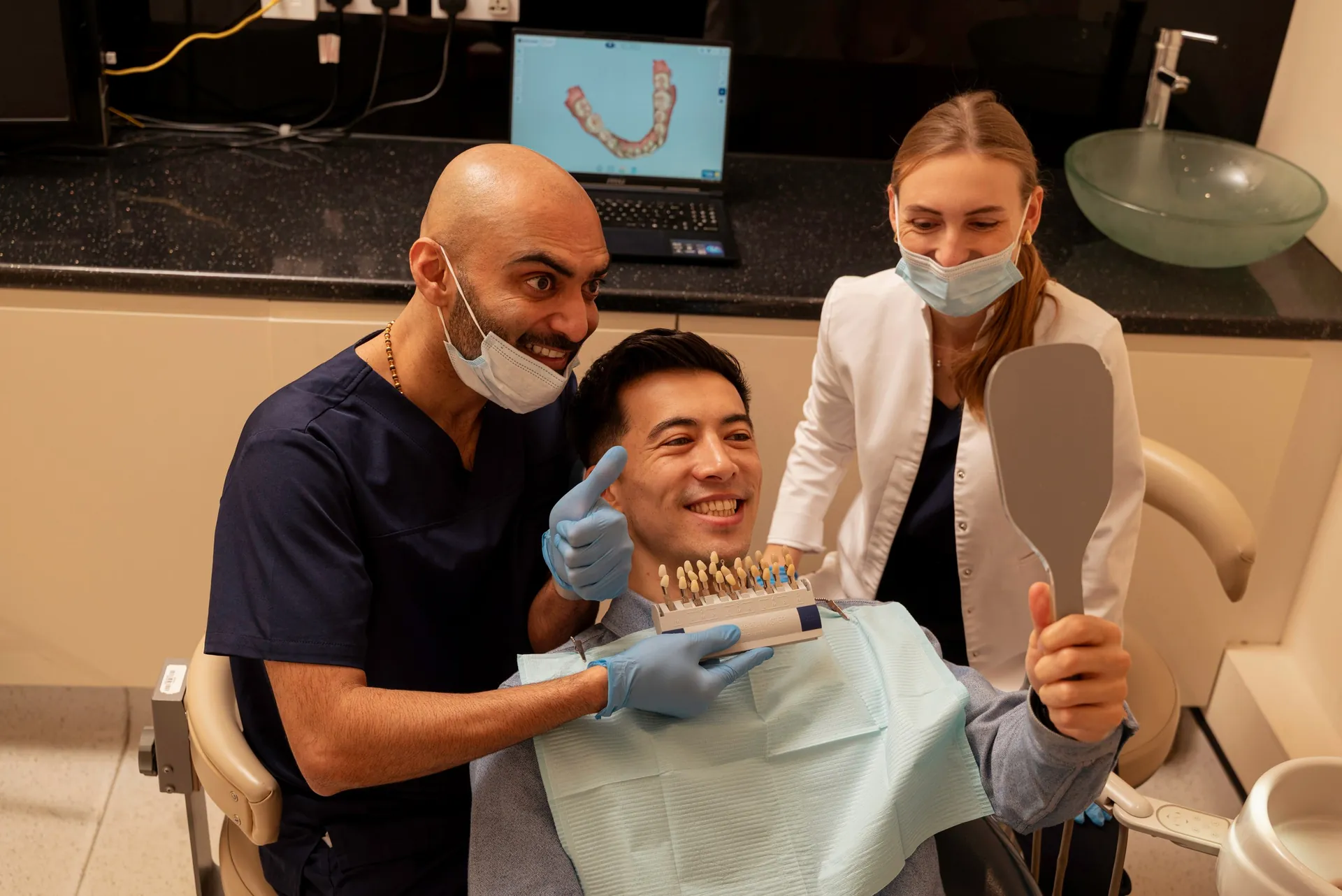
| Assessment | Assessment of the gap, the adjacent teeth, and the bone at the implant site if implant-supported is being considered, with X-rays, photographs, and a digital impression. |
| Route decided | Detailed discussion of traditional vs implant-supported options for your specific case. |
| Traditional bridge route | Preparation of adjacent teeth under local anaesthesia, immediate temporary, lab fabrication over 2–3 weeks, then final fitting. |
| Implant-supported route | Surgical implant placement first, 3–6 months of healing, then bridge fabrication and fitting. |

Our happy patients,
in their own words
Transparent pricing
Prices are set out below. Your written plan confirms the fee before any treatment begins.
| Option | Dental & Wellness London (Price) |
|---|---|
| 3-unit traditional ceramic bridge | Quoted in writing after assessment |
| Longer multi-unit traditional bridges | Quoted in writing after assessment |
| Implant-supported 3-unit bridge | Quoted in writing after assessment |
| Multi-unit implant-supported bridges | Quoted in writing after assessment |
| Single implant incl. crown (for comparison) | From £2,200 |
| Consultation | £65 |
| Finance | 0% APR over 12 months via Tabeo, subject to status |
0% APR finance over 12 months via Tabeo, subject to status.
Questions
people ask
If your question isn't answered here, call reception on 020 8127 4567 or email reception.
How much is a dental bridge in Islington?
Bridge costs depend on the type, the number of teeth spanned and the material, so we quote in writing after assessment. The consultation is £65. For comparison, a single implant is from £2,200 including the crown. 0% APR finance over 12 months via Tabeo is available, subject to status.
What types of dental bridge are there?
The main types are traditional bridges, supported by crowns on the teeth either side; cantilever bridges, supported from one side; resin-bonded (Maryland) bridges, which bond a thin wing to a neighbouring tooth; and implant-supported bridges, which rest on implants rather than natural teeth. The right type depends on your teeth, gums and bite.
Is a bridge or an implant better?
Neither is better for everyone. An implant leaves the neighbouring teeth untouched and helps preserve bone, but needs surgery and healing time. A bridge avoids surgery and is quicker, and suits cases where the neighbouring teeth already need crowns. We compare both against your own mouth at consultation.
How long does it take to get a dental bridge?
A traditional bridge usually takes two appointments around two to three weeks apart: one to prepare the teeth and fit a temporary, and one to fit the final bridge. An implant-supported bridge takes longer, because the implants need three to six months to heal before the bridge is made.
Can a dental bridge be replaced or repaired?
Yes. If a bridge debonds it can often be re-cemented, and if it fractures or the support teeth develop problems it can be replaced. Sometimes, at that point, an implant becomes the better option. Regular check-ups help us spot problems at the margins early, when they are simpler to fix.
Do you offer dental bridges near Angel and Highbury?
Yes. We are at 222 Essex Road, Islington, London N1 3AP, two minutes from Essex Road station and one stop from Highbury & Islington. Angel is a 15–20 minute walk, and buses 38, 56, 73, 341 and 476 stop nearby. Appointments are Monday to Friday, 8am to 7pm (Tuesday from 9am).
Talk through your options for the gap
Bridge, implant or denture? We assess your teeth and bone, then give you a written plan with clear costs. Call 020 8127 4567 to book.
Contact us