Custom sports mouthguards, made to fit and made to be worn
Reviewed By
Dr Vishal Patel
BDS Liverpool · MSc Aesthetic & Restorative Dentistry Manchester · GDC 103127 · AACD Member · Invisalign Diamond II Provider · IFAAS (International Fellowship in Advanced Aesthetic Science) · Facial anatomy & cadaver course, Dr Ali Pirayesh, University of Amsterdam · Harley Academy foundation training in injectable aesthetics · IBSA-trained (Profhilo) · NeoStrata-trained (skin peels) · Lynton Lasers trained, incl. ONDA
Last Updated
October 3, 2026
A gum shield made from your own teeth, for contact and combat sport. Comfortable enough to keep in for the whole match.
Custom sports mouthguards at Dental & Wellness London in Islington are gum shields made in a dental laboratory from a scan or impression of your teeth, planned and fitted under Dr Vishal Patel. They stay in place under impact and allow speech and breathing. The process takes two visits over one to two weeks, and the guard is quoted in writing after assessment.

Heading
- Custom-fitted to your dentition (not boil-and-bite)
- Single-layer for low-impact, dual-layer for contact sports
- Comfortable enough for actual wear during play
- Allows speech and breathing without removal
- Adult and youth sizes
- Quoted in writing after assessment
- Replacement every 1-3 years depending on use
A custom sports mouthguard is a gum shield made from a scan or impression of your own teeth, so that it fits closely, stays in place under impact and lets you breathe and call to teammates without taking it out. At Dental & Wellness London we make custom sports mouthguards for adults and junior players, and the same principle runs through every one: a guard only protects you if it is worn, and it is only worn if it is comfortable.
Most sports injuries we see are chipped front teeth, cracked crowns and split lips; some are teeth knocked loose or out. Each is far easier to prevent than to repair.
What a custom sports mouthguard is, and how it works
A mouthguard does three jobs. It spreads the force of a blow across the whole arch rather than letting it land on one or two teeth. It separates the upper and lower teeth so that they do not clash together when the jaw is struck from below. And it holds the lips and cheeks slightly away from the sharp edges of the teeth, which reduces cuts to the soft tissue.
A custom guard does these jobs better than a generic one for a simple reason: thickness and fit can be placed where they are needed. The material is pressure-formed or laminated over an accurate model of your teeth, so it grips without being bitten on, and its edges can be trimmed so they do not press on the gums or trigger the gag reflex. A loose guard has to be clenched to stay in place, which is tiring and tends to end with the guard in a kit bag by the second half.
Custom gum shield or sports mouthguard: is there a difference?
No. "Gum shield" is the term most rugby and boxing clubs use; "mouthguard" is the term most dentists use. A custom gum shield and a custom sports mouthguard are the same appliance, made to the same standard. The word that matters is "custom": it means the guard has been made from your teeth rather than moulded by you at home.
Who a custom sports mouthguard suits, and who it may not
A fitted guard is worth considering for anyone who plays a sport where contact with a ball, stick, opponent or the ground is part of the game:
- Contact and collision sports: rugby, hockey, lacrosse, American football, basketball and Gaelic games.
- Combat sports: boxing, kickboxing, MMA, judo, jiu-jitsu and karate, where the design is often thicker and covers the bite more fully.
- Junior players: colts rugby, school hockey and junior martial arts, where a guard that actually fits makes the difference between wearing it and not.
- Adults with existing dental work: if you have composite bonding, veneers, crowns or an implant on a front tooth, a guard protects the investment as well as the tooth beneath it.
There are situations where a standard custom guard is not the right first step. If you are mid-way through orthodontic treatment, the guard has to be designed around the changing position of the teeth; Invisalign aligners themselves are not sports guards and should not be relied on as one, so we will talk you through the options at your consultation. Young children whose teeth are changing quickly may need refits more often than parents expect. And if you grind or clench at night, a sports guard is not a substitute for a night appliance; that is a separate conversation about teeth grinding and bruxism.
Stock, boil-and-bite and custom mouthguards compared
There are broadly three kinds of guard available in the UK.
- Stock guards come ready-shaped in small, medium and large. They are inexpensive and better than nothing, but they rarely fit well, tend to be bulky, and have to be held in place by biting.
- Boil-and-bite guards are softened in hot water and moulded in the mouth. They fit better than a stock guard, but the softening and biting process thins the material over the very teeth that need most protection, and the fit is only as good as the moulding on the day.
- Custom mouthguards are made in a dental laboratory from a scan or impression. Thickness is controlled, edges are trimmed to your gums and the fit holds under impact. Single-layer designs suit lower-contact sport; laminated, multi-layer designs are used where the risk of heavy impact is higher.
If you have been searching for a custom mouthguard near me in north London, the practical question is which guard you will actually keep in for a full match; in our experience that is almost always the fitted one. Our blog sets out the wider picture in mouth guards: types and benefits, including how sports guards differ from night guards.
The process, step by step
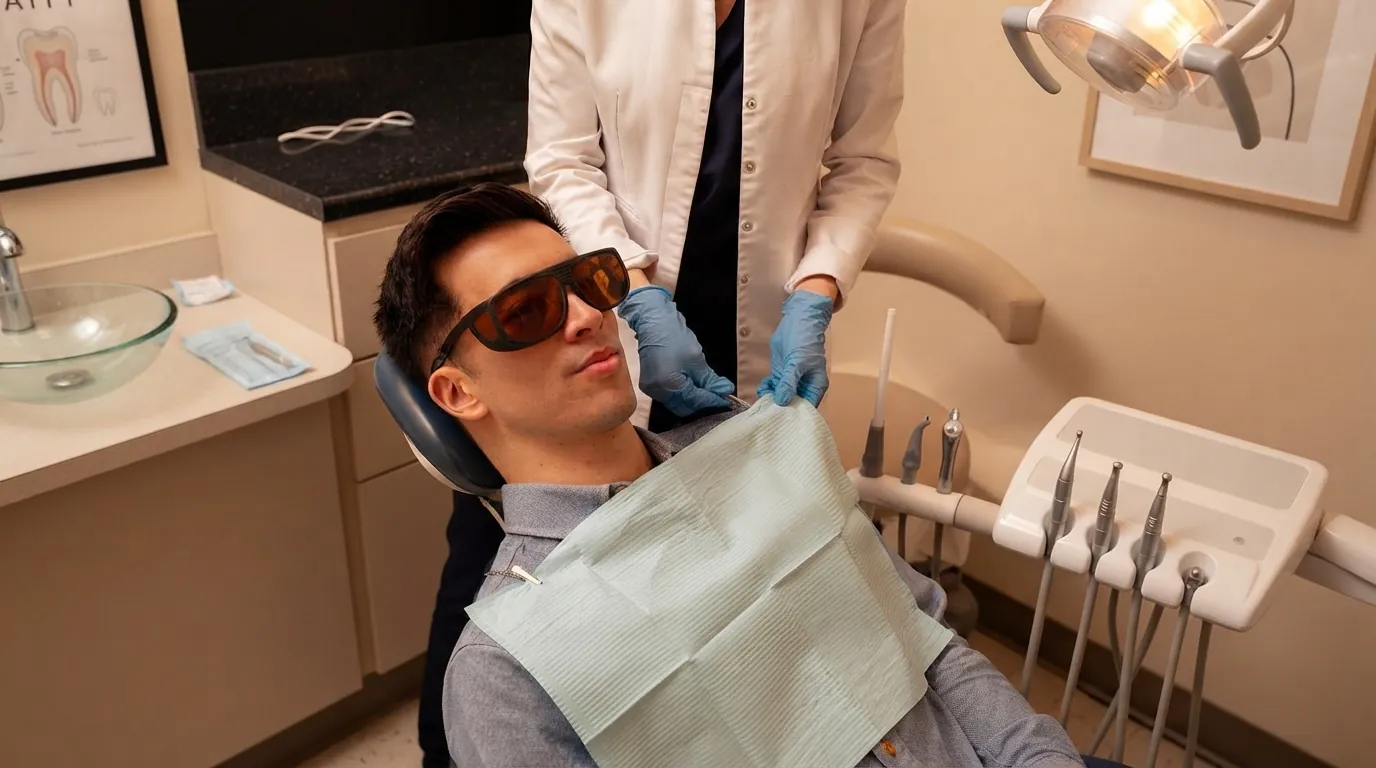
- Assessment. We check that the teeth and gums are healthy enough for a guard to be made now. Any decay, a loose filling or an untreated chip is better dealt with first, because the guard will be made around whatever is there on the day. This is often combined with a routine dental check-up.
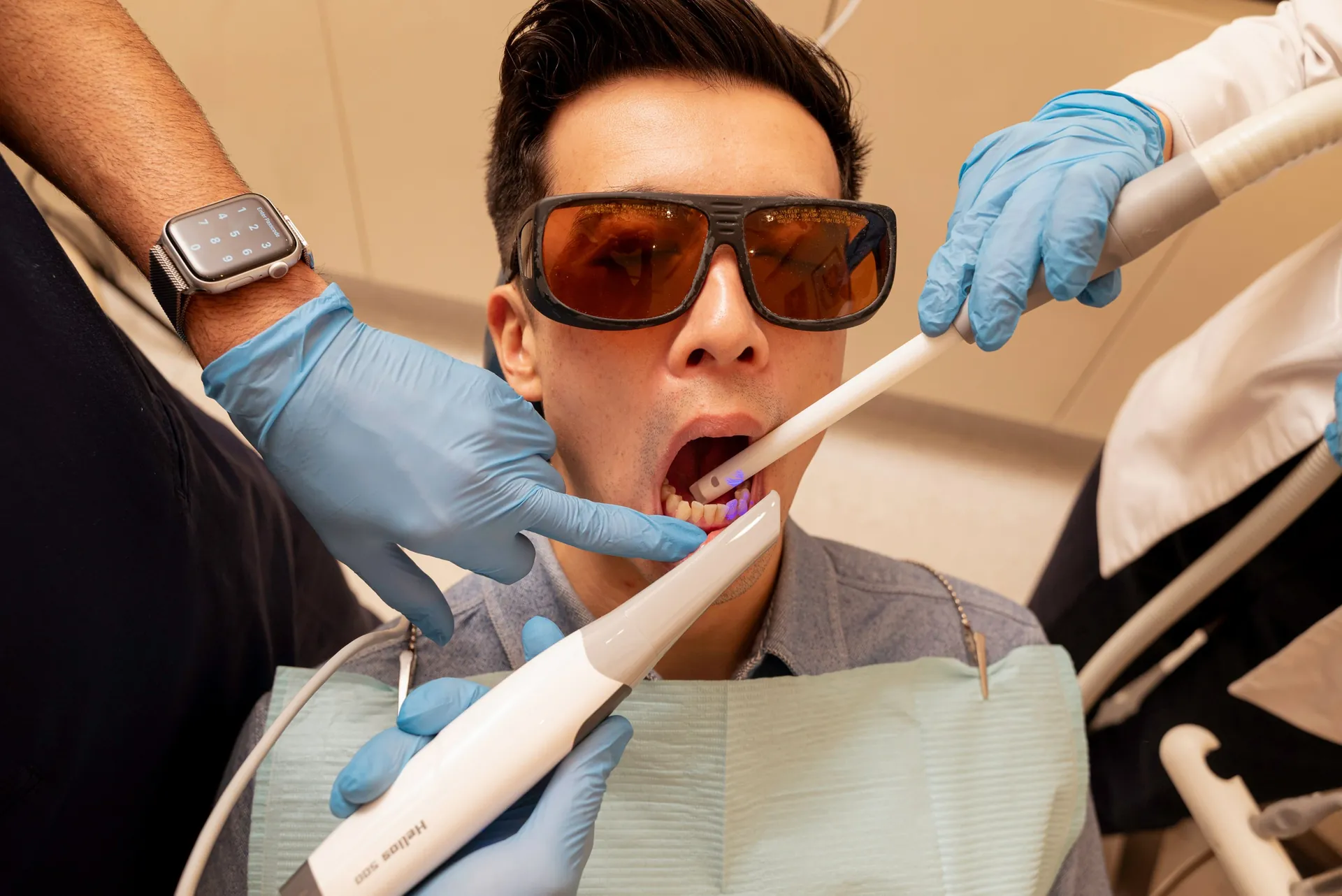
- Scan or impressions. We record the shape of the teeth with a digital scan or traditional impressions, and we record how the teeth meet.
- Design discussion. We talk through the sport, position, level of play and any preferences on colour. A front-row forward and a recreational tennis player need different guards.
- Laboratory manufacture. The guard is made to the model, typically over one to two weeks.
- Fitting. You try the guard in, we check the fit, edges and bite, and we adjust where it presses. We show you how to put it in, take it out, clean it and store it.
- Review. We check the guard at routine visits and advise when it should be replaced.
Results, longevity and aftercare
A well-made guard should feel snug and stay up without being bitten on. Most people adapt within one or two sessions.
How long a guard lasts depends on how hard it is used. Adult players typically replace theirs every one to three years; growing teenagers often need a new guard every six to twelve months because their teeth and jaws are still changing. A guard should also be replaced after any dental treatment that changes the shape of the teeth, such as a new crown or the end of orthodontic treatment.
Aftercare is straightforward:
- Rinse the guard in cool water after use and brush it gently with a soft brush. Hot water can distort it.
- Let it dry, then store it in a ventilated case away from direct sun and car dashboards.
- Bring it to your check-ups so we can look for thinning, splits and changes in fit.
The cleaning advice in how to clean your night guard properly applies equally to sports guards.
Risks, and how we reduce them
A mouthguard is a low-risk appliance, but it is not risk-free, and it does not make injury impossible. The common problems are an overlong edge that rubs the gums, a guard that is too bulky and makes breathing harder, and a guard that is worn long after it has thinned or stopped fitting. Less commonly, a guard that is not kept clean can harbour bacteria and irritate the gums.
We reduce these risks by checking the mouth before the guard is made, by trimming and adjusting at the fitting appointment rather than sending it out unchecked, and by reviewing it at routine visits. Its job is to protect the teeth, lips and gums; we do not claim that a mouthguard prevents concussion, and no guard can guarantee a tooth will not be damaged.
What to do if a tooth is damaged in sport
If an adult front tooth is knocked out, hold it by the crown rather than the root, rinse it briefly in milk or cold water if it is dirty, and if you can, put it gently back into the socket and bite on a clean cloth. If that is not possible, keep it in milk and see a dentist straight away; the first hour matters. Do not try to replant a baby tooth. For chipped, loosened or pushed-back teeth, call us; our emergency dentist in Islington page explains how urgent appointments work. Repairs range from composite bonding for small chips to crowns, onlays and inlays for larger fractures, and dental implants where a tooth cannot be saved.
Custom sports mouthguard cost in Islington and London
The cost of a custom sports mouthguard depends on the design: a single-layer guard for lower-contact sport, a laminated multi-layer guard for rugby and hockey, or a thicker combat-sports design. Because of that, we quote the guard in writing after assessment, so you know the full figure before anything is made.
- Dental examination: £65 for a 30-minute examination with a full risk assessment, if you are not already a patient.
- Children's examination: £45; under-fives are seen free with a parent's examination.
- Custom sports mouthguard: quoted in writing after assessment.
Repairing a chipped or broken tooth almost always costs more than the guard that would have protected it. Composite bonding starts at £175, a crown is £750–£1,200 and an implant starts from £2,200 including the crown, which puts the case for prevention plainly. For larger treatment plans, 0% APR finance over 12 months via Tabeo is available, subject to status.
Why patients choose us for a custom sports mouthguard
Sports guards at Dental & Wellness London are planned and fitted under Dr Vishal Patel, BDS (Liverpool), MSc Aesthetic & Restorative Dentistry (Manchester), GDC 103127, an AACD member with around 20 years in dentistry and over 15,000 cases behind him. A guard is designed around the bite as well as the teeth, and if a player is injured, the same team repairs the tooth.
We have been a private practice on Essex Road since 2009 and are rated 4.7 from more than 300 Google reviews. We see families as well as adult players: if your children play, our family dentist in Islington page explains how junior check-ups work alongside guard fittings.
Questions people ask about custom sports mouthguards
Are custom mouthguards worth it?
For anyone playing contact or combat sport regularly, usually yes. A custom guard fits closely, stays in place without being clenched and is thick where it needs to be. That makes it more comfortable, which means it is more likely to be worn for a whole match. The cost is generally modest against the cost of repairing a broken front tooth.
How long does it take to make a custom gum shield?
Usually one to two weeks from the scan or impressions to the fitting appointment, because the guard is made in a dental laboratory. If you have a season or tournament coming up, it is sensible to book a few weeks ahead so there is time to make and adjust the guard before the first match.
Can I wear a sports mouthguard with braces or aligners?
You should not play contact sport without protection during orthodontic treatment, but the guard needs to be planned around it. Clear aligners are not designed to absorb impact and should not be used as a guard. We discuss the safest approach for your stage of treatment at the consultation, and refit as the teeth move.
How often should a child's mouthguard be replaced?
Growing teenagers often need a new guard every six to twelve months, and sometimes sooner during growth spurts or when adult teeth are still coming through. A guard that has become tight, loose or chewed through should be replaced. We check junior guards at routine visits and advise when the fit has changed.
Is a sports mouthguard the same as a night guard?
No. A sports guard is designed to absorb impact and is worn for short periods during play. A night guard or splint is designed to manage grinding and clenching during sleep and is usually harder and thinner. If you grind your teeth, we may recommend a separate appliance such as a Davies splint, which is £495.
Getting here
We are at 222 Essex Road, Islington, London N1 3AP, in the same building since the practice was founded in 2009. We are open Monday to Friday, 8am to 7pm, by appointment only; we are closed at weekends and do not take walk-ins.
- By train: Essex Road station (Great Northern) is about two minutes on foot. Highbury & Islington is one stop north, and Old Street and Moorgate are a short ride south.
- By bus: the 38, 56, 73, 341 and 476 all stop on Essex Road close to the door.
- On foot from Angel: allow 15–20 minutes' walk from Angel station along Essex Road. Our Angel page has the route.
- By bike: many patients cycle or use Lime and Forest e-bikes. From Dalston it is about ten minutes by bike; see also our Highbury and Canonbury pages.
- By car: street parking on Essex Road is metered and controlled during the day. For most visits, the train, bus or bike is simpler.
Rugby, hockey, MMA, boxing
Colts, school teams, martial arts
Protecting existing dental work
Replacement timing depends on use — typically 1–3 years for adult players, 6–12 months for growing teenagers.
| Impressions & consultation | Often combined with a hygiene or examination visit: impressions and digital scans, plus a discussion of sport requirements and design preferences. |
| Fitting | 1–2 weeks later: guard tried in, adjusted for comfort, with instructions on care and storage. |
| Replacement | Timing depends on use — typically 1–3 years for adult players, 6–12 months for growing teenagers. |
Our happy patients,
in their own words
Transparent pricing
Prices are set out below. Your written plan confirms the fee before any treatment begins.
| Option | Dental & Wellness London (Price) |
|---|---|
| Standard single-layer guard | Quoted in writing after assessment |
| Dual-layer impact guard | Quoted in writing after assessment |
| Multi-colour or branded design | Quoted in writing after assessment |
| Combat-sports double-tier (boxing/MMA) | Quoted in writing after assessment |
0% APR finance over 12 months via Tabeo, subject to status.
Questions
people ask
If your question isn't answered here, call reception on 020 8127 4567 or email reception.
How much does a custom sports mouthguard cost?
The price depends on the design: single-layer for lower-contact sport, laminated multi-layer for rugby and hockey, or a thicker combat-sports guard. We quote it in writing after assessment so you know the full figure before anything is made. If you are a new patient, a 30-minute dental examination is £65, and a children's examination is £45.
Is a custom mouthguard better than boil-and-bite?
In most cases, yes. Boil-and-bite guards are moulded at home, and the process tends to thin the material over the front teeth that need most protection. A custom guard is made in a laboratory to an accurate model of your teeth, so its thickness is controlled and its edges are trimmed to the gums. It stays up without clenching, which makes it far more likely to be worn.
How many appointments does a custom gum shield take?
Usually two. At the first we check the teeth, take a scan or impressions and discuss the sport and design. At the second, one to two weeks later, we fit and adjust the guard and show you how to care for it. If you already have a check-up booked with us, the first step can often be done at the same visit.
Which sports need a mouthguard?
Rugby, hockey, lacrosse, boxing, MMA and other combat sports carry the clearest risk, and many clubs expect players to wear a guard. Basketball, cricket close to the bat, skating and mountain biking also carry a real risk of dental injury. If a ball, stick, elbow or the ground can meet your face, a fitted guard is worth considering.
Do you make custom mouthguards for children?
Yes. We make guards for junior players in colts rugby, school hockey and martial arts. Because children's teeth and jaws are still changing, guards usually need replacing every six to twelve months. We check the fit at routine children's examinations, which are £45, and advise when a new guard is needed. Our clinic is at 222 Essex Road, N1 3AP.
What should I do if a tooth is knocked out playing sport?
For an adult tooth, hold it by the crown, rinse it briefly in milk or cold water if dirty, and try to put it back in the socket, biting on a clean cloth. If you cannot, keep it in milk and see a dentist immediately; the first hour matters. Never replant a baby tooth. Call 020 8127 4567 and we will advise on the next step.
How long does a custom sports mouthguard last?
Adults typically replace a guard every one to three years, depending on how often and how hard it is used. Teenagers often need one every six to twelve months. Replace a guard sooner if it splits, thins, becomes loose or tight, or after treatment that changes the shape of the teeth. Bring it to your check-ups so we can assess it.
Book a sports guard fitting
A guard left in the kit bag protects nothing. A custom guard that fits is the one that gets worn. Call 020 8127 4567 to book an assessment.
Contact US