Laser tattoo removal in London, at our Islington clinic
Reviewed By
Dr Vishal Patel
BDS Liverpool · MSc Aesthetic & Restorative Dentistry Manchester · GDC 103127 · AACD Member · Invisalign provider since 2014 · Spark, 32Co, Six Month Smiles and Fastbraces provider · Myobrace certified · IFAAS (International Fellowship in Advanced Aesthetic Science) · Facial anatomy & cadaver course, Dr Ali Pirayesh, University of Amsterdam · Harley Academy foundation training in injectable aesthetics · IBSA-trained (Profhilo) · NeoStrata-trained (skin peels) · Lynton Lasers trained, incl. ONDA
Last Updated
November 20, 2026
Your tattoo is graded before anyone quotes you a price, the patch test is free, and you are told which colours will fade and which may not.
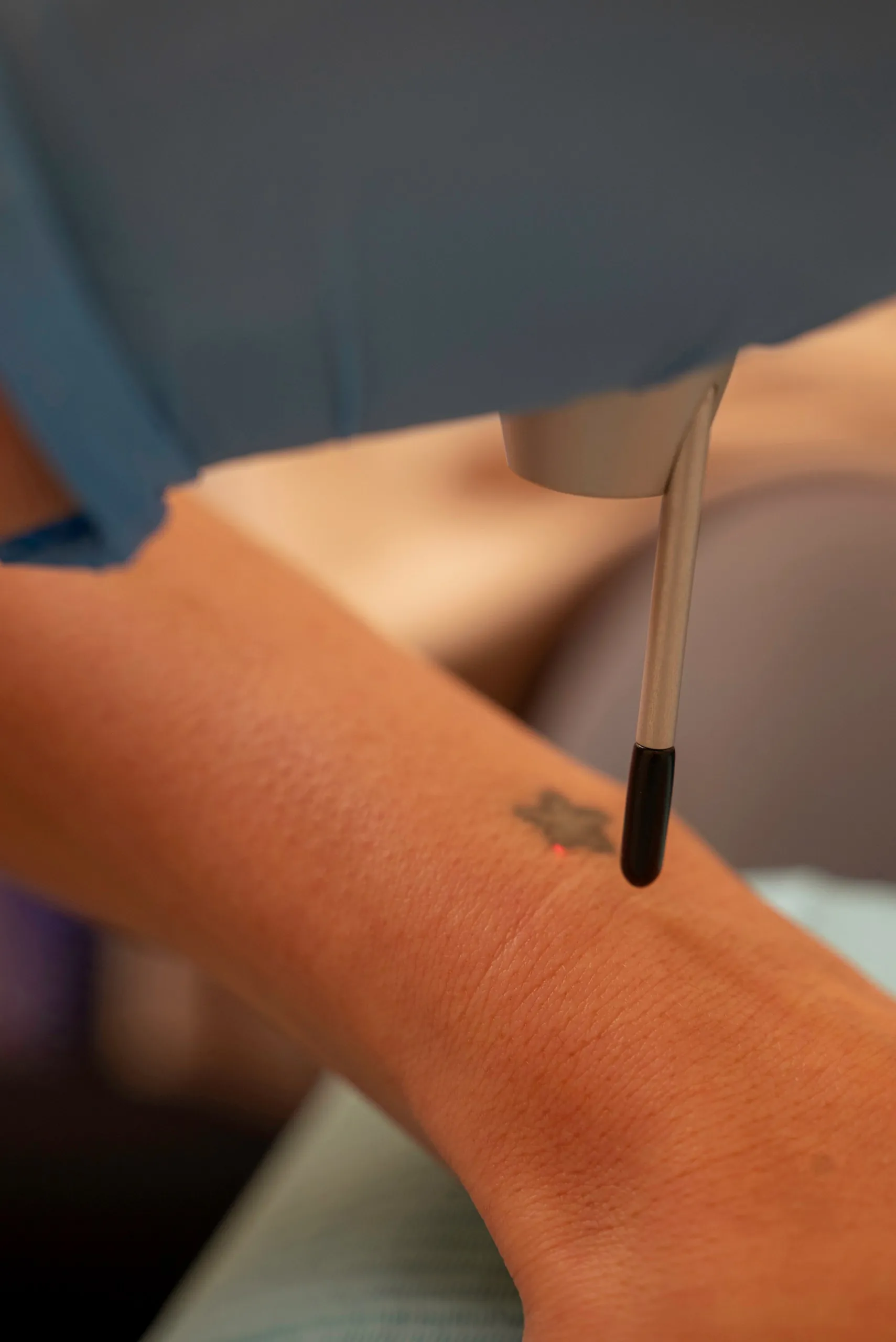
Laser tattoo removal in London at Dental & Wellness London, Islington, uses a Lynton Q-switched Nd:YAG laser. It breaks tattoo ink into fragments small enough for your body to clear over the following weeks. Every tattoo is assessed and graded before a course is recommended, and the patch test is free. Courses of up to 10 appointments start from £750, after a £65 consultation that is redeemable against treatment. Book online or by WhatsApp.
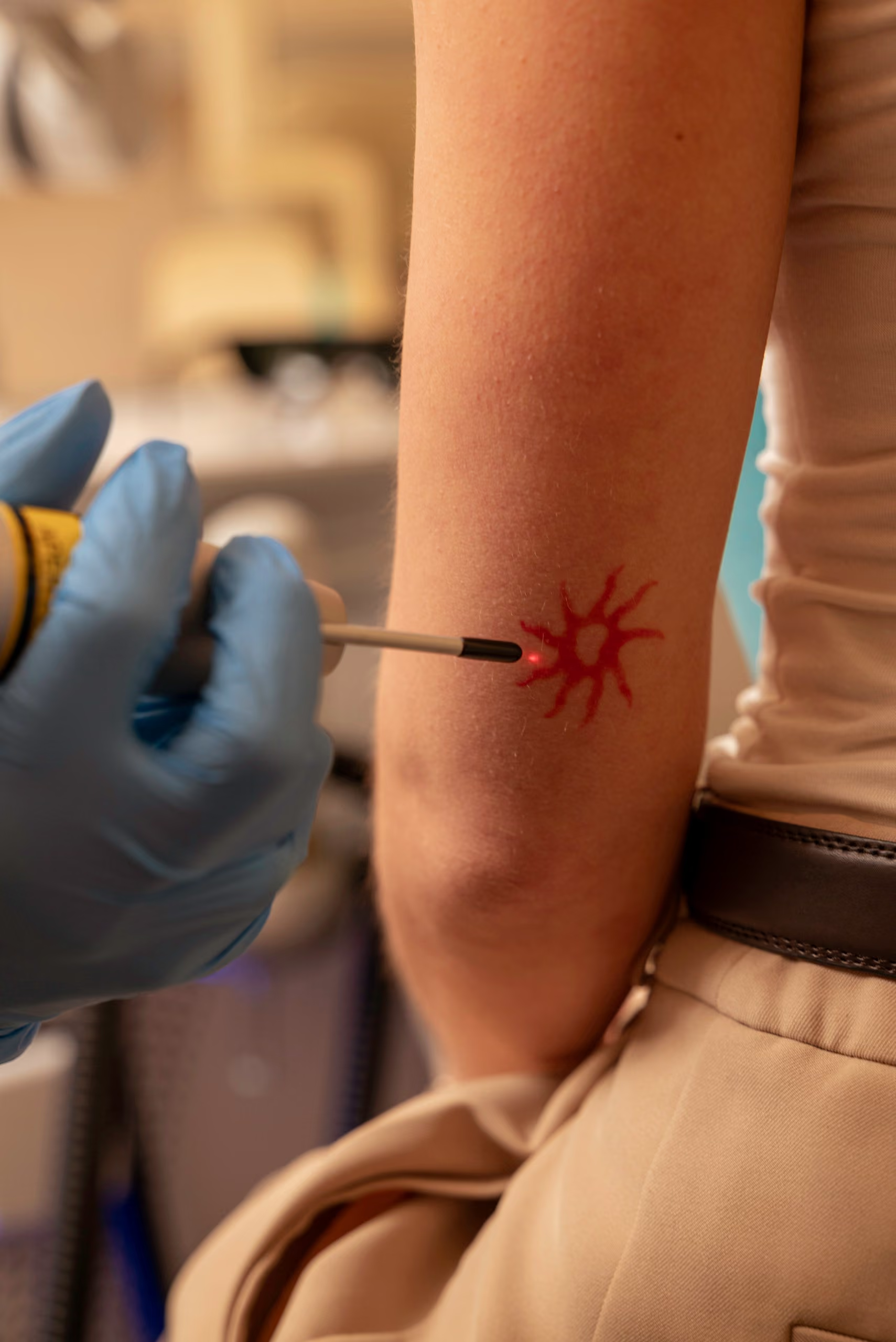
Tattoo Removal Islington
- Lynton Q-switched Nd:YAG laser, 1064 nm and 532 nm
- Black and dark blue ink respond most predictably
- Every tattoo graded class 1, 2 or 3 by the colours in it
- Course of up to 10 appointments, from £750
- Appointments six to eight weeks apart
- Patch test free; consultation £65, redeemable against treatment
- Trained laser practitioners, supervised by Dr Vishal Patel, GDC 103127
- 222 Essex Road N1, two minutes from Essex Road station
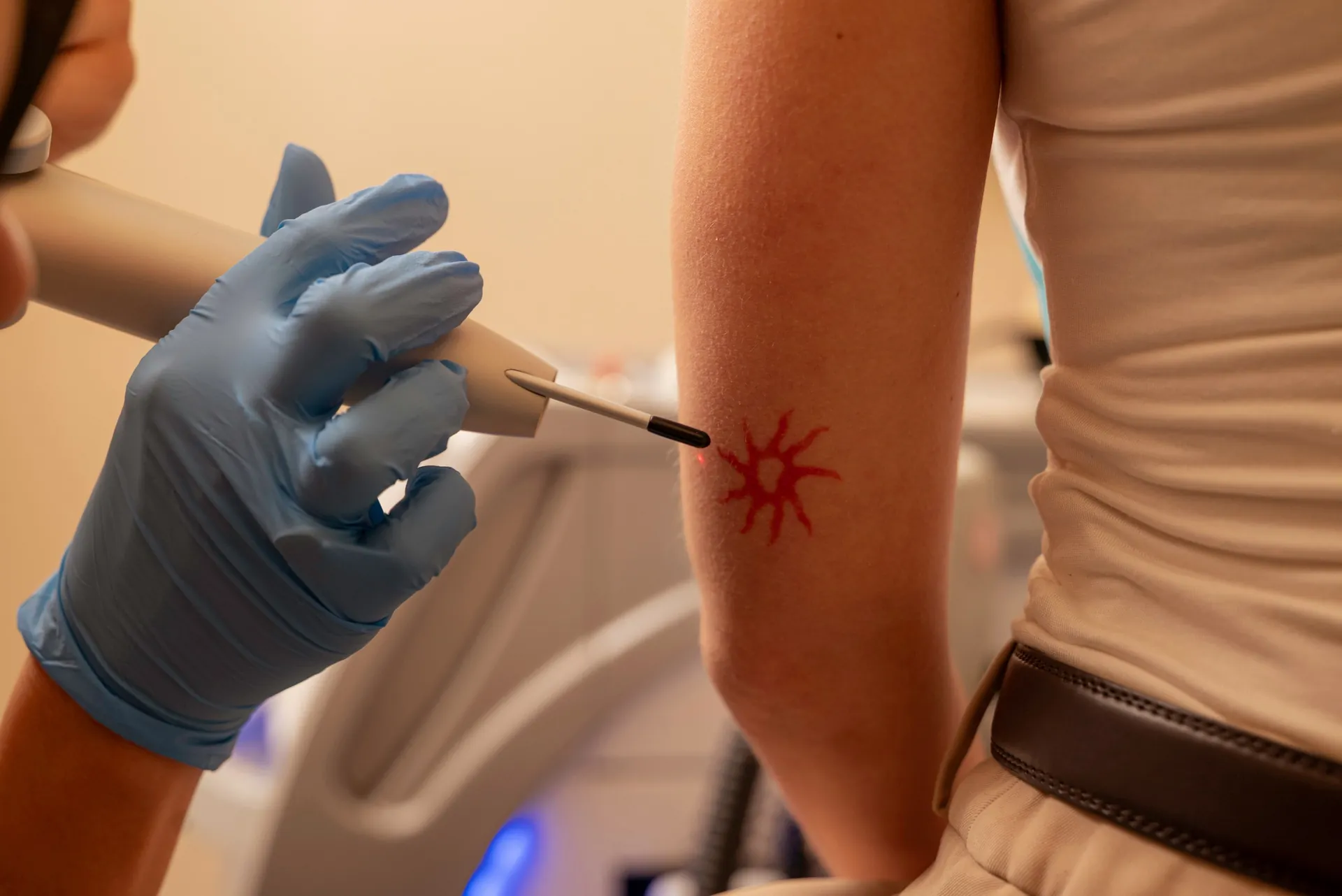
How laser tattoo removal works
Tattoo ink stays in the skin because its particles are too large for your body to carry away. A Q-switched laser changes their size. It fires pulses lasting billionths of a second, the ink absorbs the energy and shatters, and your immune system clears the fragments over the following weeks [1].
Each appointment breaks up more of the ink. The tattoo fades in steps, and the fading continues between visits.
Our laser is made by Lynton, a British manufacturer whose machines were developed with clinicians and professors at the University of Manchester. It works at two wavelengths, 1064 nm and 532 nm, so we can match the light to the ink.
Which tattoos we treat, and what to expect from each colour
We assess every tattoo, professional or amateur, new or decades old. How well it clears depends mostly on colour.
| Ink colour | Wavelength | What to expect |
|---|---|---|
| Black, dark blue | 1064 nm | The most predictable. This is the ink the 1064 nm wavelength is designed for [1]. |
| Red | 532 nm | Usually responds well [2][3]. |
| Green, purple, yellow | Judged at the patch test | These take more sessions than black, and some ink may remain [4]. |
Older tattoos and amateur ones usually clear in fewer sessions than dense professional work [3]. Cosmetic tattoos such as eyebrows behave differently and have their own page: eyebrow and cosmetic tattoo removal. Multi-colour pieces are covered on coloured tattoo removal.
How we assess your tattoo: class 1, 2 or 3
We do not give a session count for a tattoo we have not seen. At the consultation it is examined and graded by the colours in it.
| Class | What is in the tattoo | What that means |
|---|---|---|
| 1 | Black and white only, including amateur tattoos | The most predictable to treat |
| 2 | Black and white, with colours our laser can treat | Treated in full; the coloured areas may need more sessions |
| 3 | Multi-coloured, with certain colours the Lynton Q-switched laser cannot treat | You are told which colours we cannot treat before you decide |
The class decides what we offer you. You are given the options for your tattoo, what each is likely to achieve, and the fee, before you pay for a course.
Tattoo removal on darker skin
The 1064 nm wavelength is absorbed less by the natural pigment in the upper layer of skin than shorter wavelengths are. That is why it is the wavelength used for dark ink on darker skin tones [5]. The risk of lighter or darker patches is still higher than on fair skin, so the patch test matters more, and we wait to see how your skin responds before booking a course.
Tanned skin is not treated, and that includes fake tan. You would be asked to wait until it has faded [4].
How many sessions, and how long it takes
The NHS says ten or more sessions may be needed to remove a tattoo [4]. An NHS laser centre puts amateur Indian-ink tattoos at four to six sessions and professional tattoos at ten to twelve [3]. That is why our course runs to ten appointments.
Appointments are six to eight weeks apart, to let the skin recover and the body clear ink [6]. Ten appointments therefore take 12 to 17 months. If your tattoo needs more than ten appointments, further sessions are charged per appointment, or you can buy another package. We discuss that with you after the tenth appointment, if it is needed.
The calendar is the part people underestimate. A tattoo you want faded for next summer, or lightened enough for a cover-up, needs its first appointment months ahead, because nothing shortens the gap between sessions. For cover-ups, see tattoo lightening for cover-up.
Sessions are carried out by trained laser practitioners under the supervision of Dr Vishal Patel, BDS, MSc, GDC 103127, who is Lynton Lasers trained. The clinic has been on Essex Road since 2015.
Book a consultation and patch test online · WhatsApp +44 7974 910222
Risks, in numbers
According to the NHS, some ink is often left in the skin, the treated skin can turn temporarily darker or paler, and about 3 in 100 people develop a scar [4]. Laser tattoo removal is uncomfortable. Most people compare it with having the tattoo done.
We do not treat during pregnancy, on tanned skin, or over broken or infected skin. Some medicines make skin sensitive to light, so bring a list of what you take.
Q-switched or picosecond laser?
Picosecond lasers fire shorter pulses and can be quicker on some colours. We use a Q-switched laser, the long-established type for black and dark blue ink, and we do not claim it matches a picosecond machine on every tattoo. If a colour in your tattoo is unlikely to clear with our laser, you are told at the consultation. Our article on Q-switched and picosecond lasers sets out the difference.
Tattoo removal near Islington, Hackney and the City
We are at 222 Essex Road, N1 3AP. Essex Road station is two minutes' walk away, on the Great Northern line from Moorgate and Old Street, and Highbury & Islington is one stop north. Buses 38, 56, 73, 341 and 476 stop on Essex Road. We are within easy reach of Angel, Canonbury, Hackney, Dalston, Stoke Newington, Shoreditch, Camden and the City.
Tattoo removal: more in this group
Related: IPL photofacial, laser hair removal.
Further reading
- Laser vs saline tattoo removal — which is right for you?
- Tattoo lightening for cover-up — why fewer sessions are needed than full removal
- Tattoo Removal Cost in London
- Q-Switch vs Picosecond Laser — The Real Difference
References
- [1] Lynton Lasers, Luminette Q brochure (Q-switched Nd:YAG, 532 nm and 1064 nm)
- [2] Cannarozzo G, Del Duca E, Cannizzaro MV. Laser tattoo removal: results and issues. PMFA Journal
- [3] North Bristol NHS Trust, Bristol Laser Centre, tattoos
- [4] NHS, tattoo removal
- [5] Lakshmi C, Krishnaswamy G. Efficacy of the Q-switched Nd:YAG laser in the treatment of blue-black amateur and professional tattoos. Indian J Dermatol 2015;60(6):578-83.
- [6] Newcastle Hospitals NHS, laser tattoo removal
| Consultation, £65, redeemable against treatment | Medical history, skin type, and the tattoo itself: colours, density, age and position. It is graded and you are given your options. |
| Free patch test | A small area is treated so we can see how your skin and the ink respond. |
| First appointment | Booked once the patch test has settled. You wear eye protection. Each pulse feels like a sharp snap, and the skin is cooled. A session takes about 10 to 30 minutes, depending on the size of the tattoo [4]. |
| Afterwards | The area looks red and raised for a short time, and a scab may form. Keep it clean, do not pick it, and keep it out of the sun with SPF 30 or higher [4]. |
| Six to eight weeks later | The next appointment, and so on through the course, with the fading checked each time. |
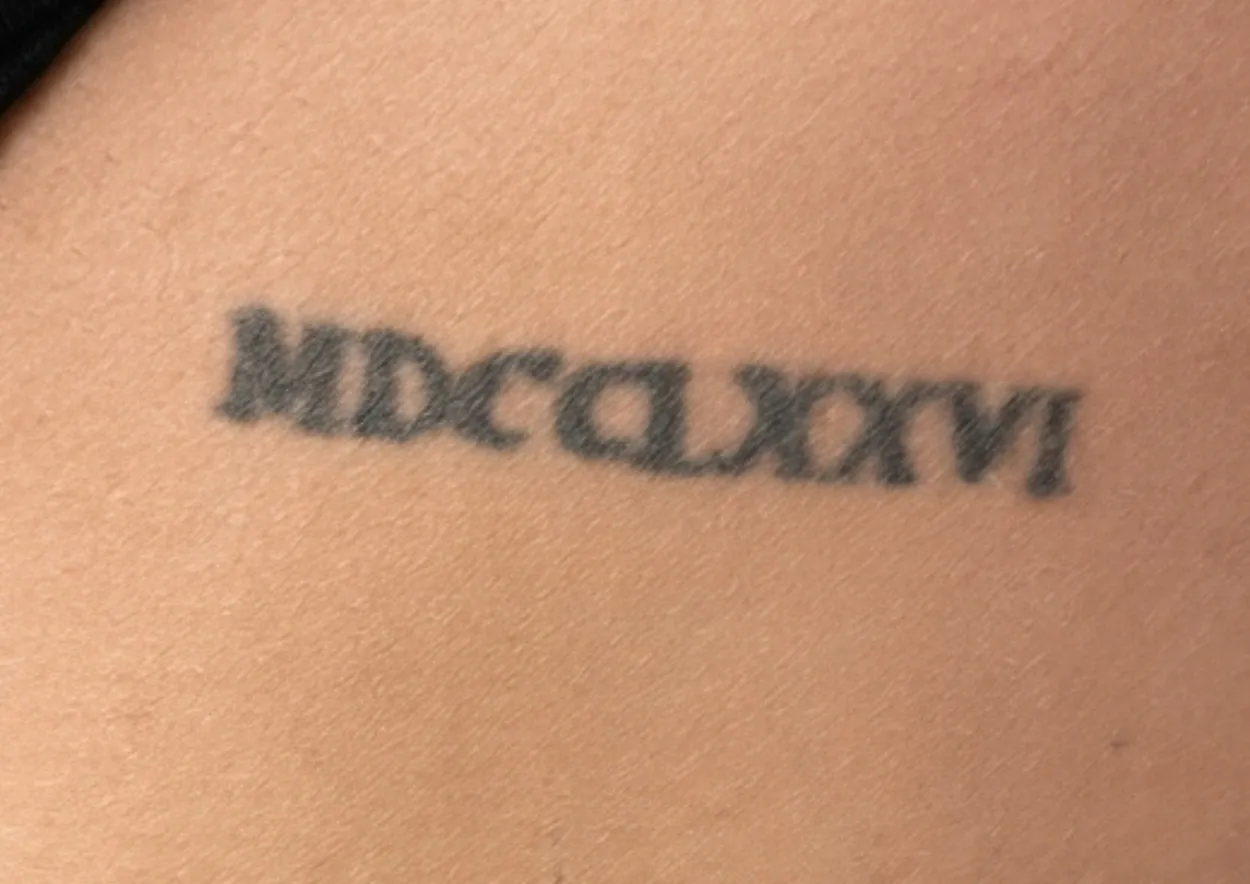
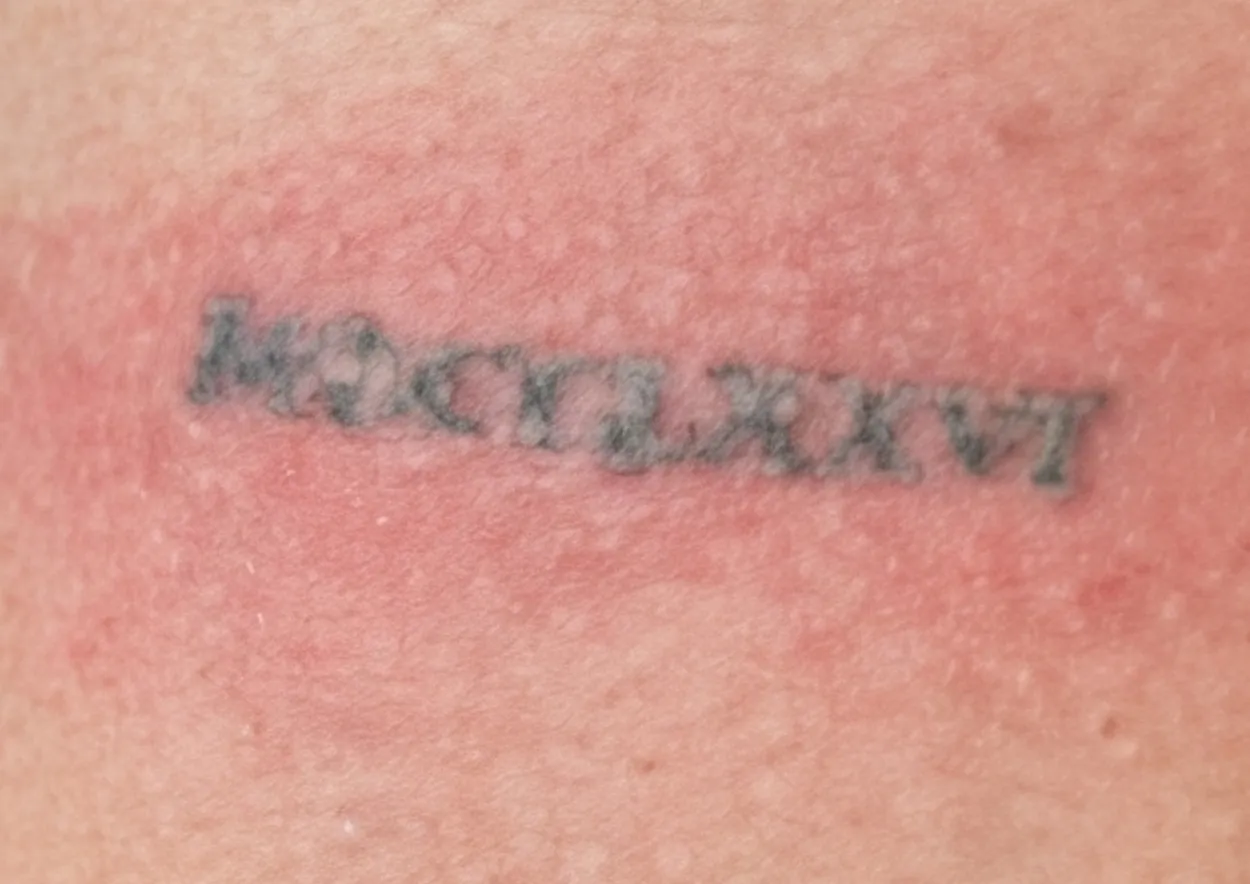
Before and After
Transparent pricing
Prices are set out below. Your written plan confirms the fee before any treatment begins.
| Item | Fee |
|---|---|
| Consultation | £65, redeemable against treatment |
| Patch test | Free |
| Course of up to 10 appointments | From £750 |
| Large, multi-colour or full-sleeve work | Quoted after assessment |
Tattoo removal here is sold as a course, and the fee depends on the grade and size of your tattoo. A £750 course works out at £75 an appointment over ten appointments. With 0% APR finance over 12 months via Tabeo, subject to status, £750 is about £63 a month. More on pricing across the city: tattoo removal cost in London.
0% APR finance over 12 months via Tabeo, subject to status.
Questions
people ask
If your question isn't answered here, call reception on 020 8127 4567 or email reception.
How much does laser tattoo removal cost in London?
At Dental & Wellness London in Islington, a course of up to 10 appointments starts from £750. The consultation is £65, redeemable against treatment, and the patch test is free. Large, multi-colour and sleeve tattoos are quoted after assessment.
How many sessions does tattoo removal take?
The NHS says ten or more sessions may be needed. Amateur tattoos often need fewer and dense professional tattoos more. Your tattoo is graded class 1, 2 or 3 at the consultation and you are given an expected range before you start. Beyond ten appointments, sessions are charged per appointment or as a further package.
How long do I wait between tattoo removal sessions?
Six to eight weeks. The gap lets the skin heal and gives your body time to clear the ink the laser has broken up. A ten-appointment course takes 12 to 17 months.
Does laser tattoo removal hurt?
It is uncomfortable. Each pulse feels like a sharp snap, and most people compare it with having the tattoo done. Sessions are short, usually 10 to 30 minutes, and the skin is cooled.
Can a tattoo be removed completely?
Sometimes, but not always. Black and dark blue ink clear most predictably. The NHS notes that it is common for some ink to remain, and that some colours fade less well than others.
Which tattoo colours are hardest to remove?
Yellow, green and purple take more sessions than black, blue and red, according to the NHS. Our laser works at 1064 nm for black and dark blue and 532 nm for red. Other colours are judged at the patch test.
Will laser tattoo removal leave a scar?
The NHS puts the risk at about 3 in 100 people. Temporary darkening or lightening of the skin is more common. Not picking the scab and keeping the area out of the sun both lower the risk.
Can you remove tattoos on dark skin?
Yes, in many cases, using the 1064 nm wavelength, which is absorbed less by the skin's own pigment. The chance of lighter or darker patches is higher than on fair skin, so a patch test always comes first.
Can I fade a tattoo for a cover-up?
Yes. Lightening a tattoo for a cover-up takes fewer sessions than full removal. Tell us what your tattoo artist needs and the plan is built around that.
Do you remove eyebrow and cosmetic tattoos?
Cosmetic pigments can react differently from tattoo ink, and some darken under a laser. They are assessed separately, always with a patch test. See eyebrow and cosmetic tattoo removal.
Is the patch test free?
Yes. The consultation is £65 and is redeemable against treatment; the patch test itself is free.
Where can I get tattoo removal in Islington?
Dental & Wellness London is at 222 Essex Road, Islington, London N1 3AP, two minutes from Essex Road station. We are open Monday to Friday, 8am to 7pm (Tuesday from 9am), by appointment.
Book a consultation and patch test
Book online, message us on WhatsApp (+44 7974 910222) or call 020 8127 4567. Reception aims to reply within an hour during opening hours. Because appointments are six to eight weeks apart, the date of your patch test sets the date of everything after it.
Contact us