A PicoSure Alternative in London — What We Use and Why
Reviewed By
Dr Vishal Patel
BDS Liverpool · MSc Aesthetic & Restorative Dentistry Manchester · GDC 103127 · AACD Member · Invisalign Diamond II Provider · IFAAS (International Fellowship in Advanced Aesthetic Science) · Facial anatomy & cadaver course, Dr Ali Pirayesh, University of Amsterdam · Harley Academy foundation training in injectable aesthetics · IBSA-trained (Profhilo) · NeoStrata-trained (skin peels) · Lynton Lasers trained, incl. ONDA
Last Updated
September 12, 2026
If you've been told you need one named machine, here's the honest version — what actually clears a tattoo is the physics and the hand holding it.
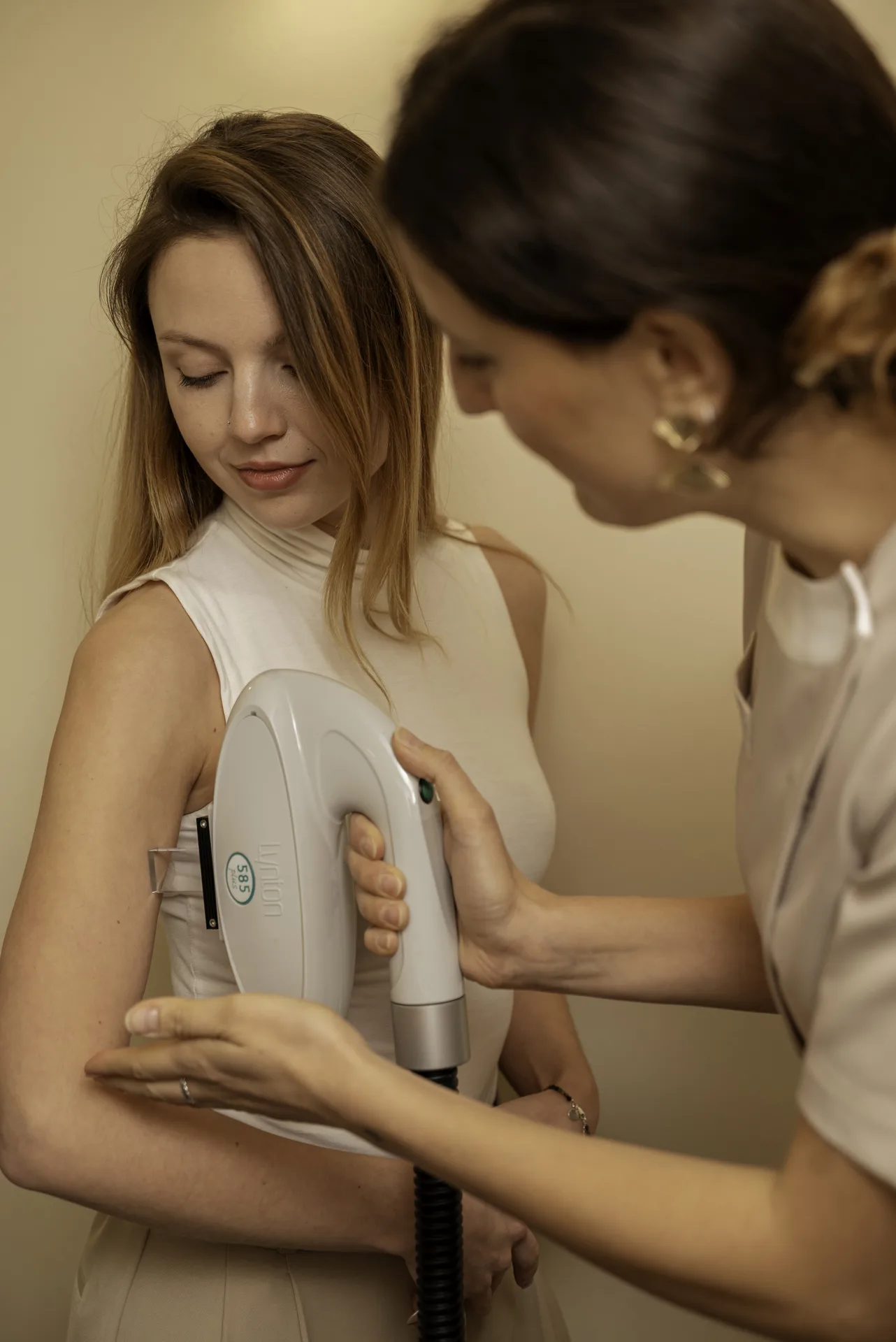
Searching for a PicoSure alternative in London? PicoSure is one brand of picosecond laser. At Dental & Wellness London in Islington we use a Q-switched laser, which fires in nanoseconds. Q-switched lasers are well established for black and dark-blue ink; some colours may need more sessions or may not clear fully. Here is how the two compare, honestly, and why operator skill and a realistic course plan matter as much as the device.
Heading
- Q-switched laser, firing in nanoseconds
- Free patch test
- Sessions spaced 6–8 weeks
- From £750 per course of up to 10 appointments
- Realistic course plans
- 4.7 rating across 300+ reviews
A lot of tattoo-removal marketing is built around one named device, as if booking the right brand were the whole decision. Patients arrive having read that they "need PicoSure," or that a clinic is somehow inferior because it does not run a particular picosecond system. It's an understandable belief — the marketing is good — but it gets the priority order wrong.
Here is the honest version. PicoSure is a well-regarded picosecond laser, and picosecond devices fire in trillionths of a second. We do not use one: we treat with a Q-switched laser, which fires in nanoseconds. Q-switched lasers are well established for black and dark-blue ink. Some colours may need more sessions, or may not clear fully, and we do not claim equivalent results to picosecond treatment. The conversation still belongs where it should — on your tattoo, not on a logo. If you are comparing systems, our PicoWay alternative page sets out the same reasoning for that device.
The genuine technical question
Real-time clinical decisions
No fixed promises
PicoSure is a well-regarded picosecond laser. We use a Q-switched laser, which is well established for black and dark-blue ink; some colours may need more sessions or may not clear fully.
| Initial Consultation & Patch Test | Includes a free patch test where we trial the laser on a small area to see how your particular ink and skin respond. We then plan an honest course with realistic session estimates, with what's included and excluded. |
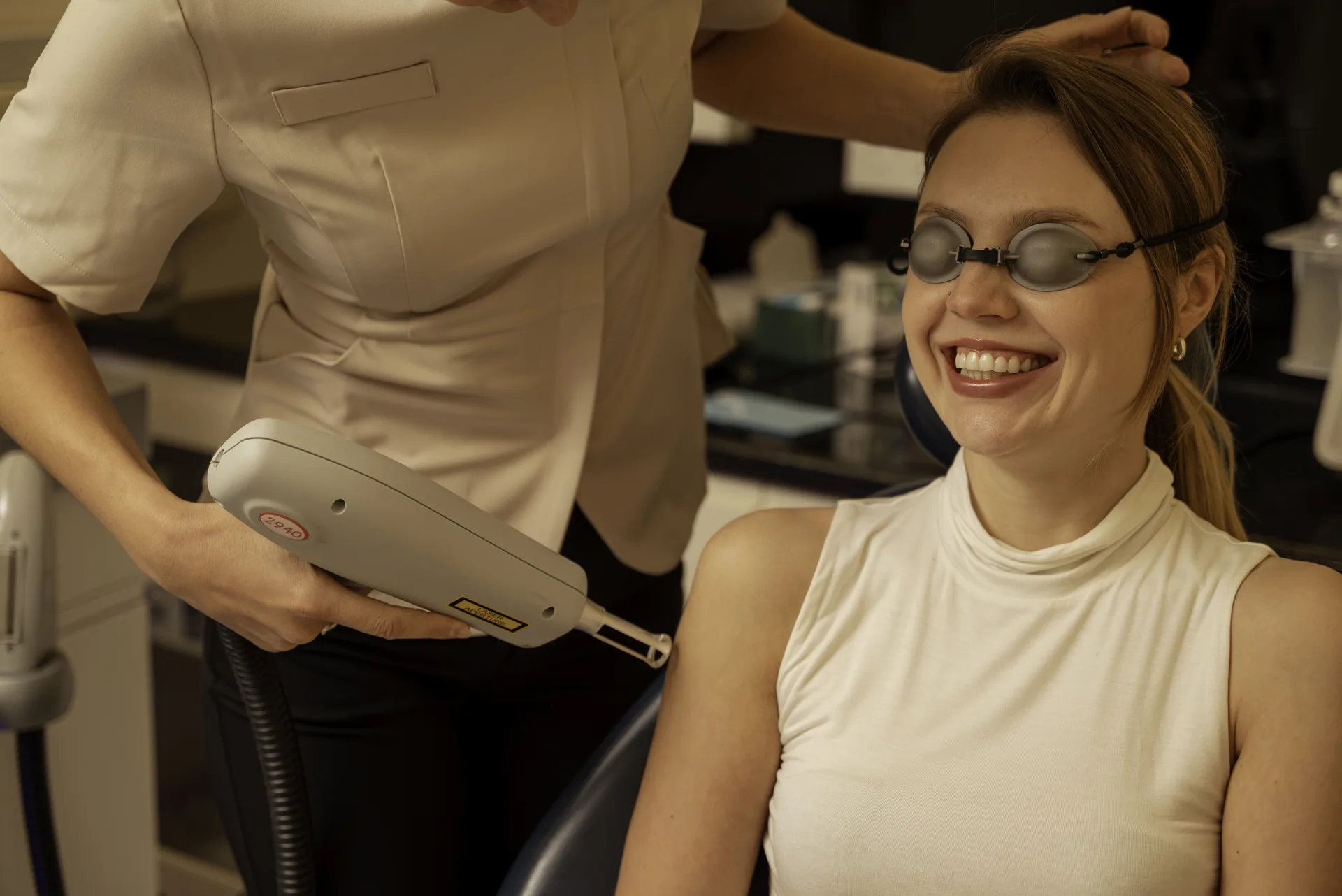
| Treatment Sessions (6–8 week intervals) | Each session uses a Q-switched laser to break up tattoo pigment. Cooling is applied. Sessions are brief and manageable. Spaced 6–8 weeks to allow immune clearance and skin recovery. Most people compare it to the original tattooing experience. |
| Course Completion & Results | Most tattoos require multiple sessions. Tattoo removal is from £750 per course of up to 10 appointments; large, multi-colour or full-sleeve work is quoted in writing after assessment. Results depend on individual factors such as ink density, colours, and location. A realistic session estimate is provided after the patch test. |
Transparent pricing
Prices are set out below. Your written plan confirms the fee before any treatment begins.
| Metric | Tattoo Removal Pricing (Per Course) |
|---|---|
| Tattoo removal | From £750 per course of up to 10 appointments |
| Large, multi-colour or full-sleeve work | Quoted in writing after assessment |
0% APR finance over 12 months via Tabeo, subject to status.
Our happy patients,
in their own words
Questions
people ask
If your question isn't answered here, call reception on 020 8127 4567 or email reception.
Do I specifically need a PicoSure laser to remove my tattoo?
No. PicoSure is one brand of picosecond laser, which works on a photomechanical principle. For most tattoos, wavelength, operator skill and an honest course plan matter as much as the device's brand name. We use a Q-switched laser, not a picosecond device, and assess your tattoo individually at a free patch test.
Is a Q-switched laser as effective as PicoSure?
For black and dark-blue ink, a Q-switched laser is well established and can give very good results. Picosecond devices such as PicoSure may clear some colours in fewer sessions, and with a Q-switched laser some colours may need more sessions or may not clear fully. We use a Q-switched laser and will tell you honestly what to expect after a free patch test.
What's the real difference between picosecond and Q-switched lasers?
Picosecond lasers fire in trillionths of a second and break ink mechanically into finer particles, which can clear some tattoos in fewer sessions with less heat to the skin. Q-switched lasers, which we use, fire in nanoseconds and rely more on heat. Q-switched lasers are well established for black and dark-blue ink; some colours may need more sessions or may not clear fully. Results vary.
How many sessions will I need with a PicoSure alternative?
That depends on your pigments, ink density, the tattoo's age and its location on your body. Most tattoos need several sessions spaced six to eight weeks apart, and our Q-switched laser may need more sessions than a picosecond device for some colours. We give you a realistic range in writing after seeing how your skin responds at the free patch test.
Does tattoo removal hurt?
It's never painless, but most people find it brief and manageable, comparable to the original tattooing and eased with cooling. Any clinic claiming a pain-free removal is marketing rather than informing.
Book a tattoo removal assessment
Call 020 8127 4567 or message WhatsApp +44 7974 910222 (both 8am–7pm). We're at 222 Essex Road, Islington, London N1 3AP, Monday to Friday, 8am–7pm (Tuesday from 9am) by appointment. Rated 4.7 across 300+ reviews.
Contact US