Teeth straightening: your options for straighter teeth as an adult
Reviewed By
Dr Vishal Patel
BDS Liverpool · MSc Aesthetic & Restorative Dentistry Manchester · GDC 103127 · AACD Member · Invisalign Diamond II Provider · IFAAS (International Fellowship in Advanced Aesthetic Science) · Facial anatomy & cadaver course, Dr Ali Pirayesh, University of Amsterdam · Harley Academy foundation training in injectable aesthetics · IBSA-trained (Profhilo) · NeoStrata-trained (skin peels) · Lynton Lasers trained, incl. ONDA
Last Updated
October 3, 2026
Four routes to straighter teeth, what each one is genuinely good at, and how we work out which belongs to your case.
Teeth straightening at Dental & Wellness London in Islington is planned by Dr Vishal Patel, an Invisalign Diamond II provider. Most adult cases are treated with clear aligners over six to eighteen months; Invisalign runs from £2,200 to £4,900, ceramic fixed braces are also provided here, and complex skeletal cases are referred to a specialist orthodontist. The orthodontic consultation, with an iTero scan and ClinCheck preview, is free.
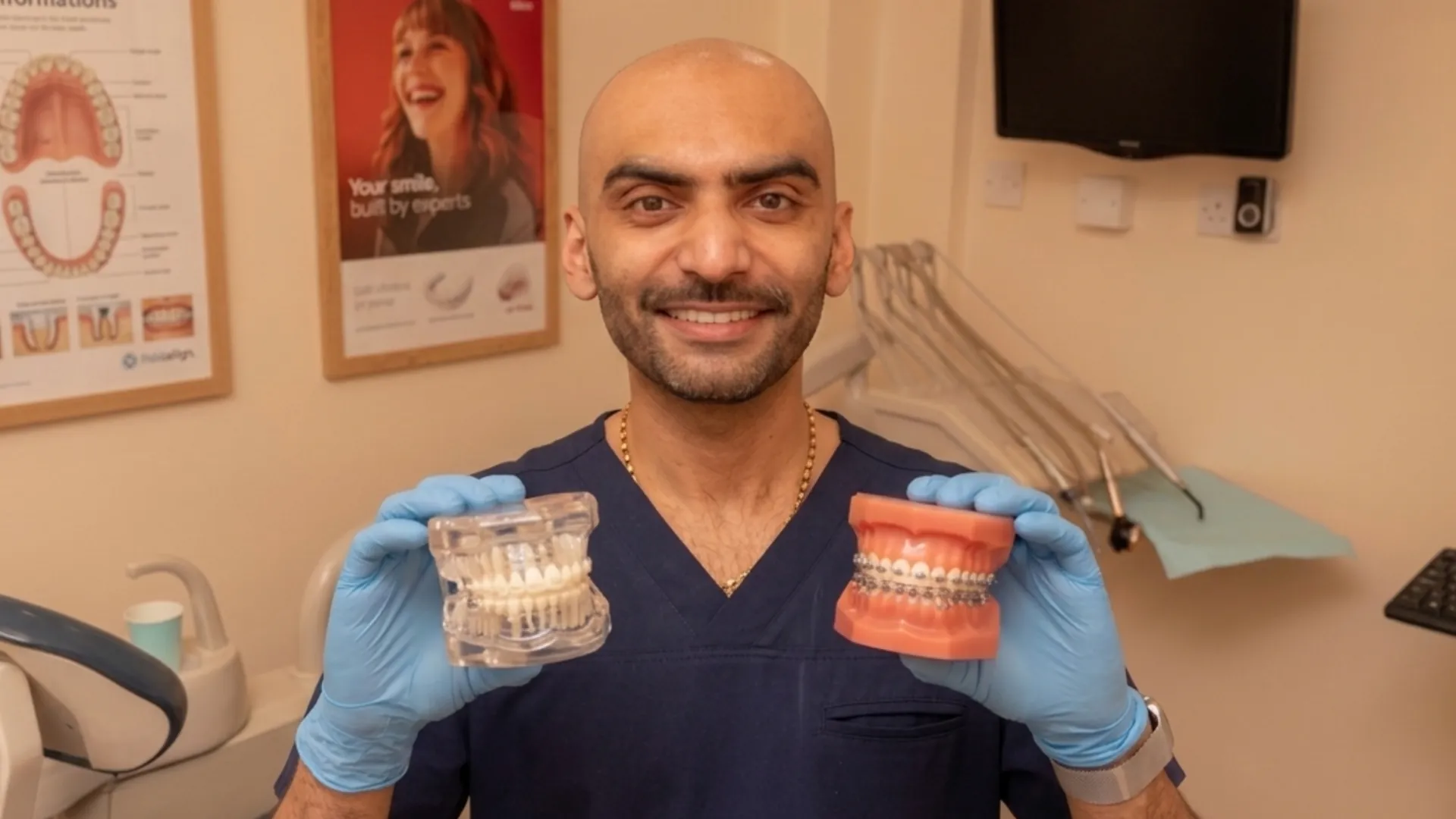
Heading
- Covers clear aligners (Invisalign and Spark), ceramic fixed braces and Six Month Smiles, with referral for complex skeletal cases
- Pathway depends on case complexity, treatment time, aesthetic preferences, and budget
- Most adult cases treated with aligners over 6-18 months
- Complex cases may need fixed braces
- Invisalign Express £2,200 · Moderate £3,400 · Unlimited £4,500–£4,900
- 0% APR finance over 12 months via Tabeo, subject to status
- Free orthodontic consultation with iTero scan and ClinCheck preview, with Invisalign Diamond II provider Dr Vishal Patel
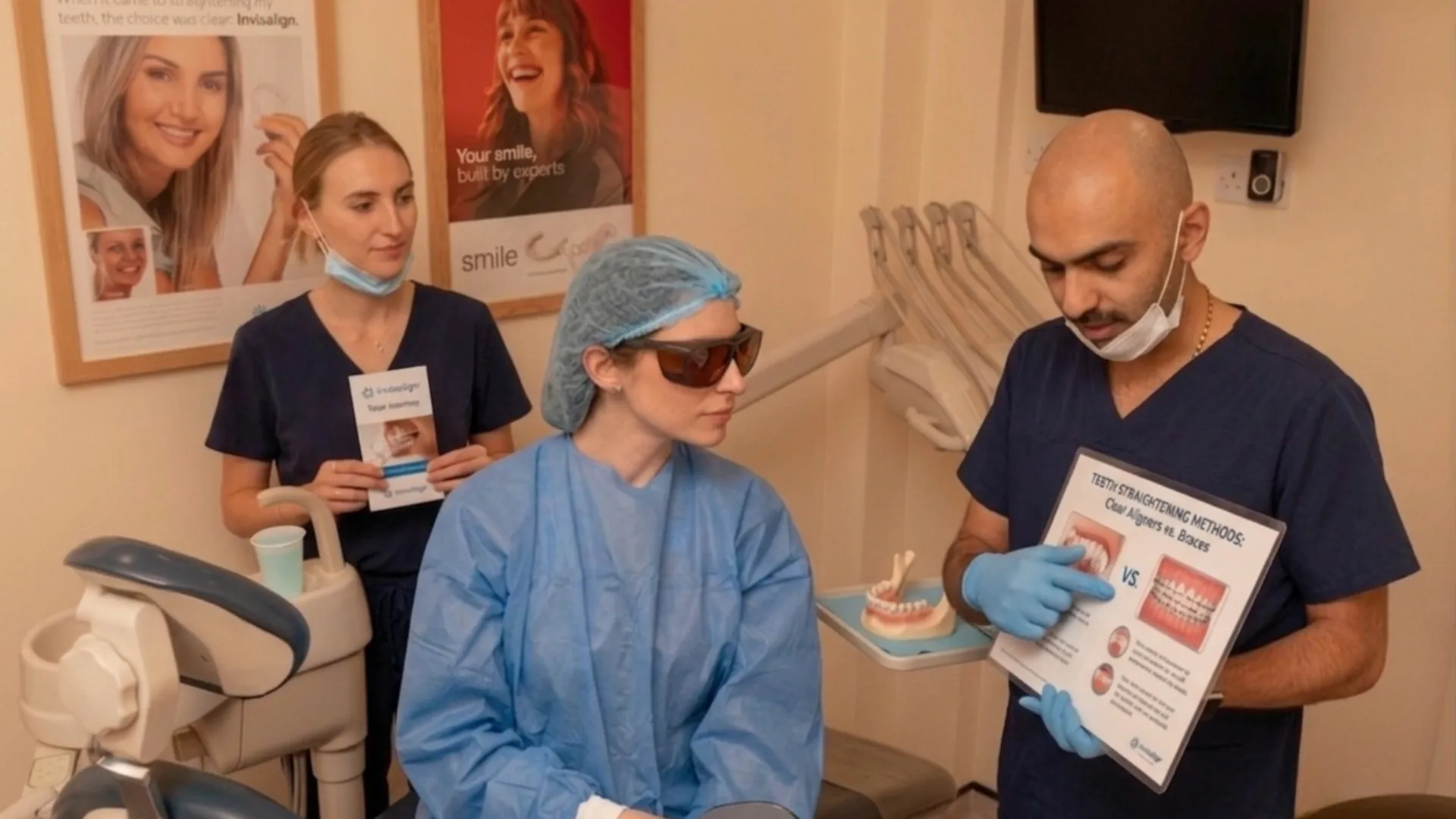
What teeth straightening means today
Teeth straightening is the controlled movement of teeth through bone into a planned position, which in clinical language is orthodontics. At Dental & Wellness London it is planned by Dr Vishal Patel, an Invisalign Diamond II provider, and the first consultation for any orthodontic treatment, including an iTero scan and ClinCheck preview, is free. What has changed over the last few decades is not the biology but the number of ways to deliver the movement, and how discreetly it can now be done.
This page is the orientation for the whole teeth straightening cluster. It sets out the routes, what each is genuinely good at, what it costs at our practice and how we decide between them. Each route then has its own page for depth, and we link to them as we go.
How teeth straightening works
A tooth sits in a socket of bone, held by a ligament. When a light, sustained force is applied, bone is resorbed on the pressure side and laid down on the tension side, and the tooth moves. Every system, whether aligner, bracket or wire, is a way of delivering that force in a controlled direction. The differences are in how precisely each system controls rotation, tipping and root movement, whether it can be removed, and how visible it is while you wear it.
That is why the brand of appliance matters less than people expect. What separates a good result from a disappointing one is the diagnosis and the plan: where the teeth should finish, how the bite should meet, and how the result will be held afterwards.
Your teeth straightening options compared
There are four broad routes to straighter teeth, plus one that does not move teeth at all.
Clear aligners, including Invisalign
A series of removable, transparent trays, each moving the teeth a fraction of a millimetre. They are worn around 22 hours a day and changed on a set schedule. Invisalign is the system we use most, and it suits the majority of adult cases: crowding, spacing, mild to moderate rotations and many bite corrections. For an overview of aligner systems, including how they differ in material and planning software, see our page on clear aligners.
Spark aligners
Spark is a clear aligner system made by Ormco, using its own TruGEN material and its own planning software. For some patients it is a sensible alternative to Invisalign; we compare the two on the same scan at consultation. Our Spark aligners page explains where it fits.
Invisible braces: ceramic and lingual
"Invisible braces" is a category rather than a product. It covers aligners, tooth-coloured ceramic brackets and lingual braces bonded to the inner surfaces of the teeth. Our invisible braces page compares them side by side. Where a case is better suited to fixed ceramic braces, we provide them here; lingual braces are not offered, so where a case needs them we assess it and refer to a colleague who does that work routinely.
Six Month Smiles and traditional fixed braces
Six Month Smiles uses clear brackets and tooth-coloured wires to align the visible front teeth over a shorter course. Dr Vishal Patel is a registered Six Month Smiles provider. It is a legitimate choice for the right case and a compromise for a genuine bite problem; our Six Month Smiles vs Invisalign comparison sets out the trade-off. Traditional fixed braces remain the most mechanically capable tool for complex movement, skeletal discrepancies and extraction cases, and those cases are referred to a specialist orthodontist.
Straighten teeth without braces: cosmetic camouflage
Some people who want to straighten teeth without braces do not need tooth movement at all. A slightly rotated or chipped edge can sometimes be disguised with composite bonding, from £175 per tooth for a simple case and £350 for a complex one. Camouflage does not change the bite, and it is only honest where the underlying position is acceptable. We will tell you if that is your case.
How to choose: the routes side by side
| Metric | Invisalign | Generic Aligners | Ceramic Braces | Fixed Metal Braces |
|---|---|---|---|---|
| Typical case | Mild to moderately complex | Mild to moderate | Moderate, compliance concerns | Complex, extraction/skeletal |
| Treatment time | 6–18 months | 6–12 months | one to two years | 18–30 months |
| Cost (2026) | £2,200 Express to £4,500–£4,900 Unlimited (DWL) | Spark at DWL: quoted in writing after assessment | Provided here; quoted in writing after assessment | Referred; quoted in writing by the specialist |
| Removable | Yes | Yes | No | No |
For most adults reading this, an aligner is likely to be the route discussed first. But "most" is not "all", and an assessment establishes which group you are in. If you are weighing removable against fixed directly, our page on Invisalign vs braces goes through it axis by axis.
Who adult teeth straightening suits, and who it does not
Adult teeth straightening is now routine. Teeth move at any age provided the gums and bone are healthy, and many of our patients are in their thirties, forties and fifties. It tends to suit people with:
- crooked teeth or front teeth that have drifted over the years;
- crowded teeth, where the planning question is whether space comes from developing the arch or removing a tooth;
- gappy teeth, often quick to close and sometimes better finished with bonding;
- a narrow smile, where the arch did not develop to its full width;
- relapse after braces worn as a teenager.
It does not suit everyone. We postpone treatment where there is active gum disease or untreated decay, because moving teeth through inflamed tissue risks the support around them. A significant skeletal discrepancy may need a specialist orthodontist and sometimes a surgical opinion. And if wearing aligners for 22 hours a day is not realistic for you, a fixed option is more honest than a removable one that sits in a drawer.
The teeth straightening process, step by step
- Free orthodontic consultation. We examine the teeth, bite and gums, take an iTero scan, and ask about breathing, sleep and clenching. Where aligners suit, you see a ClinCheck preview of the planned movement.
- Health first. If you are not a current patient, or it has been a while, a dental check-up (£65, 30 minutes) confirms that teeth and gums are ready for movement.
- Written plan. The route, likely duration, what the fee includes, and the retention plan, all in writing before you commit.
- Treatment. Aligners in series with reviews every six to eight weeks, or a fixed appliance with regular adjustments.
- Refinements. A further short series of aligners to fine-tune the finish is normal and planned for, not a sign that something went wrong.
- Retention. Retainers hold the result. Every plan includes a retention strategy from the start.
Results, longevity and aftercare
Most mild adult cases finish in a matter of months; moderate cases often take six to eighteen months, and complex fixed-brace cases longer. Results vary with the starting point, the biology of the patient and, for aligners, how consistently they are worn.
Teeth have a lifelong tendency to drift, which is why retention matters as much as the movement. We usually recommend a bonded retainer behind the front teeth, a removable night-time retainer, or both. Retainers are quoted in writing with your treatment plan. Our guide to retention after treatment explains the options. Regular hygiene visits keep the gums healthy around the newly positioned teeth.
Risks, and how we reduce them
Orthodontic movement is safe when properly planned, but it is not without risk. The main ones are:
- Gum recession where teeth are pushed beyond the bone. We plan movement within the available bone and check gum thickness first.
- Root shortening, usually minor. Light forces and sensible treatment times reduce it.
- Decay and staining under aligners or around brackets if hygiene slips. We give clear cleaning routines and keep you on a hygiene schedule.
- Relapse if retainers are not worn. We plan retention before treatment starts.
- Bite changes that feel unfamiliar. Dr Vishal Patel's restorative training means the bite is planned alongside the alignment, not as an afterthought.
Mild pressure for a day or two after each new aligner or adjustment is normal. Our article on whether Invisalign hurts describes what that feels like.
Teeth straightening cost in London and Islington
At our Islington practice the first orthodontic consultation is free, including the iTero scan and ClinCheck preview. Invisalign is offered in three plans:
- Invisalign Express: £2,200, for minor crowding, small gaps or mild relapse;
- Invisalign Moderate: £3,400, for mild to moderate crowding and spacing;
- Invisalign Unlimited: £4,500–£4,900, for complex or full-arch cases and bite correction.
Spark aligners and Six Month Smiles are quoted in writing after assessment, so you can compare them against an Invisalign plan for the same teeth. Ceramic fixed braces are quoted in writing after assessment; lingual and metal braces are quoted by the specialist we refer to. Our Invisalign cost page explains what each plan includes. 0% APR finance over 12 months via Tabeo is available, subject to status.
Why patients choose Dr Vishal Patel for teeth straightening
Dr Vishal Patel (BDS Liverpool, MSc Aesthetic & Restorative Dentistry, Manchester, GDC 103127) has around twenty years in dentistry and over 15,000 cases behind him. He is an Invisalign Diamond II provider, in the top 1% of UK Invisalign providers, an AACD member and a registered Six Month Smiles provider. Complex skeletal cases are referred to a specialist orthodontist.
Three things shape how we plan. Restorative training in the same clinician, so the movement and the finish are designed together. A long-term smile view, planning for how the teeth will support the face at fifty and seventy rather than for a single photograph. And airway-conscious planning, favouring arch development and a non-extraction approach where the biomechanics allow. Orthodontics is not a treatment for sleep apnoea; where a breathing problem is suspected, we suggest you speak to your GP. If you are looking specifically for an orthodontist in Islington, that page explains how our orthodontic service works locally.
Common questions about teeth straightening
What is the best way to straighten teeth?
There is no single best way; there is a best way for each case. For most adults with crowding, spacing or mild bite problems, clear aligners such as Invisalign are the most comfortable and discreet option. Complex skeletal or extraction cases are usually better treated with fixed braces by a specialist. An examination and scan settle the question.
How long does teeth straightening take?
Minor corrections can finish in a few months. Most moderate adult cases take six to eighteen months, and complex fixed-brace cases can take longer. The ClinCheck preview at consultation gives an estimate for your own teeth. Retention then continues indefinitely, usually with night-time retainers, so that the result holds.
Can adults straighten their teeth?
Yes. Teeth move at any age provided the gums and supporting bone are healthy. Adult teeth straightening is now one of the most common reasons people come to us, often to correct crowding that has developed over time or relapse after childhood braces. We check gum health first and treat any problems before movement begins.
Can you straighten teeth without braces?
Often, yes. Clear aligners straighten teeth without brackets or wires and are removable for eating and cleaning. Where only a small irregularity bothers you, composite bonding can sometimes disguise it without moving the tooth. Bonding does not change the bite, so we only suggest it when the underlying position is sound.
Is teeth straightening available on the NHS for adults?
Rarely. NHS orthodontic treatment is mainly for under-18s who meet clinical need criteria, and adult orthodontics is seldom funded. We are a private practice and do not provide NHS treatment. Our orthodontic consultation is free, so you can find out what your case needs and what it would cost before deciding.
Will my teeth move back after straightening?
They will try to, which is why retention is part of every plan. Teeth have a lifelong tendency to drift, especially in the first year. Wearing retainers as advised, usually at night, holds the result. Bonded retainers behind the front teeth add security. Retainers are quoted in writing with your treatment plan.
Further reading
- Braces for Adults: How They Work and If They’re Right for You
- Does mewing actually work? An honest dentist's evidence-based verdict
- Invisible braces price — what you'll actually pay in 2026
Teeth straightening: more in this group
- Invisalign Unlimited plan
- Single arch Invisalign cost
- Full Invisalign cost (both arches)
- Clear aligners vs fixed braces
- Inman aligners vs Invisalign
Related: teeth bonding, teeth whitening.
Getting here
Our practice is at 222 Essex Road, Islington, London N1 3AP, two minutes' walk from Essex Road station. Highbury & Islington is one stop away by train, buses 38, 56, 73, 341 and 476 stop on Essex Road, and Angel is a 15–20 minute walk; see our Angel page for the route. Many patients cycle or use Lime and Forest e-bikes; Dalston is about ten minutes away by bike. Local orthodontic details are on our Invisalign in Islington page. We are open Monday to Friday, 8am to 7pm, by appointment, and the ground floor is wheelchair accessible.
The most popular path
Ceramic & lingual
Most mechanically capable
What separates one practice from another is almost never the brand of aligner and almost always the planning behind it.
| Free orthodontic consultation | Examining teeth, bite and gums, with an iTero scan and ClinCheck preview where aligners suit, and asking about breathing, sleep and clenching. |
| Plan presentation | Route, timeline and cost, in writing. 0% APR finance over 12 months via Tabeo, subject to status. |
| Treatment | Aligners in series or fixed appliance adjustments. |
| Refinements | Normal, planned for. |
| Retention | Every plan includes a retention strategy from the start; retainers are quoted in writing with the treatment plan. |
Before and After
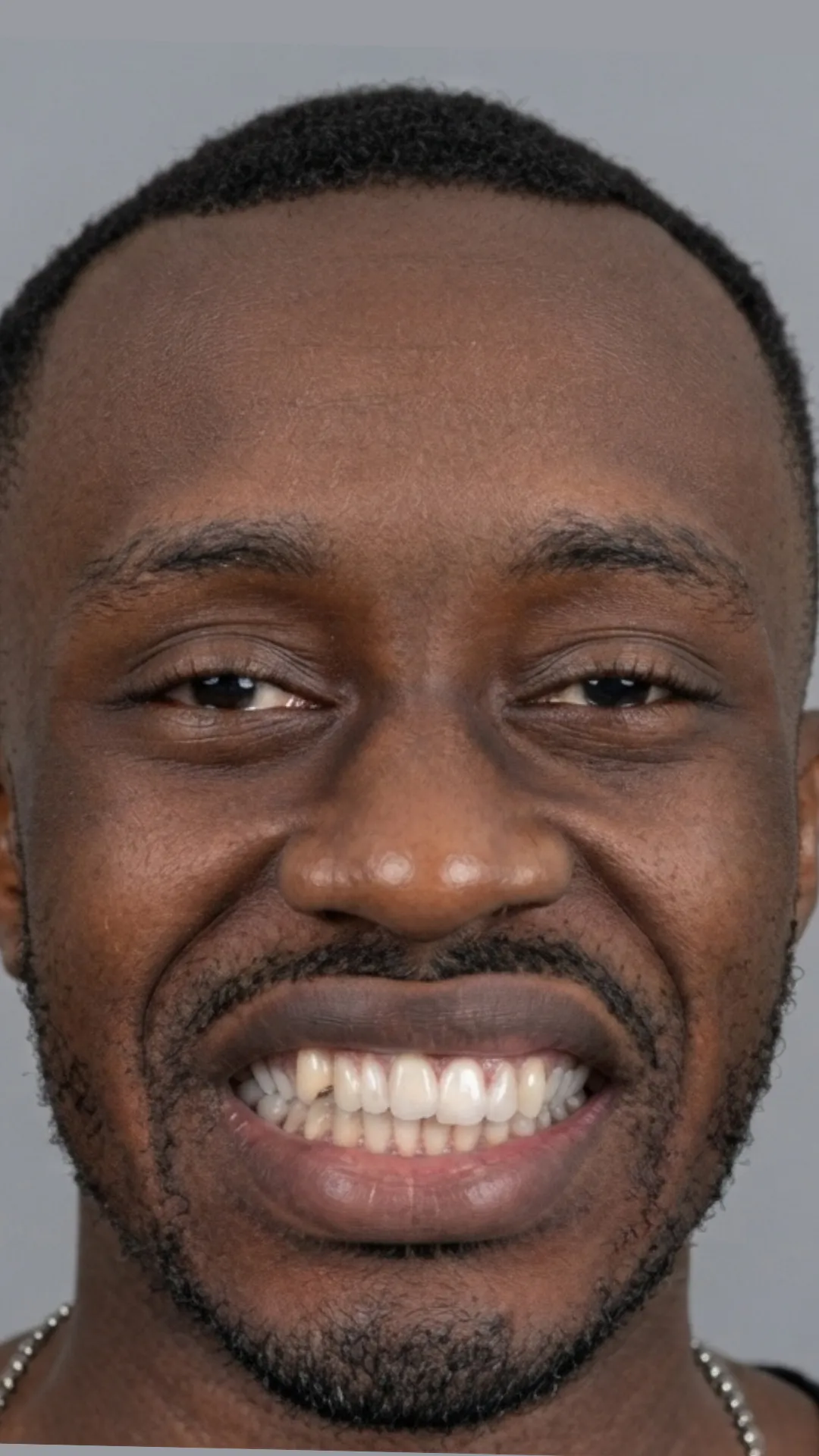
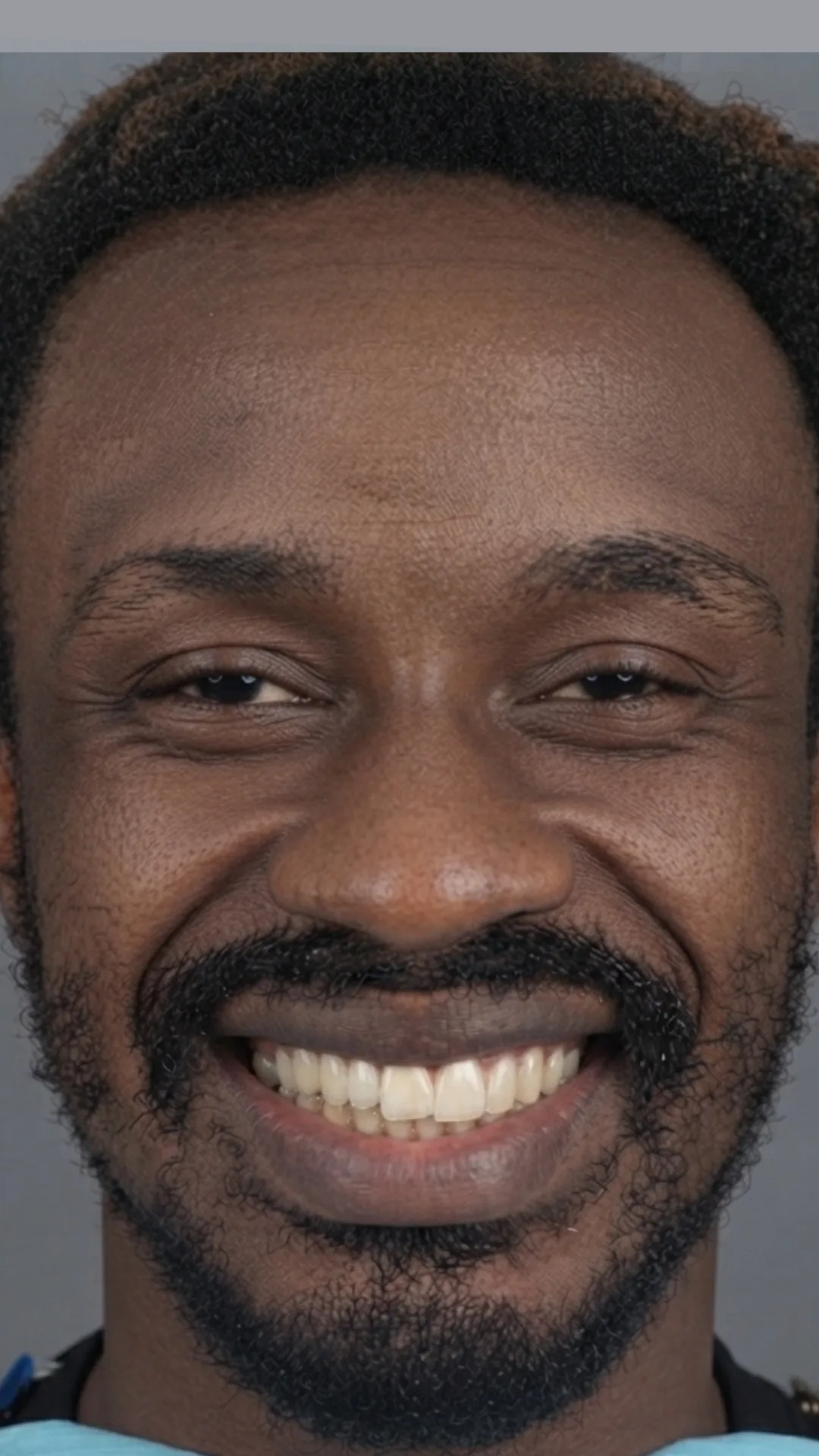
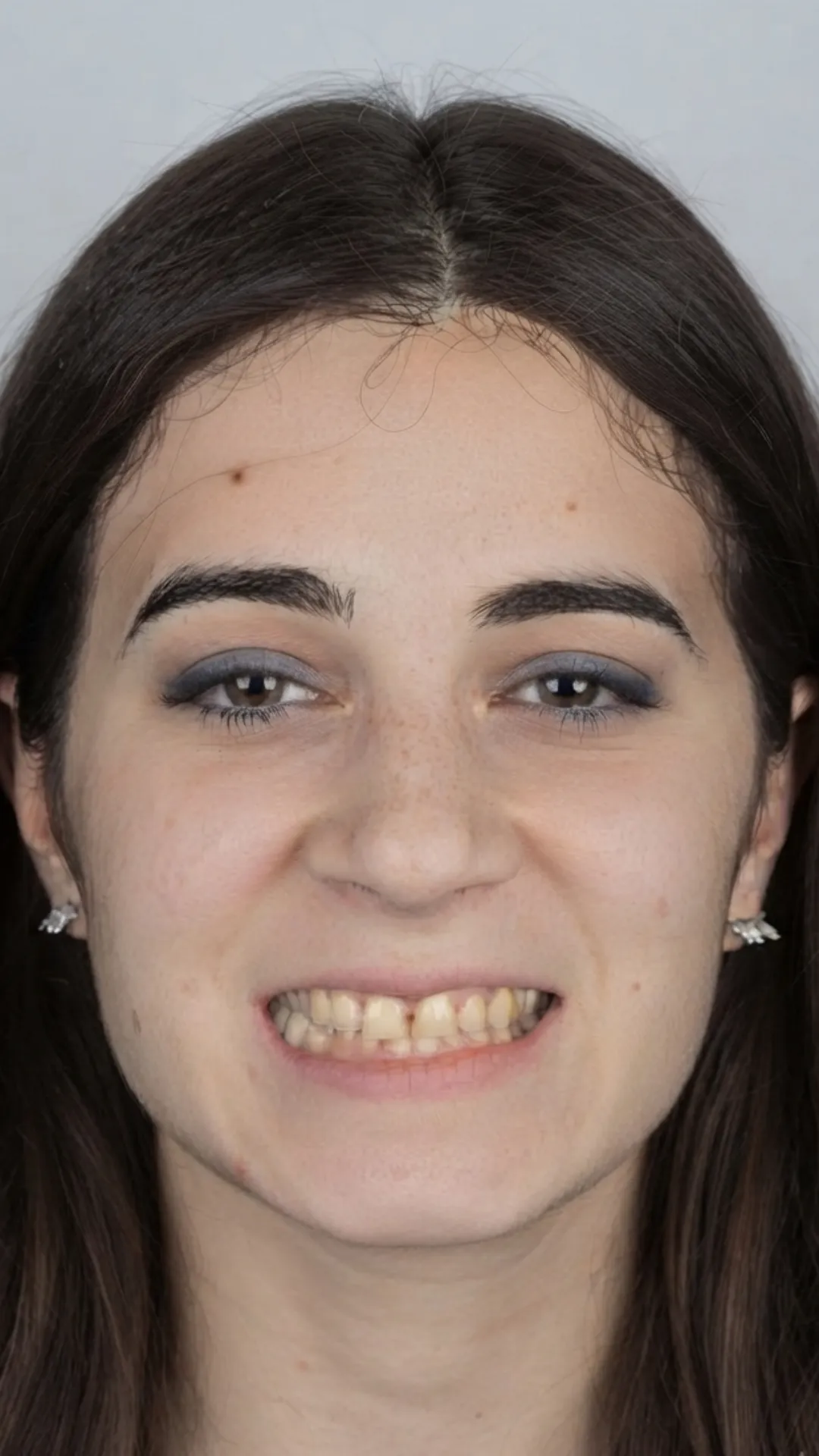
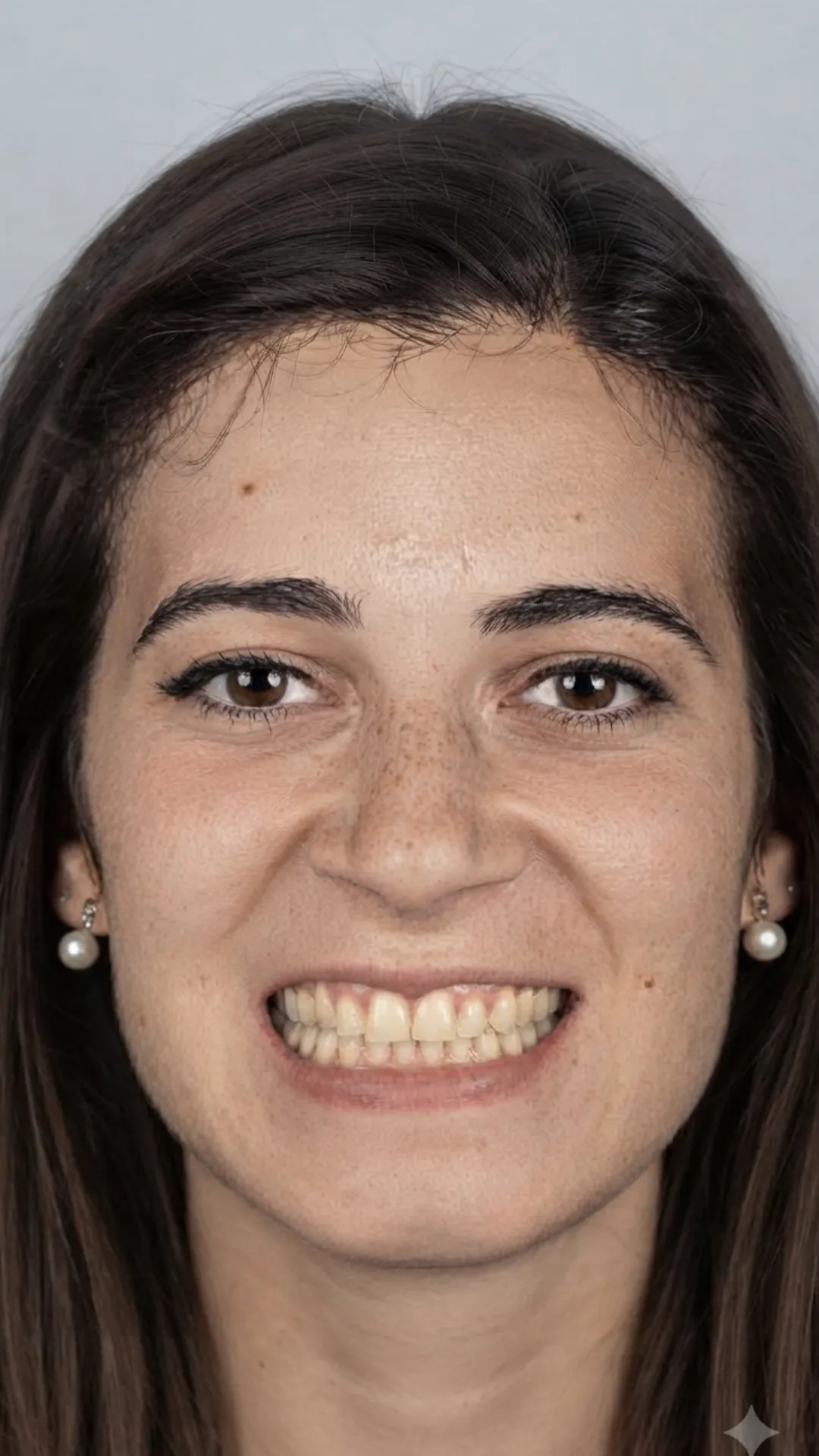
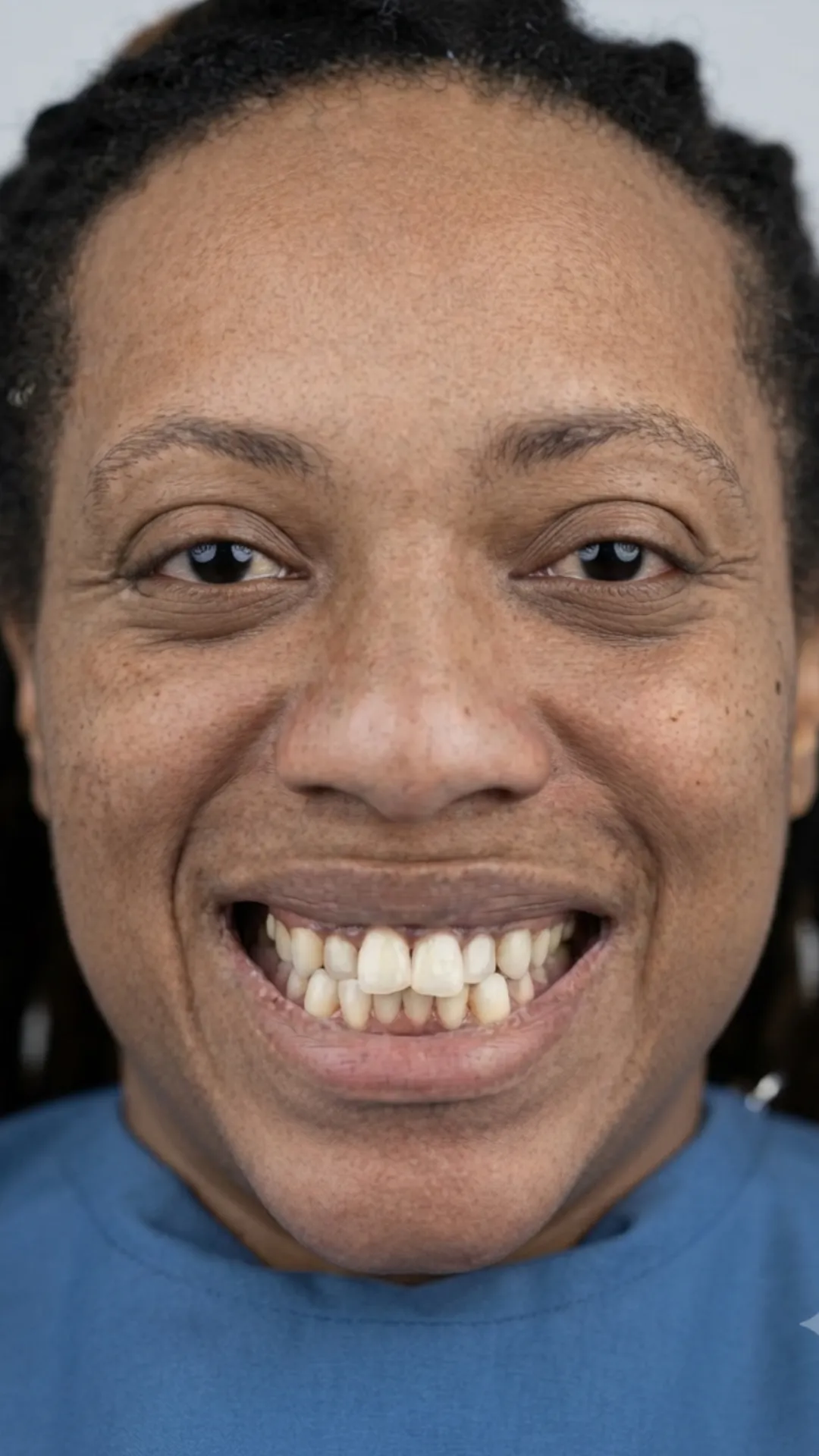
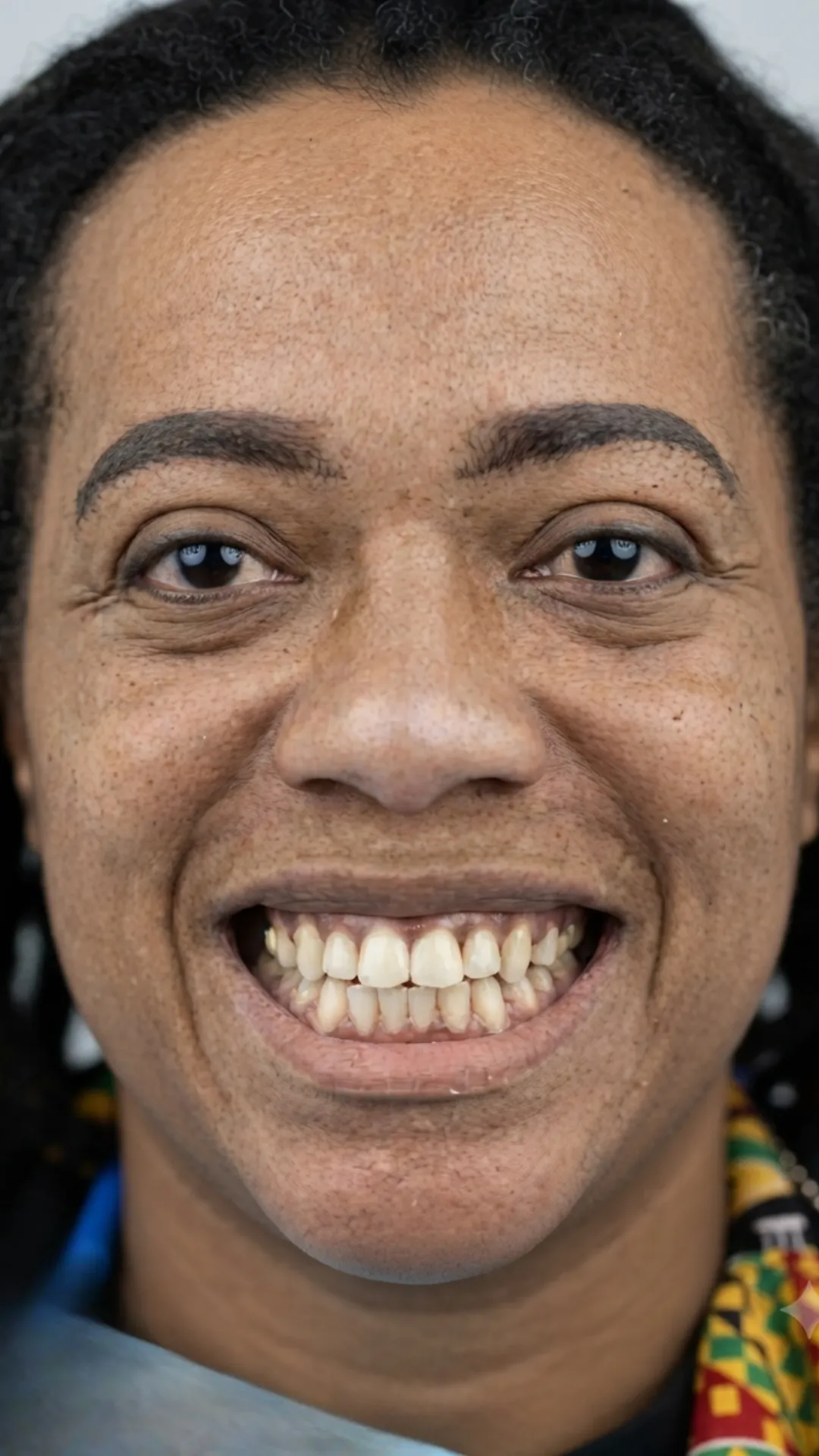
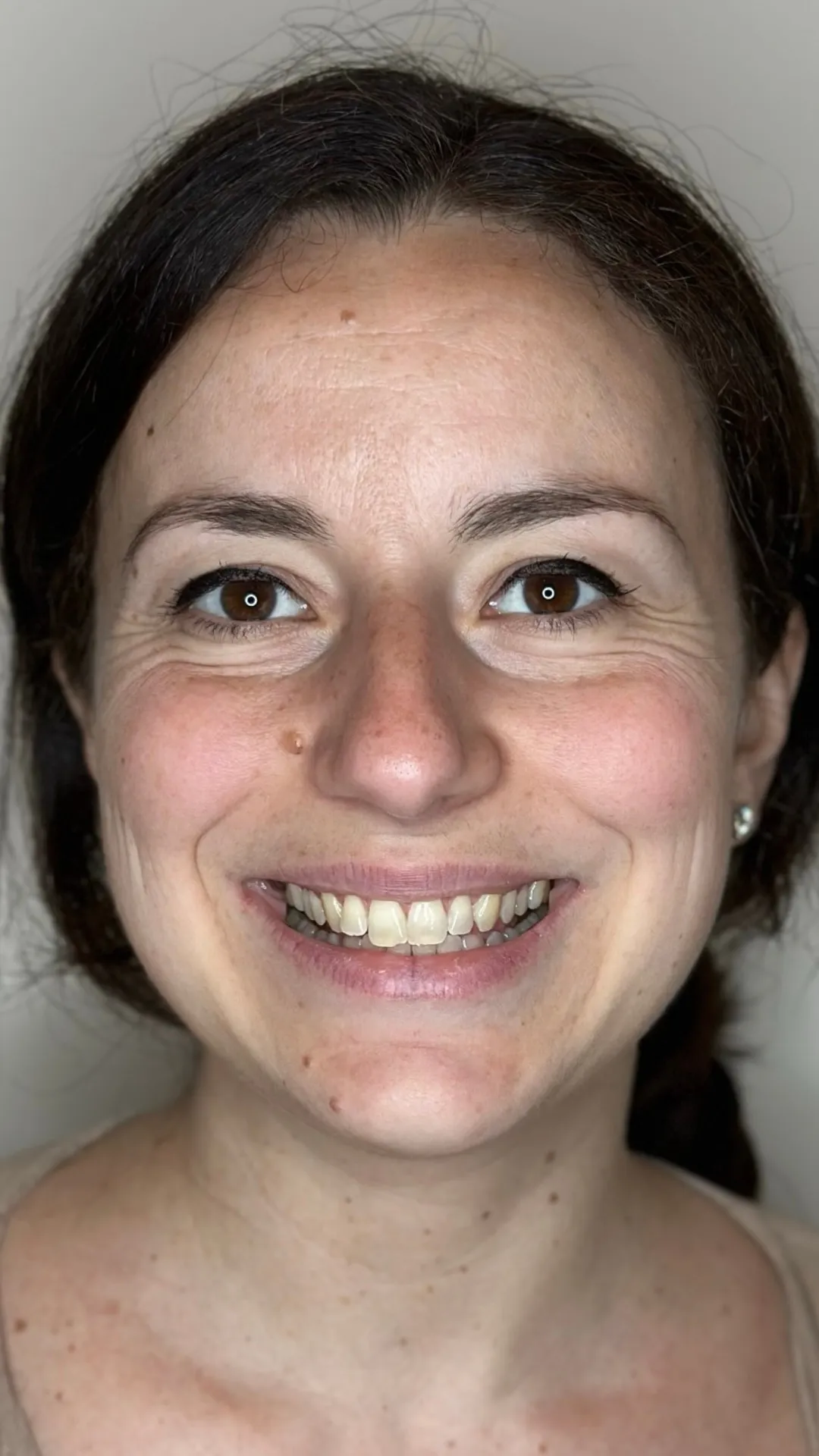
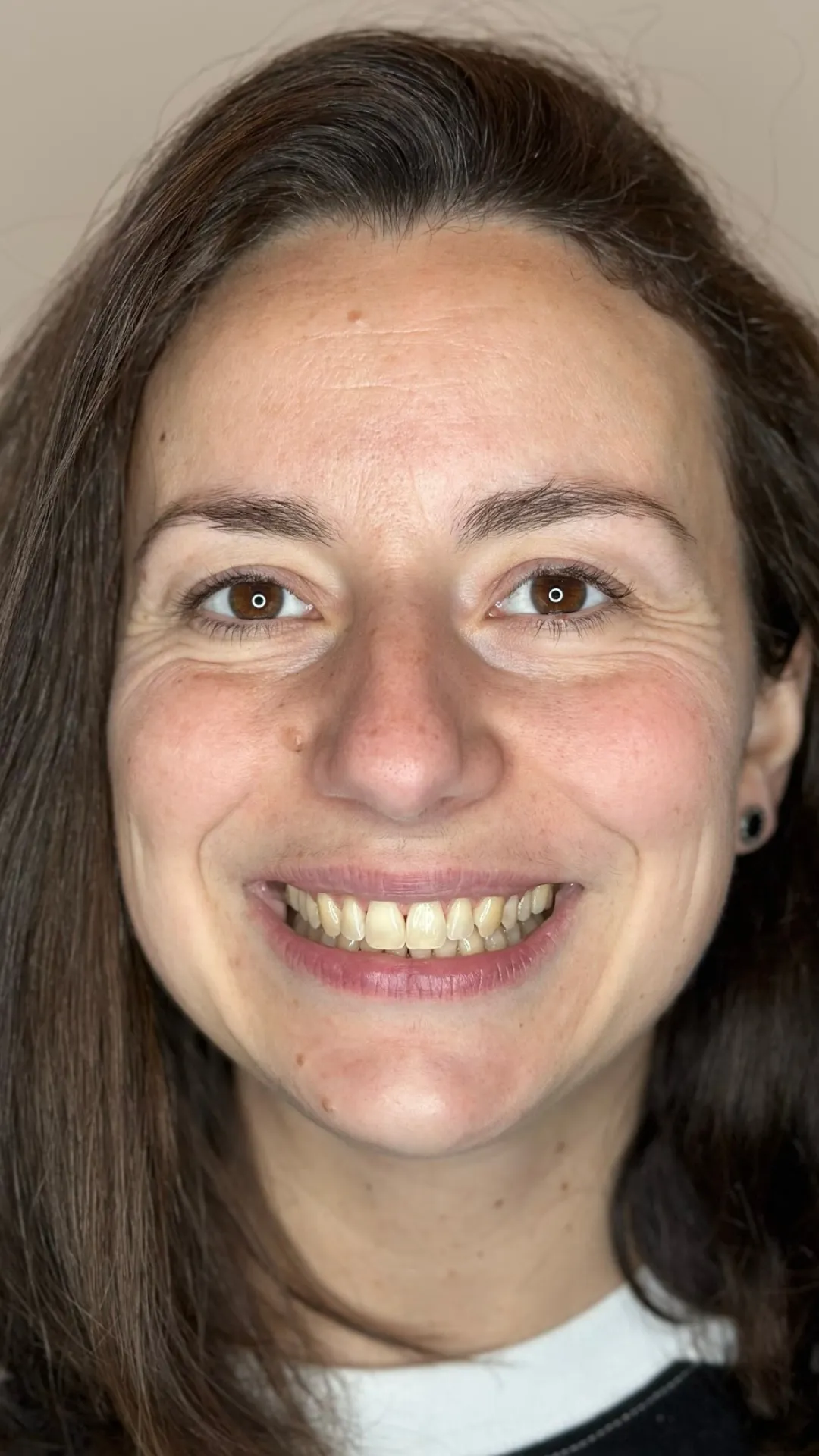
Our happy patients,
in their own words
Transparent pricing
Prices are set out below. Your written plan confirms the fee before any treatment begins.
| Pathway | Fee |
|---|---|
| Discovery call (20 minutes, by phone) | Free |
| Invisalign consultation (iTero scan + ClinCheck preview) | Free |
| Dental examination (30 minutes, full risk assessment) | £65 |
| Invisalign Express | £2,200 |
| Invisalign Moderate | £3,400 |
| Invisalign Unlimited | £4,500–£4,900 |
| Spark aligners | Quoted in writing after assessment |
| Six Month Smiles | Quoted in writing after assessment |
| Finance | 0% APR over 12 months via Tabeo, subject to status |
| Ceramic fixed braces | Quoted in writing after assessment |
| Lingual / metal fixed braces (referred) | Quoted in writing by the specialist after assessment |
0% APR finance over 12 months via Tabeo, subject to status.
Questions
people ask
If your question isn't answered here, call reception on 020 8127 4567 or email reception.
How much does teeth straightening cost in the UK?
It depends on the system and the complexity of the case. At Dental & Wellness London, Invisalign Express is £2,200, Moderate £3,400 and Unlimited £4,500–£4,900. Spark aligners and Six Month Smiles are quoted in writing after assessment. The orthodontic consultation, with an iTero scan and ClinCheck preview, is free, and 0% APR finance over 12 months via Tabeo is available, subject to status.
What is the quickest way to straighten teeth?
For small irregularities of the front teeth, a short aligner course such as Invisalign Express, or Six Month Smiles, can finish in months rather than years. Speed should follow the biology, though; forcing movement risks the roots and gums. Where a quick cosmetic change is all that is needed, composite bonding may disguise the irregularity without moving teeth at all.
Is adult teeth straightening worth it?
For many adults it is, because aligned teeth are easier to clean, wear more evenly and often look more balanced. It is worth it when the plan is sound and retention is taken seriously. It is not worth it if the gums are unhealthy or the result cannot be held. A free consultation tells you which applies to you before you spend anything.
Do clear aligners work as well as braces?
For mild to moderate crowding, spacing and many bite corrections, aligners such as Invisalign work as well as fixed braces when they are worn around 22 hours a day. Fixed braces still have the edge for severe rotations, extraction cases and skeletal discrepancies. We tell you at consultation which category your teeth fall into, and refer where a specialist is the better choice.
Does teeth straightening hurt?
Most people feel pressure or tenderness for a day or two after each new aligner or adjustment, which settles with time. Aligners avoid the cheek and lip irritation that brackets and wires can cause. Simple pain relief is rarely needed beyond the first few days. Persistent pain is not normal, and we would want to see you if it occurs.
Do you treat teenagers?
We assess teenagers and treat suitable cases with aligners, with a parent present at consultation. Whether aligners or fixed braces suit a teenager depends partly on how reliably they will be worn, which we discuss openly. Where growth modification or a complex bite is involved, we refer to a specialist orthodontist. NHS orthodontics may be available to under-18s who meet clinical criteria.
Where can I get teeth straightening near Islington?
Our practice is at 222 Essex Road, Islington, London N1 3AP, two minutes from Essex Road station and one stop from Highbury & Islington. Buses 38, 56, 73, 341 and 476 stop nearby, and Angel is a 15–20 minute walk. Many patients cycle or use Lime and Forest e-bikes. We are open Monday to Friday, 8am to 7pm (Tuesday from 9am), by appointment.
Send three Photos - get an honest answer with in a day.
Free Smile AssessmentBook a free teeth straightening consultation
A free orthodontic consultation with Dr Vishal Patel: iTero scan, ClinCheck preview and a written plan. Call 020 8127 4567.
Contact US