The word "painless" is doing dishonest work
Invisalign isn't painless, but the realistic picture is reassuring: most people feel mild, predictable, short-lived discomfort, not pain, and that discomfort is the sign teeth are moving. This is what to expect from Invisalign treatment at our Islington clinic.
The comfort curve
First 48-72 hours of each new aligner: pressure, tight squeeze, mild soreness biting. Settling period: by day three or four the aligner feels passive and comfortable. Treatment rhythm: tightness returns briefly with each new set. Switching aligners at night lets the initial tightness pass while sleeping.

Two worries that turn out to be minor
Attachments — small tooth-coloured shapes bonded to help aligners grip. Placement is brief and comfortable, no drilling. More in our guide to Invisalign attachments.
Cleaning and daily wear — causes no discomfort since aligners are removable.
How it compares to fixed braces
Braces' brackets and wires rub the lips and cheeks, causing soft-tissue irritation and ulcers, plus soreness spikes after tightening appointments. Invisalign is smooth plastic against smooth tissue, with tooth-movement pressure generally gentler and more predictable. Our page on Invisalign versus braces sets out the wider differences.
Normal soreness vs a reason to call
Normal: tightness for the first two to three days of each aligner, brief tenderness on removal, new attachment sensation.
Warrants a review: persistent severe pain beyond four or five days, sharp shooting pain in one tooth, jaw-joint pain, a sore spot from a rough edge, or pain getting worse. See also how to manage Invisalign pain.
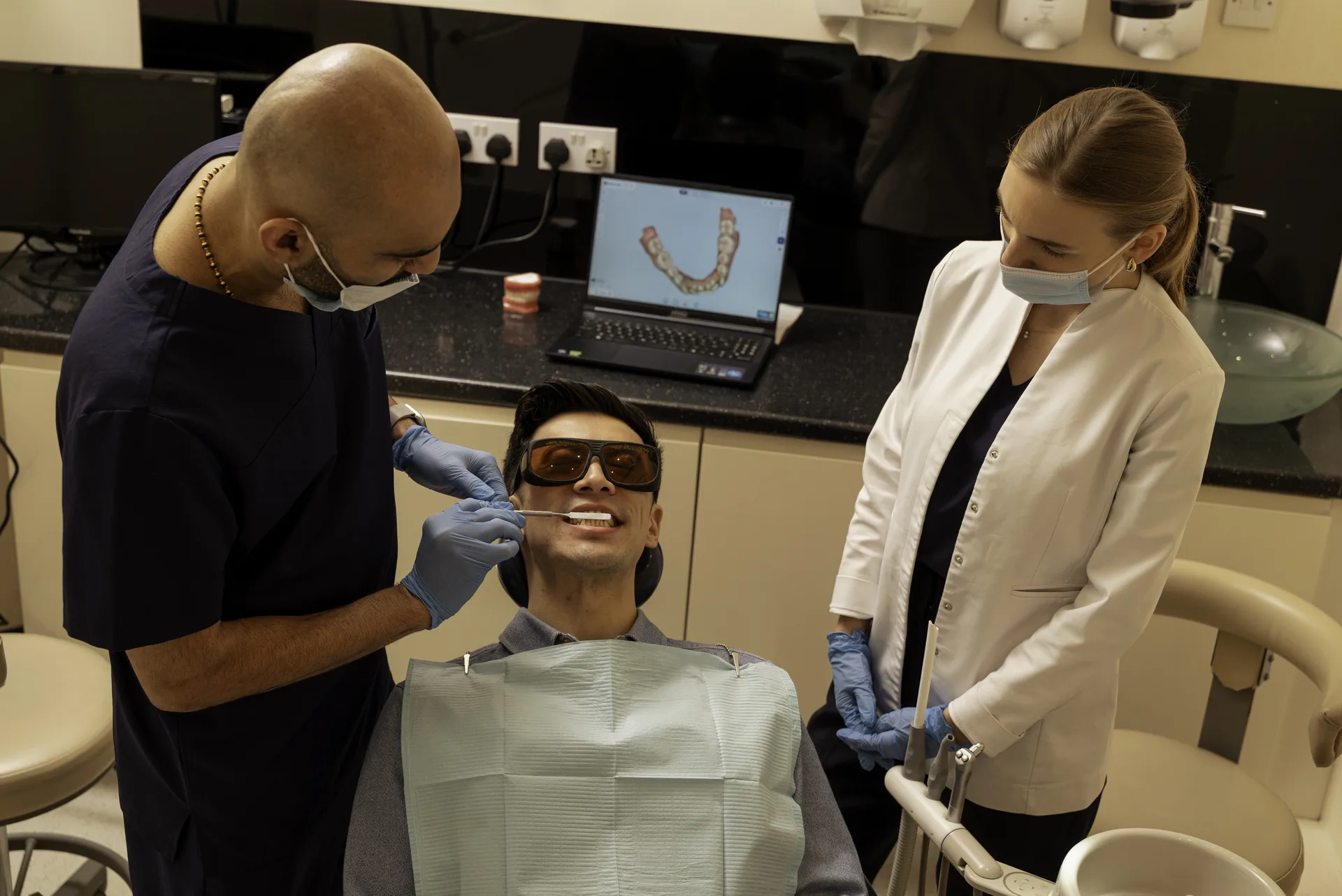
Comfort is planned, not endured
Smooth, well-fitting aligners, sensible pacing, and accurate ClinCheck planning all reduce unnecessary discomfort. Teeth are moved at a biologically sensible pace with the long-term smile view in mind, not forced for speed.
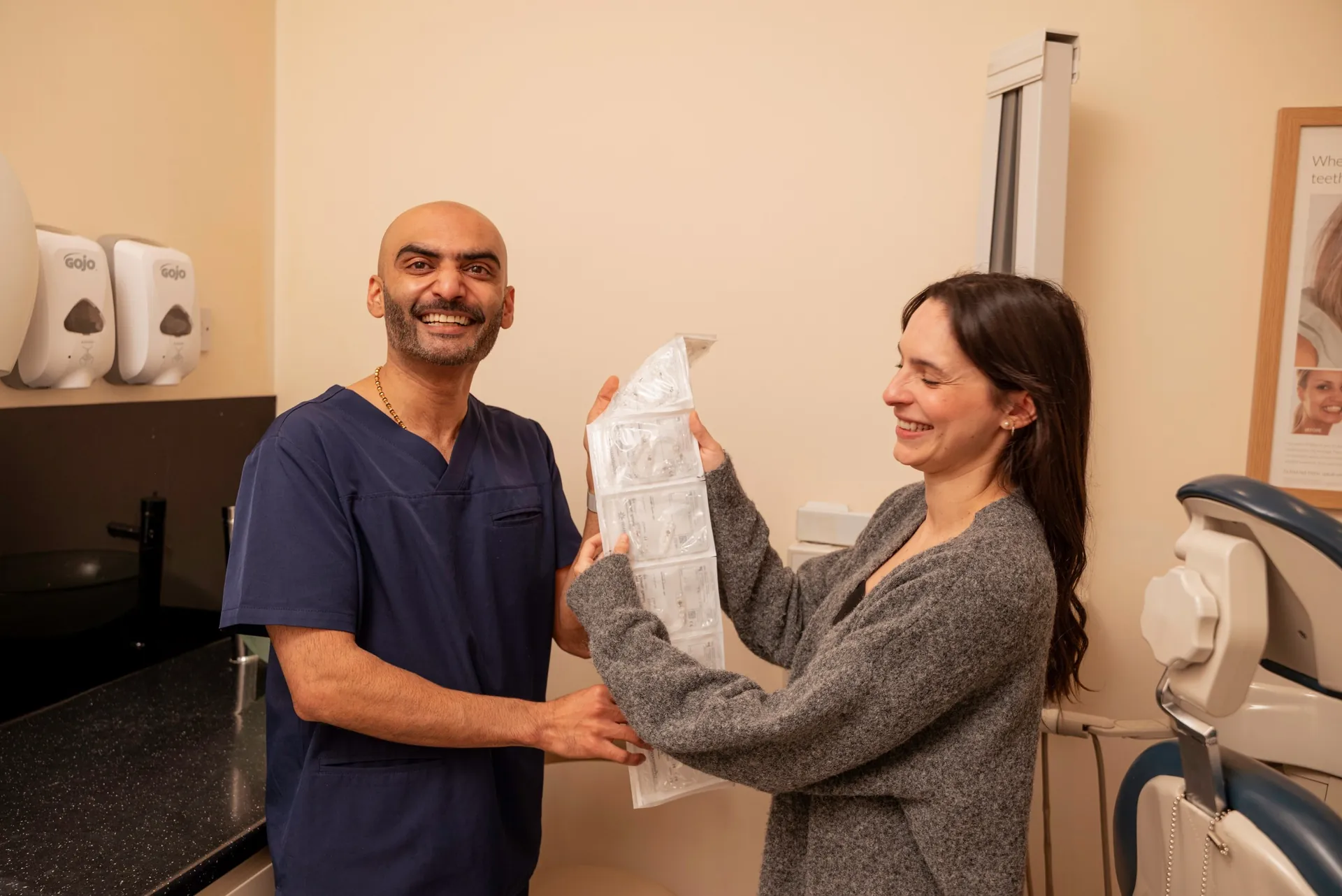
Frequently asked questions
Does Invisalign hurt when you first get it? First two to three days feel tight; settles within a few days.
Does it hurt every time you change aligners? A brief return of mild tightness, usually gentler than the first aligner.
Does Invisalign hurt more or less than braces? Less, for most people — no wires or brackets to rub soft tissue.
Is it normal for it to hurt after a few days? By day four each aligner should feel passive; persistent severe pain warrants a review.
Can Invisalign damage your teeth? No — planned and supervised properly, it moves teeth at a safe, controlled pace.
Book a consultation and ask anything about comfort
Invisalign consultations are free, including an iTero scan and ClinCheck plan. Call 020 8127 4567 or WhatsApp +44 7974 910222. 222 Essex Road, Islington, London N1 3AP.
Reviewed by Dr Vishal Patel · BDS Liverpool · MSc Aesthetic & Restorative Dentistry (Manchester) · GDC 103127 · Invisalign Diamond II Provider · AACD Member. Last reviewed 2026-06-04.