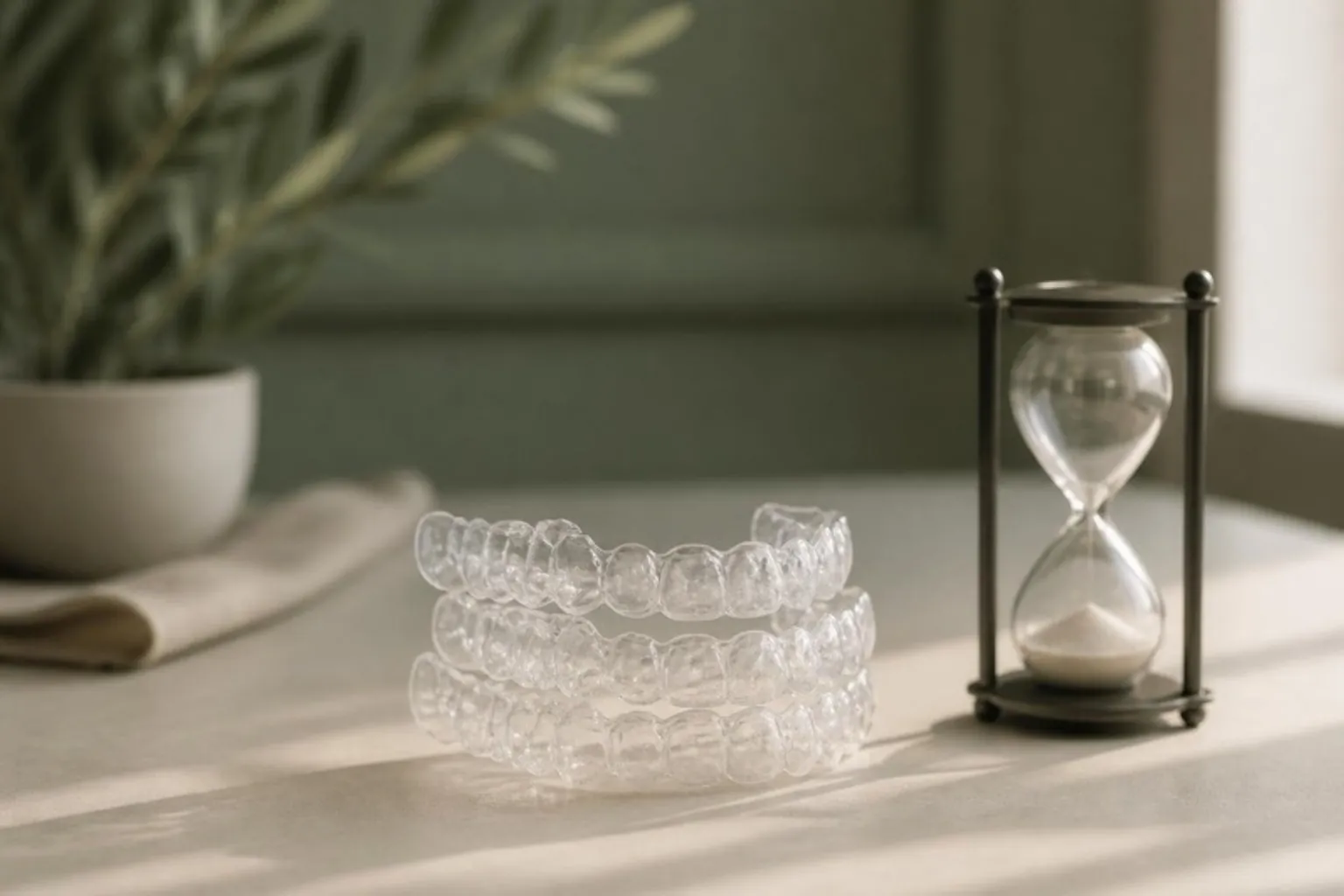
Invisalign takes from four to six months for simple Express cases up to twelve to twenty-four months for complex Unlimited treatment. Most adult cases finish within six to twelve months. Treatment time depends on case complexity, how consistently you wear the aligners, your biology, and whether a refinement round is needed.
The timeline myth
"Invisalign" is a family of treatments scaled to how much movement your case needs, not one fixed timeline. A trustworthy clinic tells you both that the timeline is predictable from a proper plan, and that it can't be promised as a single number before scanning your teeth. You can start with a free Invisalign consultation in Islington.
The three-tier timeline ladder
Express — 4-6 months. Minor crowding, small gaps, 5-10 aligners.
Moderate — 9-12 months. Mid-level complexity, up to 26 aligners.
Unlimited — 12-24 months. Complex full-arch cases, with the aligners the case needs.
The Invisalign Unlimited plan runs active treatment to what the case needs and includes multi-year aligner cover; full terms and conditions apply.
Looking good vs being finished
Most patients notice visible movement within the first month or two, since the largest movements happen early. The final months are slower detailing work.
The four variables that move your timeline
Compliance — the biggest factor in your hands; needs 22 hours daily wear. Case complexity — rotations and bite correction take longer than simple tipping. Biology — bone density, age, and tissue response vary the pace slightly. Refinements — most cases need one refinement round, typically adding 4-10 weeks, included in the tier price at DWL.
The treatment journey
Consultation and scan → ClinCheck plan (1-2 weeks) → fitting and attachments → active treatment with reviews every 6-8 weeks → refinement near the end → lifelong retention. Our week-by-week Invisalign timeline below shows what each stage feels like.
Month by month: what a typical course feels like
- Weeks 1–2: getting used to the aligners, learning to put them in and take them out, and your first follow-up.
- Months 1–3: the first visible changes, a settled wear routine and regular reviews.
- Months 4–6: larger movements; bite changes become noticeable and any refinement is discussed.
- Months 7–12 and beyond: fine alignment, bite adjustments and planning for retention.
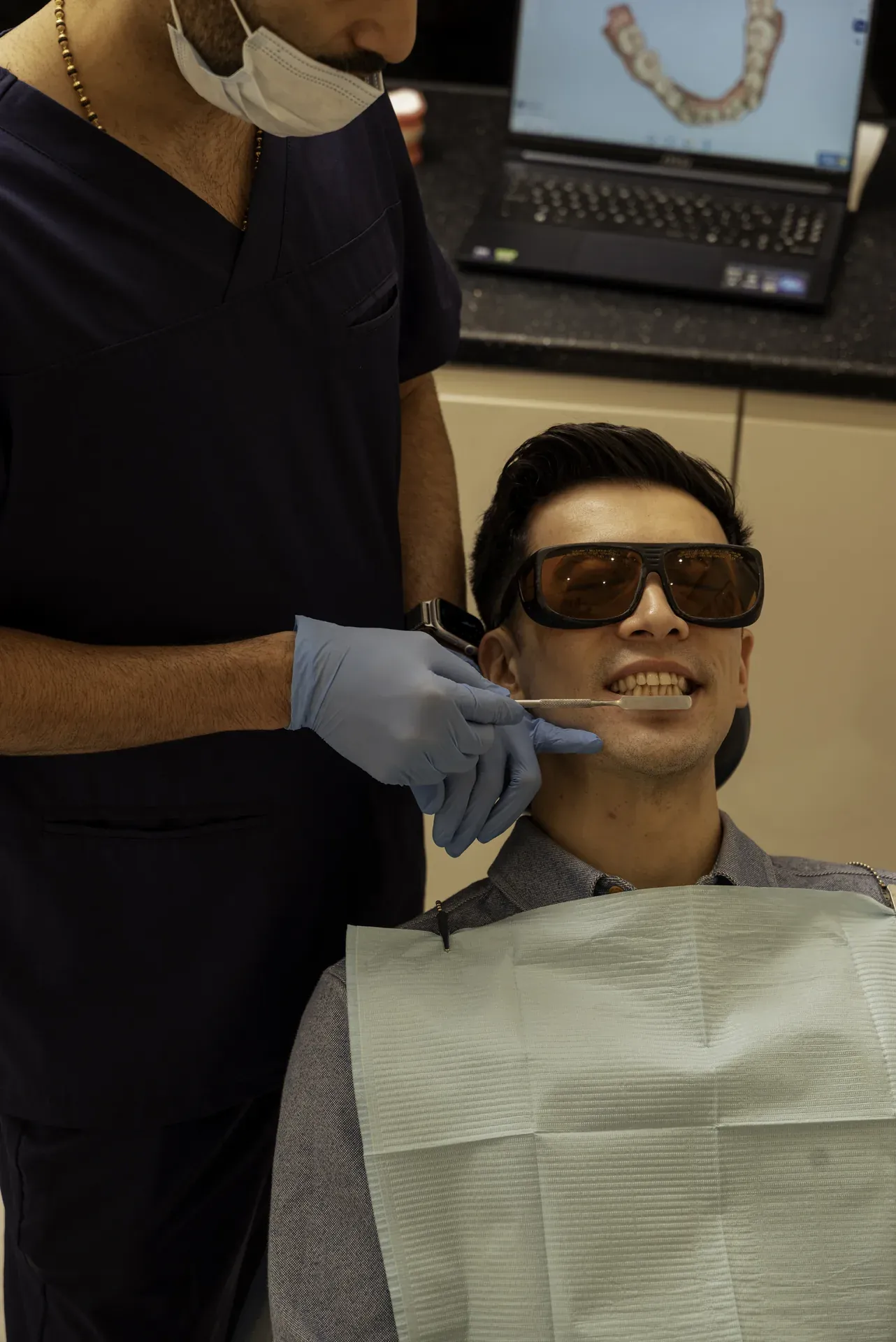
At our practice we like to place attachments early, where the teeth allow, and usually delay any enamel shaping (interproximal reduction) until around week seven or eight, after some arch expansion has happened. That tends to make the shaping smaller and easier.
The first eight weeks, week by week
Week 1: the first aligner feels tight for two or three days and speech may lisp slightly; both settle. Weeks 2–3: the routine forms: 22 hours a day, out only to eat and clean, and the attachments stop feeling strange. Weeks 4–8: the first visible change, usually in the front teeth, and the first review to check tracking. From there the course runs in six-to-ten-week review cycles until the planned end, a refinement series if needed, and then retainers: full-time for a short period, then nightly.
Wear time: the variable you control
Aligners need to be worn for 20 to 22 hours a day. Even a few hours less each day can add months, cause teeth to drift back, and mean extra aligners or a change of plan. Keep the case with you, with your name and number on it, so a forgotten case can be returned. If you are pregnant and nausea means taking aligners out more often, track your wear time and put them back as soon as you can.
After treatment: keeping the result
In the first months after treatment, retainers are usually worn full time with regular checks. Long term, most people move to night-time wear, with an annual retention check and replacement retainers when they wear out. Teeth tend to drift throughout life, so retention is part of the plan rather than an extra. See our guide to retainers after Invisalign.
Can you speed it up?
Wearing aligners the full 22 hours is the most effective speed-up. Weekly changes can help where clinically appropriate. Acceleration devices have mixed, modest evidence at best. Rushing beyond what biology allows risks lost attachment or relapse, which costs more time later. Where a bite needs correcting, Invisalign rubber bands (elastics) may form part of the plan.
Frequently asked questions
How long does it take for most people? Most adults finish in six to twelve months.
Does Invisalign work faster than braces? Broadly similar timelines; the biggest difference is wear-time compliance since aligners are removable.
Why is my treatment taking longer than expected? Usually short wear-time, teeth not tracking the plan, or a complex case slightly under-scoped for its tier.
Can I finish sooner if motivated? Within limits — full 22-hour wear is the reliable speed-up; forcing the pace beyond biology backfires.
How long do I wear retainers? For life — full-time for six months, then nights only indefinitely.
How long do 14 trays take? With weekly changes, 14 aligners take about three and a half months; with two-weekly changes, about seven months. Your dentist sets the schedule for your case.
Can I leave my aligners out for three hours? Not routinely. Every hour out slows the movement and can extend treatment. Aim for 20 to 22 hours of wear each day.
Can I wear my aligners at the gym? Yes, and you should, to keep your daily wear time up. For contact sports, though, aligners are not a substitute for a professionally made sports guard, which is designed to absorb impact.
Can Invisalign be finished in six months? For minor corrections, such as small gaps or slight crowding, often yes, provided the aligners are worn as directed. More involved cases take longer; your ClinCheck plan gives a realistic estimate before you start.
Book an Invisalign consultation
Your Invisalign consultation is free and includes an iTero scan and ClinCheck plan. Pricing is set out on our Invisalign cost page. Call 020 8127 4567 or WhatsApp +44 7974 910222. 222 Essex Road, Islington, London N1 3AP.
Reviewed by Dr Vishal Patel · BDS Liverpool · MSc Aesthetic & Restorative Dentistry (Manchester) · GDC 103127 · Invisalign Diamond II Provider · AACD Member. Last reviewed 2026-11-02.