The promise no honest dentist can make
There is a sentence patients quietly hope to hear at the end of treatment: "That's it — your teeth are fixed now." I won't say it, because it isn't true, and the clinics that imply it are setting their patients up to be disappointed in two years' time. Finishing your final aligner is a real milestone. It is not the finish line. The moment teeth stop being actively held in their new position, they begin a slow drift back toward where they started — and that tendency is biological, gradual, and lifelong.
So the honest framing, which I give every patient at the very first consultation, is this: the straightening is temporary unless you retain it. That sounds like bad news. It isn't. Retention is simple, low-effort, and far less demanding than treatment itself — a few minutes a night against the months you spent in aligners. This page is the full picture: why retainers are for life, the wear schedule, what Vivera retainers are, what they cost, how long they last, and how to look after them. If you are still weighing treatment up, our Invisalign cost UK pillar and Invisalign London pages give the fuller view, and our guide on how long Invisalign takes sets expectations for the active phase.
Why retainers are genuinely for life
The single most important thing to understand is that there is no point at which a retainer "locks in" your teeth permanently and can be retired. Teeth are held by ligaments and bone that remodel slowly over years. Even a perfectly finished case will move if nothing holds it — and teeth shift gradually with age whether or not you have ever had orthodontic treatment. Retention is a lifetime habit, not a temporary post-treatment phase.
I frame this plainly because over-promising helps no one. Some clinics suggest a few months of wear will fix the position for good. It won't. What a retainer actually does is hold your teeth steady while the bone settles around them, so that the daily forces of chewing, swallowing and ageing cannot pull them back. Stop wearing it entirely and, over months and years, the teeth relapse — sometimes subtly, sometimes enough to undo the work.
This is also where the *planning* of your case pays off. We design with the long-term smile view in mind — how your smile should sit at fifty and seventy, not just in the photo the week treatment ends. We use arch expansion where possible and a non-extraction method where the biomechanics suit it, so the finished result is stable and healthy to hold rather than constantly fighting your natural bite. We design with your future in mind, not for today alone. A well-planned, well-balanced result is an easier result to retain — the retainer is simply the small ongoing commitment that protects a smile built to stay youthful with time.
The wear schedule — a named two-stage rhythm
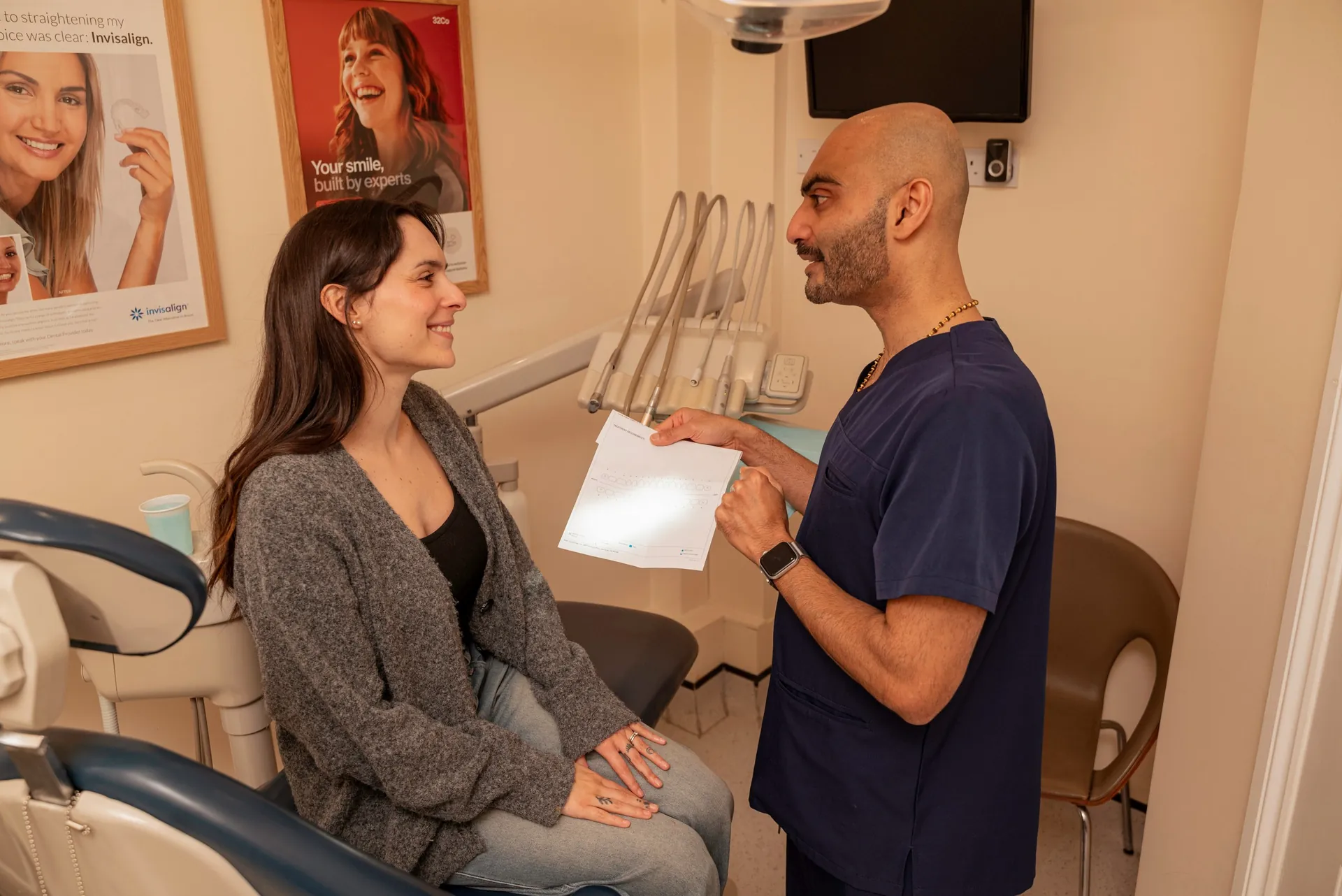
Retention follows a predictable two-stage rhythm, and naming it makes the commitment feel manageable rather than open-ended.
Stage one — the settling phase. For roughly the first six months after treatment, we typically ask you to wear retainers full-time: all day and night, apart from eating, drinking anything other than water, and cleaning your teeth. This is when teeth are most inclined to move, because the bone around them is still settling into its new position. Full-time wear through these months does the heavy lifting of stabilising the result.
Stage two — the long-term phase. After settling, most patients move to nights only, indefinitely. Nights-only wear is comfortable, invisible and easy to build into a routine — in before bed, out in the morning. For the great majority of people, that is enough to hold teeth steady for the rest of their lives. Our wider guide to Invisalign retention after treatment covers the same ground.
The exact schedule is tailored to your case, because some bites need longer in the full-time phase than others. You get a clear, personal plan at the end of treatment, not a generic instruction — and we say no to anything more elaborate than your case needs. What stays constant is the principle: the more consistently you wear your retainer, especially in those first months, the more reliably your smile stays put.

What happens if you stop — the relapse curve
It helps to be clear-eyed about consequences, because they are exactly what makes the habit worth keeping.
Relapse is rarely dramatic and almost never overnight. It is gradual. Skip your retainer for a few nights and you'll likely notice nothing. Skip it for weeks or months and teeth begin to creep — usually the lower front teeth first, because they are small-rooted and prone to shifting. Over a year or two with no retention, a noticeable amount of the original movement can return.
The frustrating asymmetry is that early relapse is easy to prevent and late relapse is hard to fix. If a retainer feels tight after a gap, that tightness *is* your teeth having moved slightly and the retainer trying to hold them — a signal to get straight back to consistent wear, not to give up. If teeth have drifted significantly, the remedy is usually a short further course of aligners (Invisalign refinement) — avoidable effort and cost. A minute's insertion each night is by far the cheaper path.
Vivera retainers — and where the cost actually goes
When people picture a retainer they imagine a bulky plastic plate. Vivera retainers are not that, and they are the option we most often recommend after Invisalign.
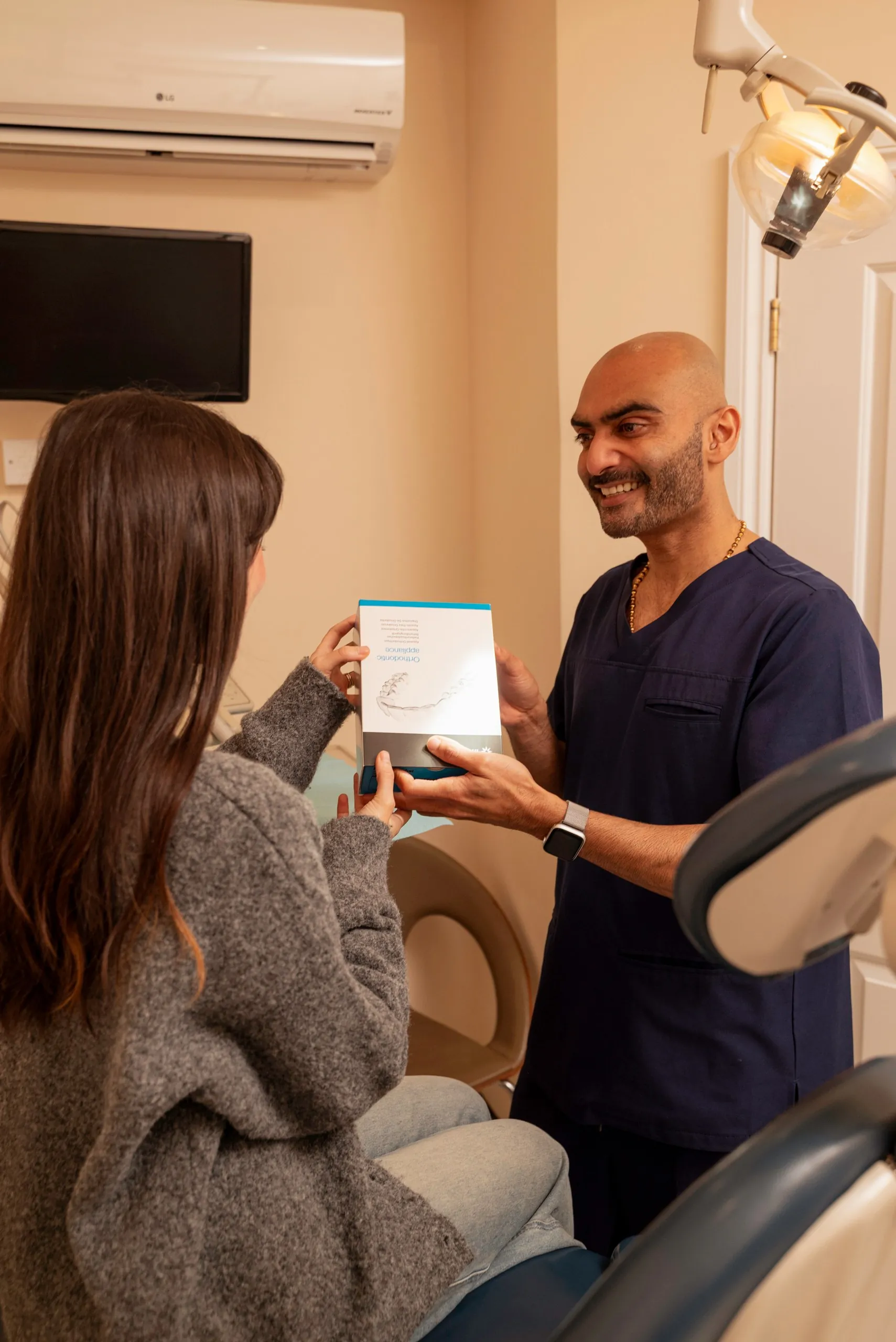
Vivera retainers are clear, custom trays made by Invisalign's own manufacturer from the same digital scan of your finished smile. They look much like a clear aligner — discreet, comfortable, barely noticeable — but they are made from a tougher material built for long-term holding rather than active tooth movement. Because they come from a precise scan of your actual result, they fit accurately and hold faithfully.
Their real advantage is durability. Vivera material is several times more rugged than standard retainer plastic, so a set lasts longer and resists the cracking and warping that shorten cheaper retainers' lives. They are usually supplied as a set of multiples, so you have replacements ready if one is lost or damaged. There are alternatives — a fixed bonded wire behind the teeth, or a simpler removable plate — and each has its place. We talk through the right choice for your case at the end of treatment rather than defaulting one option onto everyone.
On price, I believe in clarity, in line with CMA transparency expectations. Vivera retainers are quoted in writing with your treatment plan, depending on how many trays are supplied. What matters more than the number is *whether it is already in your plan*. Some Invisalign packages include retainers in the headline price; others charge separately. At Dental & Wellness London, retainers are set out in your written, costed plan before any commitment — no surprise bill at the end. Replacement sets later — a lost retainer, or a worn one — are quoted in writing in the same way. We will always tell you exactly what is and isn't included before you decide. The full package breakdown sits on our Invisalign cost page.
How long they last and when to replace them
Retainers are durable but not permanent, and planning for replacement is part of doing retention properly.
A set of Vivera retainers worn nightly typically lasts around two to three years before the material loses its grip or shows wear. Heavy grinders may go through them faster, since night-time clenching stresses the plastic; gentle wearers may get longer. Either way, a retainer is a consumable — budgeting for a fresh set every couple of years is realistic and keeps retention reliable.
Replace one sooner than its natural lifespan if it cracks, splits or warps, because a damaged retainer no longer holds teeth accurately and a poorly fitting one can even encourage movement. If a retainer suddenly feels loose or won't seat fully, get it checked. A small, predictable cost every few years is a modest insurance premium on a result you spent months — and significant money — achieving.
Caring for your retainers day to day
Looking after retainers is quick, and it shares almost everything with caring for the aligners themselves — our guide on cleaning Invisalign covers the same principles in full.
Clean them morning and evening. Rinse in cool water when you take them out, and brush gently with a soft brush and a little clear, unscented soap or a dedicated retainer cleaner. Then avoid the classic mistakes: never use hot water, which warps the plastic and ruins the fit; skip ordinary toothpaste, which is abrasive and scratches the surface into a cloudy, bacteria-trapping finish; and steer clear of coloured mouthwashes that stain. When they are out of your mouth, keep retainers in their case rather than loose or wrapped in a napkin — which is how most get binned or sat on. That's the whole routine: a few minutes a day and a sensible storage habit keep retainers clear, fresh and doing their job.
Frequently asked questions
How long do you have to wear retainers after Invisalign? For life, to keep your result. Most plans start with full-time wear — apart from eating and cleaning — for around the first six months, then move to nights only, indefinitely. Teeth drift back at any age without retention, so nightly wear becomes a permanent, low-effort habit that protects the work you have done.
What are Vivera retainers and are they worth it? Vivera retainers are clear, custom trays made by Invisalign's manufacturer from a digital scan of your finished smile, in a more durable material than standard retainers. They are discreet, fit accurately, and resist cracking. For most patients who have invested in Invisalign, a retainer made to the same standard as the treatment is a sensible way to protect the result.
How much do Invisalign retainers cost? Vivera retainers are quoted in writing with your treatment plan. At Dental & Wellness London we set out whether they are included before you commit. We set out exactly what is included in your written plan before you commit.
What happens if I stop wearing my retainer? Teeth gradually drift back, often starting with the lower front teeth crowding. A few missed nights rarely matter, but weeks or months without retention let noticeable movement return. If your retainer feels tight after a gap, your teeth have shifted slightly — get back to consistent wear. Significant relapse usually needs a further short course of aligners to correct.
How often do retainers need replacing? A nightly-worn set of Vivera retainers typically lasts two to three years before the material wears or loses grip. Grinders may need them sooner. Replace any retainer immediately if it cracks, splits or warps, since a damaged retainer no longer holds teeth accurately. Budgeting for a fresh set every couple of years keeps retention reliable.
Protect the result you have earned
Retention is the easiest and most important habit in your whole Invisalign journey — and we make it straightforward, with a clear personal schedule and retainers made to last. If you are finishing treatment, or considering Invisalign and want to understand the lifetime picture before you start, a consultation walks you through all of it honestly.
Invisalign consultation: free (45 minutes with Dr Vishal Patel · iTero scan + ClinCheck preview).
Call 020 8127 4567 or WhatsApp +44 7974 910222 (8am–7pm). Appointments Monday–Friday, 8am–7pm, by appointment at 222 Essex Road, Islington, London N1 3AP. Appointment-only — no Saturday clinic, no walk-in service. Rated 4.7★ across 300+ Google reviews.
Reviewed by Dr Vishal Patel · BDS Liverpool · MSc Aesthetic & Restorative Dentistry (Manchester) · GDC 103127 · Invisalign Diamond II Provider · AACD Member · twenty years in practice · fifteen thousand cases. Last reviewed 2026-06-04.