Invisalign before and after results vary by case complexity. Express cases refine minor front-tooth crowding; Unlimited cases correct fuller bites and alignment. Most visible change happens in the first four months, with detailing through months four to twelve. Results last when retainers are worn for life after treatment ends.
The before-and-after myth
Almost everyone searching "Invisalign before and after" is looking for the same thing: a gallery of other people's smiles, scrolled through as a way of guessing at their own outcome. It is the most natural instinct in the world, and it is also the least useful way to answer the question — for two reasons I want to be straight about before we go any further.
The first is professional. The General Dental Council restricts how we use individual patient experiences in marketing, and I think that restriction is right. We keep case examples — the photographs, the stories — for the privacy of the consultation, where they belong. The before-and-after that actually predicts your result is your own, generated from a scan of your actual teeth, and you will see it before you commit to anything.
The second is honest. A stranger's gallery tells you almost nothing about your case, because in orthodontics the outcome follows the case, not the brand on the box. What genuinely helps is understanding what kind of change Invisalign treatment produces, how it unfolds week by week, where it reaches its limits, and what makes it last. That is what this page gives you — written from the chair of a Diamond II provider, top 1% of UK Invisalign providers, who has planned more than fifteen thousand cases over twenty years.
The five layers of change — what Invisalign actually moves
Invisalign moves teeth in small, planned steps using a series of clear aligners. The "after" is not a different face; it is your own teeth brought into a planned position. It helps to separate that into five distinct layers, because most disappointment comes from expecting one layer to do another's job.
Alignment. Crowded, overlapping, or rotated teeth brought into an even arch. This is what most people are after, and the layer Invisalign delivers most predictably.
Spacing. Gaps closed or evened out.
Smile line. The curve your teeth make against your lip line, levelled and balanced. A subtle change with an outsized effect on how a smile reads.
Bite. In fuller cases, the way upper and lower teeth meet — an overbite, crossbite, or open bite improved. This is structural, not just cosmetic, and it is where restorative training earns its place: a bite corrected for optimal function ages far better than one corrected only for the photograph.
Arch shape. Where biomechanics allow, we plan with arch expansion where possible — gently widening a narrow arch rather than removing teeth to make room. This non-extraction method supports a fuller smile and more room for the tongue, and it is one reason we design with the long-term smile view rather than the front-tooth line alone.
What Invisalign does not change: the colour of your teeth (that is whitening), their shape or chips (that is bonding or veneers), or the underlying jaw position in severe skeletal cases. A realistic before-and-after separates alignment from those other things.
This matters because the most striking "transformations" online are usually combination cases — alignment plus whitening plus bonding — presented as if the aligners did all the work. They didn't. The aligners straightened the foundation; whitening lifted the colour; bonding rebuilt worn edges. Knowing which layer does what lets you plan honestly. Often the right sequence is Invisalign first, then whitening, then small finishing touches in bonding — each step building on the last. A before-and-after planned this way looks natural because it is built on a corrected foundation, not painted over a crooked one.
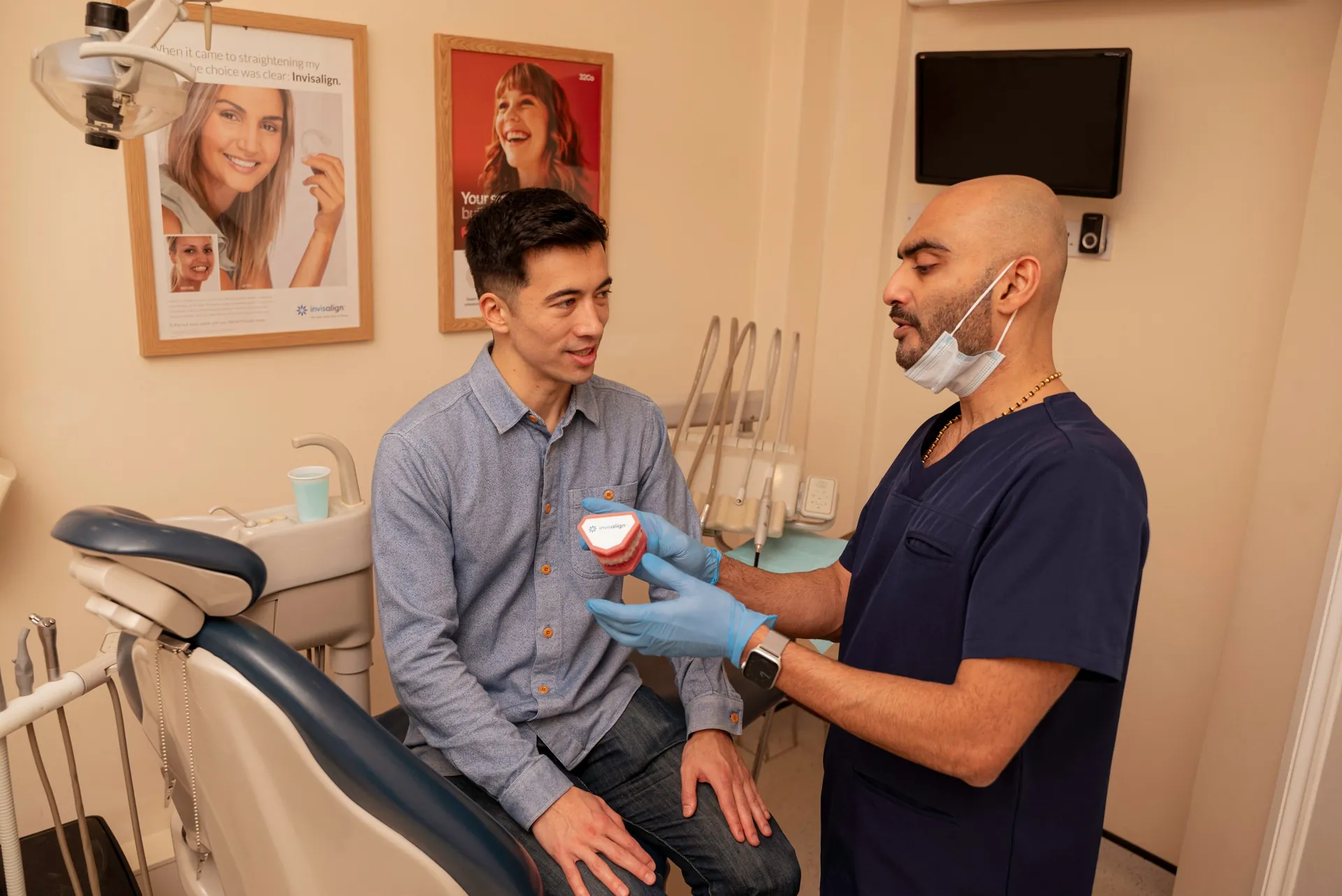
Typical results by tier — Express, Moderate, Unlimited
Because the outcome follows the case, the realistic scope of change tracks the treatment tier. These are typical patterns, not promises — your consultation and ClinCheck preview show your specific projected result.
Express. The before-and-after here is refinement, not transformation. Minor front-tooth crowding straightened, a small gap closed, slight relapse from childhood braces corrected. Real but subtle — the kind friends notice without knowing why your smile looks tidier. Around 5-10 aligners over 4-6 months, £2,200.
Moderate. A more visible change across the front teeth — moderate crowding resolved, a noticeably more even smile line, small bite issues improved. Up to 14 aligners over 6-9 months, £3,400. This is where many adults see the "after" they pictured.
Unlimited. The fullest scope — significant crowding, multiple rotations, and bite correction across both arches. The before-and-after difference is largest here because the starting complexity is greatest. Unlimited aligners over 12-24 months, £4,500–£4,900, and the tier where the planning depth of a Diamond II provider matters most.
The point worth holding onto: a bigger "after" is not better treatment — it reflects a bigger "before." A well-planned Express case is as much a clinical success as an Unlimited one. We say no often to over-treatment when a simpler tier delivers what the case actually needs, and we will never sell you a tier above your case to make the photograph look more dramatic.
The visible-change timeline — when you'll actually notice
The most common follow-up question is when. The honest pattern is consistent across most cases, and it falls into three phases.
Months 1-4 — the visible phase. Teeth move fastest at the start, when the largest planned movements happen. This is when most patients first see a real difference in the mirror, and when motivation is highest.
Months 4-12 — the detailing phase. The pace slows as treatment moves from big movements to fine detailing: closing the last small spaces, settling rotations, levelling the smile line precisely. Smaller week to week, but the detailing is what separates a good result from a great one. Patience here is normal, not stalling.
The refinement round. Most cases need one short additional set of aligners near the end to settle the final position. This is planned, not a sign anything went wrong — and at DWL one refinement is included on Express and Moderate, and Unlimited covers refinements as the case requires.
Predictability is the reassuring part. Your ClinCheck plan previews the projected end-position before you start, so you are not guessing at the "after" — you have already seen it.
It also helps to know what a normal mid-treatment stage looks like, because patients sometimes worry at the halfway point. In the middle of treatment, teeth are deliberately in transition: a gap may open temporarily before it closes, a tooth may look more prominent before it rotates into line. This is the plan working, not going wrong. Your 6-8 week reviews exist precisely to catch anything that genuinely needs correcting. The before-and-after that matters is the start point against the planned end point — not any single week in between.
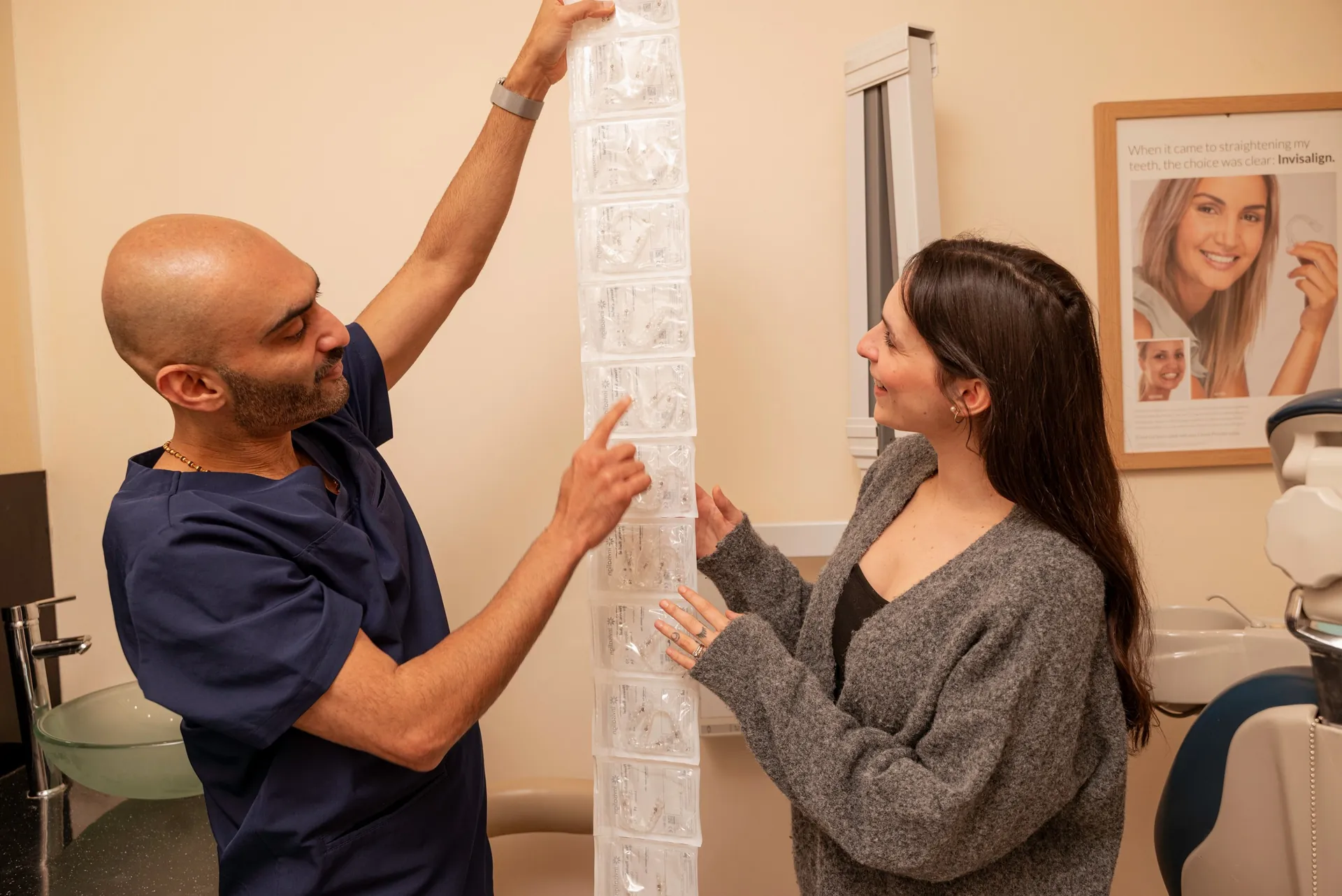
The four limits — what an honest before-and-after has to admit
Disappointing outcomes almost always come from mismatched expectations rather than failed treatment. So here is what aligners can't do.
Severe skeletal cases. Where the jaws themselves are significantly misaligned, aligners improve the teeth but not the underlying bone relationship. These cases may need fixed braces rather than clear aligners, sometimes with jaw surgery, and are referred to a specialist orthodontist. I will tell you honestly at consultation if your case sits here.
Colour, shape, and chips. Alignment is one layer. If your concern is also colour or worn edges, the complete before-and-after may combine Invisalign with whitening or bonding, sequenced so each supports the next. The cosmetic-restorative MSc framework asks the alignment question first.
Compliance. Invisalign works only when worn around 22 hours a day. The planned "after" assumes that wear. No clinician can plan around aligners left in a drawer.
Biology. Teeth move at slightly different rates between people. Two identical starting cases may finish a few weeks apart. The end-position is predictable; the exact timetable varies a little.
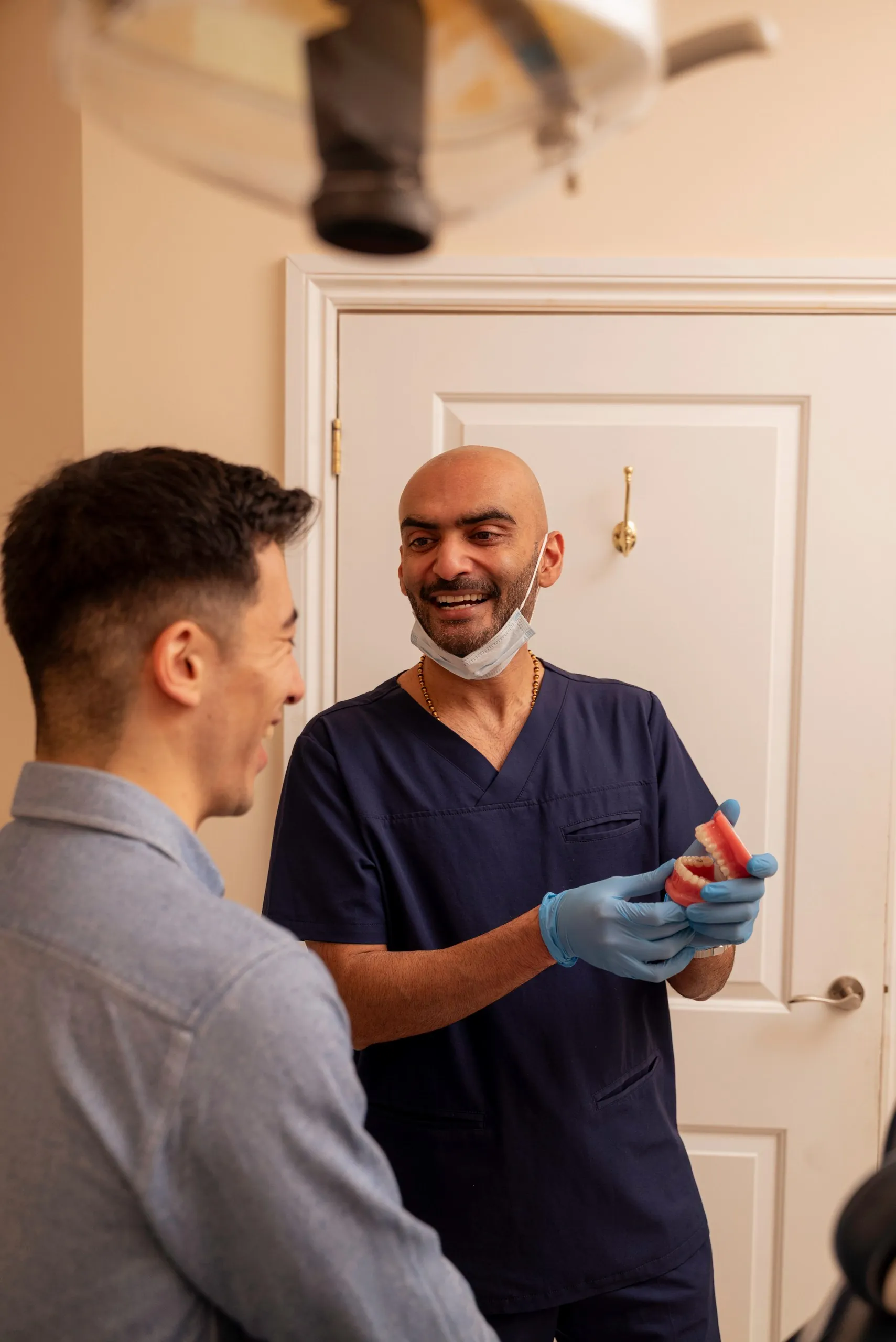
What makes the "after" last
The most overlooked part of any before-and-after is the part after the after. Teeth have memory. Left alone, they drift toward their old positions — slowly, but enough to undo a result over a few years.
Retainers are how you keep it. After Invisalign ends you wear retainers, typically full-time briefly, then nightly long-term. The honest message I give every patient: retention is for life, not for a year. A smile worth straightening is worth holding. This is one reason our Unlimited plan (£4,500–£4,900) exists — it includes multi-year aligner cover (full terms and conditions apply) for patients who want their result actively maintained. For most patients, disciplined nightly retainer wear does the job. Either way, the result you design is the result you keep.
It is also why I frame Invisalign as part of anti-ageing smile protocols rather than a one-off cosmetic event. A face narrows and a smile loses width over decades; a well-aligned, well-retained arch holds its shape and supports the soft tissue around it for far longer than an untreated one — part of how your teeth support your smile as you age. The honest before-and-after worth caring about is not the photo the week treatment ends. It is the comparison between your smile at fifty or seventy with alignment maintained, and where it would have drifted without it — the smile that remains youthful with time. That is the long-term smile view, and it is the lens I design every case through, to design with your future in mind rather than for today's photograph alone.
If you want to see your own projected before-and-after, it starts with a scan. The wider picture lives on our Invisalign cost and Invisalign in Islington pages, with related reading on how long Invisalign takes, Invisalign results, and Invisalign retainers.
Frequently asked questions
We keep individual case examples for the consultation rather than publishing them online, in line with professional standards on patient privacy. What you can see is your own projected before-and-after — a ClinCheck preview generated from a scan of your actual teeth, shown to you before you commit to treatment.
Most patients notice visible change within the first four months, when the largest planned movements happen. Months four to twelve are slower detailing work. The exact timeline depends on your tier and case complexity, but the early-change pattern is consistent across most cases.
The scope of change follows your starting point. A bigger "after" reflects a bigger "before," not better treatment. Your projected result is shown at consultation, so you will know what to realistically expect for your specific case before you begin, rather than comparing against someone else's.
Only if you wear retainers. Teeth drift back toward their original positions without retention, so the message we give every patient is that retainers are for life — typically nightly after an initial full-time period. The result you design is the result you keep, provided you maintain it.
Some severe skeletal cases need fixed braces or surgery, and some smiles need whitening or bonding alongside alignment for the complete result. We are honest about this at consultation and plan the right sequence rather than over-promising what aligners alone can do.
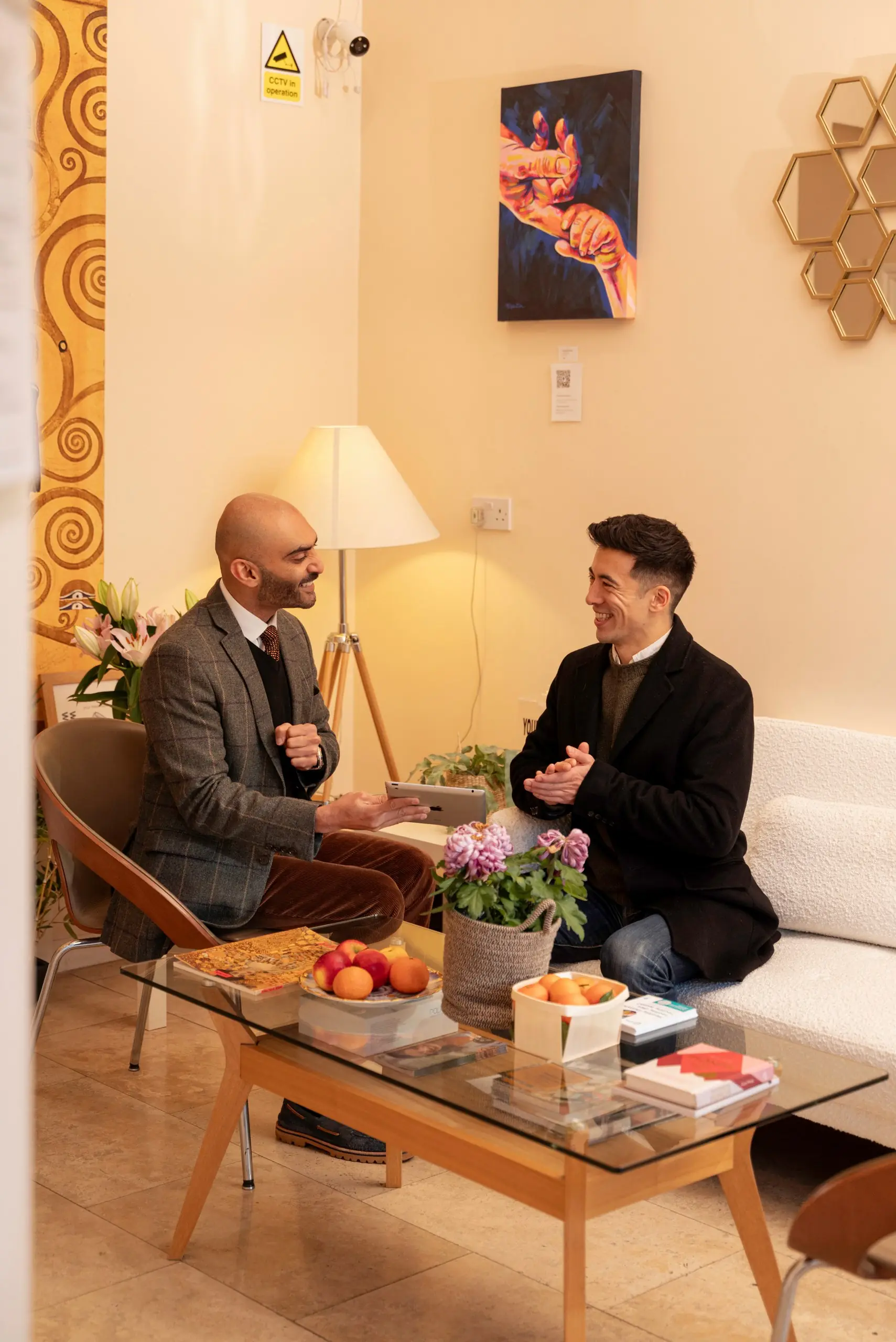
Book an Invisalign consultation to see your projected result
The most useful before-and-after is your own. At consultation we take an iTero digital scan, generate a ClinCheck preview of your projected end-position, recommend the tier your case actually needs, and write a costed plan before any commitment.
Invisalign consultation — free (with Dr Vishal Patel · iTero scan + ClinCheck preview). What's included: examination, scan, projected-result preview, written plan. What's not: the treatment itself, which is quoted by tier (Express £2,200 to Unlimited £4,500–£4,900), with 0% APR finance over 12 months via Tabeo, subject to status.
Call 020 8127 4567 or WhatsApp +44 7974 910222 during clinic hours. Appointments Monday-Friday 8am-7pm by appointment at 222 Essex Road, Islington, London N1 3AP. We do not offer Saturday or walk-in appointments. Rated 4.7 across 300+ Google reviews.
Reviewed by Dr Vishal Patel · BDS Liverpool · MSc Aesthetic & Restorative Dentistry (Manchester) · GDC 103127 · Invisalign Diamond II Provider · AACD Member · twenty years in practice · fifteen thousand cases. Last reviewed 2026-06-04.