The part of Invisalign the brochures leave out
Aligners move individual teeth beautifully but can't easily change how the upper and lower jaws relate to each other — a different job, done by rubber bands. Setting that expectation before treatment begins is part of honest scope, and it is one of the first things we cover when planning Invisalign at our Islington clinic.
Why aligners need help — the inter-arch problem
Moving teeth within an arch is one job; moving the bite between arches needs directional force a plastic shell can't generate alone. Elastics hook from upper to lower aligner and pull steadily over weeks, drawing the bite into alignment. Only cases involving a bite-relationship change need them.

When your case will — and won't — need them
Added for Class II or Class III malocclusion, crossbites, vertical adjustments, or specific movements aligners struggle with alone. Straightforward crowding or spacing within the arches, with a correctly meeting bite, usually won't need them — the ClinCheck plan determines this, discussed at consultation.
The two ways elastics attach
Precision cuts — small notches in the aligner edge, invisible from outside, used for lighter work. Bonded buttons — composite or metal buttons on the tooth for stronger anchor, visible at close range, used for heavier correction.
How to wear them
Duration — 20-22 hours daily, same as aligners. Removal — off for eating and anything but water. Changing — fresh bands every 12 hours, since latex loses elasticity quickly. First one to three days bring jaw fatigue; most settle within a week.
Common configurations
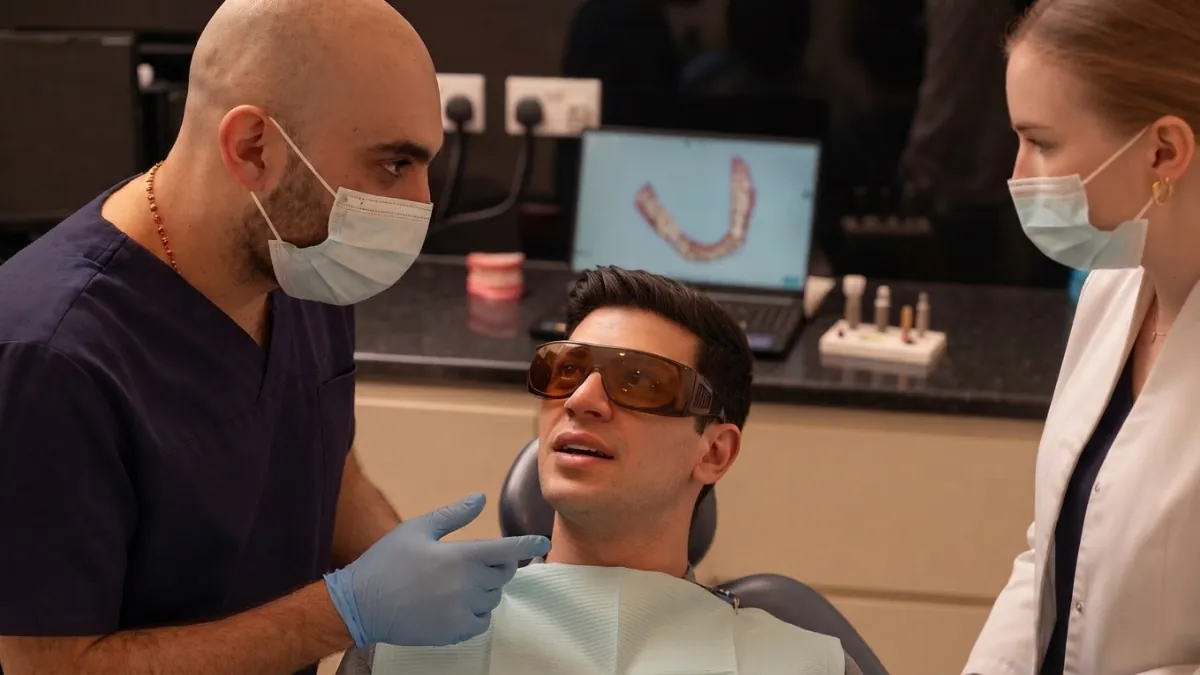
Class II — upper canine to lower molar, pulling upper back. Class III — upper molar to lower canine, pulling upper forward. Crossbite — applied across the bite. Triangle — three hook points for 3D movements. Vertical — closes or opens a bite.
When they're introduced — and when they stop
Usually introduced mid-treatment once initial tooth movements have positioned teeth for bite correction, continuing through active treatment and sometimes refinement, discontinued once retainers take over.
What they honestly feel like
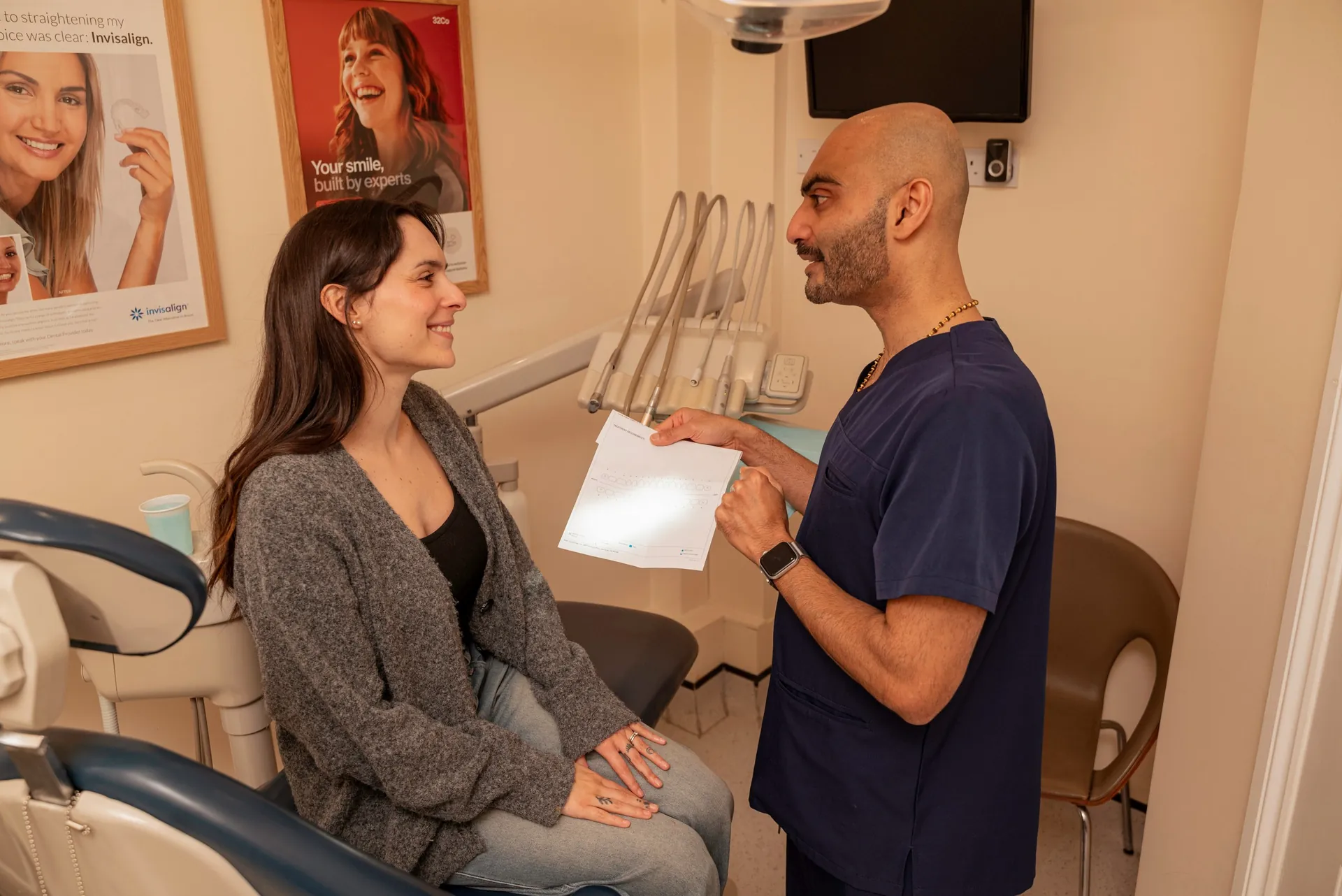
Days one to three: pulling sensation, jaw fatigue, possible mild headache. Days three to seven: adaptation well underway. Beyond a week: most patients barely notice. Significant discomfort beyond seven to ten days is worth a review.
When elastics aren't enough
For severe skeletal cases: fixed braces with elastics, combined orthodontic-surgical treatment, or accepting partial correction as a reasonable choice. This is assessed and discussed honestly at consultation.
Frequently asked questions
Why does my treatment need rubber bands when others don't? Added when your case involves bite correction, not standard for every plan.
How long will I wear them? A few weeks to most of active treatment (6-18 months), depending on correction needed.
What happens if I don't wear them? Bite correction slows or stops; poor compliance often needs refinement aligners.
Are they the same as braces elastics? Same latex bands, different attachment (precision cuts or buttons vs permanent hooks).
Can I be allergic to them? Latex allergy is uncommon but recognised; non-latex bands available.
Do they make Invisalign more visible? Somewhat, particularly button-attached cases, though still subtle.
Book a consultation
Your Invisalign consultation is free and includes an iTero scan and ClinCheck plan. Call 020 8127 4567 or WhatsApp +44 7974 910222. 222 Essex Road, Islington, London N1 3AP.
Reviewed by Dr Vishal Patel · BDS Liverpool · MSc Aesthetic & Restorative Dentistry (Manchester) · GDC 103127 · Invisalign Diamond II Provider · AACD Member. Last reviewed 2026-06-04.