Invisalign attachments are small tooth-coloured composite bumps bonded to certain teeth during treatment. They give the aligners grip to apply precise, controlled forces for movements like rotations and bite correction. Attachments are placed at the start of treatment, removed at the end, and are nearly invisible at conversational distance.
The part of Invisalign the brochures leave out
Patients arrive at their fitting appointment expecting clear, smooth aligners and nothing else, because that is all the marketing ever shows. Then small bumps appear on their teeth, and a perfectly reasonable worry follows: nobody mentioned these. It is one of the most common surprises in the whole treatment, and it is entirely avoidable with a straight explanation up front. So here is the honest version of what attachments are, why your case almost certainly needs them, and why getting them right is one of the quieter measures of an experienced provider.
The short version: attachments are not a complication, an upsell, or a sign your case is difficult. They are standard engineering — the thing that lets a sheet of clear plastic do work that used to need metal brackets and wires. See how we deliver Invisalign in Islington.

What Invisalign attachments are
Invisalign attachments are small bumps of tooth-coloured composite, bonded onto the surface of specific teeth during treatment. People also call them buttons or bumps. They are made of the same composite resin used for white fillings and edge bonding, colour-matched to your teeth, and shaped in moulds so each one sits exactly where the ClinCheck plan calls for it.
Their job is grip. A smooth aligner over a smooth tooth can tip that tooth easily, but it struggles with the harder movements — rotating a tooth, pushing it down into the bone or drawing it out, or correcting how the bite meets. An attachment gives the aligner something to push against, so it delivers a precise, controlled force in exactly the direction the plan needs. They are, in effect, tiny handles the aligner grips.
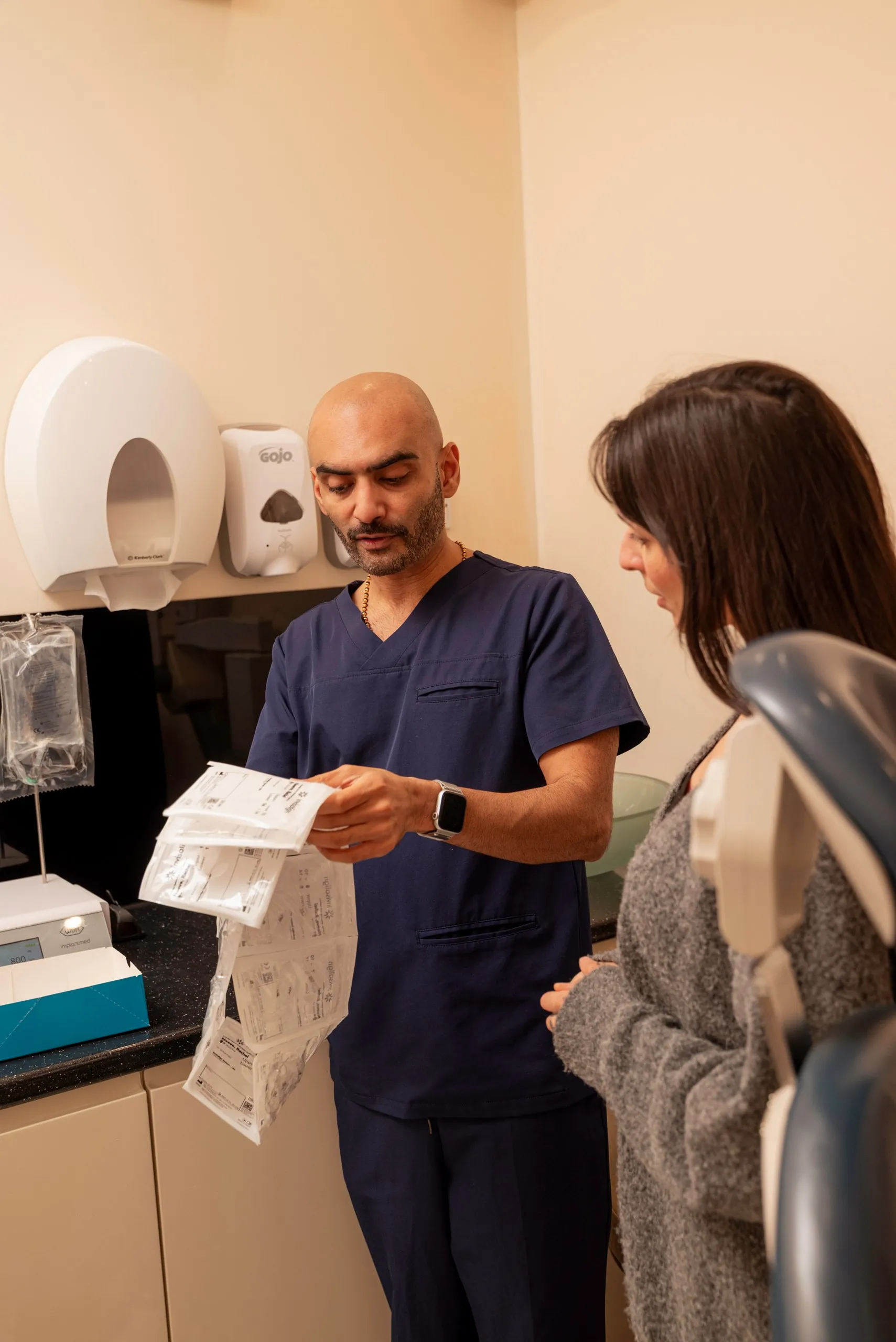
Why attachments matter — the four jobs they do
Without attachments, Invisalign would be limited to simple tooth-tipping. With them, modern aligners handle movements that once needed fixed braces. This is the framework worth understanding.
Rotations. A rotated tooth — especially a rounded one like a canine or premolar — is hard for a smooth aligner to grip and turn. An attachment gives the aligner a purchase point so it can rotate the tooth predictably.
Intrusion and extrusion. Pushing a tooth deeper into the bone, or drawing it further out, is some of the hardest movement in orthodontics. Attachments supply the leverage that makes it possible.
Bite correction. In fuller cases, attachments work alongside elastics to shift how the upper and lower teeth meet — the structural work that makes a result functional, not just cosmetic. This is where restorative training matters: we are aiming for optimal function and long-term functional outcomes, not only a straight front-tooth line.
Anchorage. Attachments hold some teeth steady while others move, so the planned forces land where they should.
The result is predictability. The reason a ClinCheck plan can preview your end position accurately is that the forces are controlled — and attachments are a large part of that control.
Do all cases need attachments?
Not always, but most do. Very simple cases — minor front-tooth tipping in an Express case, say — sometimes need few attachments or none. The more a case asks for rotations, bite correction, or vertical movement, the more it tends to use. The number varies widely: some cases have a handful, others have attachments on most teeth. There is no good or bad number. It simply reflects what your specific movements require, and your ClinCheck plan shows exactly where yours will go before treatment starts, so there are no surprises in the chair.
A point worth making firmly: attachments are a sign of capability, not complication. They are how aligners do work that once needed brackets and wires.
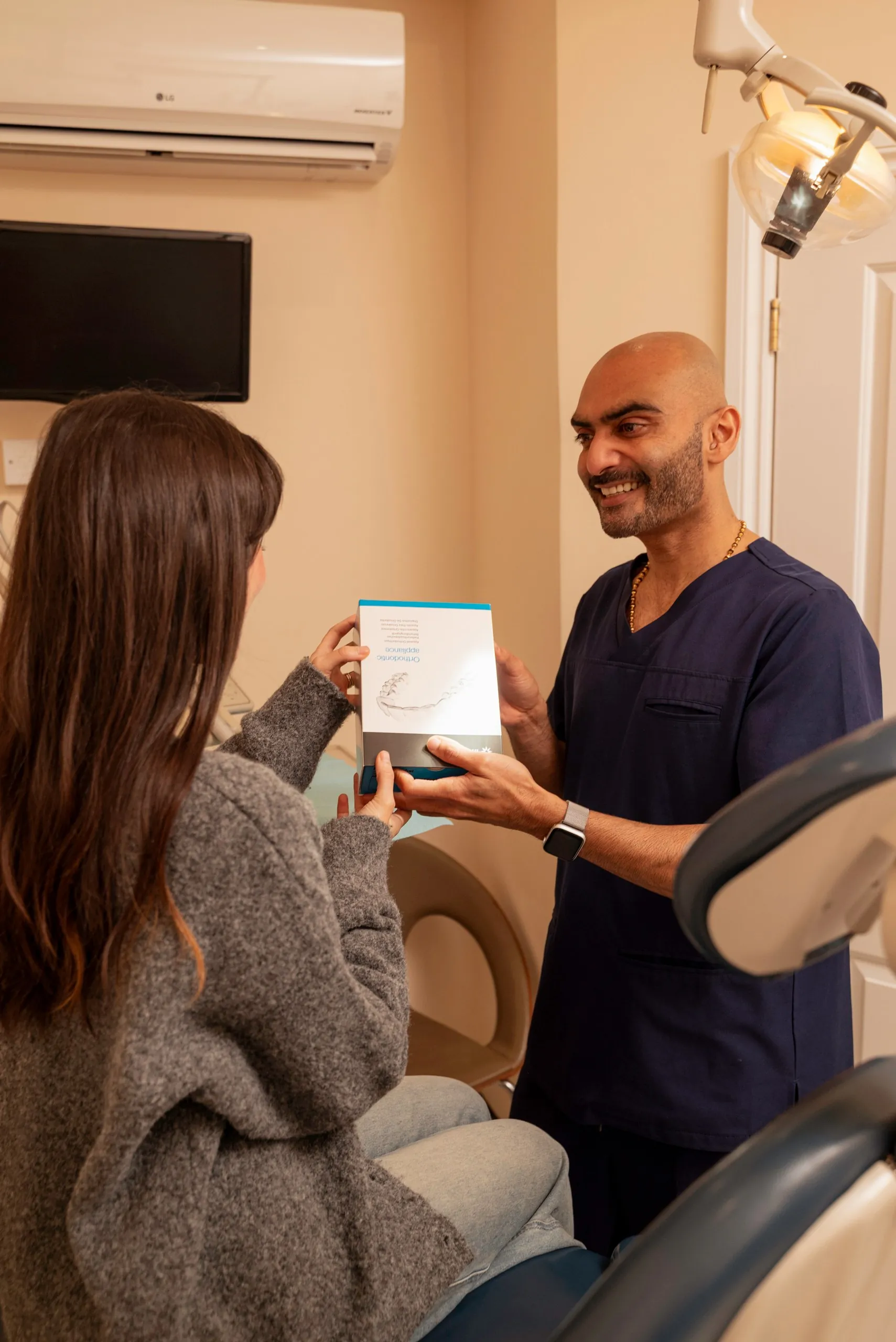
Why placement is craft, not a line on a price list
There is genuine skill here, and it is the part that separates one plan from another. The shape, size, angle, and position of each attachment determine how force reaches the tooth, and small differences in placement change how predictably a movement happens. An attachment in the wrong spot, or the wrong type chosen for a given movement, is a common reason a case drifts off plan and needs extra refinement.
This is judgement that does not show on a quote. It is exactly what separates a Diamond II provider planning 300-plus cases a year from a lower-volume clinic working off the default software suggestions. The aligners are identical; the attachment design behind them is not. Across fifteen thousand cases and twenty years in practice, you learn where the software's first suggestion holds and where it needs overriding — and that is the difference between a plan that tracks and one that stalls. We design with your future in mind, taking a long-term smile view rather than chasing the fastest-looking finish, because how your teeth support your smile depends on the bite being right, not just the front teeth being level.
What attachments actually look like
This is the question most patients really want answered, and the honest version is: visible up close, invisible at conversational distance.
Because attachments are colour-matched to your teeth, they blend in from a normal speaking distance of a metre or more. Most people you talk to will never notice them. Up close — in a mirror, a close-up photo, or to someone leaning in — you can see them as small clear or tooth-coloured bumps slightly catching the light. With your aligners in, they are even less noticeable, because the aligner sits over them. They show most in the brief moments your aligners are out, such as eating.
For context, they are far less visible than the fixed metal brackets they replace. A bracket-and-wire brace sits proud of the tooth in obvious metal or ceramic; an attachment is a small, flat, tooth-coloured bump flush against the enamel. The discretion you chose Invisalign for is preserved. Most patients who worried about attachments before starting report forgetting they are there within a week or two — the concern is understandable and common, and the lived reality is reassuringly minor. If complete invisibility matters for a specific event, it is worth raising the attachment plan at consultation; the placement is designed around the movements, but the conversation is always open.

When attachments are placed and removed
Placed at the start. Attachments go on at your fitting appointment. The teeth are gently cleaned, a small template made from your ClinCheck plan holds the composite in the exact positions, and the composite is set with a curing light. It is comfortable and quick — no drilling, no removal of healthy tooth, just composite bonded to the surface. This conservative, non-extraction, tissue-preserving approach is the same philosophy we bring to the whole plan: we work with arch expansion where possible and remove nothing we do not have to.
Worn throughout treatment. They stay on for the duration, working with every aligner. Occasionally one chips or pops off; if it does, it is a quick, routine re-bond at a review, not an emergency.
Removed at the end. When active treatment finishes, attachments are polished off. The composite is removed and the surface smoothed back to normal — no lasting mark, no damage to the enamel underneath. The teeth feel smooth again, often the same day you move into retainers.
Living with attachments
The reassuring part: they change daily life very little.
Eating. Because you remove your aligners to eat, attachments are exposed while you chew — but they are firmly bonded and built for it. You eat normally, taking aligners out for food and anything other than water.
Speaking. Attachments do not affect speech. The aligners themselves may prompt a very brief adjustment in the first days; attachments add nothing to that.
Cleaning — normal brushing, with attention. Clean your teeth as usual, brushing gently around each attachment so plaque does not gather at the edges. Flossing is unchanged.
Stain care — the one habit worth forming. Attachments are colour-matched composite, and like white fillings they can pick up surface stain from heavy coffee, red wine, tea, or smoking, which would make them more visible. The simple protection is to keep aligners out only for eating, drink staining drinks sparingly, then brush. Good cleaning keeps attachments discreet for the whole treatment.
Comfort. A new aligner can feel slightly tight against the attachments for a day or two as the teeth respond. That is the force working, and it settles quickly — pressure, not damage.
None of this is a real change to how you live. Attachments are a quiet piece of engineering doing precise work in the background, and most patients stop thinking about them within the first week.
For the wider picture, see our Invisalign cost and Invisalign London pages, with related reading on how long Invisalign takes, cleaning Invisalign, and Invisalign rubber bands.

Frequently asked questions
Are Invisalign attachments noticeable? They are nearly invisible at a normal conversational distance because they are colour-matched to your teeth. Up close — in a mirror or close-up photo — you can see them as small tooth-coloured bumps. With your aligners in, they are even less noticeable because the aligner covers them.
Do attachments hurt? No. Placing them involves no drilling and no removal of healthy tooth — composite is simply bonded to the surface and set with a light. A new aligner may feel slightly tight against the attachments for a day or two as the teeth respond, but that is normal pressure, not damage, and it settles quickly.
Do all Invisalign cases need attachments? Most do, but not all. Very simple cases sometimes need few or none, while cases with rotations, bite correction, or vertical movement use more. Your ClinCheck plan shows exactly where yours will go before treatment starts. The number reflects your specific movements, not how "bad" your case is.
Will attachments damage or stain my teeth? They do not damage the enamel — they are removed and polished off cleanly at the end of treatment. The composite itself can pick up surface stain from coffee, red wine, tea, or smoking, which would make it more visible, so good brushing and keeping aligners out only for eating keeps attachments discreet throughout.
Can attachments be removed early if I have an event? Attachments are integral to the planned tooth movement, so removing them early would interrupt treatment. If you have an important event, raise it at consultation or a review — the placement is designed around your movements, and there is always a conversation to be had about timing.
Book an Invisalign consultation
If you are weighing up Invisalign, the consultation is where your attachment plan — and everything else — becomes specific. We take an iTero digital scan, generate a ClinCheck preview showing exactly where attachments will sit, recommend the right tier, and write a costed plan before any commitment.
Invisalign consultation: free — with Dr Vishal Patel, including iTero scan and ClinCheck preview.
Call 020 8127 4567 or WhatsApp +44 7974 910222 during clinic hours. Appointments Monday to Friday, 8am-7pm, by appointment at 222 Essex Road, Islington, London N1 3AP. No Saturday or walk-in appointments.
Reviewed by Dr Vishal Patel · BDS Liverpool · MSc Aesthetic & Restorative Dentistry (Manchester) · GDC 103127 · Invisalign Diamond II Provider · AACD Member · 20 years in practice · 15,000 cases. Last reviewed 2026-06-04.