Invisalign vs braces: an honest comparison
Reviewed By
Dr Vishal Patel
BDS Liverpool · MSc Aesthetic & Restorative Dentistry Manchester · GDC 103127 · AACD Member · Invisalign Diamond II Provider · IFAAS (International Fellowship in Advanced Aesthetic Science) · Facial anatomy & cadaver course, Dr Ali Pirayesh, University of Amsterdam · Harley Academy foundation training in injectable aesthetics · IBSA-trained (Profhilo) · NeoStrata-trained (skin peels) · Lynton Lasers trained, incl. ONDA
Last Updated
October 3, 2026
Two different tools for two different jobs, and how we decide which one your case actually needs.
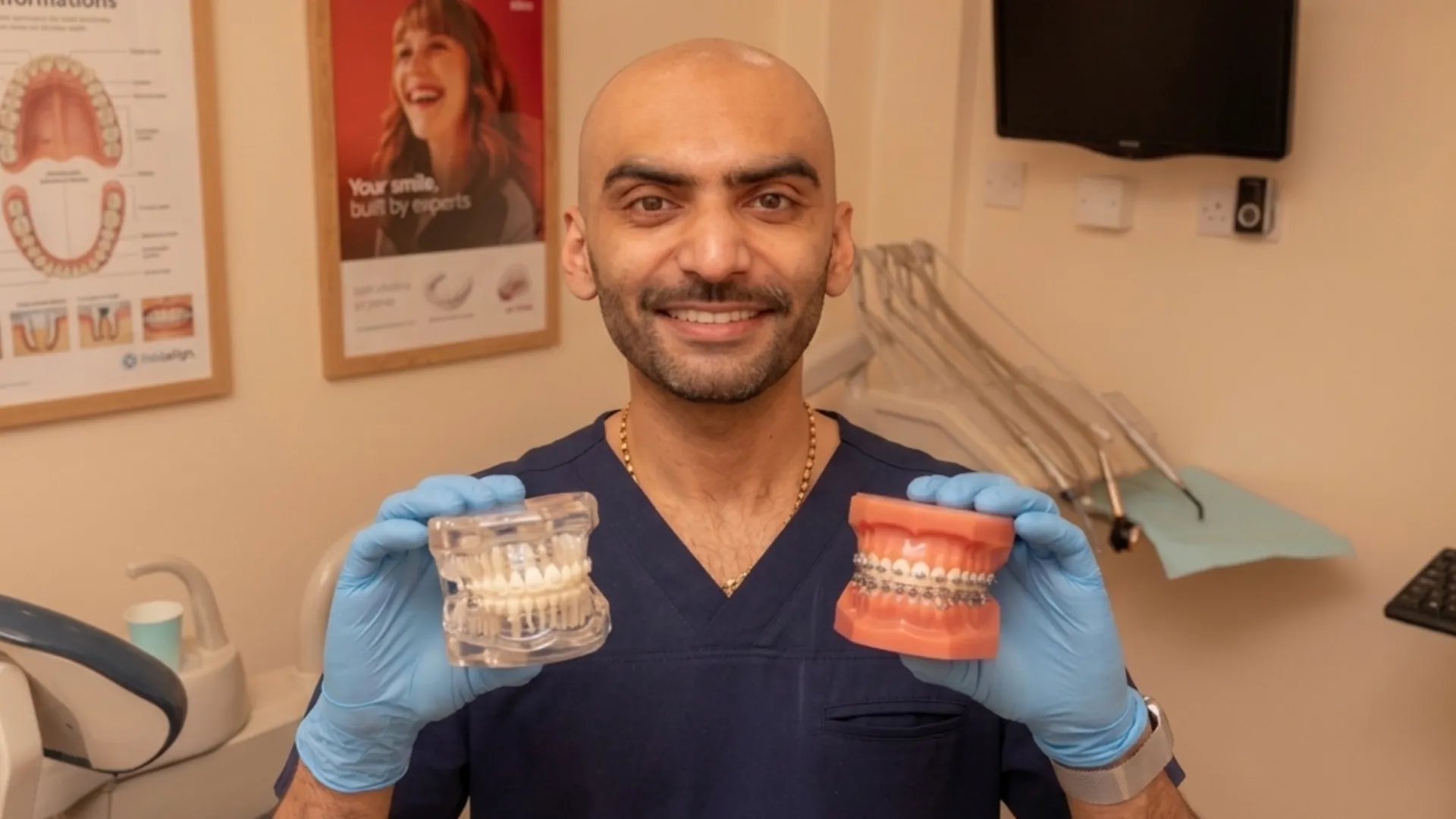
Invisalign vs braces at Dental & Wellness London in Islington is decided case by case by Dr Vishal Patel, an Invisalign Diamond II provider. Invisalign suits most adult crowding and spacing, typically over six to eighteen months, from £2,200. Fixed braces remain better for severe rotations and skeletal cases; we provide ceramic fixed braces here and refer skeletal cases to a specialist orthodontist. The orthodontic consultation is free.
Heading
- Invisalign suits most adult cases: mild-to-moderate crowding, spacing, simple bite issues
- Fixed braces remain better for severe skeletal problems, complex rotations, and compliance-uncertain cases
- The choice follows the case, not the patient's preference
- Invisalign Express £2,200 · Moderate £3,400 · Unlimited £4,500–£4,900; free orthodontic consultation
- Invisalign Diamond II provider Dr Vishal Patel assesses both pathways; ceramic fixed braces are provided here, and complex skeletal cases are referred to a specialist orthodontist
Aligners typically 3–18 months; braces vary by case

Most people arrive at Invisalign vs braces wanting a verdict. The honest answer is that the verdict question is itself the mistake. Invisalign and fixed braces are not competitors selling the same thing at different prices; they are different tools that suit different cases, the way a chisel and a plane both shape wood but neither replaces the other. At Dental & Wellness London the orthodontic consultation is free, and it is where that question gets answered for your teeth.
Both achieve the same fundamental result: teeth moved into better alignment and retained for life. They use different mechanisms to get there, with different trade-offs in cost, visibility, comfort, compliance and case range. The useful question is not which is better in the abstract but which is better for your case. This page gives you the framework to take that question into a consultation with the right expectations. For the wider picture of every route, including Spark and Six Month Smiles, start at our teeth straightening hub.
How each treatment actually works
Invisalign: removable clear aligners
Invisalign moves teeth with a series of custom thermoformed trays, each one shaped to push the teeth a fraction of a millimetre towards the planned position. Small tooth-coloured attachments bonded to selected teeth give the trays something to grip. The whole sequence is designed digitally in ClinCheck before treatment starts, so you see the planned end position before committing. Aligners are worn around 22 hours a day and removed for eating, drinking anything other than water, brushing and flossing.
Fixed braces: brackets and wires
Fixed braces use brackets bonded to each tooth and an archwire that is changed and adjusted at regular visits. Because they are attached continuously, they apply force around the clock and give the clinician fine control over three-dimensional movement, including roots. Brackets can be metal, tooth-coloured ceramic, or lingual (bonded behind the teeth). Our page on invisible braces compares the discreet fixed options with aligners.
Invisalign vs braces: the seven-axis comparison
Cost
At our practice Invisalign is offered in three plans: Express £2,200, Moderate £3,400 and Unlimited £4,500–£4,900. Where fixed braces are the right answer, tooth-coloured ceramic braces are provided here and quoted in writing after assessment; metal and lingual braces, and complex skeletal cases, are referred to a specialist orthodontist. Like for like, the difference is usually smaller than people expect; the deciding factor is rarely price alone.
Treatment time
For mild to moderate cases, aligners and fixed braces take broadly similar time, often six to eighteen months. Complex cases treated with fixed braces commonly take longer. In both, time depends on the movement required more than the appliance.
Case range
Invisalign now treats the majority of adult cases: crowding, spacing, rotations and many bite corrections. Fixed braces still have the wider range for severe rotations, large vertical movements, extraction space closure and skeletal discrepancies.
Comfort and lifestyle
Aligners are smooth plastic with no wires to catch the cheeks, and they come out for meals and important occasions. Braces cause more soft-tissue irritation early on and need food care, but there is nothing to remember to put back in.
Hygiene
Aligners come out, so brushing and flossing are normal. Braces trap food and plaque around brackets and need more careful cleaning, with a higher risk of white marks on the enamel if hygiene slips.
Predictability
Both are predictable in the right hands. ClinCheck lets you see the planned end position before you start. Fixed braces allow continuous mid-course adjustment by hand. Refinements with aligners are normal and are planned for.
Compliance
This is the axis that decides more cases than any other. Aligners only work while worn. For motivated adults, wear is rarely a problem. If you know you will struggle to keep them in for 22 hours a day, a fixed appliance is the more honest choice.
When Invisalign is the better choice
- Mild to moderate crowded teeth or spacing in an adult with healthy gums.
- Relapse after braces worn as a teenager.
- Patients who need their treatment to be discreet at work, or who play contact sports or wind instruments.
- People who want to keep normal cleaning and eating habits during treatment.
- Cases where seeing the planned result in advance matters, which ClinCheck allows.
Clear aligners are not limited to one brand. Our clear aligners page explains how the main systems compare, and the broader question of clear aligners vs fixed braces is set out on our clear aligners vs fixed braces comparison. For front-teeth cases, Inman aligners vs Invisalign explains when each is the right answer.
When fixed braces remain the better answer
- Significant skeletal discrepancies, where the jaws rather than the teeth are out of position.
- Severe rotations of rounded teeth such as lower premolars, and large vertical movements.
- Extraction cases that need large spaces closed with root control.
- Growth modification in younger patients.
- Patients who will not reliably wear a removable appliance.
In these cases we recommend ceramic fixed braces, which we provide here, or refer skeletal and growth cases to a specialist orthodontist, rather than stretching aligners beyond what the biomechanics support. Some bites, including a deep overbite, can go either way, and the scan and examination decide.
Who neither suits, and the honest no
Orthodontic movement needs healthy gums and stable bone. Active gum disease, untreated decay or very thin gum tissue means we treat those first or advise against movement. And sometimes the concern is cosmetic rather than positional: a single uneven edge may be better disguised with composite bonding, from £175 per tooth, than straightened over months. We say no when neither orthodontic option is right.
The process at our practice
- Free orthodontic consultation. Photographs, an iTero scan and an examination of bite, crowding type and gum health.
- Complexity assessment. We look at root angulation and skeletal pattern, with X-rays or a further imaging referral where needed.
- Compliance conversation. An honest discussion of whether aligners will be worn as needed.
- ClinCheck preview. Where Invisalign is appropriate, you see the planned end position before committing.
- Written plan or referral. A written Invisalign or ceramic braces plan with fee, or a referral to a specialist orthodontist for complex skeletal cases.
- Treatment and retention. Reviews every six to eight weeks, refinements as planned, and retainers to hold the result.
Results, longevity and aftercare
A well-planned result from either system can last for life, provided retainers are worn. Teeth have a lifelong tendency to drift, so every plan includes retention from the outset, usually a bonded retainer behind the front teeth, a removable night-time retainer, or both. Retainers are quoted in writing with the treatment plan. Results vary with the starting point and with wear.
Risks, and how we reduce them
The risks are similar for both systems: gum recession where teeth are pushed beyond the bone, minor root shortening, decay or white marks if hygiene slips, and relapse without retainers. We reduce them by checking gum and bone support before treatment, planning movement within the available bone, using light forces, keeping you on a hygiene schedule and planning retention before treatment starts.
Cost in Islington and London
The orthodontic consultation is free, including the iTero scan and ClinCheck preview. Invisalign Express is £2,200, Moderate £3,400 and Unlimited £4,500–£4,900; our Invisalign cost page explains what each includes. For treatment of both arches, see the full Invisalign cost (both arches). Ceramic fixed braces are quoted in writing after assessment; metal braces are quoted by the specialist we refer to. 0% APR finance over 12 months via Tabeo is available, subject to status.
Why patients bring this question to Dr Vishal Patel
Dr Vishal Patel (BDS Liverpool, MSc Aesthetic & Restorative Dentistry, Manchester, GDC 103127) has around twenty years in dentistry and over 15,000 cases behind him. He is an Invisalign Diamond II provider, in the top 1% of UK Invisalign providers, and an AACD member. He plans aligner and ceramic braces cases himself and refers complex skeletal cases to specialist orthodontist colleagues where that is the clinically right answer, so the recommendation follows the case rather than what we happen to provide.
His restorative training means the bite and the finish are planned with the alignment, and we take a long-term view: arch development where possible and a non-extraction approach where the biomechanics allow. Patients looking for local orthodontic care can read about Invisalign in Islington.
Questions people ask about Invisalign vs braces
Which is better, Invisalign or braces?
Neither is better in the abstract. Invisalign is usually the better choice for adults with mild to moderate crowding or spacing who will wear aligners reliably. Fixed braces are better for severe rotations, extraction cases, skeletal problems and uncertain compliance. An examination and scan show which group your teeth fall into.
Is Invisalign faster than braces?
For mild to moderate cases, treatment time is broadly similar, often six to eighteen months. Short courses such as Invisalign Express can finish within months for small corrections. Complex cases usually take longer with either system. Time depends on how far teeth need to move, not on the appliance alone.
Is Invisalign more expensive than braces?
It can be, but the gap is often smaller than expected. Invisalign at our practice is £2,200, £3,400 or £4,500–£4,900 depending on the plan. Ceramic fixed braces are quoted in writing after assessment, so the two can be compared for the same teeth. Finance over 12 months at 0% APR via Tabeo is available, subject to status.
Can Invisalign fix everything braces can?
Not everything. Aligners now handle most adult cases, including many bite corrections, but fixed braces retain an advantage for severe rotations, large vertical movements, extraction space closure and skeletal discrepancies. Where a case is beyond what aligners can do predictably, we recommend ceramic fixed braces or, for skeletal cases, refer to a specialist orthodontist rather than compromise the result.
Do braces work better than Invisalign for an overbite?
It depends on the cause. A dental overbite, where the teeth rather than the jaws are out of position, is often treated well with Invisalign, sometimes with elastics. A skeletal overbite may need fixed braces and, occasionally, a surgical opinion. The scan and examination at consultation distinguish between the two.
Further reading
- How Much Does Invisalign Cost in the UK? Full Price Breakdown
- Kissing with Invisalign — honest answers about intimacy during treatment
- What Does Invisalign Do? A Complete Guide
- Eating With Invisalign: The Honest Rules That Make It Easy
Getting here
Our practice is at 222 Essex Road, Islington, London N1 3AP, two minutes' walk from Essex Road station. Highbury & Islington is one stop away by train (see our Highbury page), buses 38, 56, 73, 341 and 476 stop on Essex Road, and Angel is a 15–20 minute walk. Many patients cycle or use Lime and Forest e-bikes; Dalston is about ten minutes away by bike. We are open Monday to Friday, 8am to 7pm, by appointment. For further reading, our blog on the key differences between Invisalign and braces goes into more detail.
Clear aligner advantages
When they outperform
Case-based approach
Which appliance suits you is decided at your scan and examination, not by preference alone; if fixed braces would serve your case better, Dr Vishal Patel will say so.
| Initial Consultation — free | Photographs, iTero 3D scan, examination, option set, written plan. The starting point for every case, at no charge. |
| Complexity Assessment — photography, 3D scan, bite exam | Evaluate crowding type, root angulation, skeletal pattern. Imaging referral if needed. Determines case range and suitability for aligners vs braces. |
| Compliance Forecast — honest patient discussion | For adults motivation typically carries; for teens we ask directly. Inconsistent wear compromises Invisalign outcomes, so this axis alone can decide the recommendation. |
| ClinCheck Simulation — where Invisalign appropriate | Digital preview of projected end-position shown before commitment. Provides predictability value for patients. Not offered for fixed-brace cases. |
| Fixed-Brace Pathway — when braces are the right answer | Ceramic fixed braces planned in-house for cases outside the Invisalign ceiling; complex skeletal cases referred to specialist orthodontist colleagues. Honest referral over attempting aligners where biomechanics don't support. |
| Whole-Health Context — airway and arch considerations | Plan alignment with long-term smile view, arch expansion where possible, non-extraction method. Design for how teeth support smile at fifty and seventy. |
| Honest "No" — when orthodontic treatment isn't right | Sometimes composite bonding alone delivers the cosmetic result, from £175 per tooth. We say no often and recommend alternatives when appropriate. |
Before and After


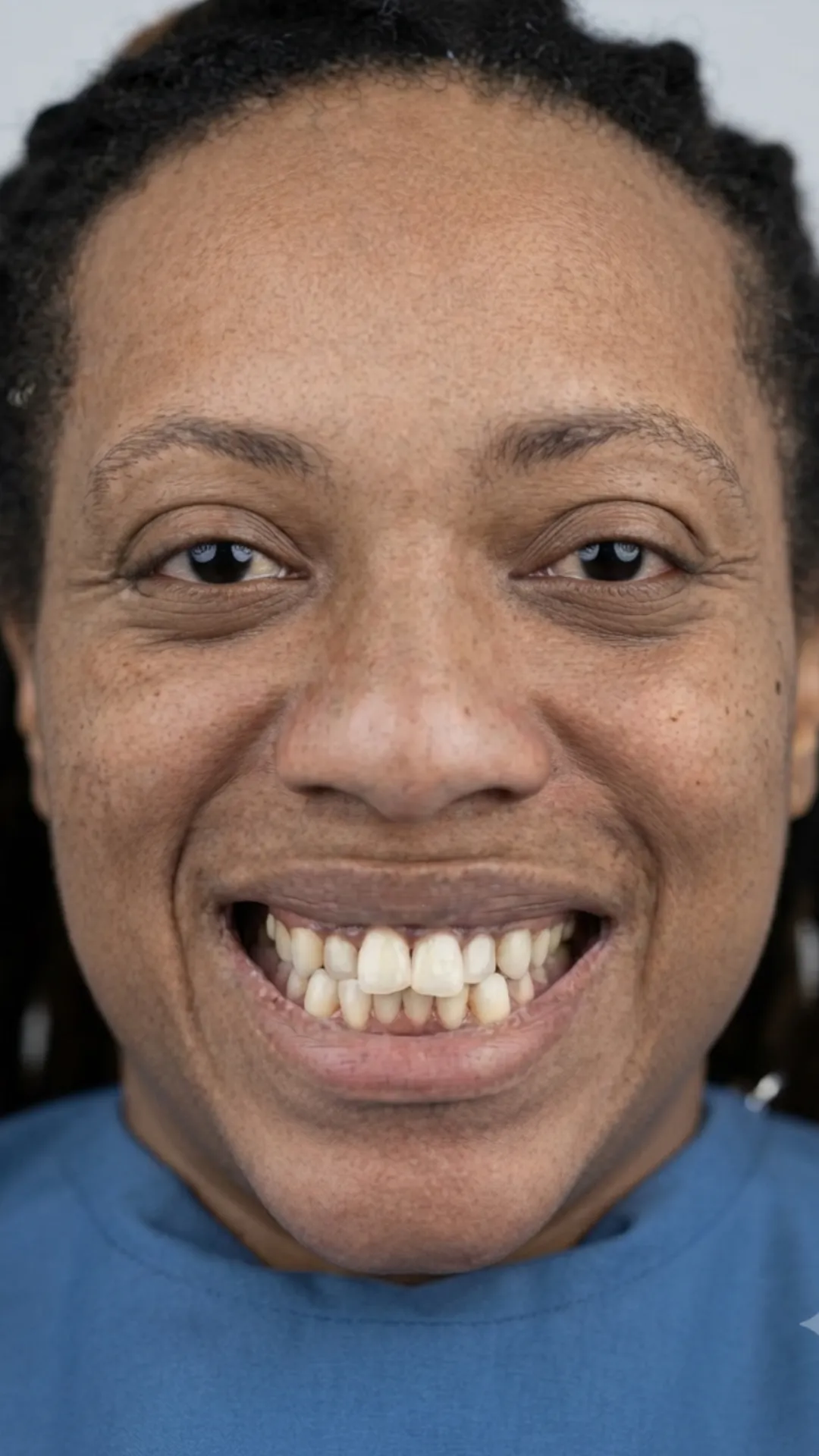
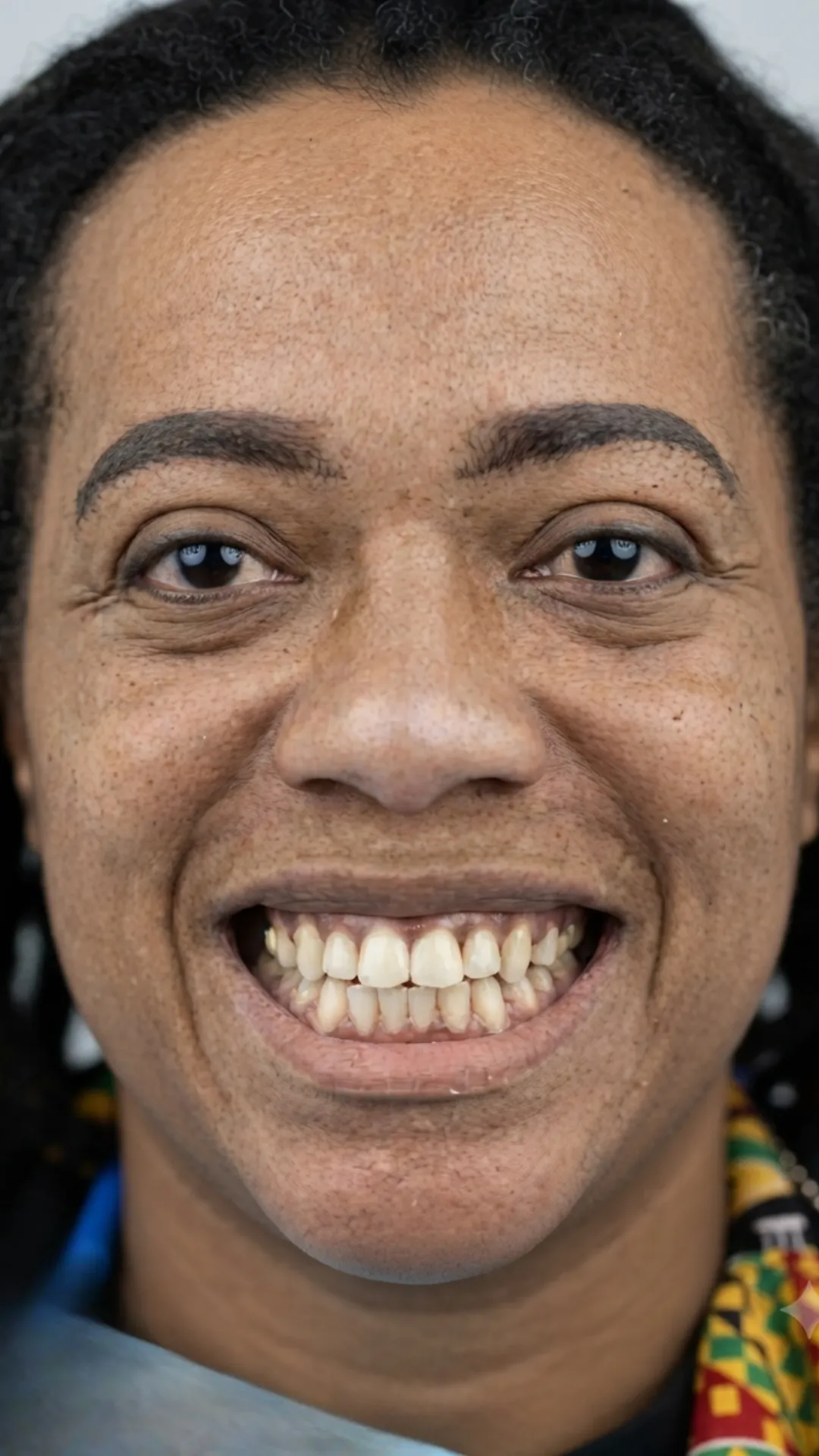
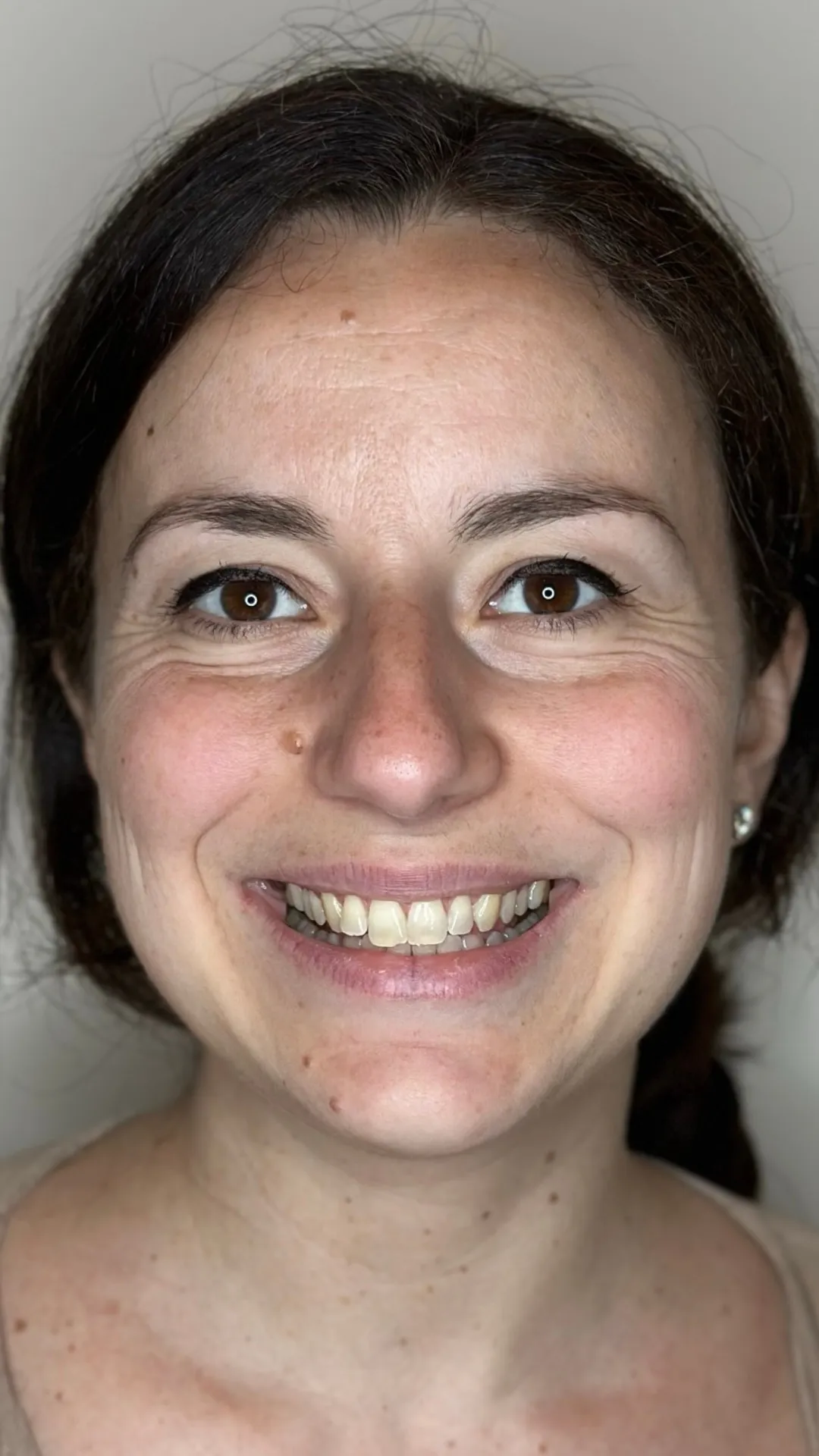
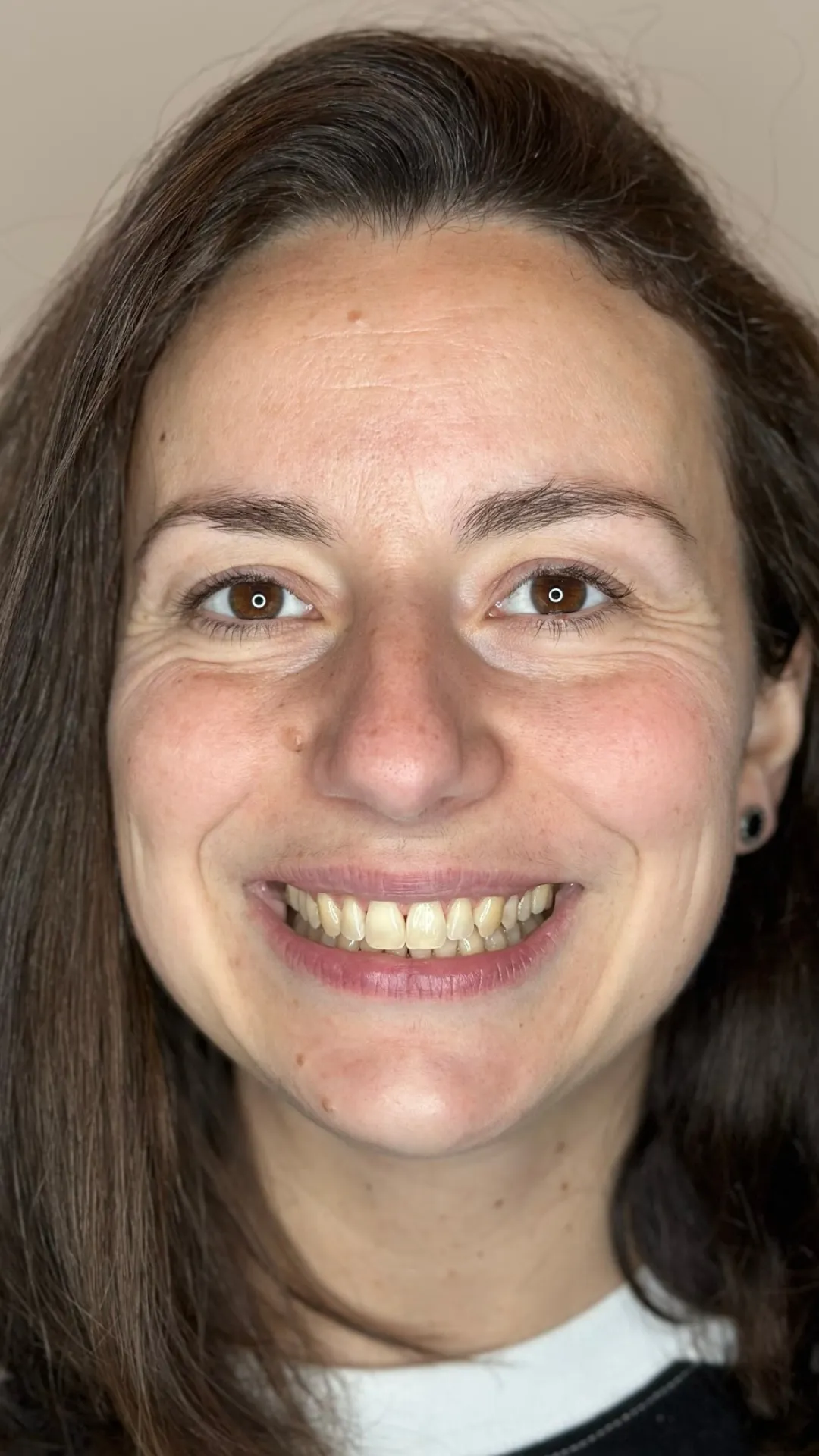
Our happy patients,
in their own words
Transparent pricing
Prices are set out below. Your written plan confirms the fee before any treatment begins.
| Treatment | DWL Price & Time Suitable For |
|---|---|
| Invisalign Express | £2,200 · a few months · minor crowding, small gaps, mild relapse |
| Invisalign Moderate | £3,400 · 6–12 months · mild-to-moderate |
| Invisalign Unlimited | £4,500–£4,900 · one to two years · complex or full-arch cases, aligners as the case requires |
| Fixed metal braces (specialist referral) | Quoted in writing by the specialist after assessment · one to two years · all case ranges |
| Fixed ceramic braces | Quoted in writing after assessment · one to two years · all case ranges, more discreet |
| Consultation | Free · iTero scan and ClinCheck preview · both pathways assessed |
| Tabeo finance | 0% APR finance over 12 months via Tabeo, subject to status |
0% APR finance over 12 months via Tabeo, subject to status.
Questions
people ask
If your question isn't answered here, call reception on 020 8127 4567 or email reception.
Is Invisalign as effective as braces?
For mild to moderate crowding, spacing and many bite corrections, Invisalign is as effective as fixed braces when aligners are worn around 22 hours a day. Fixed braces remain more capable for severe rotations, extraction cases and skeletal discrepancies. At consultation, Dr Vishal Patel, an Invisalign Diamond II provider, tells you which group your teeth fall into.
How much is Invisalign compared with braces in London?
At our Islington practice Invisalign Express is £2,200, Moderate £3,400 and Unlimited £4,500–£4,900. Ceramic fixed braces are provided here and quoted in writing after assessment; metal braces are provided by the specialist orthodontist we refer to. The orthodontic consultation, with an iTero scan and ClinCheck preview, is free, and 0% APR finance over 12 months via Tabeo is available, subject to status.
Which hurts more, Invisalign or braces?
Both cause pressure for a day or two after each new aligner or adjustment. Many people find aligners more comfortable because there are no brackets or wires to rub the cheeks and lips. Braces tend to cause more soft-tissue soreness early on. Persistent pain is not normal with either and should be checked.
Can I switch from braces to Invisalign?
Sometimes. If the remaining movement is within what aligners can do predictably, a case can be finished with Invisalign after braces are removed. It needs a fresh assessment, scan and plan, and coordination with the clinician who placed the braces. We discuss whether switching makes clinical sense at a free consultation.
Are braces better for teenagers than Invisalign?
Not always, but compliance matters more with teenagers. Aligners work well for many teens who wear them reliably. Fixed braces remove the compliance question and suit growth modification and complex bites. We discuss this openly with the teenager and a parent, and provide ceramic fixed braces where they are the better route, referring to a specialist orthodontist where growth modification is needed.
Do I need a retainer after Invisalign or braces?
Yes, after either. Teeth tend to drift throughout life, so retention is part of every plan from the start. Most patients wear a removable retainer at night, often with a bonded retainer behind the front teeth. Retainers are quoted in writing with the treatment plan, so the full cost is clear before you begin.
Where can I compare Invisalign and braces near Islington?
Our practice is at 222 Essex Road, Islington, London N1 3AP, two minutes from Essex Road station and one stop from Highbury & Islington. Buses 38, 56, 73, 341 and 476 stop on Essex Road, and Angel is a 15–20 minute walk. The orthodontic consultation is free. We are open Monday to Friday, 8am to 7pm (Tuesday from 9am), by appointment.
Send three Photos - get an honest answer with in a day.
Free Smile AssessmentInvisalign or braces: book a free assessment
A free orthodontic consultation with Dr Vishal Patel: iTero scan, an honest view of both options and a written plan. Call 020 8127 4567.
Contact US