Why orthodontic relapse happens
Causes include inadequate retention (historically time-limited), late mandibular growth into the 20s and 30s, wisdom teeth pressure, periodontal changes, and tongue/lip posture patterns.
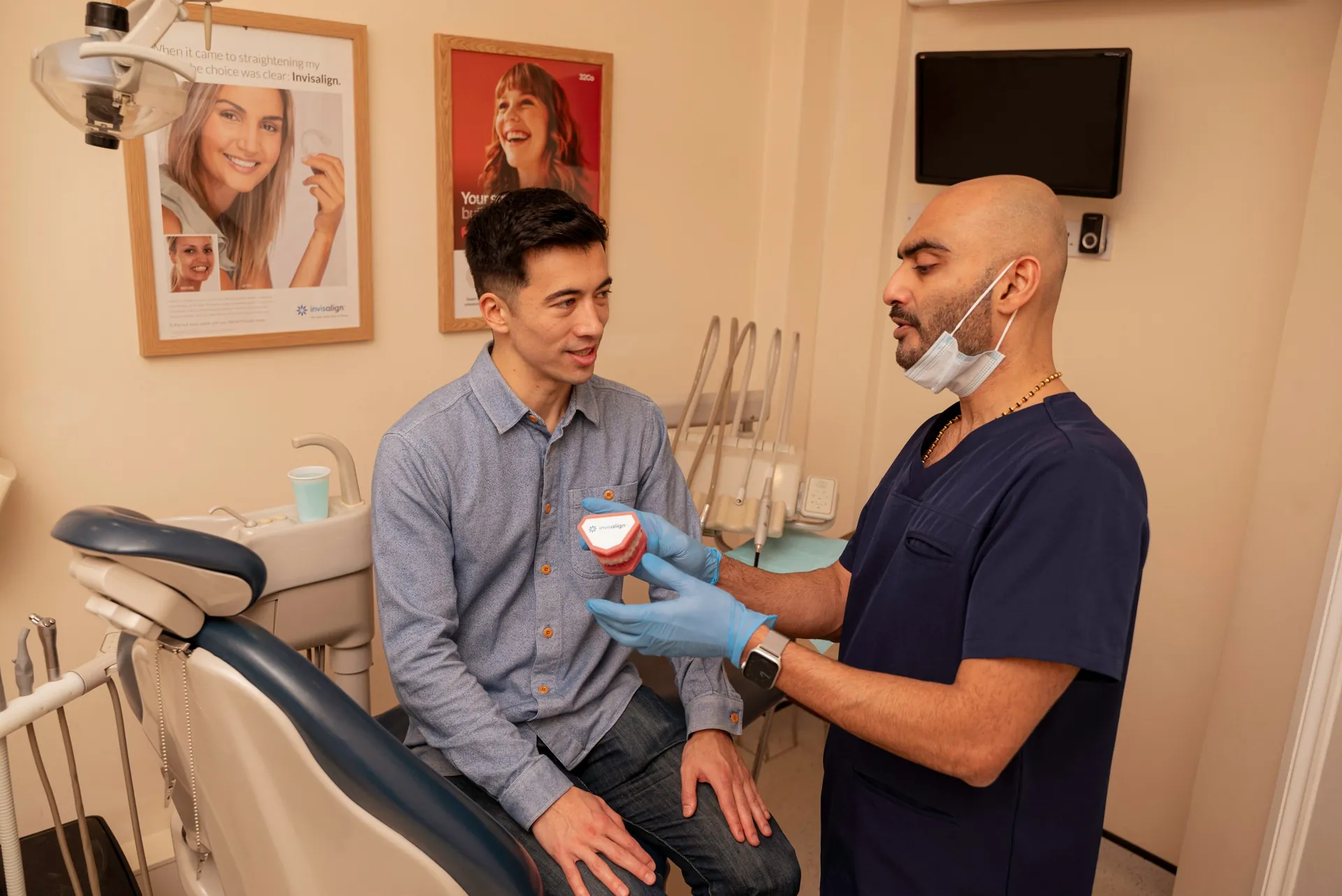
How Invisalign approaches relapse
Relapse cases often respond efficiently because teeth have moved before (bone and ligaments have memory of the previous position) and the movement scope is often smaller — typically affecting front teeth specifically. Our Invisalign page explains the process, and crowding that has returned is covered under crooked teeth.
Tier matching for relapse
Mild (1-3mm): Invisalign Express (£2,200) or Inman Aligners (quoted in writing after assessment). Moderate (3-5mm): Invisalign Moderate (£3,400). Significant: Invisalign Unlimited (£4,500–£4,900). Orthodontic consultations are free; see Invisalign cost for the full breakdown.

Long-term retention for relapse cases
Relapse cases need more rigorous retention than typical cases: Vivera full-time for 6 months (longer than standard), nightly indefinitely, and a bonded wire retainer is highly recommended.
The key is addressing the cause alongside fixing the position — treatment that improves position without addressing retention produces another relapse cycle. We cover this in more detail in Invisalign retention after treatment and Invisalign retainers after treatment.
By Dr Vishal Patel, BDS, MSc Aesthetic & Restorative Dentistry, GDC 103127, Invisalign Diamond II Provider. Last reviewed 2026-05-17.