Crooked Teeth — Causes and How to Straighten Them
Reviewed By
Last Updated
October 1, 2026
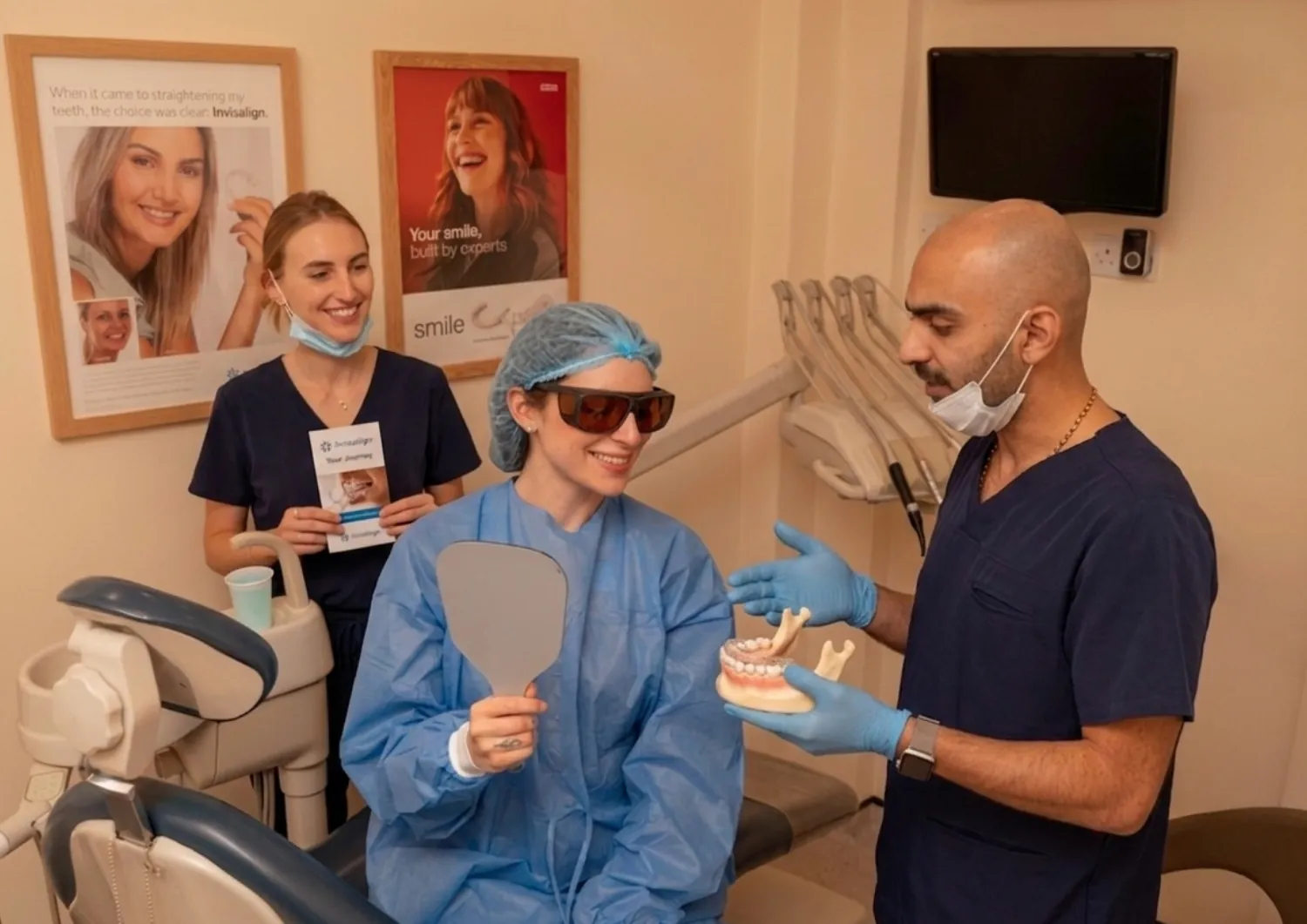
Why teeth grow out of line, what it means for long-term health, and how we approach straightening at our Islington practice.
Crooked teeth are teeth that sit out of the smooth curve of the dental arch: rotated, tipped, overlapping or displaced. They are common and usually developmental. What helps depends on severity: composite bonding or veneers for very mild cosmetic irregularity, clear aligners such as Invisalign for most adult cases, and fixed braces for complex movement. We assess each case in person at our Islington clinic.
Visible Signs & Symptoms
Crooked teeth (clinically, malaligned or malpositioned teeth) are teeth that sit out of the smooth curve the dental arch is meant to follow. A tooth may be rotated on its own axis, tipped forward or back, displaced inward or outward from the line of the arch, or overlapping its neighbour. Most people have some degree of it. What matters clinically is not whether a tooth is a fraction off line, but whether the misalignment affects how the teeth meet, how easily they can be cleaned, and how the smile will age.
Crooked, crowded and gappy are not the same
Three things are often bundled together. Crooked describes individual teeth out of alignment. Crowded describes an arch without enough room for the teeth it holds, one of the more common reasons teeth end up crooked; our page on crowded teeth covers it in detail. Gappy describes the opposite, more space than the teeth need, covered on our gappy teeth page. A single mouth can show all three in different regions, and we record each separately because they respond to different mechanics.
Signs you may notice
- Front teeth that overlap, turn or sit forward of their neighbours
- A lower front tooth that has drifted out of line in adult life
- Spots where floss catches, shreds or never reaches cleanly
- Food packing between particular teeth
- Chipping or flattened edges on one or two teeth that take more load than the rest
- A bite that does not close evenly, or feels different from one side to the other
- Feeling self-conscious when smiling or in photographs
Misalignment is common, and it is usually developmental rather than the result of anything a patient did wrong. Severity, not presence, is what determines whether it needs addressing.
Clinical Root Causes
Crookedness is almost always multifactorial. These are the main contributing forces.
Genetics
The single largest factor. Tooth size and jaw size are inherited semi-independently, so a person can inherit a smaller jaw from one parent and larger teeth from the other. The resulting mismatch is not something childhood care would have prevented. Patterns of overbite, underbite and arch shape also run in families.
Childhood habits and tongue posture
Prolonged thumb or finger sucking beyond the age at which the adult front teeth erupt applies sustained light force to the developing arch, and sustained light force is exactly what moves teeth. Tongue position matters too: at rest, the tongue against the palate supports the upper arch from within. Habitual mouth breathing drops the tongue low and forward and removes that support during the years the palate is widening. We explore this link on our page about mouth breathing and jaw development.
Early loss of baby teeth
Baby teeth hold space. When one is lost early to decay or a knock, neighbouring teeth drift into the gap and the adult tooth beneath erupts wherever it can, often out of the arch. This is one of the few partly preventable causes.
Narrow arches
Where the arch is narrower than the teeth require, teeth rotate, overlap and displace to fit. This is why we look at arch width, not only the position of individual teeth. Our narrow smile page covers it in depth.
Trauma and change in adult life
A blow to the mouth can displace a tooth directly. Separately, teeth continue to move throughout life: lower front crowding that appears in the thirties or forties, in a mouth that was straight at eighteen, is a well-recognised pattern. Gum disease, tooth loss and grinding all accelerate that drift.
Are crooked teeth a health problem?
Sometimes crooked teeth are a health concern, and often they are not. It depends on degree. Mild misalignment, such as a slightly rotated side incisor, is a cosmetic matter for most people and does not need treating on health grounds. We say so regularly in consultation.
Moderate to severe misalignment is different:
- Cleaning. Overlapping and rotated teeth create surfaces a brush and floss cannot reliably reach. Plaque left there demineralises enamel and inflames the gums.
- How the teeth meet. An uneven bite loads individual teeth with forces they were not shaped for. Over years this shows as wear, chipping, gum recession on the overloaded tooth and sometimes cracked cusps.
- Jaw and muscle discomfort. Some patients with significant malocclusion report jaw or facial muscle pain. The evidence linking the two is mixed, and straightening is not a reliable treatment for jaw pain, but it is worth assessing.
- Confidence. Not a clinical finding, but a legitimate reason to seek treatment.
When to be seen
Book an assessment if a tooth has started to move in adult life, if you notice new gaps or crowding, if teeth are chipping or wearing unevenly, or if areas bleed when you brush. A tooth that becomes loose, or a change in alignment after a knock to the mouth, should be checked promptly. Drift in adulthood can be a sign of gum disease, which is covered on our gum disease page. Misalignment can only be properly assessed in person, with a clinical examination and radiographs where needed.
Treatment options by severity
We think in three broad bands. Where you fall determines the sensible starting conversation, and the right answer is sometimes to leave things as they are.
Mild: cosmetic correction
Where one or two teeth are slightly out of line, the bite is sound and the concern is purely appearance, composite bonding can build up or reshape the visible surface of a tooth in tooth-coloured resin, usually without removing healthy enamel. Veneers can camouflage mild irregularity where bonding is not enough, though porcelain veneers involve some enamel preparation, which is a permanent decision. The trade-off is plain: camouflage changes appearance, not position. If the cause is a crowded or narrow arch, the tooth is no easier to clean afterwards.
Moderate: clear aligners
Most adult crookedness sits here. Invisalign clear aligners move teeth in small planned increments over months and handle rotations, tipping, mild to moderate crowding, spacing and a good deal of arch development. They are removable, which is both their advantage and their limitation: they work only while worn, and around 22 hours a day is the requirement.
Severe: fixed braces
Where teeth need substantial root movement, or the underlying jaw relationship is significantly off, fixed braces remain the more capable tool. When that is the case we say so at assessment and refer you to a specialist orthodontist. A minority of severe cases involve a jaw-size discrepancy that appliances alone cannot resolve; these need specialist surgical opinion, and we arrange that referral rather than treat beyond what is appropriate. Our comparison of Invisalign and braces sets out the differences.
What happens at DWL
Alignment is planned by Dr Vishal Patel, who holds an MSc in Aesthetic & Restorative Dentistry and is an Invisalign Diamond II provider. Assessment includes a clinical examination, photographs and an iTero digital scan, from which we build a ClinCheck plan showing the proposed tooth movements. We check gum health first, because teeth should not be moved through inflamed gums. If you are local, see our page on Invisalign in Islington.
How we choose
We take a long-term smile view: how the teeth will look and function at fifty and seventy, not only at the end of treatment. We favour arch expansion where possible and a non-extraction method, developing the arch rather than removing healthy teeth, though extraction is sometimes genuinely necessary and we will say so. Where breathing history is relevant, we plan in an airway-conscious way; this is a planning consideration, not a treatment claim. Every result needs lifelong retention.
Cost
- Invisalign consultation with iTero scan: free
- Dental examination: £65
- Composite bonding: £175 simple, £350 complex, per tooth
- Composite veneers: £350–£500 per tooth; porcelain veneers: £750–£1,500 per tooth
- Invisalign Express £2,200, Moderate £3,400, Unlimited £4,500–£4,900
You receive a written, itemised plan before agreeing to anything. 0% APR finance over 12 months is available. Results vary between patients.
We are at 222 Essex Road, Islington, N1, two minutes from Essex Road station. Buses 38, 56, 73, 341 and 476 stop on Essex Road, and many patients arrive by bike or on Lime and Forest e-bikes.
Further reading
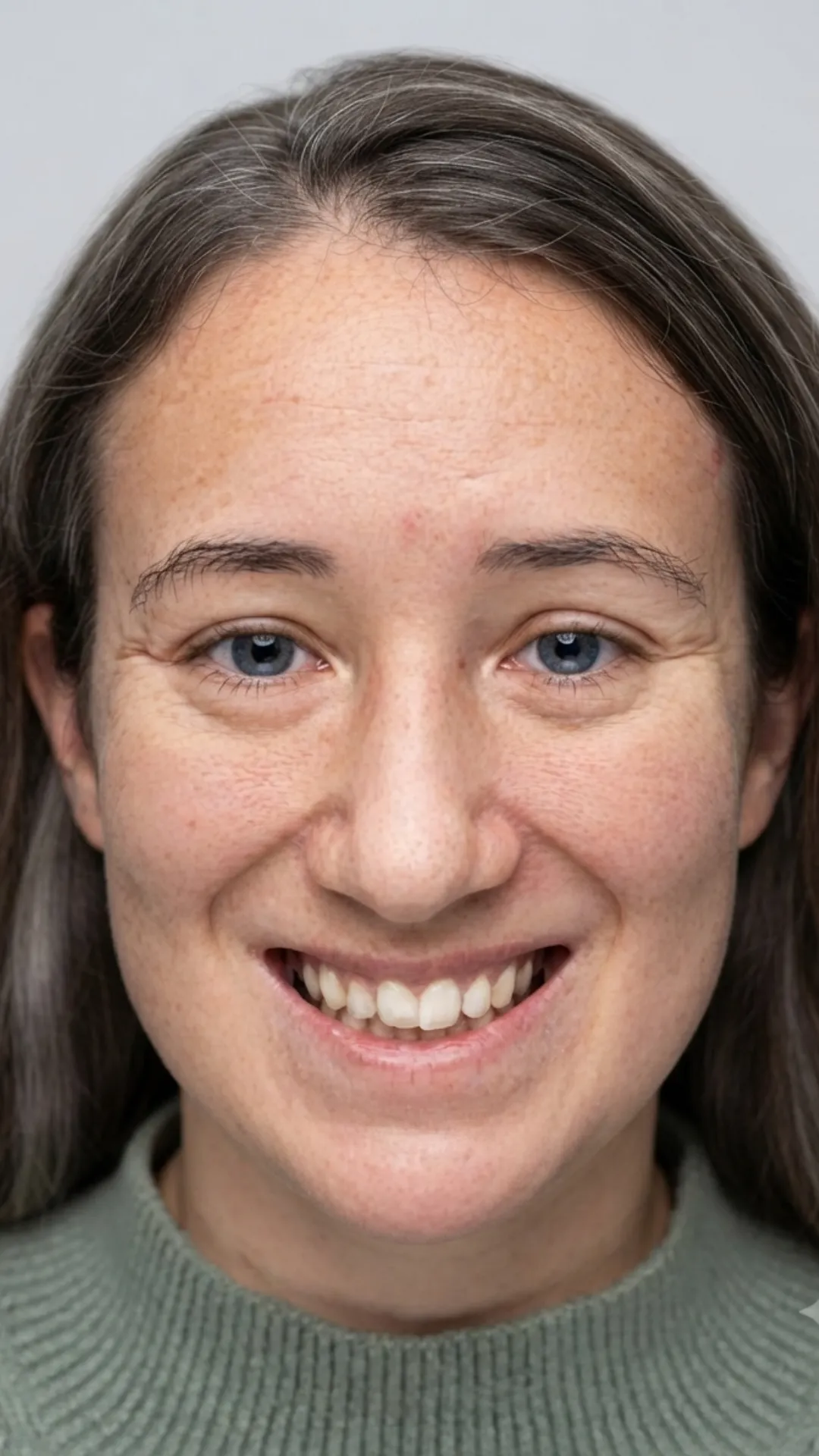
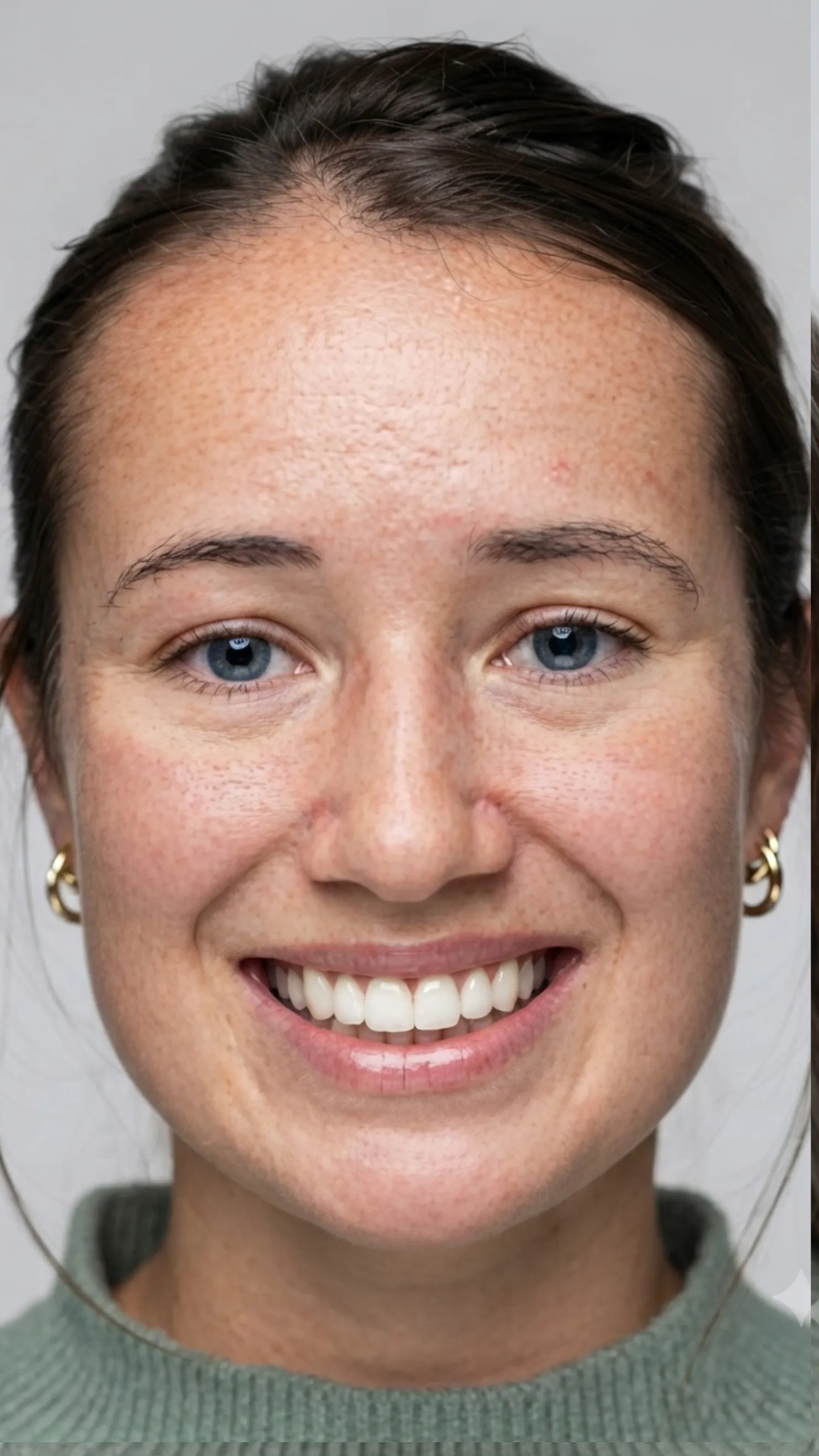
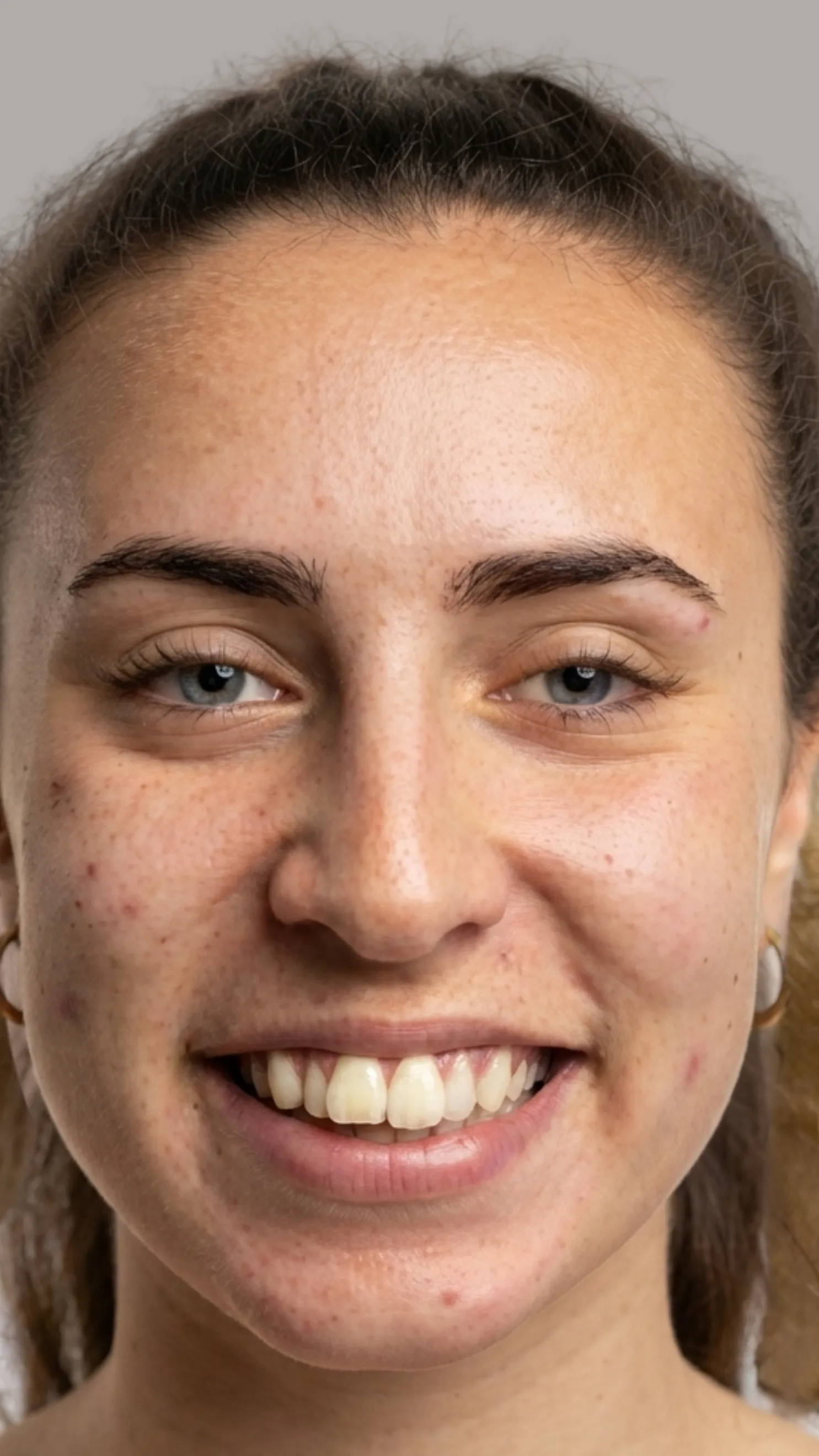
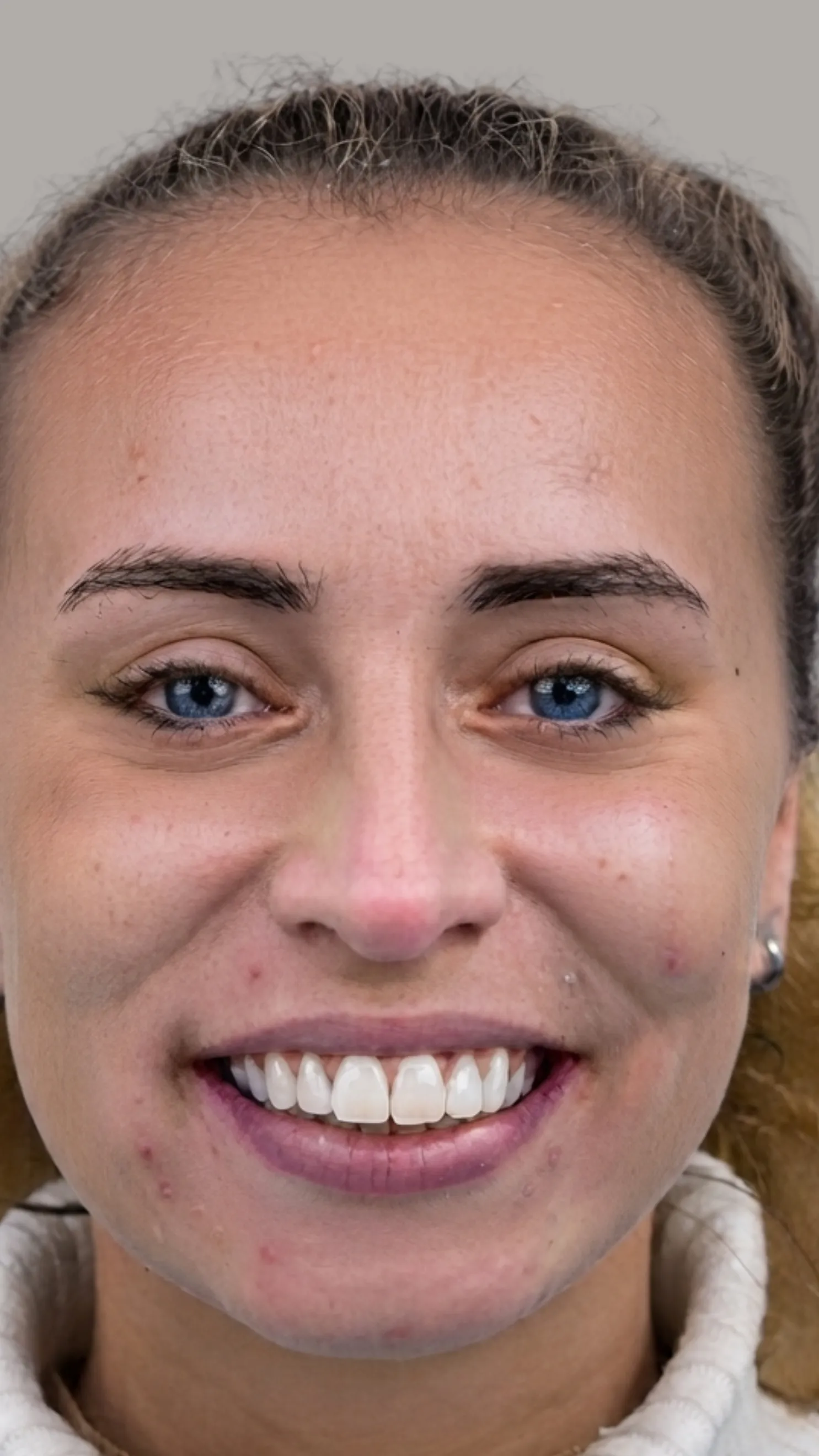
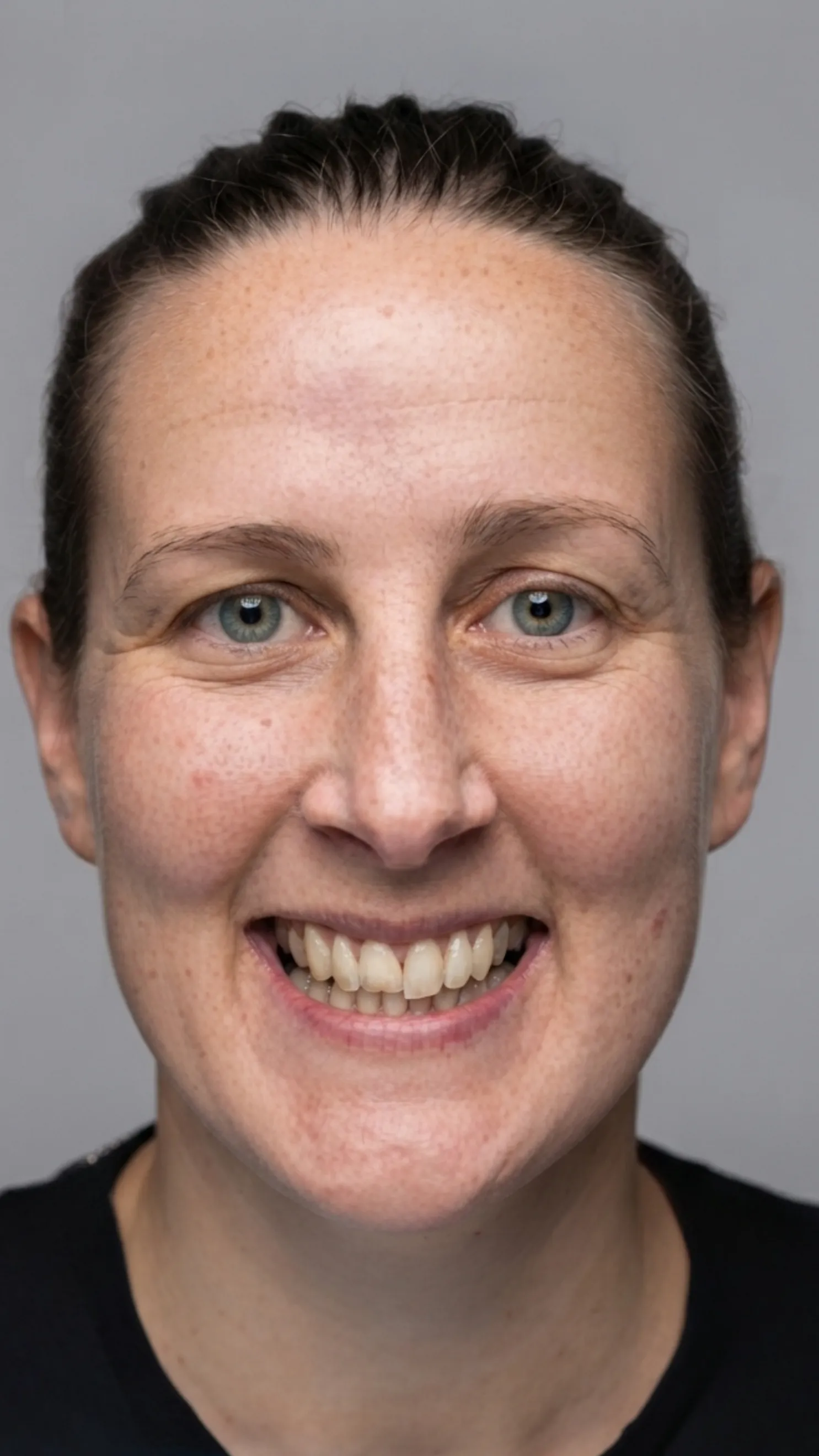
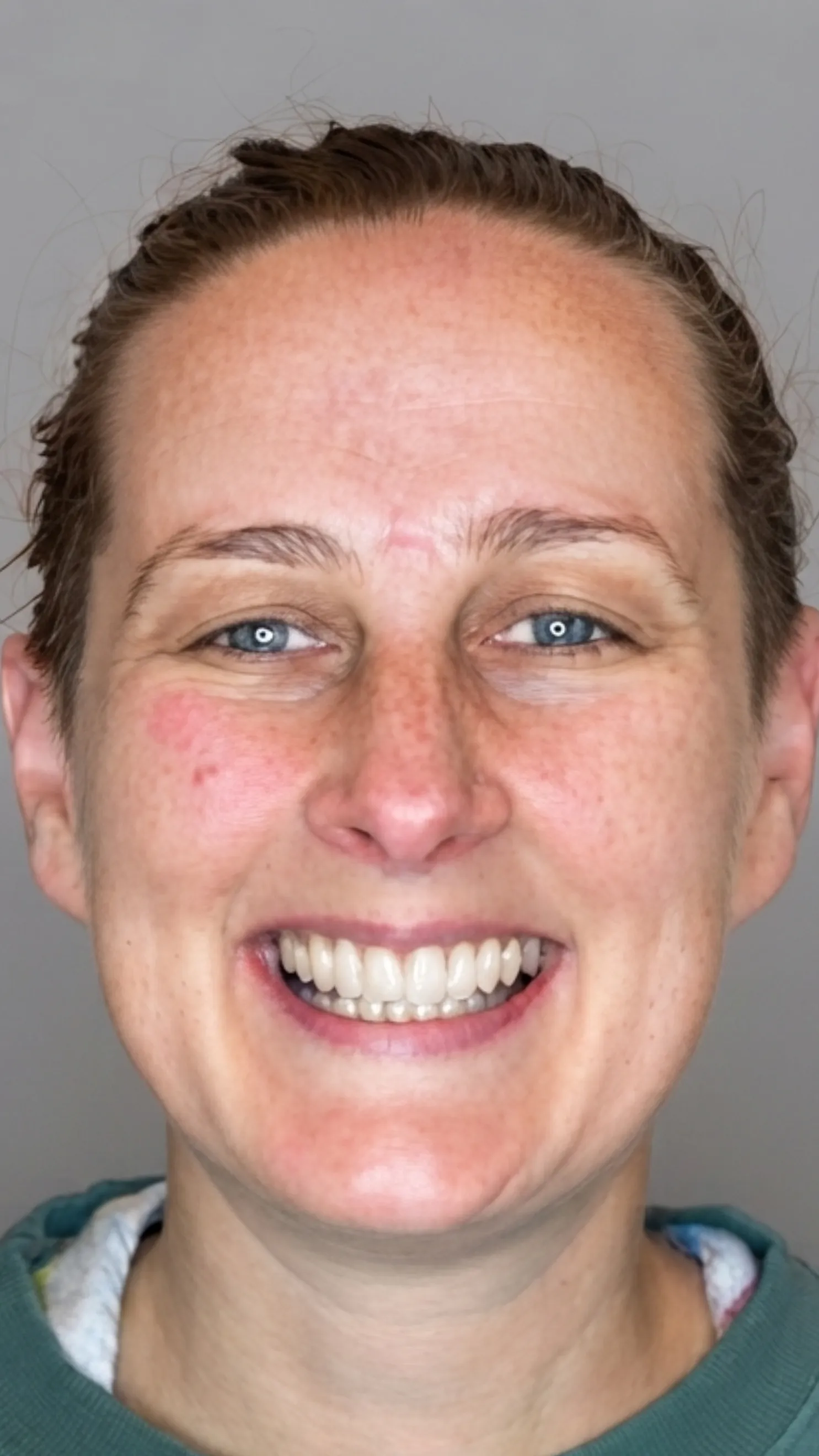
Send three Photos - get an honest answer with in a day.
Free Smile ASssessmentFrequently asked questions
If your question isn't here, call reception on 020 8127 4567 or book a free discovery call.Text Link
View all FAQs →Can I get composite bonding with crooked teeth?
For mild crookedness — yes, bonding can mask small irregularities by reshaping the contour. For significant crowding, Invisalign first is the better answer.