Gappy teeth (diastema) — treatment options when you want change
Reviewed By
Last Updated
October 1, 2026
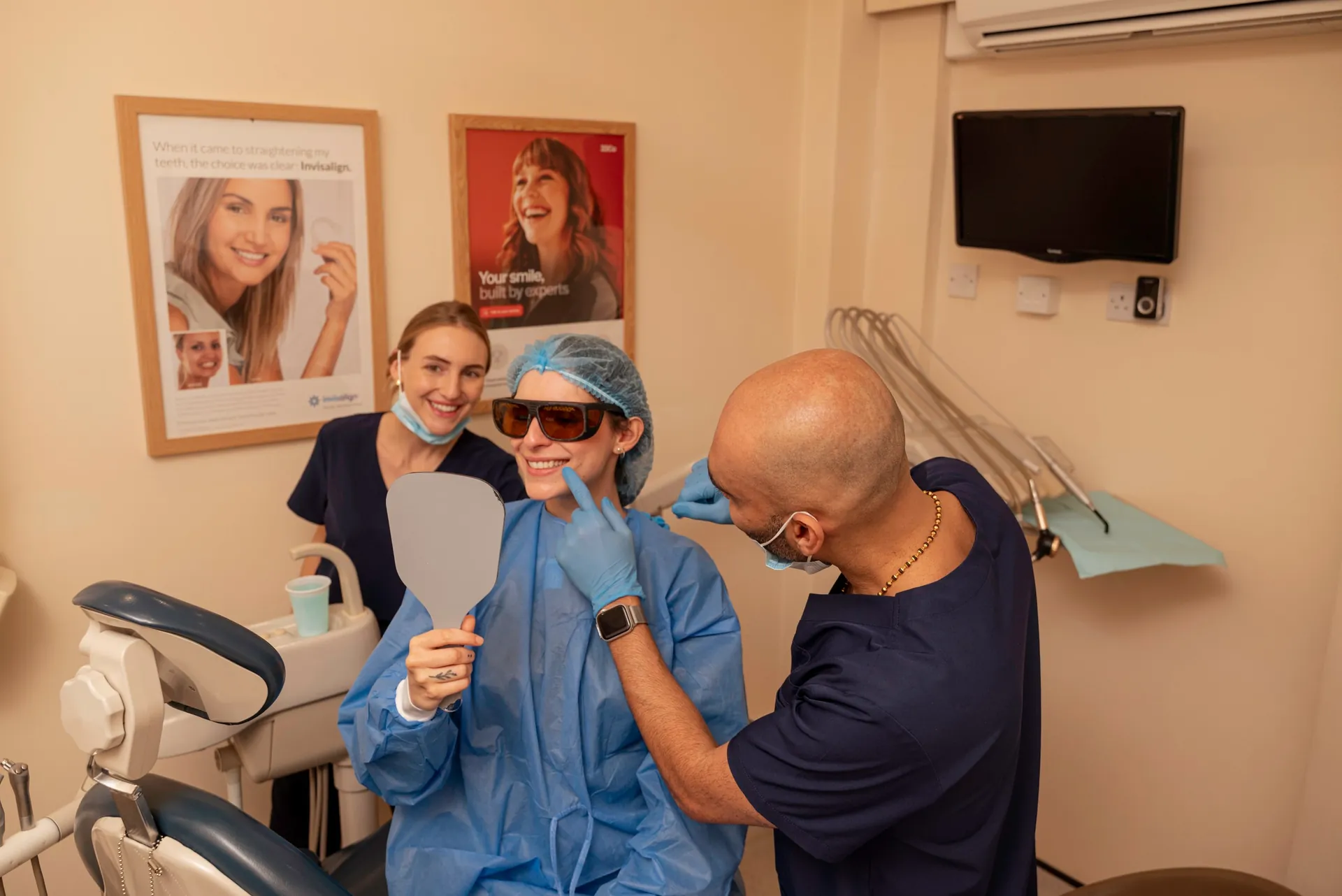
Some gaps need closing. Some don't. The honest framework for deciding.
Gappy teeth, or a diastema, means a space between teeth, most often between the two upper front teeth. It is common and often harmless. Treatment is optional and depends on the cause and your goals: composite bonding for small stable gaps, Invisalign where alignment is involved, and veneers for wider cosmetic change. We assess the cause first at our Islington clinic.
Visible Signs & Symptoms
A diastema is the clinical term for a gap between two teeth. Most often it is the midline gap between the two upper central incisors, but spaces can appear between any teeth. A gap may be a fraction of a millimetre or several millimetres wide, and its visual impact depends heavily on the rest of the smile.
Diastema is common. Many people keep theirs by choice and regard it as part of their face; others would rather it closed. Both are valid. Which is right depends on what you want from your smile and, clinically, on why the gap is there.
Signs and symptoms
- A visible space between the upper front teeth, or between other teeth
- Several small spaces across the arch, sometimes described as generalised spacing
- Food catching between teeth that do not touch
- A gap that has appeared or widened in adult life
- Front teeth that seem to be fanning outward
- A gap that reopened after previous orthodontic treatment or bonding
Stable gap or changing gap
The most useful distinction is between a gap you have always had and one that is new or growing. A long-standing, stable gap with healthy gums is usually a cosmetic feature. A gap that has opened or widened in adulthood is a signal to look for a cause, because something is moving the teeth. We also look at the gum level between the teeth: where gum has receded, a dark triangular space can appear that looks like a gap but needs a different approach; our gum recession page explains why. Spacing is the opposite of crowding, and both can sit within a broader picture of crooked teeth.
Clinical Root Causes
Five causes account for most gaps, and each has different treatment implications.
Tooth-to-jaw size mismatch
The teeth are slightly smaller than the available arch, or the arch is slightly wider than the teeth need. This is the most common cause of a midline gap in adults, and cosmetic closure tends to work well when it is the whole picture. Small or peg-shaped side incisors can produce a similar effect.
Labial frenum position
The small fold of tissue joining the upper lip to the gum can sit low between the two front teeth and mechanically prevent them meeting. Where it is the block, closure may not hold unless it is addressed, and a minor procedure called a frenectomy is sometimes recommended.
Tongue-thrust habit
The tongue pushes against the front teeth when swallowing, a pattern that usually resolves in childhood but sometimes persists. The repeated outward pressure creates or widens a gap, and closure without addressing the habit tends to reopen over time. Our page on tongue posture explains the mechanics.
Gum disease and drift
Gum disease causes loss of the bone supporting the teeth, which allows them to drift. A new gap between the front teeth in an adult who never had one is a classic presentation. Here the order is fixed: stabilise the gums first, then consider alignment, then cosmetic refinement.
Missing teeth
A missing or never-formed tooth elsewhere in the arch can let neighbouring teeth drift, opening spaces that were not there before. The right sequence depends on which teeth are missing and whether replacement is planned.
Identifying the cause matters because it determines the treatment sequence. We assess all five before discussing whether to close the gap at all.
Why closing a diastema matters
A stable diastema with healthy gums and a sound bite is a cosmetic feature, not a health concern, and there is no clinical need to close it. Closing a gap is a choice, and we are equally comfortable helping you keep it.
A gap matters clinically when it is a symptom of something else:
- Gum disease. If the gap is caused by bone loss and drift, the underlying disease will continue to loosen teeth if left untreated. See our page on gum disease and bleeding gums.
- An active habit. An unaddressed tongue thrust keeps pushing the teeth forward, and any closure is likely to relapse.
- Missing teeth. Continued drift can tip neighbouring teeth and complicate later replacement.
- Food trapping. Some spaces between back teeth catch food and irritate the gum.
When to be seen
Book an assessment if a gap has appeared or widened in adult life, if your front teeth are fanning outward, if your gums bleed or teeth feel loose, or if a gap has reopened after treatment. A tooth that is becoming mobile should be checked promptly. In children, many gaps between the upper front teeth close naturally as the adult canines erupt, so cosmetic treatment is usually deferred until the teeth have settled.
The three main treatment options
Choosing well depends on three things: the width of the gap, whether it is stable, and whether the surrounding teeth also need attention. Some cases need the cause addressing before any cosmetic closure; others simply need the right restorative or orthodontic tool. For many, the right answer is no treatment.
Leave it
If you like your gap, or have simply made peace with it, and it is stable with healthy gums, there is no reason to change it. We will not recommend treatment you do not want.
Composite bonding: small to moderate stable gaps
Composite bonding adds tooth-coloured resin to the adjacent teeth to close the space, usually in a single visit and usually without removing enamel, so it is largely reversible. It suits isolated gaps of a few millimetres. Bonding needs occasional polishing and periodic refreshing over the years. Closing a wide gap with bonding alone can make teeth look too broad, which is why gap width shapes the choice. If you are in or near Islington, see composite bonding in Islington.
Invisalign: gaps within a wider alignment picture
Where the gap is one feature among others, such as mild crowding, rotations or flared front teeth, Invisalign moves the teeth together and corrects the underlying positions rather than masking them. Because the teeth themselves are not reshaped, the result tends to look natural, and it holds best when the cause of the gap has been dealt with. Light bonding is sometimes added at the end to balance tooth proportions. Our page on adult orthodontics in Islington covers wider alignment care. Lifelong retainers are essential.
Veneers: where shape and colour also need attention
Where the gap is one part of a wider cosmetic concern across several front teeth, veneers can close it within a broader redesign. Porcelain veneers involve permanent enamel preparation, so for an isolated midline gap they are usually more than the case needs. Where the gap accompanies a narrow smile, the wider shape of the arch is considered too.
When the cause comes first
Where gum disease is driving drift, we stabilise the gums with hygiene and periodontal treatment before any closure. Where missing teeth are involved, Dr Rishil Patel, whose special interests are oral surgery and dental implants, plans replacement alongside alignment. Where a low frenum or tongue thrust is the block, we assess and refer to a specialist for frenectomy, or for myofunctional therapy, before cosmetic closure.
What happens at DWL
Cosmetic and alignment planning is led by Dr Vishal Patel, an Invisalign Diamond II provider with an MSc in Aesthetic & Restorative Dentistry. We examine teeth, gums and bite, take photographs and a scan, identify the cause, and give a written recommendation, including when that recommendation is to leave the gap alone. We take a long-term smile view, planning for how the result will look and hold years from now. If you are local, see our page on Invisalign in Islington.
Cost
- Invisalign consultation with iTero scan: free; dental examination: £65
- Composite bonding: £175 simple, £350 complex, per tooth
- Invisalign Express £2,200, Moderate £3,400, Unlimited £4,500–£4,900
- Porcelain veneers: £750–£1,500 per tooth; composite veneers: £350–£500
- Hygiene £85; periodontal treatment £255
- Dental implants from £2,200 including the crown
0% APR finance over 12 months is available. Results vary.
Find us at 222 Essex Road, Islington, N1, two minutes from Essex Road station. Buses 38, 56, 73, 341 and 476 run along Essex Road, and Lime and Forest e-bikes are a popular way to arrive.
For the full picture, including how this compares with the alternatives, see our guides to teeth straightening and teeth bonding.
Further reading
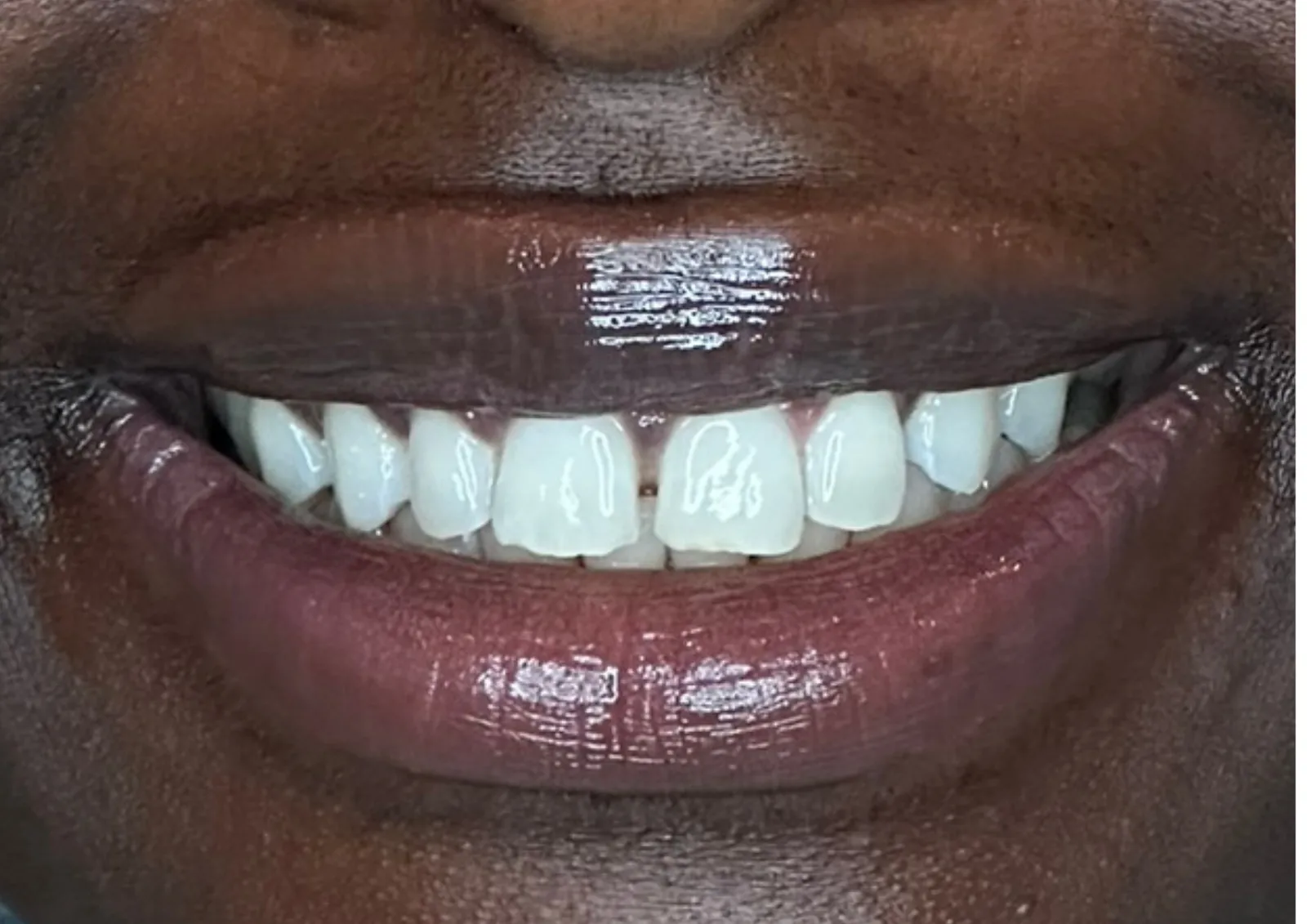
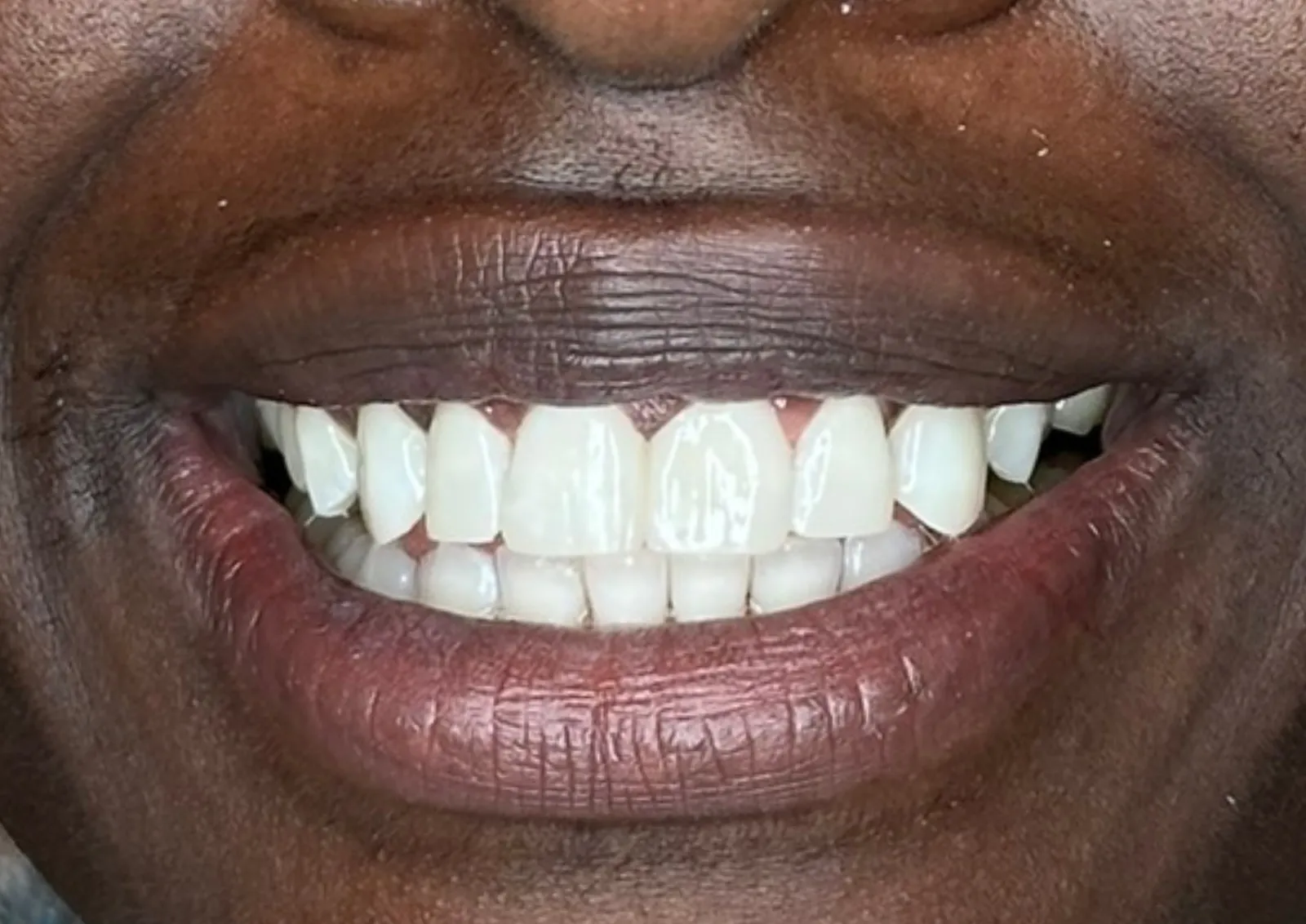
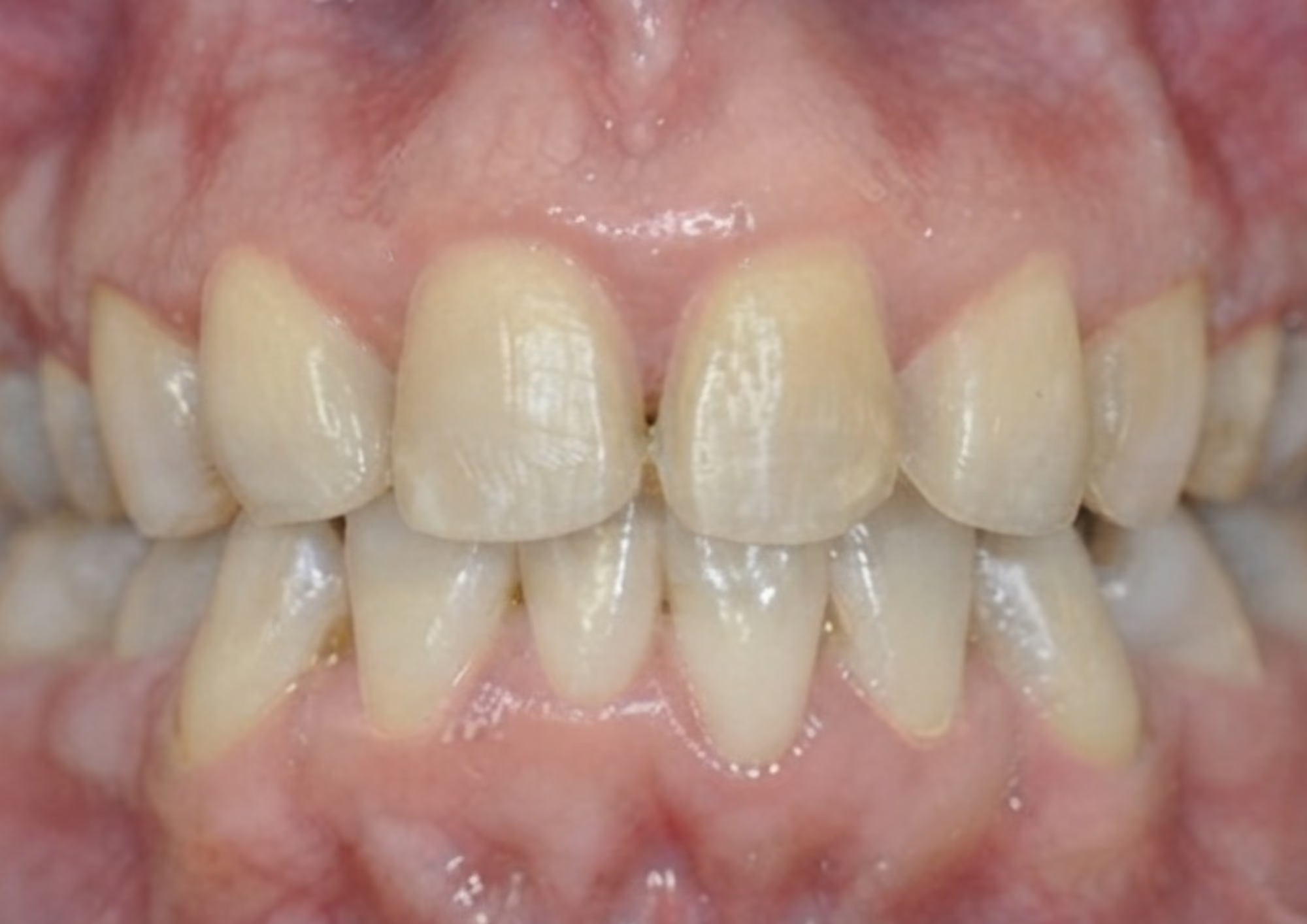
Send three Photos - get an honest answer with in a day.
Free Smile ASssessmentFrequently asked questions
If your question isn't here, call reception on 020 8127 4567 or book a free discovery call.Text Link
View all FAQs →What causes gappy teeth?
Five common causes: a tooth-to-jaw size mismatch (the most frequent), a low-set labial frenum mechanically blocking closure, a persistent tongue-thrust habit, periodontal drift from gum disease, or compensatory drift from a missing tooth elsewhere in the arch. Identifying which one applies determines the right treatment sequence.
How much does it cost to close gappy teeth in the UK?
Depends on the route the case needs. Composite bonding starts at £175 per tooth (typically £350-£700 for a midline closure across two teeth). Invisalign is £2,200 (Express), £3,400 (Moderate) or £4,500–£4,900 (Unlimited). Porcelain veneers are £750-£1,500 per tooth. The dental examination is £65.
Composite bonding or Invisalign for gappy teeth — which is better?
Neither is universally better — they suit different cases. Composite bonding is right for an isolated, stable gap where you want to preserve enamel. Invisalign is the better long-term answer when the gap is one feature of a wider alignment picture, because it corrects the underlying tooth positions rather than masking them.
Are gappy teeth a dental problem?
Usually not. A stable diastema with healthy gums and a sound bite is a cosmetic feature, not a health concern. It only becomes a clinical issue when the gap is a symptom of something else — active gum disease, a tongue-thrust habit, or drift from a missing tooth.
Will my gap come back if I close it cosmetically?
Depends on the cause. If the underlying alignment is stable, composite or veneer closure holds well for the lifespan of the restoration. If there's an unaddressed cause — tongue-thrust, frenum positioning, periodontal drift — the gap will reopen regardless of how it was closed.
Can Invisalign close my gap without bonding?
Yes for most gaps under 4-5mm. Invisalign closes the gap by moving the adjacent teeth together, which is the most natural-looking result. For larger gaps, closure may leave the teeth narrower than surrounding teeth and benefit from light composite refinement at the end.
Is the gap part of my "smile fingerprint" I should keep?
That's a personal call. The honest test is: would you keep it if treatment were free and instant, no commitment? If yes, keep it. If no, treatment is reasonable.
Will the gap reopen if I stop wearing retainers after Invisalign?
Almost certainly yes, in months to years. Teeth drift without retention. Lifetime nightly retainer wear after any orthodontic treatment, including gap closure, is non-negotiable for stability.
Can a child have their gap closed?
Often best to wait. Many childhood diastemas close spontaneously as the canines erupt in late childhood. We typically defer cosmetic intervention until late teens at earliest, by which point the alignment has stabilised.