Spark aligners: an alternative clear aligner system
Reviewed By
Dr Vishal Patel
BDS Liverpool · MSc Aesthetic & Restorative Dentistry Manchester · GDC 103127 · AACD Member · Invisalign Diamond II Provider · IFAAS (International Fellowship in Advanced Aesthetic Science) · Facial anatomy & cadaver course, Dr Ali Pirayesh, University of Amsterdam · Harley Academy foundation training in injectable aesthetics · IBSA-trained (Profhilo) · NeoStrata-trained (skin peels) · Lynton Lasers trained, incl. ONDA
Last Updated
October 3, 2026
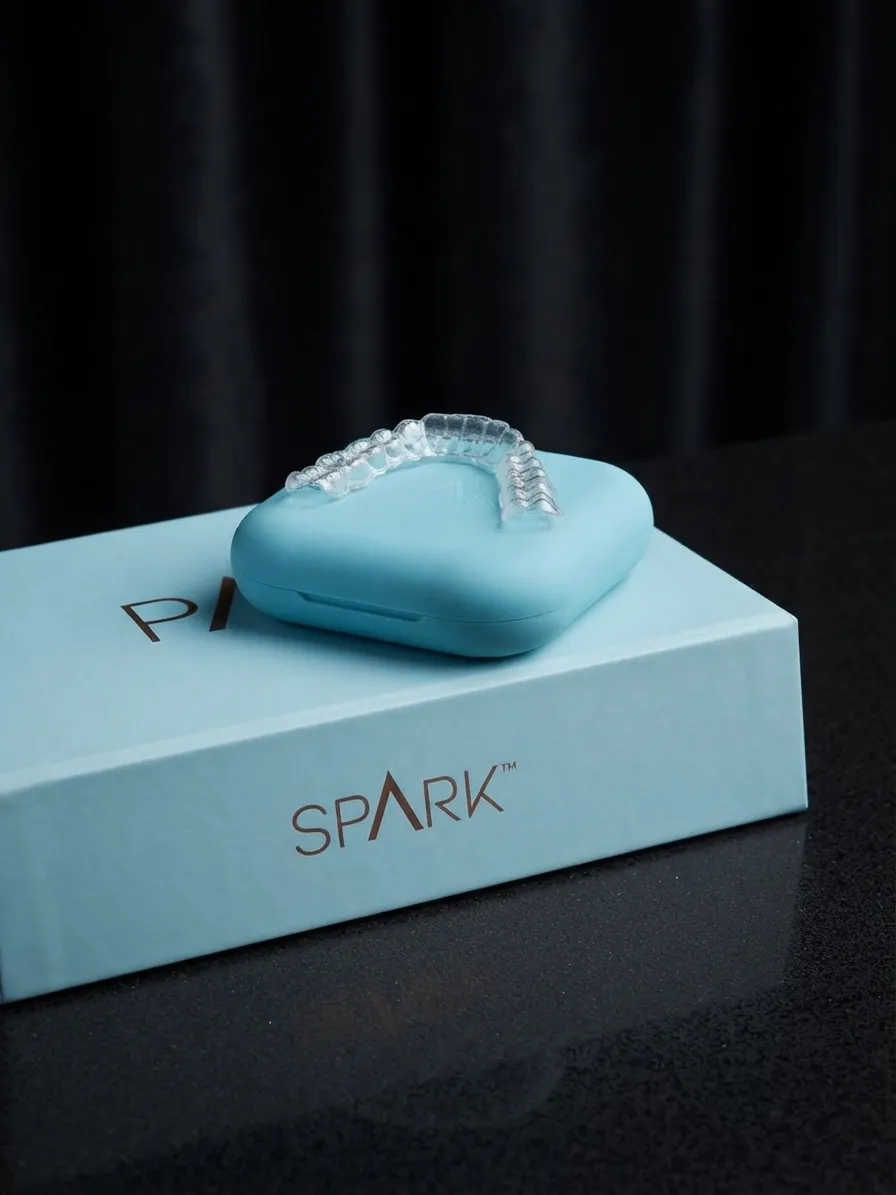
A clear aligner made by Ormco from TruGEN material. We offer both Spark and Invisalign, and choose by what suits the case.
Spark aligners at Dental & Wellness London in Islington are clear, removable trays made by Ormco, planned by Dr Vishal Patel, an Invisalign Diamond II provider. Most mild to moderate cases take six to eighteen months. The fee is quoted in writing after a free orthodontic consultation and iTero scan, alongside the comparable Invisalign plan, which starts at £2,200.
Heading
- Clear aligner system made by Ormco; an alternative to Invisalign
- TruGEN aligner material, designed by the manufacturer to resist staining
- Same wear pattern as Invisalign (22 hrs/day, changed every 7–10 days)
- Fee quoted in writing after a free orthodontic consultation and iTero scan
- 6–18 months typical treatment duration
- 0% APR finance over 12 months via Tabeo, subject to status
Spark aligners are a clear aligner system made by Ormco, one of the long-established names in orthodontics. Like Invisalign, Spark straightens teeth with a series of removable transparent trays, each moving the teeth a fraction of a millimetre towards a digitally planned position. At Dental & Wellness London we offer both systems, and the orthodontic consultation, including an iTero scan, is free. That lets us compare Spark and Invisalign on the same scan of your teeth rather than defaulting to one brand.
This page explains what Spark is, how it differs from Invisalign, who it suits, what treatment involves and how it is priced at our practice. For the full range of straightening routes, see our teeth straightening hub, or our page on adult orthodontics in Islington.
What Spark aligners are and how they work
Every aligner system relies on the same biology. A light, sustained force on a tooth causes bone to remodel around the root, and the tooth moves. The aligner delivers that force; small tooth-coloured attachments bonded to selected teeth give it something to grip, especially for rotations and root movement.
With Spark, the treatment is designed in Ormco's planning software from an iTero scan. The clinician sets the end position tooth by tooth, decides the sequence of movement and where attachments are needed, and approves the plan before any aligners are made. You then wear each set for around 22 hours a day, changing to the next set every 7 to 10 days as directed, with reviews every six to eight weeks.
TruGEN material
Spark aligners are made from TruGEN, a multi-layer material that the manufacturer describes as clearer and more resistant to staining than earlier aligner plastics, and designed to maintain a consistent force. Spark trays are also trimmed to follow the gum line closely, which some patients find comfortable. These are manufacturer claims, and in practice the difference you notice day to day is modest; the planning matters far more than the plastic.
Spark vs Invisalign: what actually differs
Spark vs Invisalign is a question we are asked often, and the honest answer is that the two systems are more alike than different. Both use digital planning, attachments, a 22-hour wear schedule and refinements where needed. The practical differences are:
- Material. Spark uses TruGEN; Invisalign uses its own SmartTrack material. Both are clear and comfortable in normal wear.
- Planning software. Invisalign uses ClinCheck, which has the longest track record and the largest body of treated cases. Spark uses Ormco's own software. In both, the result depends on the clinician's decisions, not the software alone.
- Features for complex cases. Invisalign has a wider range of established features for bite correction and growing patients. For straightforward adult crowding and spacing, both systems are capable.
- Fee. Spark is quoted in writing after assessment, so you can compare it directly with the relevant Invisalign plan for the same teeth.
Our article on Spark aligners vs Invisalign looks at the comparison in more depth, and our clear aligners page sets out how the main aligner systems differ.
Who Spark aligners suit, and who they do not
Spark tends to suit adults with:
- mild to moderate crowded teeth or spacing;
- gappy teeth that can be closed with predictable movement;
- relapse after braces worn as a teenager;
- a preference for a particular aligner material, or a wish to compare systems on value.
Spark is less suitable where a case needs extensive bite correction, large vertical movements or significant root movement, where we would usually favour Invisalign's more established feature set, or refer to a specialist orthodontist for fixed braces. As with any orthodontic movement, active gum disease or untreated decay must be dealt with first, and aligners only work if they are worn. If 22 hours a day is not realistic, a fixed option is more honest. Our page on invisible braces compares the fixed discreet options. For a narrower front-teeth case, see Inman aligners vs Invisalign.
Spark aligners compared with other options
Spark sits alongside Invisalign within the clear aligner family. Outside it, the alternatives are Six Month Smiles, which uses clear brackets to align the front teeth over a shorter course, and conventional fixed braces for complex cases. For a small cosmetic irregularity, composite bonding from £175 per tooth may give the visual result without moving teeth at all. We set these routes out openly at consultation, including when the answer is not an aligner.
The Spark treatment process, step by step
- Free orthodontic consultation. Examination of teeth, bite and gums, photographs and an iTero scan. We discuss Spark and Invisalign for your case side by side.
- Health check. If needed, a dental examination (£65, 30 minutes) confirms the teeth and gums are ready for movement.
- Digital plan. Dr Vishal Patel plans the movement, sequence and attachments, and the fee is set out in writing.
- Fitting. Attachments are bonded to selected teeth and the first aligners fitted, with guidance on wear and cleaning.
- Active treatment. Aligners worn around 22 hours a day, changed every 7 to 10 days, with reviews every six to eight weeks.
- Refinements. A short additional series to fine-tune the finish is normal and planned for.
- Retention. Retainers are fitted at the end of treatment to hold the result.
Results, longevity and aftercare
Many mild to moderate adult cases finish within six to eighteen months, depending on the movement needed and how consistently the aligners are worn. Results vary from person to person. Once complete, the result can last for life provided retainers are worn, usually at night, sometimes with a bonded retainer behind the front teeth. Retainers are quoted in writing with your treatment plan. Our guide to retention after treatment explains why this stage matters.
Day to day, remove the aligners to eat and to drink anything other than water, brush before putting them back in, and rinse the trays when you take them out. Even stain-resistant material stays clearer with good habits.
Risks, and how we reduce them
- Gum recession if teeth are moved beyond the bone. We plan movement within the available bone and check gum support first.
- Minor root shortening. Light forces and sensible treatment times reduce it.
- Decay under the trays if sugary drinks are taken with aligners in. We give clear cleaning and drinking guidance and keep you on a hygiene schedule.
- Tracking problems where aligners stop fitting closely, usually from inconsistent wear. Regular reviews catch this early.
- Relapse without retainers. Retention is planned before treatment starts.
Spark aligners cost in Islington and London
The orthodontic consultation is free, including the iTero scan. Spark aligner treatment is quoted in writing after assessment, because the fee depends on the complexity of the case. For comparison, Invisalign at our practice is offered as Express £2,200, Moderate £3,400 and Unlimited £4,500–£4,900, and we will show you both fees for your teeth before you choose. 0% APR finance over 12 months via Tabeo is available, subject to status. Our article on Spark aligners cost in the UK covers what to ask when comparing quotes.
Why choose Dr Vishal Patel for Spark aligners
Dr Vishal Patel (BDS Liverpool, MSc Aesthetic & Restorative Dentistry, Manchester, GDC 103127) has around twenty years in dentistry and over 15,000 cases behind him. He is an Invisalign Diamond II provider, in the top 1% of UK Invisalign providers, and an AACD member. That depth of aligner experience carries across systems: the decisions about where teeth should finish and how the bite should meet are the same whichever trays deliver them. Because we offer both, the recommendation follows the case. Complex skeletal cases are referred to a specialist orthodontist.
Common questions about Spark aligners
Are Spark aligners as good as Invisalign?
For mild to moderate adult crowding and spacing, Spark and Invisalign both produce good results when well planned and worn as directed. Invisalign has the longer track record and a wider set of established features for complex bite correction. We compare both on your scan and recommend whichever suits the case.
How long does Spark aligner treatment take?
Most mild to moderate cases take six to eighteen months, with aligners changed every 7 to 10 days and reviews every six to eight weeks. A short refinement stage at the end is common. The digital plan gives an estimate for your own teeth before you commit.
Do Spark aligners stain?
Spark's TruGEN material is designed by the manufacturer to resist staining, but any aligner can discolour if worn while drinking coffee, tea or red wine. The simple rule is to remove the aligners for anything other than water, and to brush before putting them back in. That keeps them clear and protects the teeth.
How much do Spark aligners cost in London?
At our Islington practice, Spark treatment is quoted in writing after a free orthodontic consultation and iTero scan, because the fee depends on complexity. We show you the comparable Invisalign plan, from £2,200 for Express, alongside it. 0% APR finance over 12 months via Tabeo is available, subject to status.
Getting here
Our practice is at 222 Essex Road, Islington, London N1 3AP, two minutes' walk from Essex Road station. Highbury & Islington is one stop away by train, buses 38, 56, 73, 341 and 476 stop on Essex Road, and Angel is a 15–20 minute walk. From Canonbury Square it is about ten minutes on foot; see our Canonbury page. Many patients cycle or use Lime and Forest e-bikes; Dalston is about ten minutes away by bike. We are open Monday to Friday, 8am to 7pm, by appointment. For local aligner care, see Invisalign in Islington.
Want options beyond Invisalign
Coffee, tea, red wine drinkers
Reduced friction, lower cost
Aligners are worn 22 hours a day and changed every 7–10 days, the same discipline as any clear-aligner system.
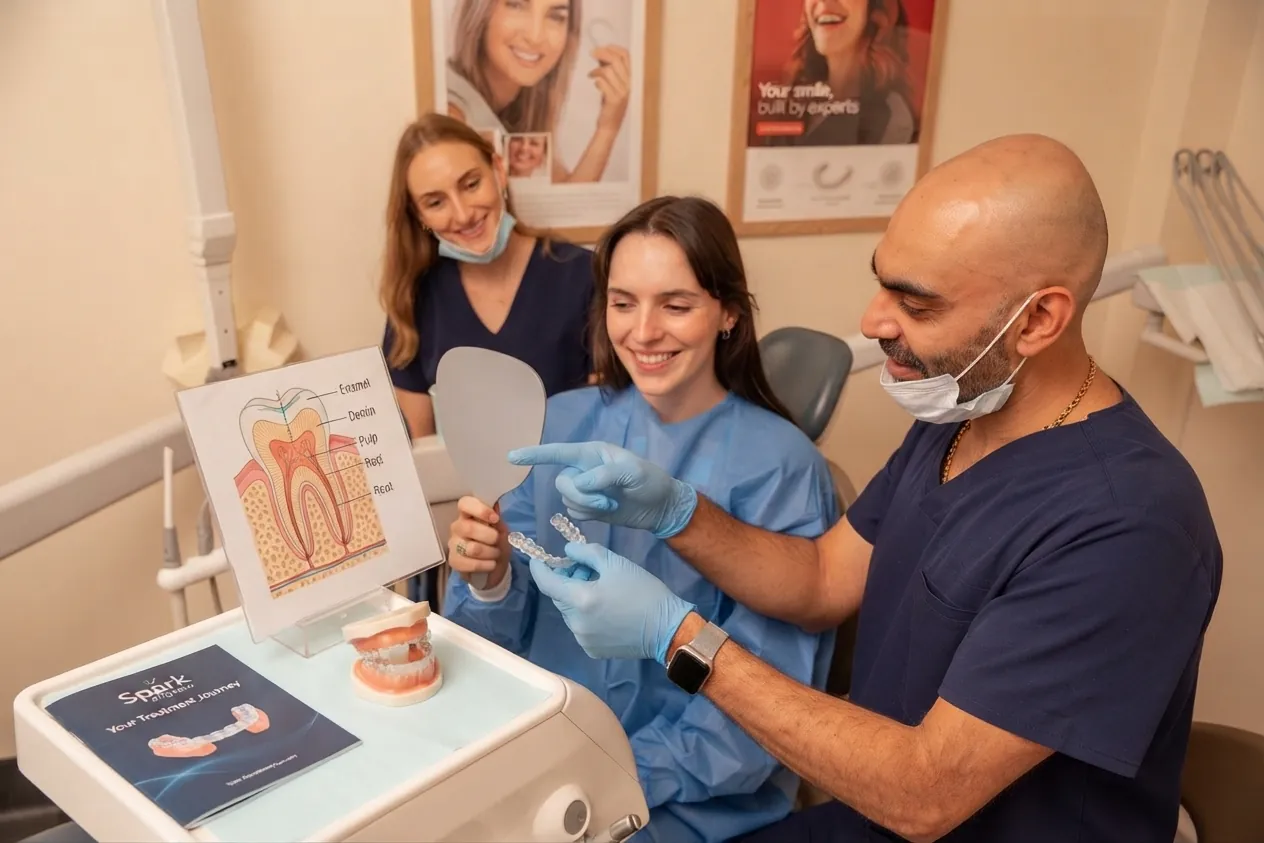
| Assessment & planning | Free orthodontic consultation: full assessment, iTero digital scan, photographs (X-rays where needed), and a treatment-planning conversation comparing Spark and Invisalign for your case. |
| Fitting | Attachments bonded to selected teeth, first aligners fitted. |
| Active wear | Worn 22 hours a day, changed every 7–10 days, with reviews every 6–8 weeks. |
| Retention | Retainers fitted at completion; quoted in writing with the treatment plan. |
Our happy patients,
in their own words
Transparent pricing
Prices are set out below. Your written plan confirms the fee before any treatment begins.
| Tier | Dental & Wellness London (Fees) |
|---|---|
| Orthodontic consultation | Free (iTero scan, Spark and Invisalign compared) |
| Spark aligner treatment | Quoted in writing after assessment |
| Invisalign, for comparison | Express £2,200 · Moderate £3,400 · Unlimited £4,500–£4,900 |
| Included | iTero scan, treatment plan, attachments, reviews, refinements; retainers quoted in writing with the plan |
| Finance | 0% APR over 12 months via Tabeo, subject to status |
0% APR finance over 12 months via Tabeo, subject to status.
Questions
people ask
If your question isn't answered here, call reception on 020 8127 4567 or email reception.
What are Spark aligners?
Spark aligners are clear, removable orthodontic trays made by Ormco from a material called TruGEN. They straighten teeth in the same way as Invisalign, through a series of trays worn around 22 hours a day. At our Islington practice Dr Vishal Patel plans Spark cases from an iTero scan, and compares them with Invisalign at a free consultation.
Is Spark better than Invisalign?
Neither is better for every case. For mild to moderate crowding and spacing, both work well when planned carefully and worn as directed. Invisalign has the longer track record and more established features for complex bite correction. Spark appeals to some patients for its material. We compare the two on your scan and recommend whichever suits your teeth.
How much do Spark aligners cost?
At Dental & Wellness London, Spark treatment is quoted in writing after a free orthodontic consultation and iTero scan, because the fee depends on how complex the case is. We show you the comparable Invisalign plan alongside it; Invisalign Express is £2,200, Moderate £3,400 and Unlimited £4,500–£4,900. 0% APR finance over 12 months via Tabeo is available, subject to status.
Do Spark aligners hurt?
Most people feel pressure or mild tenderness for a day or two after changing to a new set, which settles quickly. There are no brackets or wires to rub the cheeks. The trays are trimmed to follow the gum line, which many patients find comfortable. Persistent pain is not normal, and we would want to see you if it happens.
Can I eat and drink with Spark aligners in?
Remove them to eat and to drink anything other than plain water. Sugary or acidic drinks trapped under the trays raise the risk of decay, and coffee, tea and red wine can stain both aligners and teeth. Brush before putting the aligners back in. Keeping them out for meals and drinks within the 22-hour wear time is the main daily discipline.
Do I need a retainer after Spark aligners?
Yes. Teeth tend to drift throughout life, so retainers hold the result once treatment ends. Most patients wear a removable retainer at night, sometimes with a bonded retainer behind the front teeth. Retainers are quoted in writing with the treatment plan, so the full cost is clear from the start.
Where can I get Spark aligners near Islington?
Our practice is at 222 Essex Road, Islington, London N1 3AP, two minutes from Essex Road station and one stop from Highbury & Islington. Buses 38, 56, 73, 341 and 476 stop on Essex Road, and Angel is a 15–20 minute walk. We are open Monday to Friday, 8am to 7pm (Tuesday from 9am), by appointment.
Compare Spark and Invisalign at a free consultation
We offer both Spark and Invisalign, and compare them on your own scan at a free consultation. Call 020 8127 4567 or WhatsApp +44 7974 910222.
Contact US