IPL photofacial in London
Reviewed By
Dr Vishal Patel
BDS Liverpool · MSc Aesthetic & Restorative Dentistry Manchester · GDC 103127 · AACD Member · Invisalign Diamond II Provider · IFAAS (International Fellowship in Advanced Aesthetic Science) · Facial anatomy & cadaver course, Dr Ali Pirayesh, University of Amsterdam · Harley Academy foundation training in injectable aesthetics · IBSA-trained (Profhilo) · NeoStrata-trained (skin peels) · Lynton Lasers trained, incl. ONDA
Last Updated
October 1, 2026
Intense pulsed light for sun spots, uneven tone and fine surface redness, using the Lynton IPL platform at our Islington clinic.
An IPL photofacial uses intense pulsed light to fade sun spots, freckling and fine surface redness, and to improve skin tone and texture. At Dental & Wellness London, Islington, it is delivered on the Lynton IPL platform under the oversight of Dr Vishal Patel. Most people have 3 to 5 sessions about four weeks apart, with little or no downtime. Consultation £65, redeemable; treatment from £180.
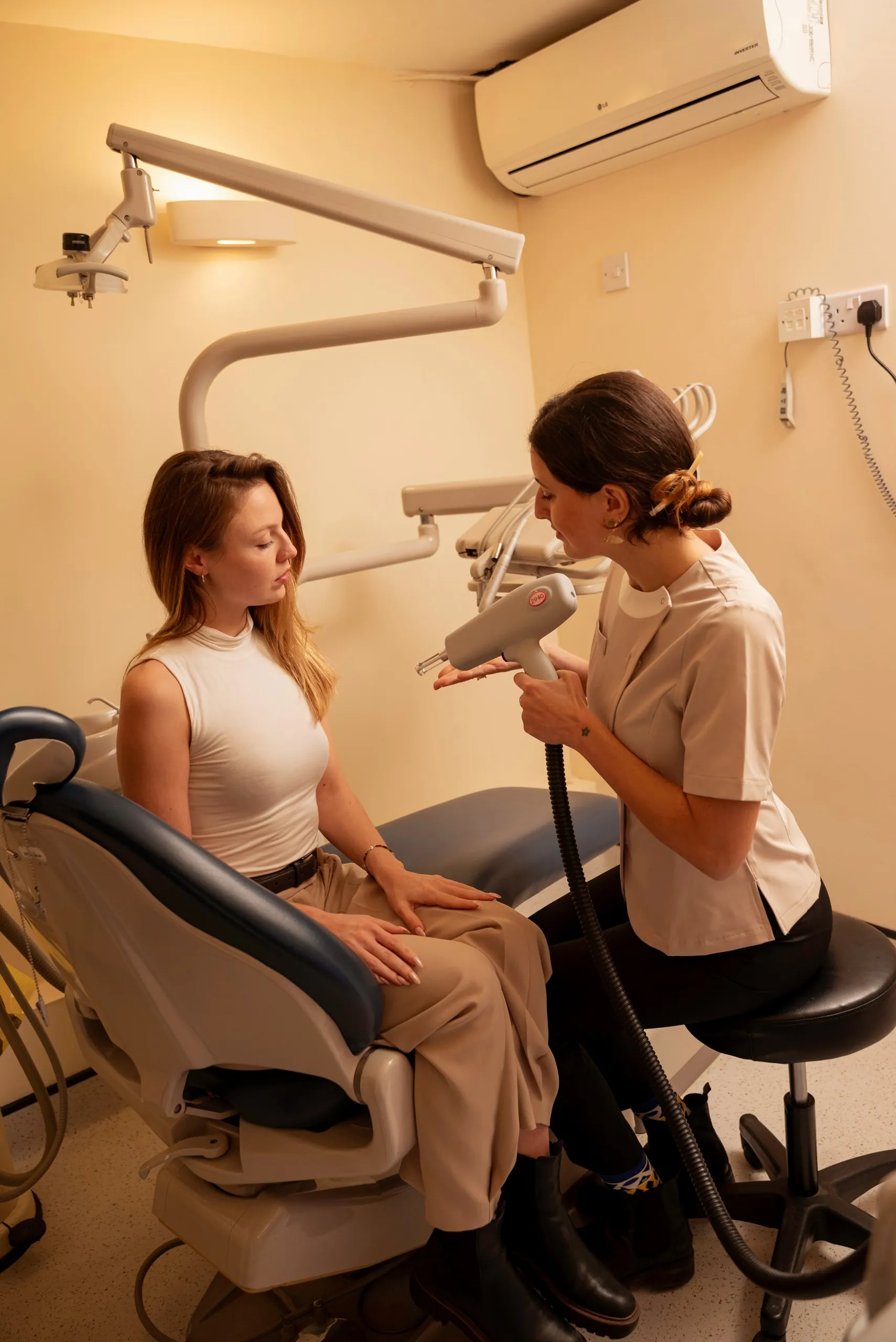
- Lynton IPL platform
- For sun spots, uneven tone, fine redness and dull texture
- Usually 3 to 5 sessions, about 4 weeks apart
- Little or no downtime; brown spots flake within a week
- Not for melasma, tanned skin or most darker skin types
- Consultation £65, redeemable · treatment from £180
IPL photofacial at our Islington clinic
What an IPL photofacial does
An IPL photofacial uses intense pulsed light, a broad spectrum of light delivered in short pulses, to treat the visible signs of sun damage and uneven tone. The light is absorbed by brown pigment and by small surface blood vessels, which then fade over the following weeks. The gentle warmth also encourages the skin to renew itself, so texture and fine lines often look softer across a course.
At our Islington clinic we use the UK-made Lynton IPL platform. An IPL photofacial is a skin rejuvenation treatment: it is different from IPL used for rosacea and thread veins, and from IPL hair removal, even though the same device family is used. The difference lies in the filters, settings and treatment plan, and in what we are trying to achieve. For a photofacial the aim is a more even, clearer complexion overall, rather than the removal of a single mark.
How intense pulsed light works on the skin
IPL is not a laser. A laser delivers a single wavelength of light; IPL delivers a range of wavelengths at once, filtered to suit the target. That breadth is what makes it useful for photo-ageing, because sun-damaged skin rarely has just one problem. Brown patches, fine redness and a slightly dull, uneven surface tend to appear together, and a photofacial can address all three in the same session.
Melanin in a sun spot and haemoglobin in a small vessel both absorb the light and convert it to heat. The pigment is drawn up towards the surface, darkens and sheds; the vessel is gently sealed and gradually cleared by the body. The surrounding skin is warmed but not broken, which is why recovery is usually quick. That same mild heat stimulates the skin's own repair processes, and over a course many people notice their skin looks fresher and more even in tone.
Who IPL photofacial suits
- Sun spots, freckling and uneven brown patches on the face, neck, chest or hands
- Dull, blotchy skin with fine surface redness
- Early fine lines and rough texture, as part of a wider skin plan
- Lighter skin types, which respond most predictably to IPL
The people who tend to be happiest with an IPL photofacial are those whose main concern is the accumulated effect of sun over the years: a mottled chest, freckling across the cheeks, brown marks on the backs of the hands, or a general sense that the complexion has lost its clarity. It is often a good first step for someone who wants their skin to look healthier without injectables or significant downtime. If the neck is part of the concern, our guide to neck rejuvenation explains the options.
When IPL is not the right choice
IPL is not suitable during pregnancy, on tanned skin, with some light-sensitising medicines, or for most darker skin types, where the risk of pigment change is higher. Melasma often worsens with heat and light, so we usually recommend a different plan. IPL does not lift sagging skin or jowls; for laxity we would talk about skin tightening instead. If IPL is not right for you, we will say so.
We also take care with recent sun exposure, self-tan, a history of cold sores in the treatment area, active skin infection, and some skin conditions that react to heat. Raised, changing or irregular moles and marks are never treated with light; if anything looks unusual, we will ask you to have it checked by your GP or a dermatologist first. Light treatment should never mask a mark that needs a medical opinion.
Your consultation and patch test
Every IPL photofacial begins with a skin consultation (£65, redeemable in full against treatment). We look closely at your skin in good light, ask about your medical history, medicines, sun habits and skincare, and agree what you are hoping to change. Part of the assessment is working out which pigment we are dealing with. Sun spots and freckles behave very differently from melasma, and confusing the two is one of the most common reasons light treatment disappoints.
If IPL is the right fit, we carry out a free patch test on a small, discreet area. This lets us see how your skin responds to the settings we plan to use before treating the full area. We usually ask you to wait a short interval after the patch test before your first full session. If another approach would serve you better, such as laser pigmentation treatment for a few well-defined spots, or clinical skincare for more diffuse dullness, we will explain why.
What a session involves and recovery
Your skin is cleansed, your eyes are protected, and a cool gel is applied. Each pulse feels like a quick warm snap, and a full face takes around 20 to 30 minutes. Afterwards, skin can look slightly pink for a few hours. Brown spots usually darken over the next day or two, then flake away within about a week. Most people go straight back to work. Daily SPF 50 is essential during and after a course.
Most people describe the sensation as tolerable without numbing cream; the cooling gel and the short duration of each pulse help. Treating the neck, chest or hands adds a little time. Some areas of fine redness may look slightly more flushed for a day before they settle.
Aftercare in the first week
- Use a gentle cleanser and a simple moisturiser for the first few days.
- Leave darkened spots to flake on their own; do not pick or scrub them.
- Pause exfoliating acids, retinoids and other active products until we advise.
- Avoid saunas, hot yoga and very strenuous exercise for a day or two while the skin is warm.
- Apply a broad-spectrum SPF 50 every morning, reapply when outdoors, and avoid deliberate sun exposure.
Make-up can usually be worn the following day if the skin is calm. If you notice blistering, crusting or anything that concerns you, contact us and we will see you.
Results and how many sessions
Many people notice a clearer, more even complexion after the first session, once the darkened spots have flaked away. Because sun damage builds over years, a short course spaced several weeks apart usually gives a more complete result than a single treatment, and we agree the number with you at consultation based on your skin and your goals. Results vary from person to person.
IPL clears existing pigment, but it does not stop new pigment from forming. Further sun exposure, hormonal change and simply getting older all play a part. A good daily sunscreen and a sensible skincare routine are what keep the result, and some people choose an occasional maintenance session.
Risks and how we reduce them
IPL is a well-established treatment, but it is still a treatment that uses heat. Possible effects include temporary redness and swelling, short-lived darkening of spots, and less commonly blistering, temporary lightening or darkening of the skin, or scarring. The risk is highest on tanned or darker skin, and when settings are not matched to the skin in front of us.
We reduce those risks by assessing skin type properly, declining to treat tanned skin, carrying out a patch test, starting conservatively and adjusting settings between sessions. We would rather take an extra session to reach a result safely than push the skin too hard.
IPL photofacial compared with other options
For a handful of distinct brown spots, a targeted laser pigmentation treatment can be more precise. For dull skin without much pigment or redness, a medical-grade facial or a gentle peel may be a better starting point. For texture and fine lines, microneedling works on collagen in a different way, and for a calmer, more radiant complexion some patients add LED light therapy. If your concern is firmness rather than tone, we would discuss skin tightening. These treatments are not competitors; we often combine them in a plan built around your skin.
IPL photofacial cost in Islington
An IPL photofacial at our clinic is £180 per session. The skin consultation is £65, redeemed in full against treatment, and the patch test is free. We give you a written plan with the expected number of sessions before you commit, so the total cost is clear from the start.
Why have IPL at Dental & Wellness London
Every skin plan is overseen by Dr Vishal Patel, who has worked in facial aesthetics for ten years and is trained on Lynton lasers. We assess your skin type and your pigmentation first, and we will recommend laser pigmentation treatment or clinical skincare where they are the better answer. We have cared for patients in Islington since 2009, and we are rated 4.7 stars from more than 300 Google reviews.
The clinic is at 222 Essex Road, Islington, London N1 3AP, two minutes from Essex Road station and a short ride from Angel, Highbury, Canonbury, Hackney and Stoke Newington. Buses 38, 56, 73, 341 and 476 stop on Essex Road. Many patients cycle or use a Lime or Forest e-bike. We are open Monday to Friday, 8am to 7pm, by appointment.
Clinically reviewed by Dr Vishal Patel · BDS · MSc Aesthetic & Restorative Dentistry · GDC 103127. Last reviewed 1 October 2026.
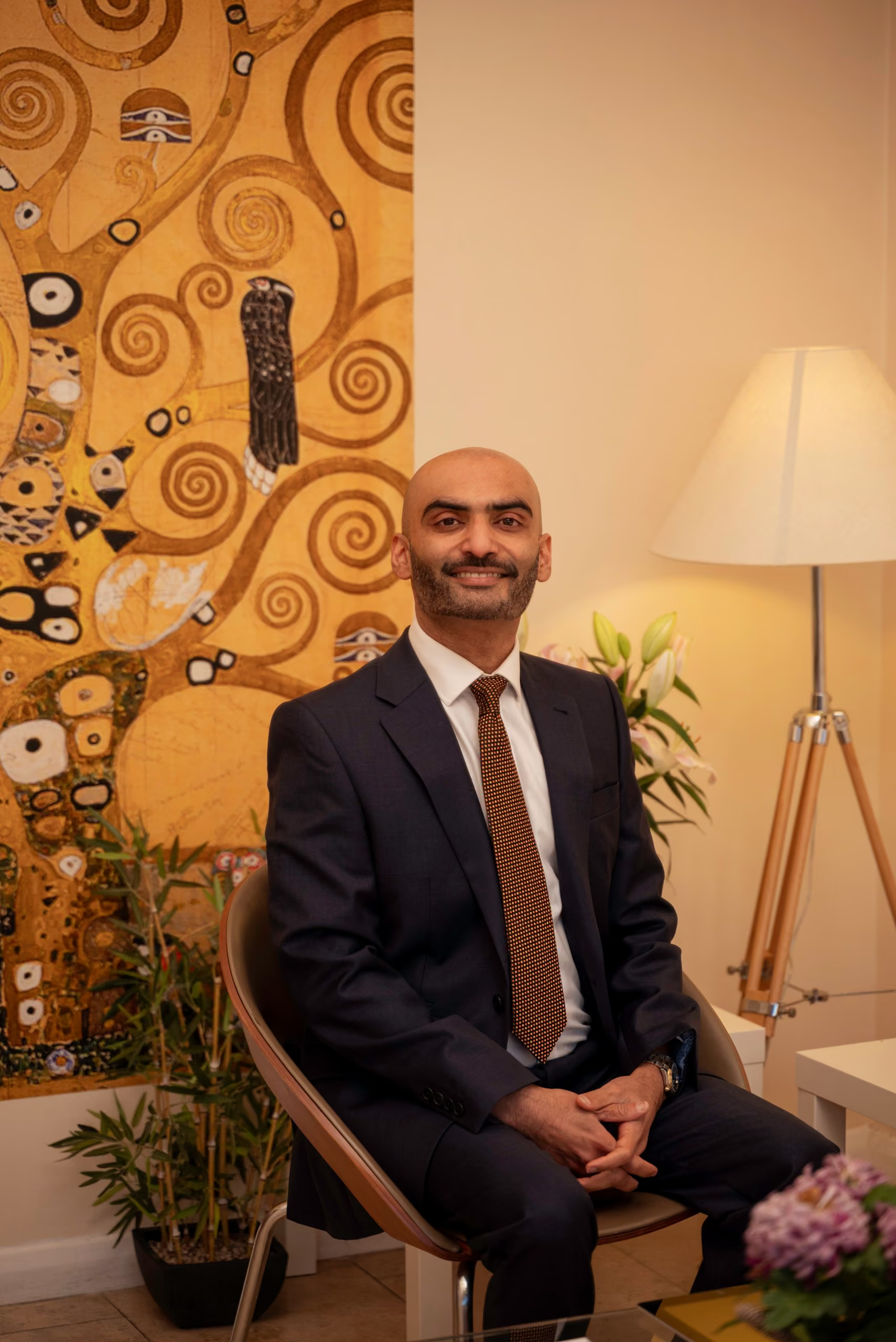
Dr Vishal Patel
Clinical lead · Lynton Lasers trained, including ONDA
BDS Liverpool · MSc Aesthetic & Restorative Dentistry (Manchester) · GDC 103127 · Lynton Lasers trained, including ONDA · International Fellowship in Advanced Aesthetic Science (IFAAS) · 10 years in facial aesthetics
We will tell you when a treatment is not the right answer. That honesty is part of the treatment.
Read Dr Patel’s profile →IPL and pigmentation: more in this group
Related: laser hair removal.
Further reading
A course of light, matched to your skin.
Consultation — £65
A skin assessment with an honest view of what will help. The fee is redeemable in full against treatment.
Free patch test
A free test on a small area checks how your skin responds before the first full session.
Sessions 1 to 5
20 to 30 minutes each, about four weeks apart. Brown spots darken, then flake away.
Review
We review your skin after the course and agree whether an occasional maintenance session makes sense.
Start with a skin consultation
- £65, redeemable in full against treatment
- Skin type and pigment assessed first
- An honest answer, including when IPL is not the right treatment
Or call 020 8127 4567 · WhatsApp +44 7974 910222
222 Essex Road, Islington N1 3AP · Mon–Fri, 8am–7pm
Results build over a course.
Pigment rises to the surface and looks darker before it clears.
Darkened spots flake away. Skin can look brighter already.
Each session reduces pigment and redness further.
Daily SPF protects the result; some people have a yearly top-up.
Our happy patients,
in their own words
Transparent pricing
Prices are set out below. Your written plan confirms the fee before any treatment begins.
Clear prices, set out before you start.
Redeemable in full against treatment
Per session; most people need 3 to 5
Included
- Skin and pigment assessment
- Free patch test before the first full session
- A written plan and costs before treatment
Quoted separately
- Other treatments combined with IPL, priced separately
Questions
people ask
If your question isn't answered here, call reception on 020 8127 4567 or email reception.
What does an IPL photofacial do?
It uses pulses of broad-spectrum light to fade sun spots, freckling and fine surface redness, and to even out tone and texture. It is a rejuvenation treatment, different from IPL used for rosacea or for hair removal.
What is the downside of IPL?
Results build over several sessions rather than at once, and spots darken before they flake. IPL is not suitable for tanned skin, melasma, pregnancy or most darker skin types, and it does not lift sagging skin. Strict daily SPF is needed during and after the course.
How long does it take to recover from an IPL photofacial?
Most people go straight back to work. Skin may look pink for a few hours; brown spots darken over a day or two, then flake away within about a week. Avoid sun exposure and use SPF 50 daily.
Does IPL help sagging jowls?
No. IPL improves pigment, redness and surface texture, but it does not lift loose skin. For laxity along the jaw we would discuss skin tightening options at consultation.
How much is an IPL photofacial in London?
At Dental & Wellness London, Islington, an IPL photofacial is from £180 per session, and most people need 3 to 5 sessions. The patch test is free, and the skin consultation is £65, redeemable in full against treatment.