Laser vs IPL — what's the difference?
Laser uses a single, specific wavelength of light (e.g. 755nm for Alexandrite, 810nm for diode) focused on a narrow beam — monochromatic, coherent and highly directional. This produces precise, efficient absorption by melanin in the hair follicle and minimal scatter into surrounding tissue.
IPL (Intense Pulsed Light) uses a broad spectrum of wavelengths (typically 500-1200nm) emitted as a flash through a filter. The light is polychromatic, diffuse and less directional — less energy is absorbed by hair follicle melanin specifically, more is absorbed by skin pigment and scattered into surrounding tissue.
In practical terms: laser does one thing, very specifically, with high efficiency. IPL does many things, less specifically, with lower per-treatment efficiency for any one of them. For hair removal this means laser typically requires fewer sessions to achieve the same result. Our laser hair removal service uses Lynton technology chosen to suit your skin type.
At-a-glance comparison
CriterionClinic laserClinic IPLAt-home IPLEffectiveness80-90% reduction in 6-8 sessions60-70% in 8-10 sessions50-60% in 10-15 sessionsSuitable skin tonesAll, with correct wavelengthFair to medium (I-IV)Fair only (I-III)Sessions needed6-88-1010-15+ ongoingCost (course of 6, UK market range)£390-£1,150+£250-£800£200-£500 one-offLong-term durabilityHigh — true follicle damageModerate — partial damageLower — superficial damageLocationClinic onlyClinic and salonAt home
How laser hair removal works
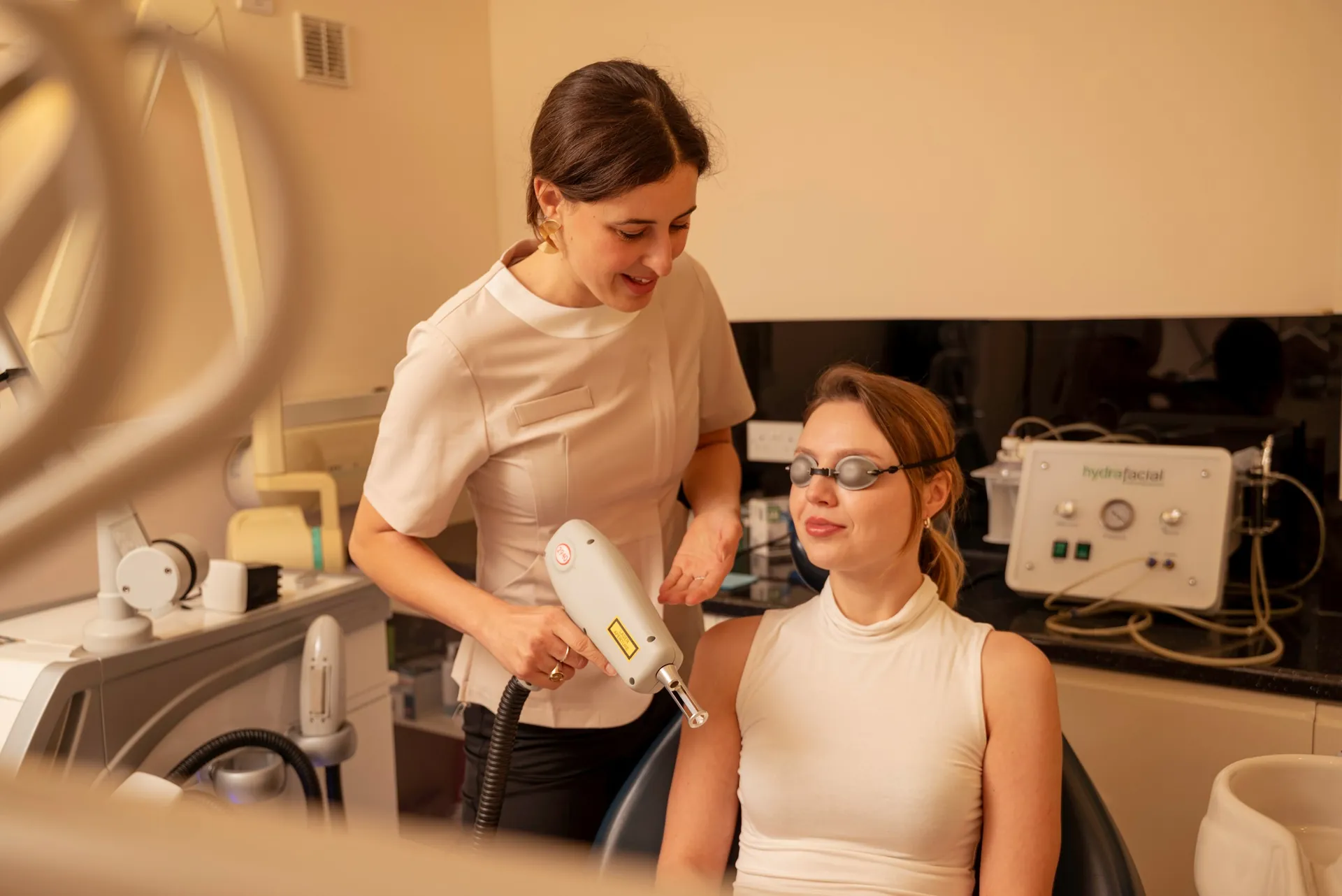
Clinic laser uses a specific wavelength — typically 755nm (Alexandrite) or 810nm (diode) — preferentially absorbed by melanin in the hair follicle. The energy converts to heat at the follicle bulb, damaging the cells responsible for regrowing hair. This is selective photothermolysis: the wavelength, pulse duration and energy are chosen so the target absorbs the energy while surrounding skin stays cool. Alexandrite 755nm suits fair-to-medium skin (Fitzpatrick I-III) with dark, fine-to-medium hair; diode 810nm penetrates deeper; Nd:YAG 1064nm penetrates deepest and is the safest choice for medium-to-dark skin (Fitzpatrick IV-VI). At DWL we use the Lynton Nd:YAG laser for darker skin or Lynton IPL for lighter skin with dark hair, selected per patient according to skin type.
How IPL works
IPL produces a broad spectrum of wavelengths from 500nm to 1200nm through a xenon flashlamp filtered to remove unwanted shorter wavelengths. Pros: lower equipment cost, broader cosmetic applications (skin rejuvenation, vascular, pigmentation), gentler treatment some patients prefer. Cons: lower energy density per pulse, less precise targeting, more sessions needed, less effective for darker skin (higher burn risk in Fitzpatrick IV-VI), and lower long-term durability. The wider IPL vs laser comparison covers skin treatments as well as hair.
IPL is the right technology for some specific applications (rosacea, sun damage, pigmentation) but is the less effective, less durable option for hair removal specifically — for hair removal in 2026, laser is the clinical gold standard.
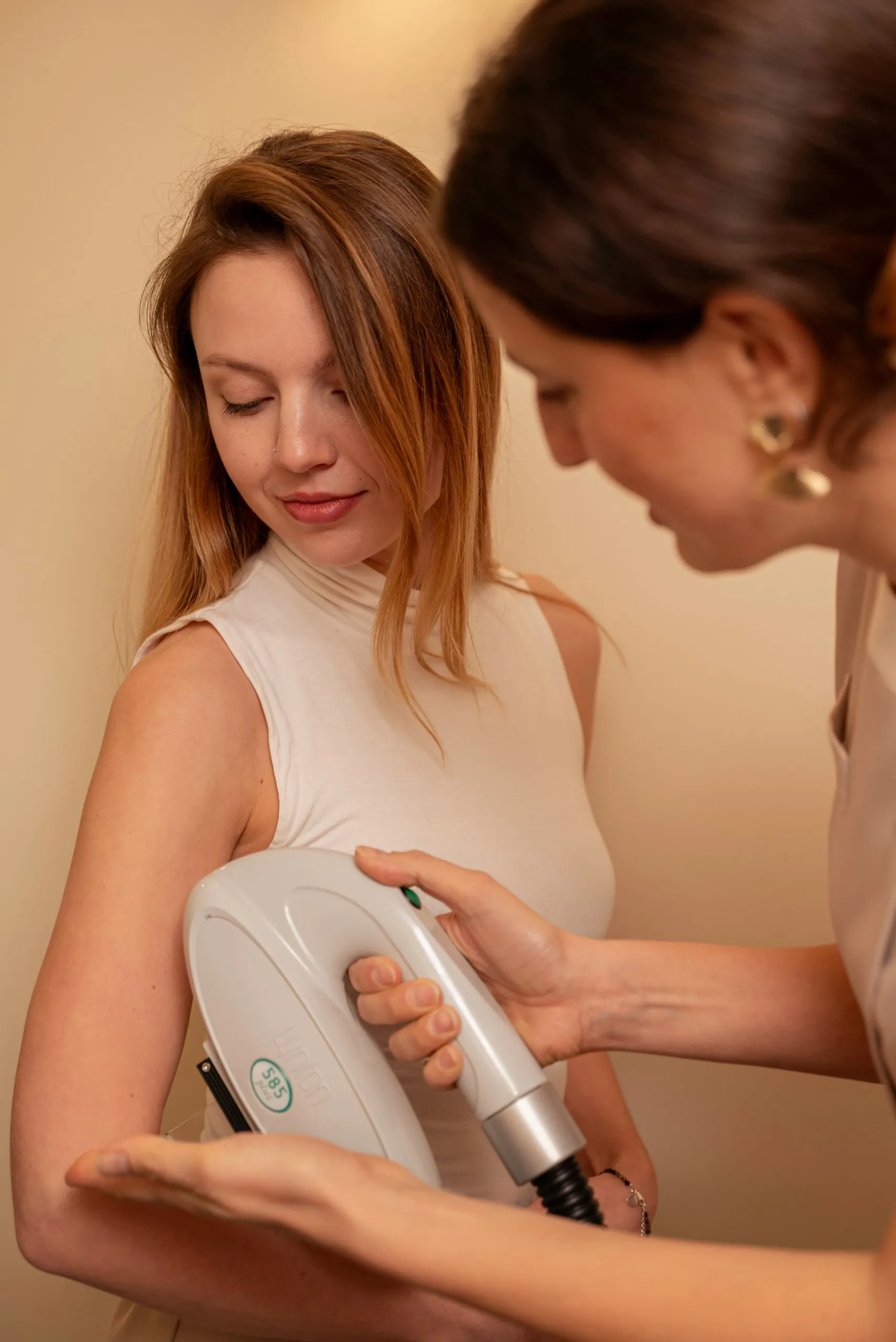
Which is more effective?
The meta-analytic evidence is consistent: clinic laser produces faster, more complete and more durable hair reduction than IPL for the same number of sessions. A 2021 Cochrane Review on hair removal interventions found laser achieves a higher percentage of long-term reduction per session than IPL — average reductions of 70-90% (laser) vs 50-70% (IPL) after a standard course, with the differential larger for darker and coarser hair. At-home IPL devices typically achieve 30-60% reduction with consistent use, often plateauing lower than clinic treatments.
If effectiveness per session matters and you want a defined course, clinic laser is the clear winner. If you have realistic expectations and want gradual density reduction over years, at-home IPL has a role. For a fuller side-by-side, see our guide to laser hair removal vs IPL.
Which skin tones can each treat safely?
Clinic laser with correct wavelength: Fitzpatrick I-VI when the appropriate wavelength is used — the Nd:YAG 1064nm laser is specifically safer for darker skin.
Clinic IPL: Fitzpatrick I-III is the standard safe range; some modern devices filter for darker skin, but broad-spectrum nature increases burn risk. Many UK IPL clinics decline patients above Fitzpatrick IV.
At-home IPL: Fitzpatrick I-III is the manufacturer-approved range; most consumer devices are contraindicated for Fitzpatrick IV-VI. This is a real equity gap — at-home solutions exist for fair skin but not realistically for darker skin tones.
For Fitzpatrick IV-VI skin, a clinic Nd:YAG laser (1064nm) is clearly superior for both safety and effectiveness. Timing around tanning also matters, as explained in laser hair removal and sun exposure.
At-home IPL vs clinic laser — when is at-home enough?
At-home IPL is reasonable for: fair skin (Fitzpatrick I-II) with dark hair; maintenance after a clinic laser course; density reduction rather than near-complete removal; limited budget over the treatment lifetime.
Clinic laser is necessary for: darker skin tones (Fitzpatrick IV-VI); finer or lighter hair; wanting substantial reduction in the shortest time; PCOS or hormonal hirsutism; specific clinical conditions (ingrown hair, folliculitis); results needing minimal ongoing maintenance.
The honest middle ground: for many fair-skinned, dark-haired patients, a clinic laser course first (6-8 sessions), then maintaining with at-home IPL, gives the best long-term cost-benefit balance.
Cost comparison over 5 years
MethodYear 1Years 2-55-year totalClinic laser (typical UK clinic course)£1,620£450 (maintenance)£2,070Clinic IPL course£1,000-£1,500£600-£900 (top-ups)£1,600-£2,400At-home IPL device£500£150 (replacement)£650Ongoing waxing only£600£2,400£3,000
At-home IPL is the cheapest, clinic laser is the most effective per pound, ongoing waxing is the most expensive long-term. For most patients wanting sustained reduction rather than ongoing maintenance, clinic laser is the cost-effective option. For full UK clinic pricing see our how much is laser hair removal guide. DWL charges per session by area, from £45 to £295.
When DWL recommends laser over IPL
Darker skin tones (Fitzpatrick IV-VI) — the Lynton Nd:YAG laser (1064nm), always. PCOS or hormonal hair patterns — laser, the efficacy difference is significant. Coarse, dark hair — laser, IPL undertreats this hair type. Wanting minimum sessions to substantial result — laser. Specific conditions like ingrown hair or recurrent folliculitis — laser. Already tried at-home IPL with disappointing results — laser; the technology gap is the issue.
When IPL might be the right choice
Fair skin (Fitzpatrick I-II), dark hair, modest goals — at-home IPL works well enough for many patients. Budget constraints — at-home IPL one-off cost is competitive long-term. Maintenance after a completed laser course. Combined skin and hair concerns where IPL's skin-rejuvenation effect adds value. Preference for at-home self-care over clinic visits.
DWL provides laser hair removal with the Lynton Nd:YAG laser or Lynton IPL chosen by skin type, and at-home IPL has a real role for the right patient — we say so at consultation rather than push laser as the only answer.
Book a consultation
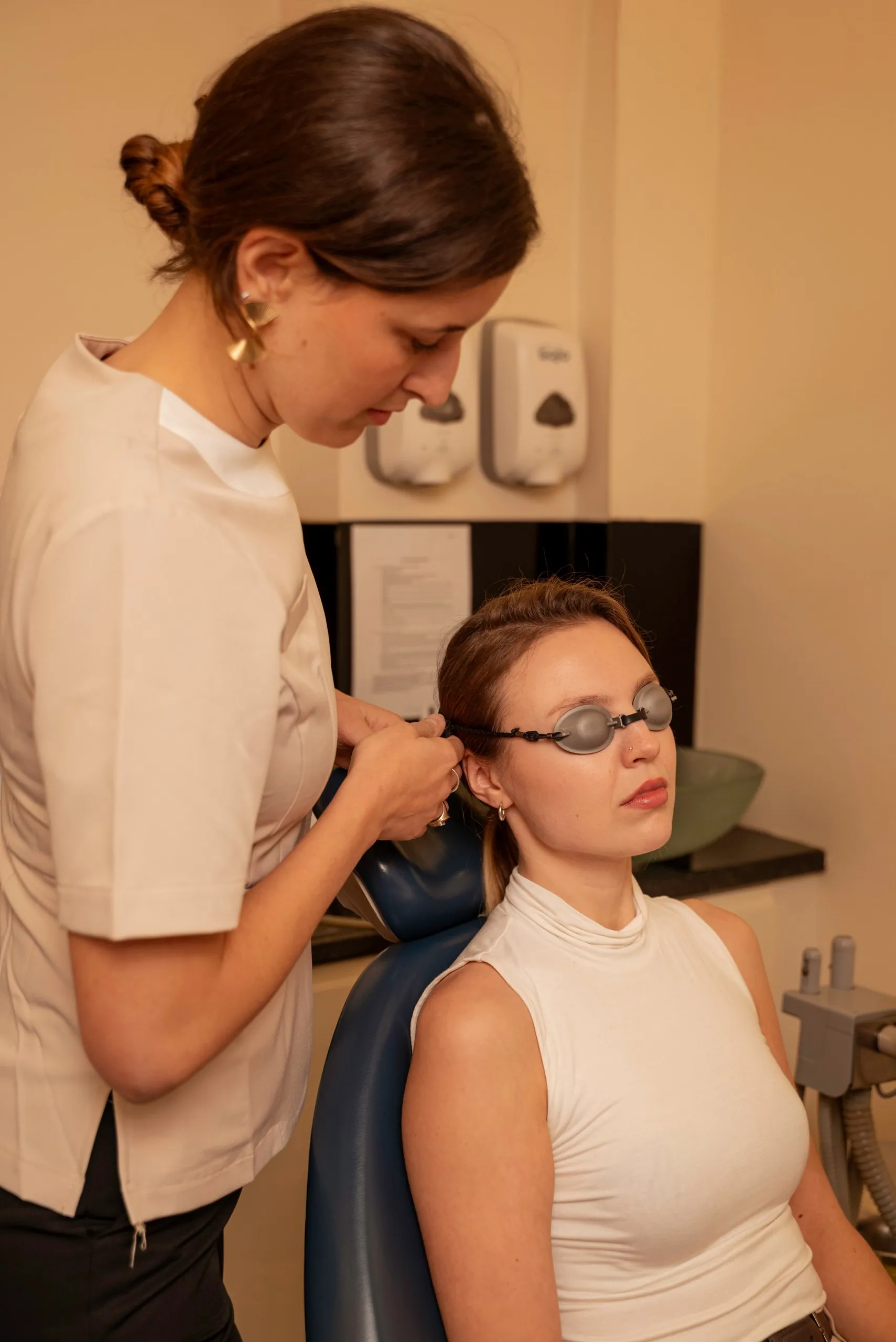
The honest way to know which is right for you is a consultation. We assess skin tone, hair type, goals and budget, and recommend the right approach — even where that's at-home IPL for an initial trial rather than a laser course.
Call 020 8127 4567 · WhatsApp +44 7974 910222 · Visit 222 Essex Road, Islington N1 3AP. Patch test free. Mon-Fri 8am-7pm by appointment.
FAQs
Is IPL the same as laser?
No. IPL uses broad-spectrum light; laser uses single-wavelength focused light. Laser is more powerful and effective per session.
Is at-home IPL as good as clinic laser?
No — significantly less powerful, needs more sessions, largely ineffective for darker skin tones.
Can IPL work on dark skin?
Some devices have darker-skin filters, but the broad-spectrum nature makes it less safe than an Nd:YAG laser. For Fitzpatrick IV-VI, laser is clearly superior.
Can I combine clinic laser with at-home IPL?
Yes — clinic laser course first, at-home IPL maintenance afterward. Don't run them in parallel during the initial course.
Does IPL hurt less than laser?
Generally yes, but the trade-off is more sessions are needed.
Can pregnant women have IPL?
Pregnancy is a contraindication for clinic laser, clinic IPL, and at-home IPL alike.