IPL vs Laser · What's the Actual Difference? · DWL Islington
Reviewed By
Dr Vishal Patel
BDS Liverpool · MSc Aesthetic & Restorative Dentistry Manchester · GDC 103127 · AACD Member · Invisalign Diamond II Provider · IFAAS (International Fellowship in Advanced Aesthetic Science) · Facial anatomy & cadaver course, Dr Ali Pirayesh, University of Amsterdam · Harley Academy foundation training in injectable aesthetics · IBSA-trained (Profhilo) · NeoStrata-trained (skin peels) · Lynton Lasers trained, incl. ONDA
Last Updated
September 16, 2026
IPL vs laser — different technologies, different uses.
IPL vs laser — different technologies, different uses. Laser is single coherent wavelength (precision); IPL is broad-spectrum (versatility). Which is better depends on the indication. Honest comparison from a London clinic.
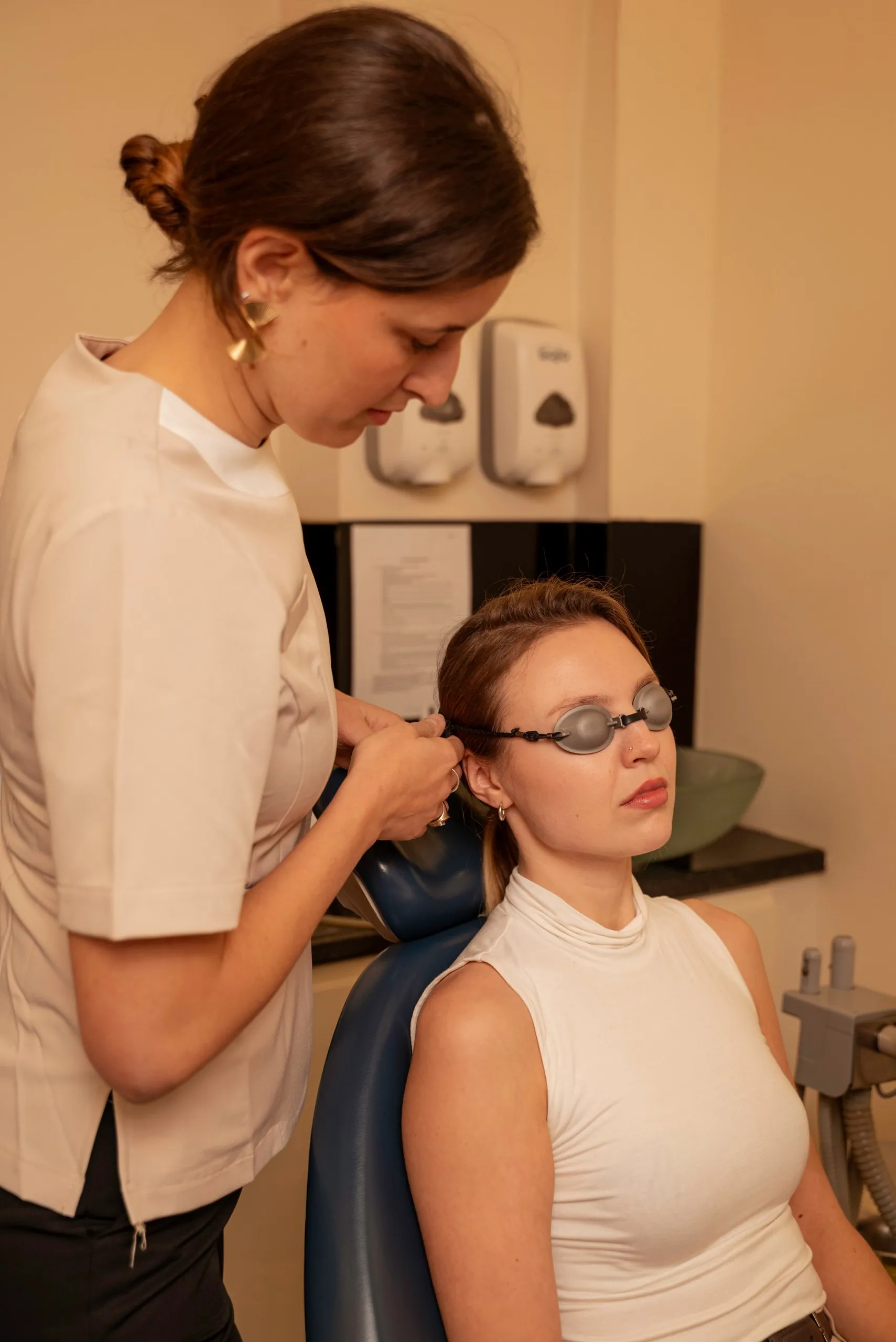
- Laser: single focused wavelength, more efficient for hair removal
- IPL: broad-spectrum light, more versatile (hair, pigmentation, redness) but less specific per use
- For hair removal specifically, laser generally outperforms IPL
- IPL wins for multi-concern treatment (hair + pigmentation + redness in one device)
- For hair removal we use the Lynton Nd:YAG laser or Lynton IPL, chosen by skin type; IPL where broader skin-concern treatment is wanted
This page is part of our wider guide to IPL photofacial, which sets out every option we offer side by side.
Further reading
The technology difference, simply
Patients often assume IPL and laser are the same thing because both produce light that affects skin and hair. They're related but technically distinct, and the differences matter for which treatment is right for which indication.
Laser delivers a single coherent wavelength — one specific frequency of light, tightly focused. Examples: Diode laser (810nm), Nd:YAG (1064nm), Alexandrite (755nm), Ruby (694nm), Picosecond (variable, typically 1064/532nm). Each laser wavelength is selected for what it targets in the skin.
IPL (Intense Pulsed Light) delivers a broad spectrum of wavelengths (typically 515-1200nm) filtered to specific bands depending on indication. It's not a single coherent beam — it's a broader pulse of mixed light. Filters select which wavelength bands are delivered.
Neither is universally 'better.' They're different tools for different jobs.
Which is better for which indication
Hair removal
Laser typically wins for darker hair on lighter skin (Fitzpatrick I-III with coarse dark hair). Single-wavelength precision means more energy delivered to the hair follicle melanin without competing absorption.
IPL wins on speed for large areas where broad-spectrum coverage and faster pulse rates matter (e.g. legs, back).
For darker skin (Fitzpatrick IV-VI) — Nd:YAG laser at 1064nm is the safer choice. IPL is typically not appropriate for darker skin due to surface melanin absorption risk.
At DWL, hair removal is carried out with either our Lynton Nd:YAG laser (1064nm), used for darker skin, or our Lynton IPL, chosen according to your skin type and hair colour at consultation.
Vascular indications (rosacea, thread veins, spider veins)
IPL typically wins. Broad-spectrum protocols selectively target dilated capillaries. Vascular IPL is a mainstay treatment for rosacea management at clinics like DWL.
Laser (specifically pulsed-dye laser) is also effective for vascular work but tends to produce more bruising. IPL gives comparable outcomes with less downtime for most patients.
Pigmentation (sun damage, age spots)
Depends on depth. Surface pigmentation often responds well to both IPL and Q-switched laser. Deeper pigmentation may need laser. Melasma is its own conversation — see our dedicated melasma page (often topical-first, laser-cautious).
Photofacial / skin rejuvenation
IPL wins. The broad-spectrum approach delivers multiple skin benefits in one session — pigmentation, texture, collagen stimulation. Laser-based skin rejuvenation exists but typically targets a single indication per session.
Tattoo removal
Laser, specifically a Q-switched laser. IPL is not appropriate for tattoo removal — the pigment shattering required needs short-pulse high-energy laser delivery. We use a Q-switched laser for tattoo removal.
Skin type appropriateness
Fitzpatrick I-III (lighter skin) — both IPL and most lasers work well. Choose by indication.
Fitzpatrick IV (olive skin) — Nd:YAG laser (1064nm) safer than IPL. Specific IPL protocols may be appropriate but with caution.
Fitzpatrick V-VI (darker skin) — Nd:YAG 1064nm laser is the appropriate choice. IPL generally not safe due to surface melanin absorption (risk of burns and post-inflammatory hyperpigmentation).
This is why we ask about skin type at consultation. The right device-and-protocol choice depends on it.
Session counts and cost
Per session cost (general guide):
- Laser or IPL hair removal £45–£295 per session by area (small £45–£75, medium £95–£165, large £195–£295)
- IPL photofacial £180
- IPL facial vessels from £80
- Patch test free for either modality
Session counts (typical):
- Laser hair removal 6-8 sessions for permanent reduction
- IPL hair removal 8-10 sessions (slightly more than laser typically)
- IPL photofacial 3-5 sessions
- IPL vascular 3-5 sessions
Cost per outcome is comparable across modalities when matched correctly to indication. The differences are in clinical fit, not pure cost.
Pain and downtime
Laser — sharper sensation per pulse (snapped rubber band). Mild redness post-treatment, resolves within hours. Higher precision means slightly higher comfort with topical numbing.
IPL — warmer broader sensation per pulse. Mild redness post-treatment, longer-lasting (24-48 hours) than laser. Generally well-tolerated without numbing.
Both modalities have minimal genuine downtime — most patients return to normal activity same day.
Why DWL uses both
We use a Lynton Nd:YAG laser and a Lynton IPL platform. Hair removal uses either, chosen by skin type; IPL is used for vascular work, photofacial, and hair removal where IPL is the better fit.
The modality choice for any specific patient depends on:
1. Skin type (Fitzpatrick assessment at consultation)
2. Indication being treated (hair, vascular, pigmentation, rejuvenation)
3. Hair colour and density (for hair removal cases)
4. Cost and session count considerations
5. Combined-treatment planning where multiple indications co-exist
We don't default-recommend one over the other. Modality matched to case.
Honest scope
IPL and laser are tools. Neither cures conditions; they manage and improve. Permanent results require maintenance for most indications. Sun protection is essential for all post-treatment outcomes regardless of modality.
We say no to both modalities when neither is appropriate (active inflammatory skin conditions, pregnancy, photosensitising medications, specific contraindications). Some consultations end with a recommendation not to treat, or a referral.
Our happy patients,
in their own words
Transparent pricing
Prices are set out below. Your written plan confirms the fee before any treatment begins.
| Service | Price |
|---|---|
| Laser hair removal (per session, by area) | £45–£295 |
| IPL photofacial | £180 |
| IPL facial vessels | from £80 |
| Patch test (either modality) | Free |
Questions
people ask
If your question isn't answered here, call reception on 020 8127 4567 or email reception.
Is laser better than IPL?
Depends on what you're treating. Laser wins for darker hair on lighter skin, tattoo removal, deeper pigmentation. IPL wins for vascular indications (rosacea, thread veins) and skin rejuvenation photofacial. Neither is universally better.
What is the difference between IPL and laser?
Laser delivers a single coherent wavelength of light — one specific frequency, tightly focused. IPL (Intense Pulsed Light) delivers a broad spectrum of wavelengths filtered to specific bands. Both treat skin and hair, but laser is more precise and IPL is more versatile. Different tools for different jobs.
Is IPL the same as laser for safety?
Similar mechanism (non-ionising light energy targeting melanin) — same safety profile regarding cancer (no association). IPL has slightly different technical characteristics than laser but the cancer-safety question has the same answer for both.