Thread vein removal in London
Reviewed By
Dr Vishal Patel
BDS Liverpool · MSc Aesthetic & Restorative Dentistry Manchester · GDC 103127 · AACD Member · Invisalign Diamond II Provider · IFAAS (International Fellowship in Advanced Aesthetic Science) · Facial anatomy & cadaver course, Dr Ali Pirayesh, University of Amsterdam · Harley Academy foundation training in injectable aesthetics · IBSA-trained (Profhilo) · NeoStrata-trained (skin peels) · Lynton Lasers trained, incl. ONDA
Last Updated
October 4, 2026
Lynton IPL or Nd:YAG laser, matched to the vessel and your skin, with honest advice about what it can and cannot do.
Thread vein removal at Dental & Wellness London, Islington treats fine red and blue facial vessels with Lynton IPL or the Lynton Nd:YAG laser, chosen for the size, depth and colour of the vessel and for your skin type. Light is absorbed by the blood inside the vein, which closes and fades over the following weeks. Many people need 1 to 3 sessions, about four weeks apart; results vary. Treatment is from £80 per session; consultation £65, redeemable.
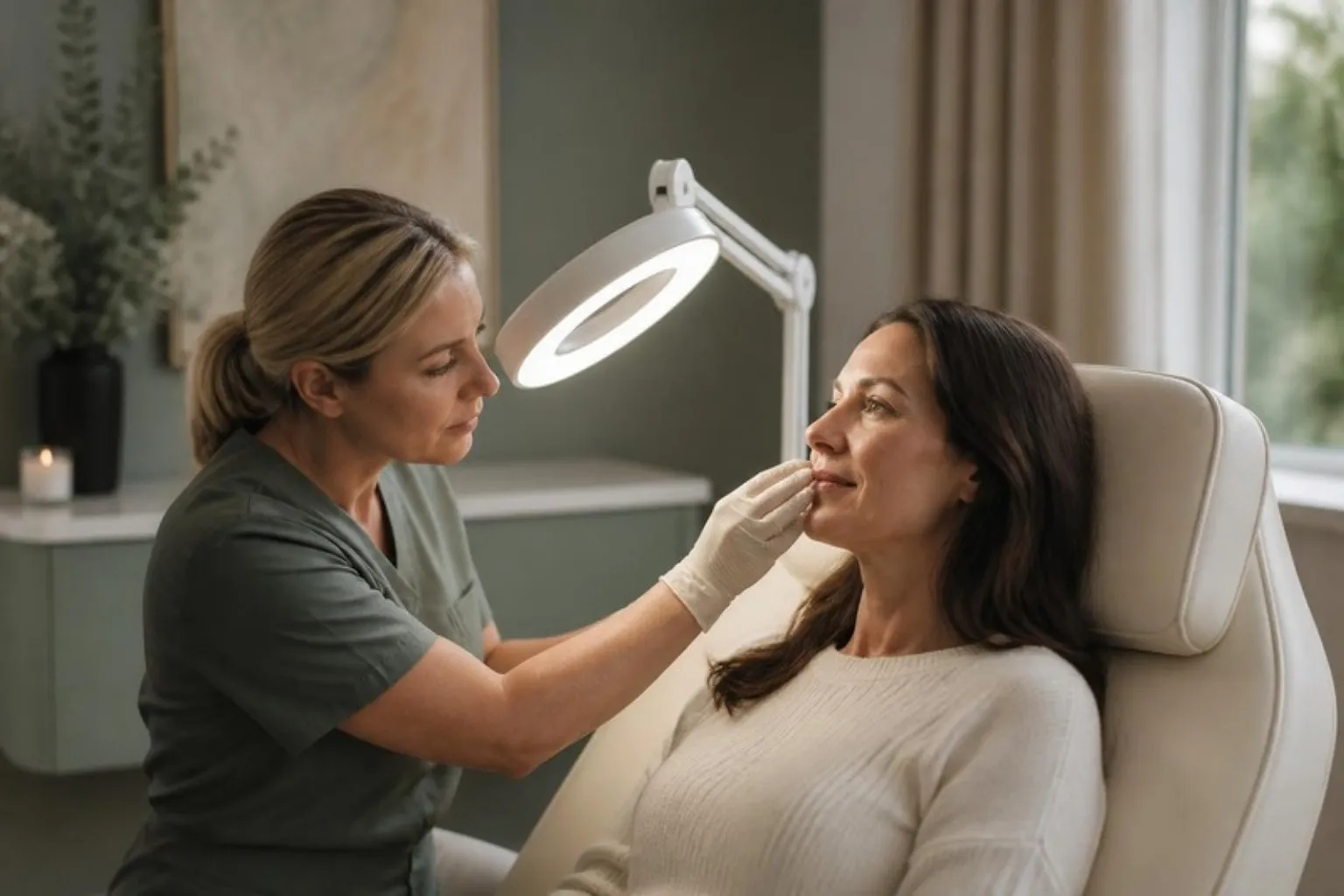
- Lynton IPL or Lynton Nd:YAG laser
- Fine red and blue facial thread veins, broken capillaries, diffuse redness
- Often 1 to 3 sessions, about four weeks apart
- Mild redness for a day or two; little downtime
- Free patch test where needed
- From £80 per session
Thread vein removal in Islington
What thread veins are
Thread veins are small, widened blood vessels that sit just beneath the surface of the skin. On the face they usually appear as fine red lines around the nose, across the cheeks and on the chin, sometimes with a background of diffuse redness. You may also hear them called spider veins, broken capillaries or, in clinical language, telangiectasia. They are not broken in the true sense: the vessel wall has lost some of its tone and stays dilated, so the blood inside shows through the skin.
Facial thread veins are very common and are usually harmless. Most people who ask about them do so because they find them distracting in photographs or under make-up, or because they would like a more even complexion. Thread vein removal at our Islington clinic uses light energy to close these vessels so that they fade, and it is one of the more predictable cosmetic skin treatments when the right device is matched to the right vessel.
What causes facial thread veins
There is rarely a single cause. More often several factors build up over years:
- Sun exposure: long-term ultraviolet damage weakens the collagen that supports small vessels, particularly across the cheeks and nose.
- Genetics and skin type: fair skin that flushes easily is more prone to visible vessels, and they often run in families.
- Rosacea: repeated flushing stretches facial vessels over time. Facial thread veins and persistent redness are among the most common features of rosacea.
- Temperature and weather: wind, cold and sudden changes of temperature encourage vessels to dilate.
- Hormones and pregnancy: new vessels sometimes appear in pregnancy, and some fade afterwards on their own.
- Alcohol, heat and spicy food: these do not cause thread veins directly, but they trigger flushing that can make existing vessels more prominent.
- Age and skin thinning: as skin thins, vessels that were always there become easier to see.
Our article on spider veins, their causes and treatment covers the background in more detail.
Who thread vein removal suits, and who it does not
Treatment tends to suit adults with fine red or blue facial vessels who are prepared to protect their skin from the sun before and after each session. Fine, well-defined red and blue veins respond best. Diffuse redness also improves, though it usually takes a little longer and is more likely to return if the underlying flushing is not managed.
We do not treat during pregnancy or while breastfeeding, on tanned or recently sun-exposed skin, over active infection or broken skin, or while you are taking certain light-sensitising medicines. We ask about your medical history at consultation for this reason. If a mark is raised, changing, bleeding or new, we ask you to see your GP or a dermatologist before any light treatment.
Thread veins and rosacea
Where thread veins are part of rosacea, light treatment can reduce the visible vessels and some of the background redness, but it does not cure the condition. We will talk with you about triggers, gentle skincare and sun protection, and if your rosacea needs medical treatment, such as for inflamed spots or eye symptoms, we will suggest you see your GP or a dermatologist alongside or before treatment with us.
Darker skin types
Darker skin contains more melanin, which competes with the blood vessel for the light energy. This raises the risk of burns and of temporary lighter or darker patches. Darker skin needs particular care: we often favour the Lynton Nd:YAG laser, whose longer wavelength is absorbed less by melanin, and we use conservative settings and a patch test first. If we think the risk outweighs the likely benefit, we will say so plainly.
How Lynton IPL and Nd:YAG laser treat thread veins
Both devices work on the same principle. Light passes through the skin and is absorbed by haemoglobin, the pigment in the blood inside the vessel. That energy turns to heat, which damages the lining of the vessel so that it closes. Over the following weeks the body clears the sealed vessel and it fades from view. The surrounding skin is largely spared because it absorbs far less of the energy. We choose between the two devices according to the size, depth and colour of the vessel, and according to your skin type.
Lynton IPL
Intense pulsed light uses a filtered band of wavelengths delivered through a cooled crystal. It covers a broad area with each pulse, which makes it well suited to fine red vessels, flushing and diffuse redness across the cheeks and nose, particularly where there is also some sun damage or uneven pigment. The same technology is used in our IPL photofacial, which treats redness and sun damage across the whole face.
Lynton Nd:YAG laser
The Nd:YAG laser delivers a single, longer wavelength that reaches deeper into the skin. It is typically chosen for slightly larger, deeper or bluer vessels, such as those along the sides of the nose, and is often the safer option for darker skin types. It can trace individual vessels precisely.
Your consultation and patch test
Treatment begins with a skin and aesthetic consultation (£65, redeemable in full against treatment). We examine your skin in good light, ask how long the vessels have been there, what makes them worse, your medicines, your sun habits and your skincare, and whether there are signs of rosacea. Where it is needed, we carry out a free patch test so we can see how your skin responds before treating more widely. You then receive a written plan with the device we recommend, the likely number of sessions and the total cost.
What a session involves
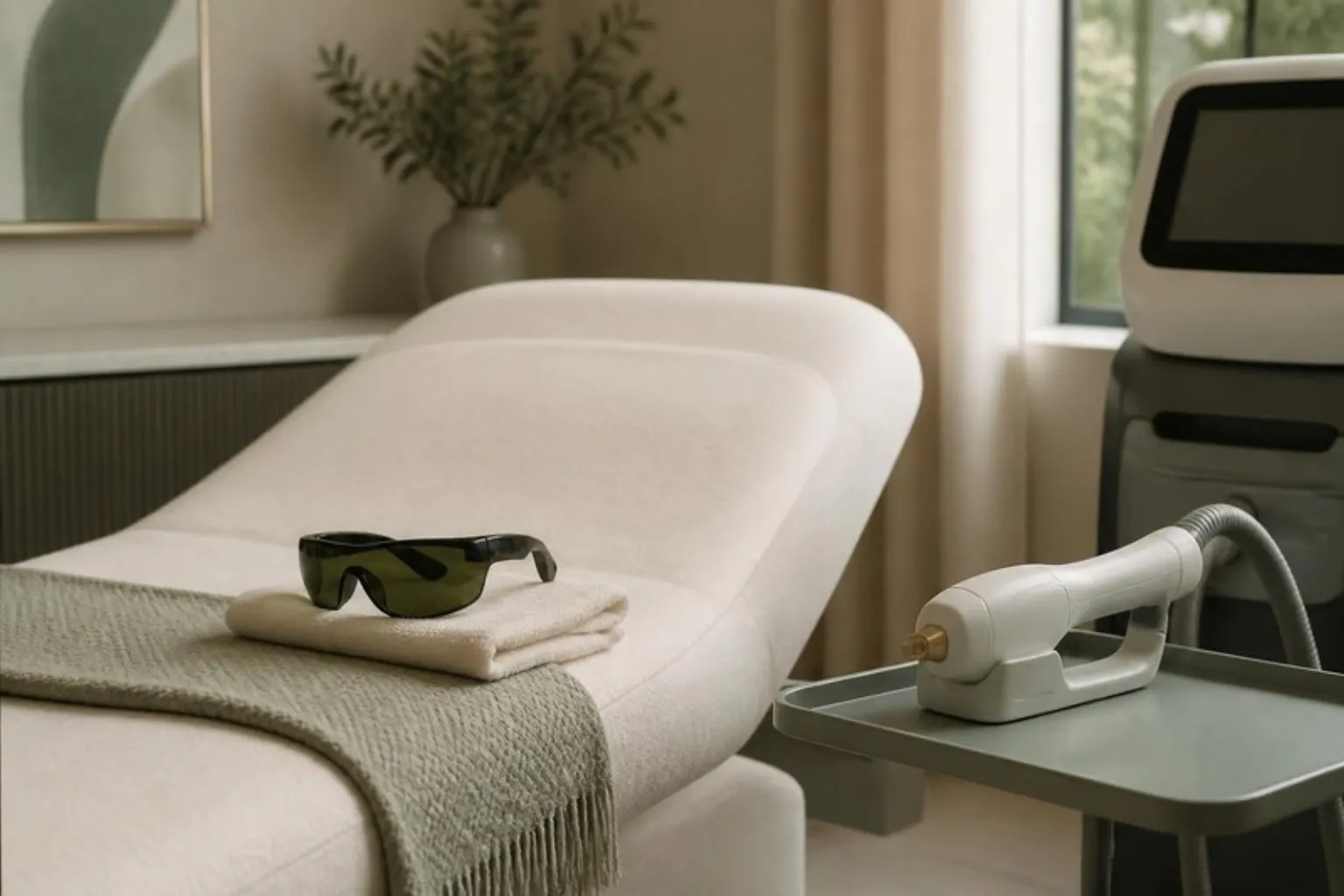
Your skin is cleansed and your eyes are protected with shields. For IPL, a cool gel is applied and each pulse feels like a warm flash, or a light snap against the skin. With the Nd:YAG laser, each pulse is a brief, sharper sting along the vessel. Most people find it manageable without numbing, and the device cools the skin as it works. A small area such as the sides of the nose takes a few minutes; a full face takes longer. Some vessels disappear or change colour during the session itself.
How many sessions you may need, and what results to expect
For facial thread veins, many people need 1 to 3 sessions, about four weeks apart. Small, isolated red vessels may clear after a single session; more widespread vessels, or redness linked to rosacea, usually need a short course. Results vary from person to person, and we cannot promise that every vessel will clear. We review your skin before each session and adjust the plan to how it has responded.
Is thread vein removal permanent?
A vessel that has been closed successfully does not usually reopen. But the tendency that produced it remains, so new thread veins can form over time, especially with sun exposure, flushing or rosacea. Many people return for an occasional maintenance session. Daily sun protection and managing your known triggers are the most useful ways to keep the result.
Downtime and aftercare
Most people return to normal activities straight away. The treated area is usually pink and slightly swollen for a few hours to a day or two. Occasionally a small area of bruising appears, particularly after Nd:YAG laser, and settles within one to two weeks. Make-up can usually be worn the following day if the skin is calm.
- Avoid hot baths, saunas, intense exercise and alcohol for 48 hours, as heat increases flushing and swelling.
- Use a gentle cleanser and a plain moisturiser, and pause retinoids and exfoliating acids until we advise you to restart.
- Apply a broad-spectrum SPF 50 every day and avoid direct sun and sunbeds. Sun protection afterwards is essential.
- Do not pick or scrub any small crusts; let them settle naturally.
- Contact us if you notice blistering, crusting or anything unexpected.
Risks and how we reduce them
The common effects are temporary redness, mild swelling and, occasionally, bruising. Less commonly, the skin can blister or crust, or develop temporary lighter or darker patches. These pigment changes are more likely on darker or tanned skin and usually fade over months, though rarely they can persist. Scarring is rare. We reduce these risks with a careful assessment, patch testing where needed, choosing the device that suits your skin, conservative starting settings, spacing sessions to let the skin settle, and declining to treat tanned skin.
Alternatives we do not offer
We would rather you understood the full picture. Other clinics may offer sclerotherapy, in which a solution is injected into the vein, or short-wave electrical treatments such as Veinwave and Thermavein. We do not offer any of these. Sclerotherapy is mainly used on the legs rather than the face. Light-based treatment is our approach because it treats both individual vessels and the surrounding redness, without needles.
For leg vessels, see our page on leg thread vein removal. Varicose veins, swollen or painful legs, skin changes or ulcers need GP assessment and referral to a vascular service first; we do not treat varicose veins. Where wider skin quality or texture is the main concern, laser rejuvenation or laser resurfacing may suit you better, and brown marks rather than red ones are covered on our laser pigmentation page.
Thread vein removal cost
Facial thread vein removal is from £80 per session, with the price depending on the size and number of areas treated. An IPL photofacial for redness and sun damage across the whole face is £180 per session. Leg thread veins are £75 per session. The skin and aesthetic consultation is £65 and is redeemed in full against treatment, and the patch test is free. We confirm your total cost in writing before you begin, and 0% APR finance over 12 months via Tabeo, subject to status, is available. Our full price list sets out every treatment.
Why have it with us
Every treatment is overseen by Dr Vishal Patel (BDS Liverpool, MSc Aesthetic & Restorative Dentistry, Manchester, GDC 103127), who is Lynton Lasers trained and has ten years of experience in facial aesthetics, alongside around twenty years in dentistry. His training includes the International Fellowship in Advanced Aesthetic Science (IFAAS) and a facial anatomy and cadaver course with Dr Ali Pirayesh at the University of Amsterdam. We assess before we treat, we explain the limits honestly, and we will tell you if light treatment is not the right answer for your skin. We have been caring for patients in Islington since 2009 and are rated 4.7 stars from more than 300 Google reviews.
Getting here
The clinic is at 222 Essex Road, Islington, London N1 3AP, two minutes from Essex Road station. Angel is a 15 to 20 minute walk, and Highbury, Canonbury, Hackney and Stoke Newington are a short bus or bike ride away. Buses 38, 56, 73, 341 and 476 stop on Essex Road, and many patients cycle or use a Lime or Forest e-bike. The clinic is on the ground floor and is wheelchair accessible. We are open Monday to Friday, 8am to 7pm, by appointment. You can call 020 8127 4567, message us on WhatsApp on +44 7974 910222, or get in touch through our contact page.
Clinically reviewed by Dr Vishal Patel · BDS · MSc Aesthetic & Restorative Dentistry · GDC 103127. Last reviewed 4 October 2026.
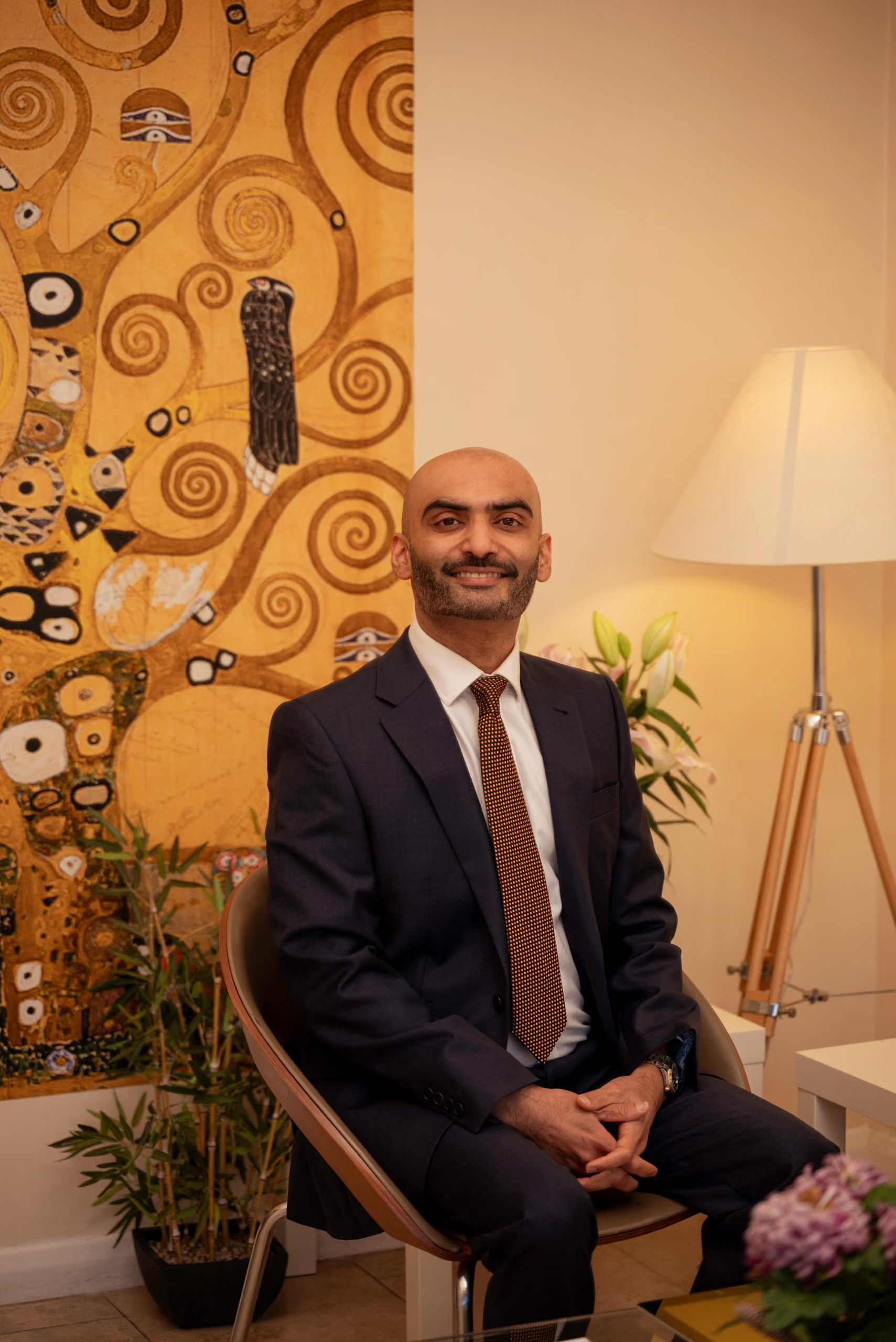
Dr Vishal Patel
Clinical lead · Lynton Lasers trained, including ONDA
BDS Liverpool · MSc Aesthetic & Restorative Dentistry (Manchester) · GDC 103127 · Lynton Lasers trained, including ONDA · International Fellowship in Advanced Aesthetic Science (IFAAS) · 10 years in facial aesthetics
We will tell you when a treatment is not the right answer. That honesty is part of the treatment.
Read Dr Patel’s profile →For redness and sun damage across the whole face, see our guide to IPL photofacial.
Further reading
The right light, for your vessels.
Consultation — £65
A skin assessment with an honest view of what will help. The fee is redeemable in full against treatment.
Patch test
A free patch test where needed, so we can see how your skin responds first.
Sessions
Often 1 to 3, about four weeks apart. Results vary.
Review
We review your skin and agree maintenance, including daily SPF.
Start with a skin consultation
- £65, redeemable in full against treatment
- Lynton IPL or Nd:YAG, matched to the vessel
- Honest advice about rosacea and limits
Or call 020 8127 4567 · WhatsApp +44 7974 910222
222 Essex Road, Islington N1 3AP · Mon–Fri, 8am–7pm
Vessels fade over a few weeks.
Mild redness and swelling; some vessels fade at once.
Swelling settles; any light bruising fades.
Treated vessels are cleared by the body.
Daily SPF 50 and managing triggers help keep the result.
Our happy patients,
in their own words
Transparent pricing
Prices are set out below. Your written plan confirms the fee before any treatment begins.
Clear prices, set out before you start.
Redeemable in full against treatment
Per session, Lynton IPL or Nd:YAG laser
Per session, see leg thread vein removal
Included
- Vessel and skin assessment, with a free patch test where needed
- A written plan and total cost before treatment
Quoted separately
- Skincare and sun protection products, priced separately
Questions
people ask
If your question isn't answered here, call reception on 020 8127 4567 or email reception.
How much does thread vein removal cost in London?
Prices vary by clinic. At Dental & Wellness London, Islington, facial thread vein removal is from £80 per session, and the skin consultation is £65, redeemable in full against treatment.
How many sessions does facial thread vein removal take?
Many people need 1 to 3 sessions, about four weeks apart. Small red vessels can clear in one; wider redness or rosacea usually needs a short course, and results vary.
Does thread vein removal hurt?
Most people describe each pulse as a warm flash or a quick snap against the skin. It is usually manageable without numbing, and the device cools the skin as it works.
Is there downtime after facial thread vein treatment?
Very little. The skin is usually pink and slightly swollen for a day or two, and occasional light bruising settles within one to two weeks. Daily SPF 50 is essential afterwards.
Is thread vein removal permanent?
A vessel that has been closed does not usually reopen, but new thread veins can form with sun exposure, flushing or rosacea. Some people return for occasional maintenance.
Can darker skin have thread vein removal?
Often, with care. We usually favour the Lynton Nd:YAG laser, use conservative settings and patch test first, because darker skin has a higher risk of pigment change. If it is not safe, we will say so.
Can laser help thread veins caused by rosacea?
It can reduce visible vessels and some background redness, but it does not cure rosacea. We combine treatment with advice on triggers and sun protection, and suggest GP or dermatologist care where medical treatment is needed.
Can I have thread vein removal while pregnant?
No. We postpone treatment until after pregnancy and breastfeeding. Some vessels that appear in pregnancy fade on their own afterwards.