Melasma and laser: the honest answer
Reviewed By
Dr Vishal Patel
BDS Liverpool · MSc Aesthetic & Restorative Dentistry Manchester · GDC 103127 · AACD Member · Invisalign Diamond II Provider · IFAAS (International Fellowship in Advanced Aesthetic Science) · Facial anatomy & cadaver course, Dr Ali Pirayesh, University of Amsterdam · Harley Academy foundation training in injectable aesthetics · IBSA-trained (Profhilo) · NeoStrata-trained (skin peels) · Lynton Lasers trained, incl. ONDA
Last Updated
October 1, 2026
Why laser often makes melasma worse, what to try first, and the few cases where it can help.
Laser can make melasma worse, because heat can trigger more pigment, and results often relapse. The best first steps are strict daily sun protection, clinical skincare and gentle peels, with prescription treatment from your GP or a dermatologist where needed. Laser is considered only in selected cases, at conservative settings. At Dental & Wellness London, Islington, peels are from £160 and melasma treatment from £80.
- Laser can worsen melasma and often relapses
- Start with SPF, clinical skincare and gentle peels
- Prescription treatment via your GP or dermatologist
- Laser only in selected cases, conservatively
- Peels from £160 · melasma treatment from £80
Melasma and laser
The honest answer about laser for melasma
Many people with melasma come to us asking for laser, having read that it can clear pigmentation in a few sessions. For sun spots and age spots, that is often true. Our page on laser pigmentation removal covers those. For melasma it usually is not, and in some people laser makes it worse. This page explains why, what tends to work better first, and the limited situations in which we would consider laser at all. We would rather you hear this before spending money on treatment than afterwards.
What melasma is
Melasma is a common form of pigmentation that usually appears as patchy, symmetrical brown or grey-brown areas across the cheeks, forehead, upper lip, nose or jawline. It is more common in women, in people with medium to darker skin types, and in those with a family history of it. It often appears or deepens during pregnancy, with hormonal contraception or hormone treatment, and after periods of strong sun.
Unlike a sun spot, which is a fixed area of excess pigment, melasma reflects an ongoing tendency of the skin to overproduce pigment in response to its triggers. Some melasma sits closer to the surface and some sits deeper, and many people have a mixture. Deeper pigment is slower and harder to shift with any treatment. This is why melasma behaves so differently from other pigmentation, and why it needs its own plan.
Why laser can make melasma worse
Melasma is driven by hormones, sunlight and visible light, and inflammation, so pigment keeps being produced. Laser and IPL deliver heat, which can itself trigger more pigment. Many people see melasma fade after laser, then return darker within weeks. That is why we do not start with laser.
The pattern is familiar to anyone who treats pigmentation. The first session appears to work: the patches lighten and the result looks encouraging. Then, as the skin responds to the heat and inflammation of treatment, the pigment cells become more active, and the melasma comes back, sometimes darker and wider than before. This rebound is more likely in darker skin types and with more aggressive settings. Heat-based treatments in general, including IPL and resurfacing, carry this risk in some people, and even everyday heat such as saunas, hot yoga or cooking over a hot stove can make melasma more noticeable. If you are comparing light-based options, IPL vs BBL explains how they differ.
Can melasma be cured?
It can be controlled, often very well, but it tends to recur with sun or hormonal change, so maintenance matters. We are careful not to promise clearance. A realistic aim is skin where the patches are much lighter, more even and easier to cover or forget about, with a routine that keeps them that way. If you stop protecting your skin, or your hormonal situation changes, melasma can return even after a very good response. Results vary, and we will be honest with you about what is likely in your case.
What works best first
- Strict daily sun protection, ideally a tinted SPF 50 that also blocks visible light.
- Clinical skincare with pigment-regulating ingredients, chosen for your skin. We use NeoStrata and can supply other professional brands through our pharmacy partner.
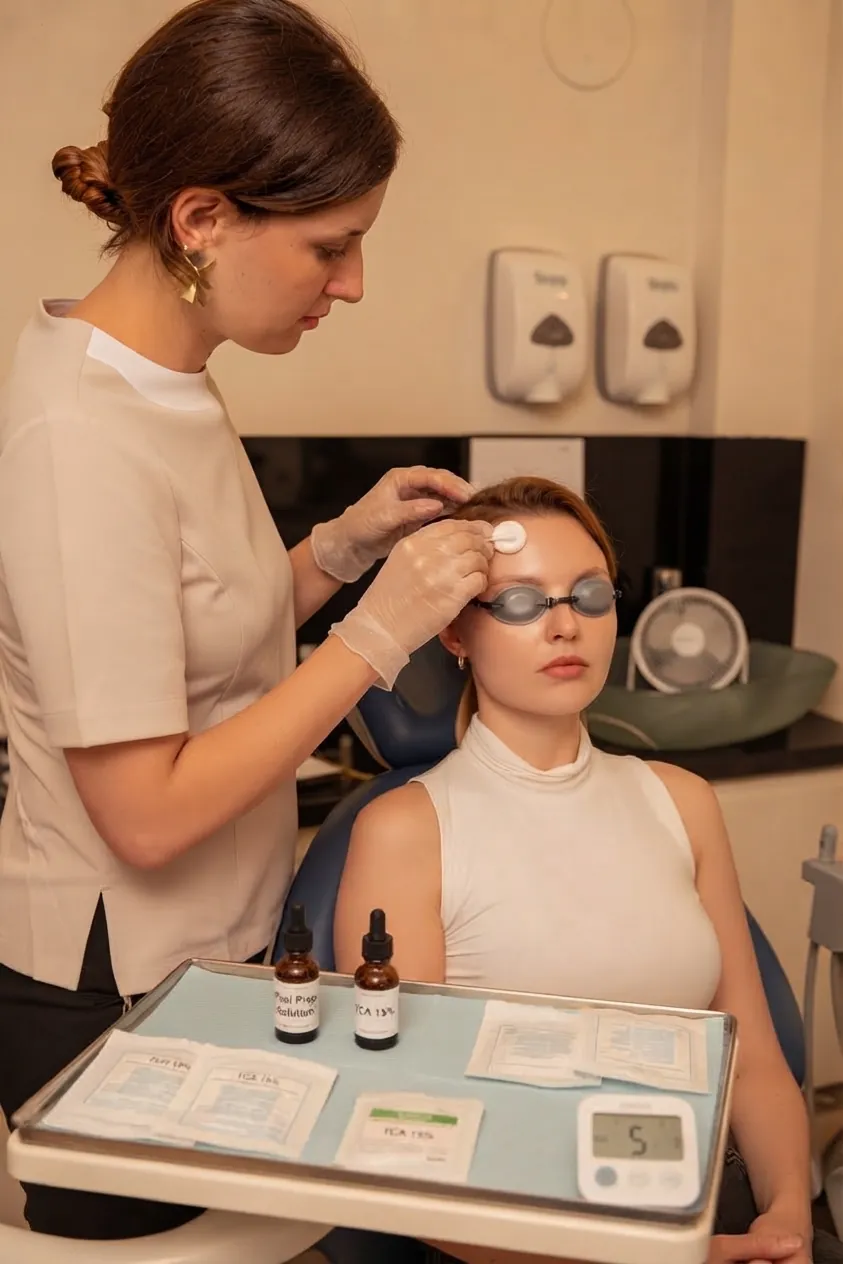
- Gentle chemical peels (from £160), used selectively.
- Your GP or a dermatologist for prescription treatment where appropriate.
Sun and visible light protection
This is the foundation, and without it nothing else holds. Melasma responds not only to ultraviolet light but also to visible light, which ordinary clear sunscreens block poorly. A tinted, broad-spectrum SPF 50 applied every morning, reapplied through the day when outdoors, and paired with a wide-brimmed hat in strong sun, does more for most people's melasma than any single clinic treatment. It matters on cloudy days and in winter too.
Clinical skincare
A considered routine with ingredients that calm pigment production, support the skin barrier and gently increase cell turnover is usually the main treatment. We select products for your skin type and sensitivity, because irritated skin can produce more pigment. Our pharmacy partner can supply brands such as ZO Skin Health, SkinCeuticals, Obagi, La Roche-Posay and Heliocare where they suit you better. Improvement is gradual, typically judged over several months rather than weeks.
Gentle peels
Light, carefully chosen peels can help lift surface pigment and support skincare. We use them selectively and conservatively, because a peel that inflames the skin can provoke the very problem we are treating.
Medical treatment
Some people benefit from prescription treatment for melasma. That is a matter for your GP or a dermatologist, and we are happy to write to them with our findings. If your melasma is extensive, does not respond, or there is any doubt about the diagnosis, we will recommend a dermatology opinion.
When is laser appropriate?
Only in selected cases, after skincare has stabilised the melasma, at very conservative settings. Melasma treatment is from £80 per session. Read more about melasma.
In practice, we would only consider laser for someone whose melasma has been settled for some time on a good skincare and sun protection routine, whose skin type carries a lower risk of rebound, and who understands that the improvement may be modest and may not last without maintenance. We use low-energy settings, treat cautiously, review the skin closely between sessions and stop if there is any sign of the pigment darkening. For many people we never reach the point where laser is the right step, and that is a reasonable outcome.
Who should not have laser for melasma
- Anyone who is pregnant or breastfeeding, when melasma often settles on its own after the hormonal change passes
- Anyone with tanned skin or recent strong sun exposure
- People whose melasma is still active, spreading or darkening
- Darker skin types where the risk of rebound pigmentation is high
- Anyone taking some light-sensitising medicines
- Anyone unable to commit to daily sun protection afterwards
What your consultation involves
A skin consultation costs £65 and is redeemed in full against treatment. We look closely at the pattern and depth of your pigmentation, ask when it started, what makes it better or worse, about pregnancy, hormonal contraception or hormone treatment, your medicines, your skincare and your sun habits. Melasma is sometimes confused with sun spots or with marks left after inflammation, and the treatment for each is different, so getting the diagnosis right comes first.
We then agree a plan, which usually starts with sun protection and skincare and is reviewed after a few months. If laser is ever discussed, we will patch test first, free of charge, and explain the risks in plain terms before you decide. For light-based treatment generally, our IPL aftercare guidance sets out what follows a session.
How long before you see a difference
Melasma responds slowly, and patience is part of the treatment. With consistent sun protection and the right skincare, many people notice the patches beginning to soften within two to three months, with further gradual improvement after that. Deeper pigment takes longer and may only partly fade. We usually review your skin, with photographs taken in the same light, after a few months so that progress can be judged fairly rather than day to day in the mirror. If there is little change despite a good routine, that is the point at which we would discuss a dermatology referral rather than escalate to stronger heat-based treatment.
Maintaining the result
Melasma management is long term. Most people need to keep up daily tinted SPF 50 and a maintenance skincare routine indefinitely, with closer attention in spring and summer and around any hormonal change. Some benefit from an occasional peel. We review your skin periodically and adjust the routine as it changes. Flares are common and not a sign of failure; they are a reason to return to the basics quickly.
Why have it with us
Dr Vishal Patel is NeoStrata and Lynton Lasers trained, and will be honest about what each option can do. He has ten years of experience in facial aesthetics and oversees every skin plan personally. We have cared for patients in Islington since 2009 and are rated 4.7 stars from more than 300 Google reviews.
The clinic is at 222 Essex Road, Islington, London N1 3AP, two minutes from Essex Road station and a short ride from Angel, Highbury, Canonbury, Hackney and Stoke Newington. Buses 38, 56, 73, 341 and 476 stop on Essex Road. Many patients cycle or use a Lime or Forest e-bike. We are open Monday to Friday, 8am to 7pm, by appointment.
Clinically reviewed by Dr Vishal Patel · BDS · MSc Aesthetic & Restorative Dentistry · GDC 103127. Last reviewed 1 October 2026.

Dr Vishal Patel
Clinical lead · Sole aesthetic prescriber · 10 years in facial aesthetics
BDS Liverpool · MSc Aesthetic & Restorative Dentistry (Manchester) · GDC 103127 · International Fellowship in Advanced Aesthetic Science (IFAAS) · Facial anatomy and cadaver course with Dr Ali Pirayesh, University of Amsterdam · Harley Academy · IBSA and NeoStrata trained
We will tell you when a treatment is not the right answer. That honesty is part of the treatment.
Read Dr Patel’s profile →If you are still weighing up your options, our overview of IPL photofacial brings them together in one place.
Why melasma resists laser
Melasma involves not just surface pigmentation but ongoing pigment production driven by hormones and inflammation. Laser delivers heat — which is itself an inflammatory trigger. The paradox: laser temporarily improves the appearance, then triggers more melanin production over the following months. Net result often worse than starting point.
This isn't a clinic-specific issue — it's true across the dermatology literature on melasma. Most laser modalities cause some degree of paradoxical worsening.
What actually helps for melasma
Strict sun protection (foundation)
- SPF 50+ daily including indoors
- Iron-oxide-containing tinted SPF specifically (better visible light protection)
- Wide-brimmed hats outdoors
- Sun avoidance especially during peak hours
Without this, no other treatment works long-term.
Topical regimens (first line)
- Hydroquinone (prescription strength)
- Retinoids (tretinoin)
- Vitamin C serums
- Niacinamide
- Azelaic acid
- Combinations (the 'Kligman regimen' classically)
3-6 months of consistent use needed for substantive improvement.
Gentle chemical peels (selective use)
- Superficial salicylic or glycolic peels can help
- Used cautiously — too aggressive triggers worsening
- Course-based with monitoring
Oral tranexamic acid (for selected cases)
- Prescribed by dermatologist
- Off-label use for stubborn melasma
- Evidence supports its use
Laser only in specific cases
- Q-switched lasers at very low fluences
- Pico lasers in some protocols
- For specific patient profiles only — assessed by skin specialist
What we don't do at DWL for melasma
- Aggressive ablative laser (high paradoxical worsening risk)
- IPL for melasma (high risk)
- Aggressive chemical peels without careful protocol
- Quick-fix promises
We say no to laser for most melasma cases. The honest first-line is topical regimens with strict sun protection.
When we recommend referral
Substantial or treatment-resistant melasma — dermatology referral for specialist management. Sometimes oral tranexamic acid, sometimes specialist laser protocols not available at general aesthetic clinics.
Our happy patients,
in their own words
Transparent pricing
Prices are set out below. Your written plan confirms the fee before any treatment begins.
Clear prices, set out before you start.
Redeemable in full against treatment
Per peel
Per session, selected cases
Included
- Skin assessment
- A written plan
Quoted separately
- Skincare products, priced separately
Questions
people ask
If your question isn't answered here, call reception on 020 8127 4567 or email reception.
Can melasma be cured?
It can be controlled, often very well, but it tends to recur with sun exposure or hormonal change, so maintenance matters.
Why is laser problematic for melasma?
Laser delivers heat, which can trigger more pigment. Melasma often fades, then returns darker.
What should I try first for melasma?
Strict daily SPF that also blocks visible light, clinical skincare and gentle peels, with prescription treatment from your GP or a dermatologist where appropriate.
When is laser appropriate for melasma?
Only in selected cases, once skincare has stabilised it, and at very conservative settings.
Will melasma come back after treatment?
It can, especially with sun or hormonal change. Daily SPF and maintenance skincare reduce the risk.