Picosecond and Q-switched lasers both remove tattoos by shattering ink into fragments the body clears, but picosecond lasers fire in trillionths of a second rather than billionths, breaking pigment into finer particles. In practice that usually means fewer sessions, better results on stubborn colours, and slightly more comfort. Q-switched lasers still work well; picosecond simply works better in most cases. The gap is real, but it is not infinite.
Why this comparison gets oversold in both directions
Clinic websites tell two versions of this story. Some treat picosecond as a magic upgrade that dissolves any tattoo in a handful of sessions. Others, usually clinics still running older Q-switched machines, downplay the difference as marketing hype. Neither is quite honest. The physics genuinely favours picosecond for most tattoos, but it doesn't turn a twenty-session removal into a two-session one, and Q-switched technology still clears plenty of ink perfectly well. Our tattoo removal service uses a Q-switched laser.
What both lasers actually do
Both laser types work the same way in principle: a burst of light energy is absorbed by tattoo pigment, which shatters into fragments small enough for the immune system to carry away over the following weeks. Neither laser removes ink instantly, and both need multiple sessions spaced six to eight weeks apart to let the body clear each round of shattered pigment.
The real difference — pulse speed
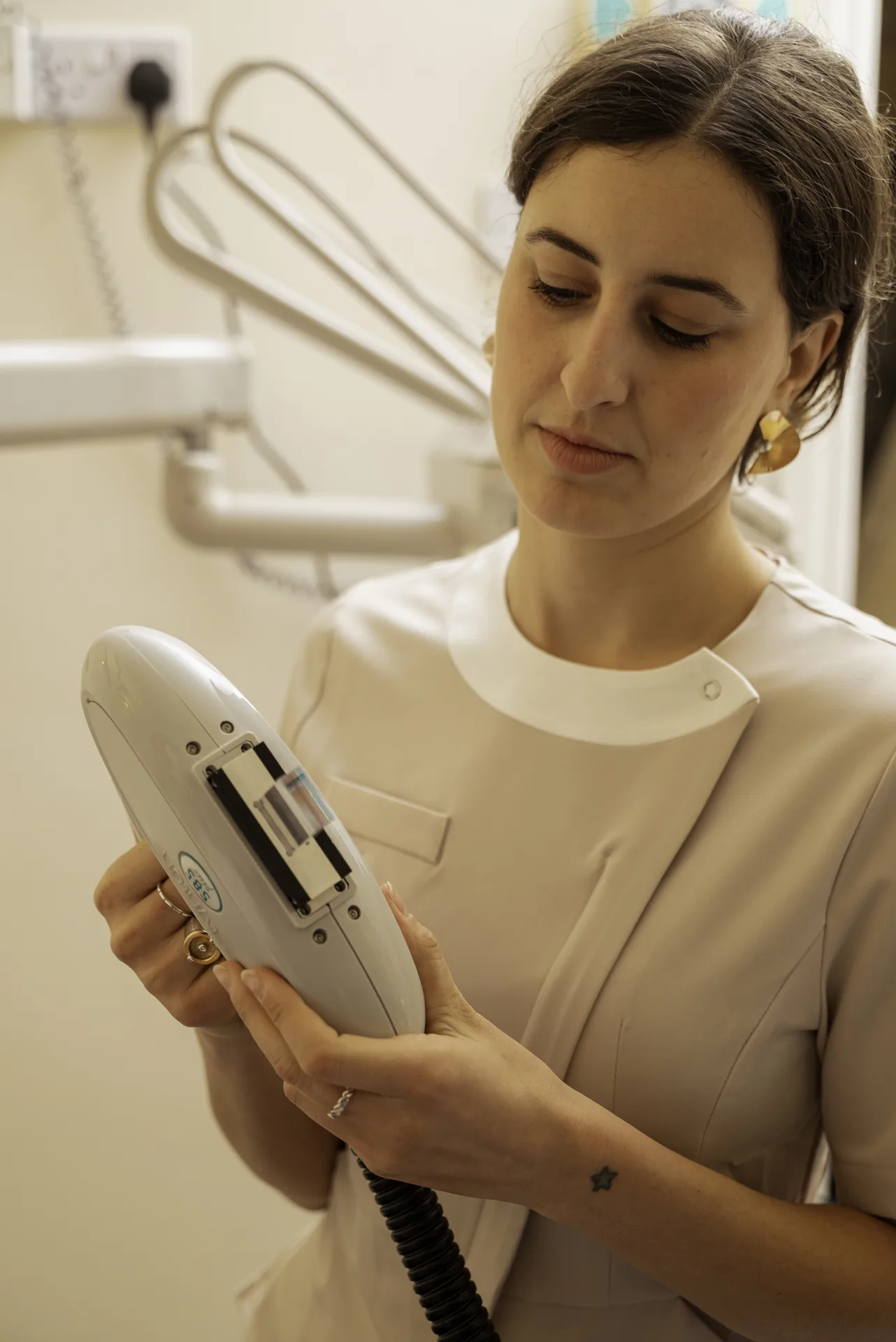
A Q-switched laser fires in nanoseconds — billionths of a second. A picosecond laser fires in picoseconds — trillionths of a second, roughly a thousand times faster. That shorter pulse delivers energy to the pigment before it has time to spread as heat, which shatters ink into smaller, more evenly sized particles. Smaller fragments clear faster and more completely, which is why picosecond lasers typically need fewer total sessions and perform noticeably better on stubborn colours — greens and blues in particular, which Q-switched technology has always struggled with. See our page on coloured tattoo removal for what is realistic.
Comfort, skin safety, and the things that are close
A faster pulse also produces less heat in the surrounding skin, which generally means less discomfort during treatment and a lower risk of scarring or pigment change in the skin around the tattoo — an advantage that matters more for darker skin tones, where excess heat is more likely to cause lasting pigment changes. Where the two technologies are close: both are similarly safe in experienced hands, both need the same aftercare, and both carry the same small risk of paradoxical darkening on certain cosmetic-tattoo pigments, which is a pigment-chemistry issue rather than a laser-speed one.
So why do some clinics still use Q-switched?
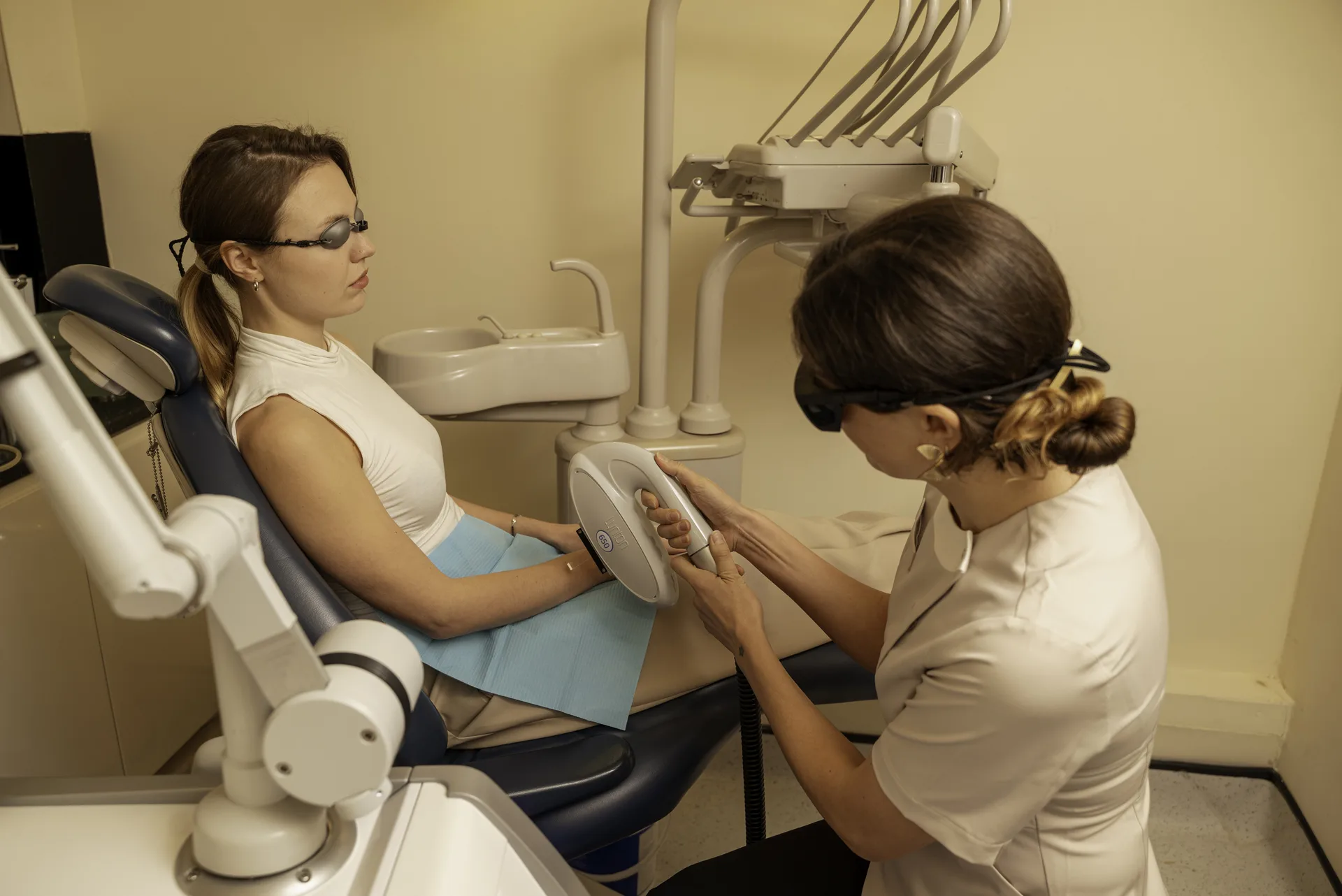
Mostly cost. Picosecond machines are significantly more expensive to buy and maintain, and Q-switched lasers remain genuinely effective on black and dark blue ink, which covers a large share of tattoos. A clinic with an older Q-switched machine isn't necessarily giving you inferior care — but for stubborn colours, denser ink, or a patient who wants the fewest possible sessions, picosecond can be the better tool. We use a Q-switched laser and say so plainly at consultation; our PicoSure alternative page explains how we approach this.
Does the brand of laser matter?
Within the picosecond category, less than people think. The underlying physics — pulse duration, wavelength options, spot size — matters more than the manufacturer's name. What matters more than either is the clinician's judgement: reading your specific ink, skin type, and tattoo age to plan realistic spacing and settings, and being honest when a tattoo will need more sessions than a website headline implies.
Frequently asked questions
Is picosecond always better? For most tattoos, yes — fewer sessions and better results on stubborn colours. For solid black ink, the practical difference is smaller.
Why do some clinics still use Q-switched lasers? Largely cost, and because Q-switched still performs well on black and dark blue ink.
Does picosecond hurt less? Generally, yes — the faster pulse produces less heat in surrounding skin, which most patients find more comfortable.
Will picosecond get rid of all colours? No single laser type is equally effective on every pigment. Whites, yellows and some cosmetic pinks remain difficult for both technologies. Our guide to blue, green and red tattoo removal goes further.
Does the laser brand matter? Less than the underlying pulse technology and the clinician's experience reading your specific tattoo.
Book an assessment
The right laser matters, but the right plan matters more. Tattoo removal is from £750 per course of up to 10 appointments, with a free patch test; see tattoo removal cost in London. 0% APR finance over 12 months via Tabeo, subject to status.
Dental & Wellness London, 222 Essex Road, Islington, London N1 3AP. Call 020 8127 4567 or WhatsApp +44 7974 910222. Monday–Friday, 8am–7pm by appointment.
Reviewed by Dr Vishal Patel · BDS (Liverpool), MSc Aesthetic & Restorative Dentistry (Manchester), AACD member · GDC 103127. Last reviewed 5 June 2026.