The wavelength science, simply
Laser pigment removal works on selective absorption — different pigments absorb different wavelengths. Black and dark blue respond well to one wavelength; red, orange and yellow to another; light blue, turquoise and white resist both.
Colour-by-colour realistic outcomes
Black ink: best case, 6-10 sessions. Red/orange/yellow: generally good clearance. Light green/sky blue/turquoise: the most stubborn, sometimes only partial fade over 12-16 sessions. Results vary, and some colours may not clear fully with a Q-switched laser. White ink: can paradoxically darken — we don't laser it.
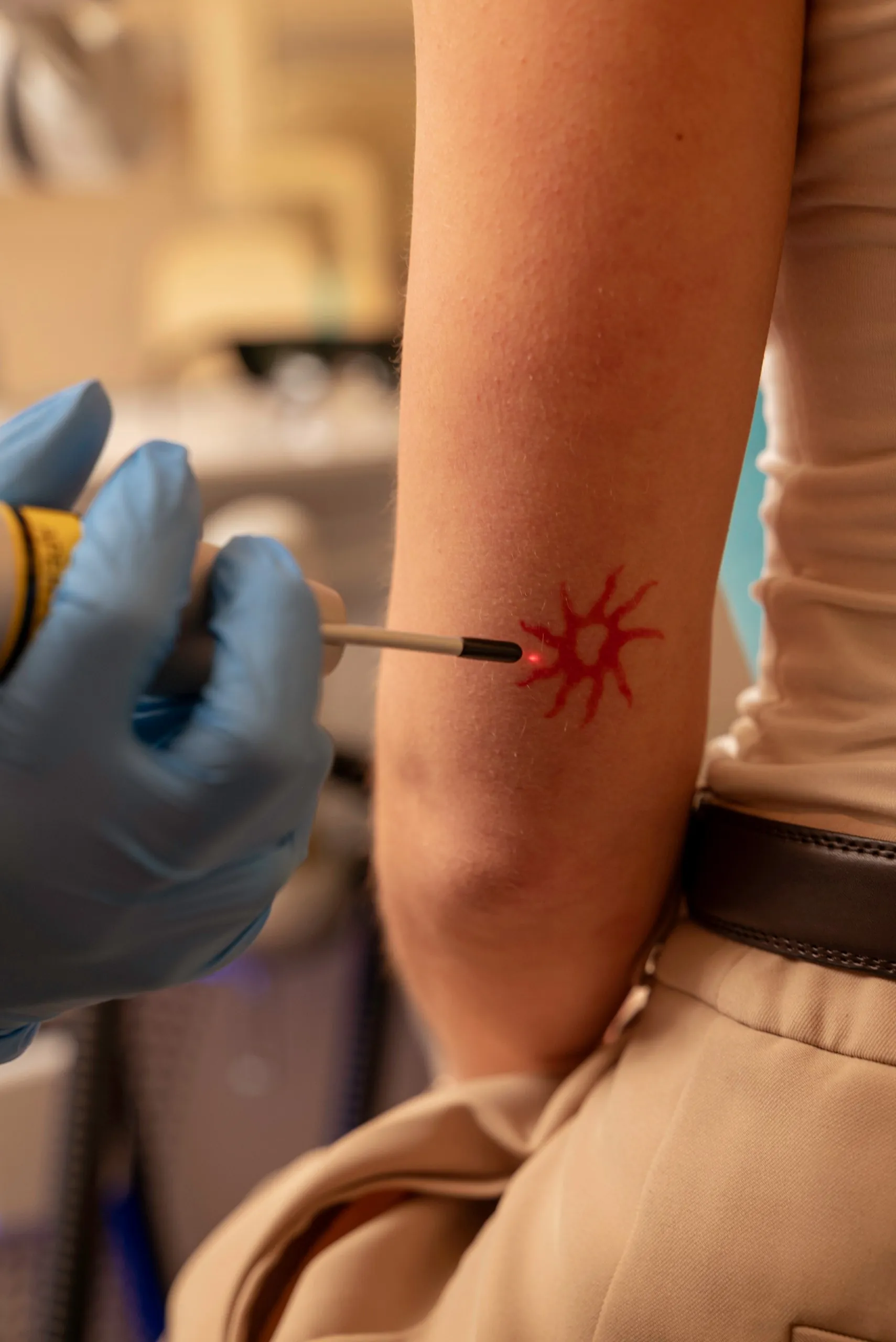
Multi-coloured tattoo strategy
Black components first, then warm pigments, then stubborn pigments last, avoiding skin-tone or white pigments where possible. Our guide to laser tattoo removal explains the process in more detail.
When complete removal isn't realistic
For tattoos with significant light green, sky blue, turquoise or white ink, we're honest at consultation that complete removal may not be achievable — substantial fade plus cover-up tattoo is often the realistic outcome.
By the DWL Laser team under Dr Vishal Patel, GDC 103127. Tattoo removal from £750 per course of up to 10 appointments. Last reviewed 2026-05-17.