White fillings: tooth-coloured composite repairs that last
Reviewed By
Dr Vishal Patel
BDS Liverpool · MSc Aesthetic & Restorative Dentistry Manchester · GDC 103127 · AACD Member · Invisalign Diamond II Provider · IFAAS (International Fellowship in Advanced Aesthetic Science) · Facial anatomy & cadaver course, Dr Ali Pirayesh, University of Amsterdam · Harley Academy foundation training in injectable aesthetics · IBSA-trained (Profhilo) · NeoStrata-trained (skin peels) · Lynton Lasers trained, incl. ONDA
Last Updated
October 3, 2026
Mercury-free composite fillings, shade-matched and bonded to keep as much healthy tooth as possible. We will also tell you when a tooth can simply be watched.
White fillings at Dental & Wellness London in Islington are mercury-free composite fillings, shade-matched and bonded to repair teeth damaged by decay or fracture. They are planned after a £65 dental examination under Dr Vishal Patel, GDC 103127, and usually placed in one appointment of under an hour. Cost depends on size and is quoted in writing after assessment. They commonly last seven to ten years.
Heading
- Cost quoted in writing after assessment, depending on size
- Usually one appointment of under an hour
- Mercury-free, biocompatible, tooth-coloured
- Dental examination £65 (30 minutes) · problem assessment £75
- Commonly lasts 7–10 years with proper care; results vary
Usually one visit, under an hour per filling
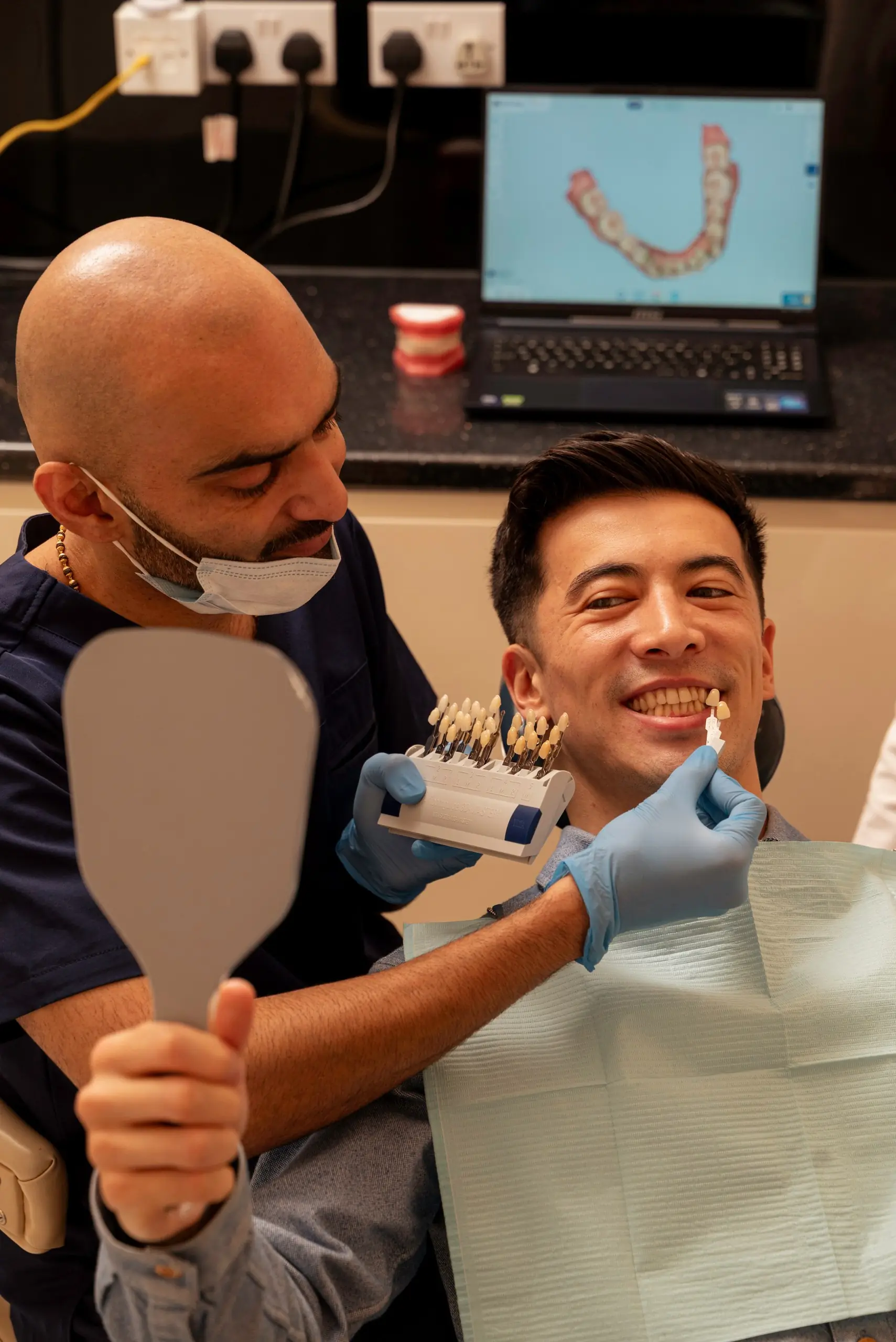
White fillings, also called composite fillings or tooth-coloured fillings, repair a tooth damaged by decay or fracture using a resin that is shaded to match the tooth around it. At Dental & Wellness London in Islington they are our standard filling material: mercury-free, bonded to the tooth and placed so that as much healthy structure as possible is kept. Dr Vishal Patel and the team will also tell you when a tooth does not need drilling at all.
This page explains how white fillings work, who they suit, how they compare with amalgam and with lab-made restorations, what happens at the appointment, how long they last, the risks, how we price them and how to find us. Many people reach this page searching for composite fillings in London; the answers below apply wherever you are travelling from.
What are white fillings and how do they work?
A composite filling is a blend of resin and very fine glass or ceramic particles. Once decay or damaged tooth has been removed, the surface is conditioned so the resin can bond to it, and the composite is built up in thin layers, each one set hard with a curing light. It is then shaped to follow the natural form of the tooth, the bite is checked and the surface is polished.
Because composite bonds to the tooth rather than relying on a mechanical undercut, we can usually remove less healthy tooth than an amalgam filling requires. Because it can be shaded and layered, a well-placed white filling is difficult to see, even up close. It is fully set before you leave the chair.
Who white fillings suit, and when another option is better
Composite fillings suit most small and medium cavities, on both front and back teeth. They are also used to:
- repair small chips and fractures;
- replace old fillings that have leaked, cracked or developed decay beneath them;
- seal shallow grooves at risk of decay;
- cover exposed, sensitive root surfaces near the gum line (see sensitive teeth).
They are not always the right answer. Where a cavity is very large, or the walls of a back tooth are thin or cracked, a direct filling may not hold reliably, and a lab-made inlay or onlay gives a stronger, longer-lasting result; our page on crowns, onlays and inlays explains when we recommend them. Where decay has reached the nerve, root canal treatment may be needed first. And where the aim is to change the shape or colour of front teeth rather than repair damage, the same material is used differently, as composite bonding.
Very early decay, confined to the enamel, can sometimes be stopped with fluoride, diet changes and closer monitoring rather than a filling. Where that is a reasonable option, we offer it.
White fillings compared with the alternatives
Composite vs amalgam
Amalgam, the silver-grey material many adults still carry from childhood, is durable and regarded as safe and effective by mainstream dental and regulatory bodies. We do not tell patients their existing fillings are harming them. For new work, though, we use composite as standard: it is mercury-free, it bonds and so conserves more tooth, and it matches the tooth. Some patients simply prefer not to have mercury placed in their mouth, and we respect that as an informed choice rather than a health claim. Our article on mercury fillings sets out the evidence.
Composite vs glass ionomer
Glass ionomer is a tooth-coloured material that releases fluoride. It is less hard-wearing than composite, so we use it mainly for temporary fillings, small root-surface cavities and some children's teeth.
Composite vs ceramic inlays and onlays
For larger restorations on back teeth, a lab-made ceramic inlay or onlay is stronger and more wear-resistant than a large direct filling, at a higher cost and over two visits. We recommend it only where the size of the cavity warrants it.
The white filling appointment, step by step
- Examination and diagnosis. Fillings are planned after a dental examination (£65, 30 minutes) with X-rays where needed, or a dental problem assessment (£75) if you are in pain. We explain what we have found, the options and the cost before any treatment.
- Numbing. We use local anaesthetic unless the cavity is very shallow and you would rather not.
- Removing decay. Only decayed or unsupported tooth is removed. Where possible we isolate the tooth with a rubber dam to keep it dry, which helps the bond.
- Bonding and layering. The surface is conditioned, a bonding agent applied, and the composite built up in layers, each cured with a light.
- Shaping and bite check. We shape the filling to the tooth, check your bite carefully so it does not sit high, and polish it smooth.
A single filling is usually completed in one appointment of under an hour. You can eat once the numbness has worn off, usually after a couple of hours.
Results, longevity and aftercare
A well-placed composite filling commonly lasts seven to ten years and often longer, particularly on front teeth, although results vary. Large fillings on back teeth, heavy grinding, a frequent-sugar or acidic diet and missed check-ups all shorten that; good daily cleaning and regular reviews extend it. Our article on how often to have a dental check-up explains how review intervals are set.
Aftercare is straightforward. Brush twice a day with a fluoride toothpaste, clean between your teeth daily and keep regular hygienist appointments (30 minutes, £85) so the edges of fillings can be checked and kept clean. If you clench or grind, tell us; a night guard protects fillings and natural teeth alike (see teeth grinding and bruxism). Mild sensitivity to cold for a week or two is common; anything sharper, or a filling that feels high, should be checked.
Risks, and how we reduce them
- Post-operative sensitivity. Usually mild and short-lived. Careful layering, curing and isolation reduce it.
- A high bite. A filling that sits slightly high can make the tooth sore. We check the bite before you leave and adjust it promptly if needed.
- Nerve inflammation. Deep decay sits close to the nerve, and occasionally a tooth later needs root canal treatment. We protect the nerve where decay is deep and explain the risk beforehand.
- Wear, staining or chipping. Composite is hard-wearing but less so than ceramic. Polishing at hygiene visits keeps the surface smooth, and we recommend a lab-made restoration where the load is too high for composite.
- Recurrent decay. New decay at the edges is the most common reason fillings fail, and good daily cleaning and regular check-ups are the best protection.
Replacing old amalgam fillings
Some patients want old silver fillings replaced with white ones, for appearance or personal preference. We are happy to discuss this, with two honest points. We do not advise removing sound, functioning amalgam fillings for general-health reasons. And where amalgam is removed, the way it is done matters, because removal releases some mercury vapour and particles. Our safe amalgam removal page explains the precautions we follow, and the wider philosophy is set out on our biological dentistry page.
White filling cost in Islington and London
The cost of a white filling depends on the size of the cavity, how many surfaces of the tooth are involved and whether it is a front or back tooth, so we quote it in writing after assessment rather than publishing a single figure that may not apply to your tooth. Every fee is agreed before treatment begins.
The dental examination is £65 (30 minutes, including a full risk assessment) and the dental problem assessment is £75. Children's examinations are £45. If a lab-made restoration is the better option, ceramic inlays start at £750 and onlays at £850. 0% APR finance over 12 months via Tabeo is available on larger treatment plans, subject to status.
Why choose Dental & Wellness London
Dental care at our clinic is led by Dr Vishal Patel, BDS (Liverpool), MSc Aesthetic & Restorative Dentistry (Manchester), GDC 103127, a member of the American Academy of Cosmetic Dentistry with around 20 years in dentistry. Restorative training shapes how we approach a routine filling: conserving healthy tooth, sealing the margins properly and balancing the bite are what separate a filling that lasts a decade from one that fails in a few years.
We have practised on Essex Road since 2009 and are rated 4.7 from more than 300 Google reviews. We are a private practice, and appointments are unhurried. Where a tooth can be watched rather than drilled, we say so.
Common questions about white fillings
Are white fillings as strong as silver fillings?
For small and medium cavities, modern composite performs well and is a durable, well-established choice. Amalgam can tolerate very large restorations on heavily loaded back teeth slightly better, which is why, for large cavities, we often recommend a lab-made ceramic onlay instead of either. We advise on the strongest conservative option for each tooth.
How long does a composite filling take?
A single composite filling is usually completed in one appointment of under an hour, including time for the anaesthetic to work. Larger or multiple fillings may take longer or be split across visits. The composite is fully set before you leave, so the only wait afterwards is for the numbness to wear off.
Can you eat after a white filling?
Yes, once the numbness has worn off, usually after a couple of hours. Composite sets fully under the curing light, so there is no setting time to wait for. Waiting for sensation to return simply avoids biting your cheek or tongue, or burning yourself on a hot drink.
Do white fillings stain?
The surface of a composite filling can pick up some staining over the years from coffee, tea, red wine or smoking, particularly at the edges. Regular hygiene appointments and polishing keep this to a minimum. Composite does not respond to whitening, so if you plan to whiten, we usually do it before front-tooth fillings are matched.
Are composite fillings safe?
Composite is a well-established material used routinely worldwide, and it is mercury-free. As with any dental material, a very small number of people have sensitivities to particular components, so tell us about any known allergies. Placed carefully under isolation, composite restores the tooth conservatively and safely.
Getting here
Dental & Wellness London is at 222 Essex Road, Islington, London N1 3AP, on the ground floor and wheelchair accessible. Essex Road station (Great Northern line) is two minutes' walk away, and Highbury & Islington is one stop north. Buses 38, 56, 73, 341 and 476 stop on Essex Road close to the door. From Angel it is a 15 to 20 minute walk up Essex Road.
Many patients cycle or use Lime and Forest e-bikes; from Dalston it is about ten minutes by bike. We are open Monday to Friday, 8am to 7pm, by appointment only, with no walk-ins and no weekend sessions, so every appointment has the time it needs.
For patients coming from the Canonbury side, our Canonbury page has more on the walk. If you have a tooth that is suddenly painful or broken, see our emergency dentist in Islington page.
Composite vs amalgam
Whole-health dentistry
Lifespan & maintenance
We do not advise removing sound amalgam fillings for general-health reasons, in line with mainstream dental evidence — what we offer for new work is mercury-free composite as informed choice, not a health claim.
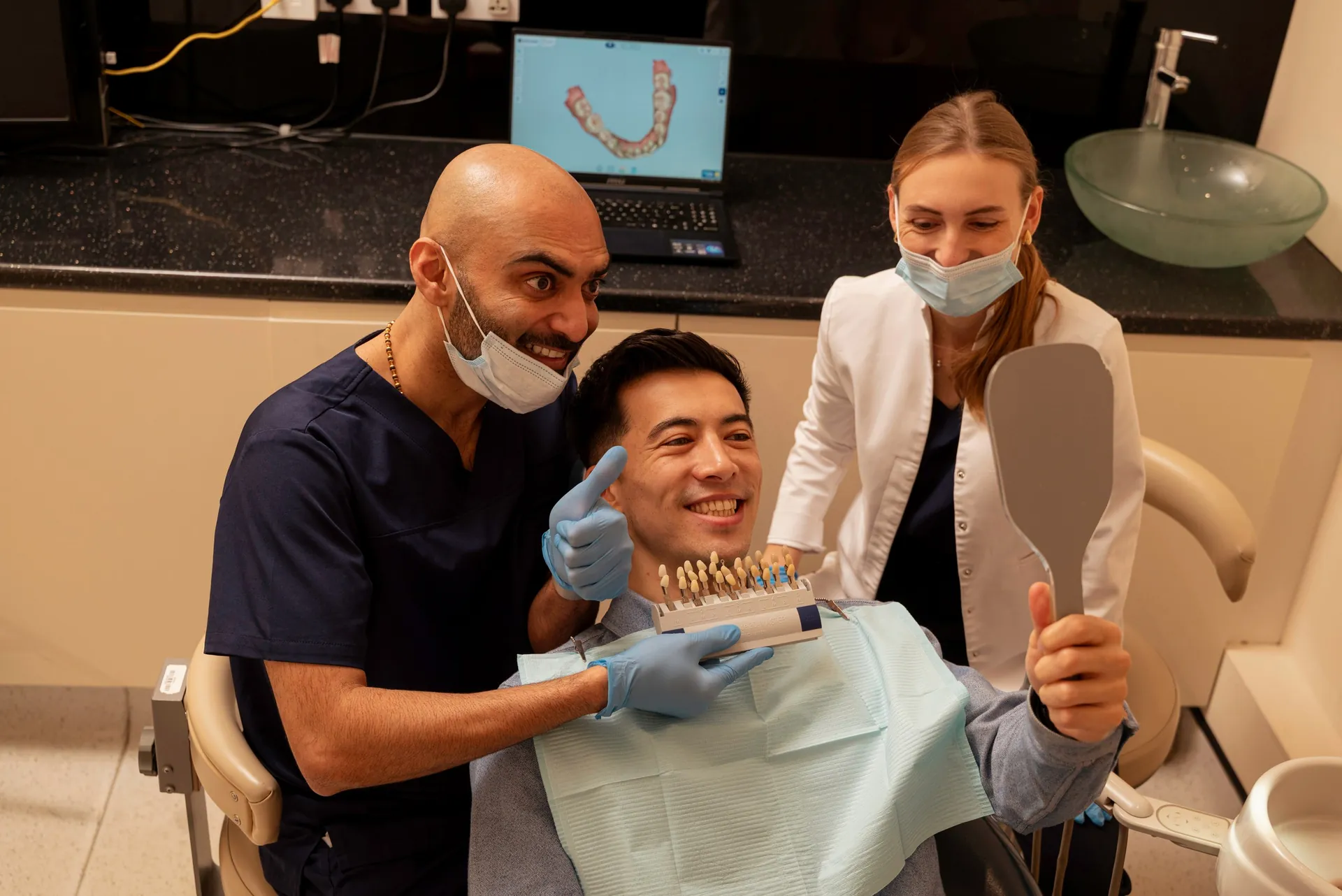
| Consultation — assessment and treatment plan | Every filling starts with an honest assessment (dental examination £65, 30 minutes): what is actually wrong, your options, costs, and — sometimes — the option to watch and wait. We will not drill a tooth that does not need it. |
| Filling appointment — usually under an hour | We numb the area unless the cavity is very shallow. Decay or damaged structure is removed — only what needs to go. The tooth is cleaned and prepared; composite is built up in layers, cured with a light, shaped to the tooth, and polished. You can eat once the numbing wears off (usually a couple of hours). |
| Aftercare and maintenance | No special care beyond standard brushing and flossing. If you grind your teeth, a night guard protects the filling and adjacent teeth. Report any sensitivity beyond the first two weeks or if the filling feels high. |

Our happy patients,
in their own words
Transparent pricing
Prices are set out below. Your written plan confirms the fee before any treatment begins.
| Metric | Dental & Wellness London Pricing |
|---|---|
| Dental examination (30 minutes) | £65 |
| Dental problem assessment | £75 |
| Small, single surface | Quoted in writing after assessment |
| Medium, two surfaces | Quoted in writing after assessment |
| Large, multi-surface (back tooth) | Quoted in writing after assessment |
0% APR finance over 12 months via Tabeo, subject to status.
Questions
people ask
If your question isn't answered here, call reception on 020 8127 4567 or email reception.
How much does a white filling cost in London?
The cost depends on the size of the cavity and how many surfaces of the tooth are involved, so at Dental & Wellness London we quote it in writing after assessment, before any treatment. The dental examination is £65 and a dental problem assessment £75. If a lab-made restoration is better, ceramic inlays start at £750.
Are composite fillings better than amalgam?
For new fillings we use composite as standard: it is mercury-free, bonds to the tooth so less healthy structure is removed, and matches the tooth colour. Amalgam is regarded as safe and effective by mainstream dental bodies, and we do not advise removing sound amalgam fillings for general-health reasons. The choice is about material and appearance, not a health claim.
How long do white fillings last?
A well-placed composite filling commonly lasts seven to ten years, often longer on front teeth, although results vary. Large fillings on back teeth, grinding, a frequent-sugar diet and missed check-ups shorten their life. Daily cleaning, regular 30-minute hygiene visits and a night guard if you grind all help them last.
Do composite fillings hurt?
The filling is placed under local anaesthetic, so most people feel pressure and vibration rather than pain. Mild sensitivity to cold for a week or two afterwards is common. If the tooth aches, feels sharp or the filling seems high when you bite, contact us so we can check and adjust it.
Can I replace my old silver fillings with white ones?
Yes, if you choose to, usually for appearance or personal preference. We do not advise removing sound amalgam fillings for general-health reasons. Where removal is chosen, we follow recognised precautions to reduce exposure to mercury vapour and particles during the procedure, and we explain these at your assessment at our Islington clinic.
Will a white filling match my teeth?
Composite is available in many shades and can be layered to mimic the translucency of enamel, so a well-placed white filling is difficult to see. On front teeth we treat colour matching as a priority. Because composite does not respond to whitening, we usually whiten before matching any visible front-tooth fillings.
Do I always need a filling if I have a cavity?
Not always. Very early decay that is confined to the enamel can sometimes be stopped with fluoride, diet changes and closer monitoring. Once decay has reached the dentine or caused a hole, a filling is usually needed. We explain what we see on your X-rays and, where watching is reasonable, offer that option.
Book a dental examination
Start with a £65 examination at 222 Essex Road, N1 3AP. We will tell you what the tooth needs, including when to leave it. Call 020 8127 4567.
Contact US