Sensitive Teeth: Why It Happens and How to Actually Fix It
Reviewed By
Last Updated
October 1, 2026
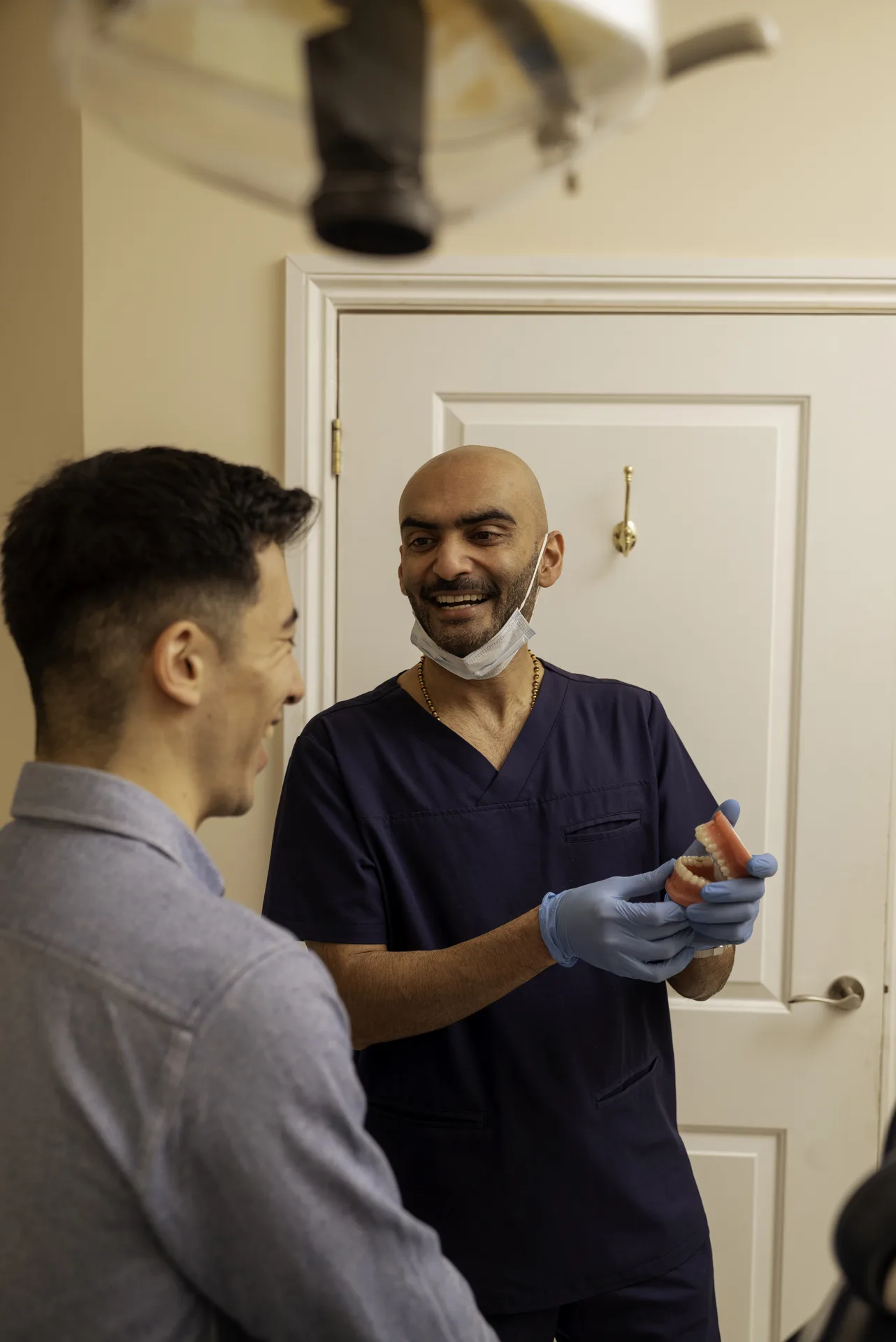
Sensitivity is a symptom, not a disease.
Sensitive teeth are usually caused by exposed dentine, the layer beneath enamel, through gum recession, worn or eroded enamel, heavy brushing or grinding. A desensitising toothpaste can ease mild cases, but lasting relief comes from finding and treating the underlying cause. Sharp pain that lingers or centres on one tooth should be checked. We assess sensitivity at our Islington clinic.
Visible Signs & Symptoms
Tooth sensitivity is a symptom rather than a disease. It is your tooth signalling that its protective layers have been breached somewhere, so the nerve inside is responding to things it normally would not feel. A sensitive toothpaste can quieten that signal, but it does nothing about the cause. The useful question is not which toothpaste to buy, but why the teeth have become sensitive.
What is happening inside the tooth
A tooth has three layers. Enamel on the outside is hard and has no nerve supply. Beneath it is dentine, a softer layer threaded with microscopic tubules that lead inward. At the centre is the pulp, where the nerve sits. While enamel and healthy gum cover the dentine, those tubules are sealed. When enamel thins, or the gum recedes to expose the root (which has no enamel at all), the tubules open. Cold, heat, sweetness and even cold air can then travel down them and stimulate the nerve.
Every effective treatment works in one of two ways: blocking the open tubules, or calming the nerve's response. Lasting relief also means stopping whatever is exposing the dentine.
Typical signs
- A sharp, short twinge from cold drinks, ice cream or cold air that fades once the trigger has gone
- Discomfort with sweet or acidic foods
- Sensitivity when brushing, especially near the gum line
- Sensitivity at the neck of one or two teeth where the gum has receded
- Sensitivity for a few days after a filling, a clean or whitening
Signs that suggest something more
Pain that lingers for many seconds after the trigger, sensitivity to heat in particular, throbbing, pain that wakes you, or sensitivity that is focused on one tooth and getting worse are different patterns. These can point to a crack, decay or an inflamed nerve, and they need an examination rather than another tube of toothpaste.
Clinical Root Causes
Sensitivity has several possible causes, and the right fix differs for each. Most patients have one main cause and a contributing one.
- Gum recession. When the gum pulls back, the root surface is exposed. This is why sensitivity often sits at the gum line of one or two teeth while the rest of the mouth feels fine. See gum recession.
- Acid erosion. Frequent acidic food and drink, such as citrus, fizzy drinks, fruit teas and wine, softens and dissolves enamel over time. How often you have them matters more than how much. Acid reflux, including the quieter kind that reaches the mouth at night without obvious heartburn, can do the same; if you often clear your throat, wake with a sour taste or notice hoarseness, it is worth discussing with your GP. Dry mouth from mouth breathing reduces the saliva that would otherwise neutralise acid.
- Heavy brushing. A firm brush, strong pressure and a scrubbing action wear enamel at the gum line and encourage recession. People with the most sensitivity are often the most diligent brushers. Brushing straight after acidic food or drink adds to the wear, because enamel is briefly softened.
- A cracked tooth, decay or a failing filling. These allow cold and sweetness to reach the dentine through a gap. They are the causes that must not be missed, because early repair is far simpler than treatment once the nerve is affected.
- After dental treatment. Sensitivity after a filling, a clean or whitening is common and usually settles within days to a couple of weeks. Whitening briefly opens the tubules, which is one reason it should be supervised and correctly dosed. See sensitive teeth and whitening.
- Grinding and clenching. Night-time grinding wears and flexes the teeth, creating notches at the gum line. Jaw tightness, morning headaches and flattened teeth are clues. See teeth grinding and bruxism.
- Early gum disease. Inflamed gums can be tender to temperature, and early recession exposes root surfaces. Sensitivity together with bleeding on brushing points this way. See gum disease and bleeding gums.
Pregnancy can contribute through hormonal gum changes and, where there is sickness, acid exposure. Gentle, regular hygiene support during pregnancy helps.
When sensitivity is something to take seriously
Most sensitivity is a nuisance rather than an emergency, but it is worth understanding before it is simply managed. When only the symptom is treated, the cause can continue quietly: erosion keeps thinning enamel, recession keeps exposing root, and a small crack or area of decay can reach the nerve. At that point, what might have been a simple repair can become a larger filling, a crown or root canal treatment.
Sensitivity can also change how you eat and drink, and some people start avoiding cleaning the sore area, which allows plaque to build up and makes the gums worse.
When to book an examination
Book if sensitivity has not improved after two to three weeks of using a desensitising toothpaste correctly, if it is spreading, or if it has not settled within two to three weeks of dental treatment or whitening.
Red flags: be seen promptly
- Sharp pain that lingers well after the hot or cold has gone
- Sensitivity to heat in particular
- Pain that throbs, wakes you at night or worsens over days
- Sensitivity focused on a single tooth that is getting worse
- Any sensitivity with swelling, a bad taste or a broken tooth
These patterns can point to a crack, deep decay or nerve inflammation, all of which are easier to treat early. If you are in pain, see our emergency dentist page.
How to actually get relief — the honest ladder
Relief works as a ladder, from changes you can make at home to treatments only a clinic can provide. We match the step to the cause, and if your sensitivity is mild and technique-related, you may leave with a brushing change and a toothpaste recommendation rather than a treatment plan you do not need.
At home
- Change how you brush. A soft brush, light pressure and small movements at the gum line. Wait about an hour after acidic food or drink before brushing.
- Use a desensitising toothpaste correctly. Use it consistently for at least two weeks, and at night smear a little onto the sensitive area and leave it rather than rinsing it away.
- Reduce acid exposure. Keep acidic drinks to mealtimes, use a straw, and rinse with water afterwards rather than sipping across the day.
In the clinic
- Professional desensitising treatment, such as fluoride varnish or a sealant over exposed dentine, to block the tubules.
- Hygiene care to remove build-up and settle the gums. See our dental hygienist page.
- Periodontal treatment where gum disease is contributing.
- Bonding or a filling to cover a worn notch at the gum line or repair decay or a failing filling. See composite bonding and composite fillings.
- A crown or onlay to hold a cracked tooth together. See crowns, onlays and inlays.
- Root canal treatment where the nerve is irreversibly inflamed.
- A hard bite splint where grinding is the driver. See our guide to the Davies splint.
Where recession is advanced and gum surgery might help, we refer you to a specialist periodontist. Where reflux may be involved, we suggest you see your GP, and our nutritional therapist can support dietary changes alongside medical care.
What happens at DWL
Your first appointment is a dental problem assessment or a full dental examination with Dr Vishal Patel. We ask when the sensitivity happens and what triggers it, check the gums, enamel, fillings and bite, test individual teeth, and take X-rays where needed. We then explain the likely cause and give you a written plan with fees before any treatment. Hygiene and periodontal care are carried out by our GDC-registered hygiene team.
Cost
- Dental problem assessment: £75
- Dental examination: £65
- Hygiene appointment: £85 (30 minutes, deep clean included) · Diamond hygiene £135
- Periodontal treatment: £255
- Composite bonding: £175 simple · £350 complex
- Crowns, onlays and inlays: £750–£1,200
- Root canal treatment: £550–£950
- Davies splint: £495
0% APR finance over 12 months is available.
Getting here
We are at 222 Essex Road, Islington, N1, two minutes from Essex Road station on the Great Northern line. Buses 38, 56, 73, 341 and 476 stop on Essex Road, and many patients cycle or use Lime and Forest e-bikes; Dalston is about ten minutes away by bike. See contact for directions.
If you are still weighing up your options, our overview of teeth whitening brings them together in one place.
Further reading
Frequently asked questions
If your question isn't here, call reception on 020 8127 4567 or book a free discovery call.Text Link
View all FAQs →Will it make my teeth sensitive?
Some patients notice mild, temporary sensitivity during a course. Because we use custom trays and can adjust the gel strength and timing, we manage this far better than a one-size product can.
Can I whiten if I have sensitive teeth?
Usually, yes — carefully. We use a gentler, desensitising formulation, control the strength and wear-time, and read why your teeth are sensitive before starting. Sensitivity is a reason to plan, not a reason to avoid.
What if I have very sensitive teeth?
We can plan anaesthetic for comfort even when clinically unnecessary. We'd discuss at consultation. The treatment itself can be modified slightly for sensitive patients (gentler etching, careful temperature control during light-curing).