The myth this guide is here to correct
The whitening market is built on a comforting fiction: that there is a single "best" whitening, and your only job is to find it. There isn't. There are several legitimate options, each strong at something and weak at something else, and the "best" one is simply the one that matches your teeth, your sensitivity, and the cause of your colour.
I have spent twenty years watching patients buy the wrong option for the right reasons — choosing a kit because it was convenient when their discolouration needed supervision, or paying for an in-chair session when a polish and a take-home course would have served them better and cost less. So this is not a ranking with a winner at the top. It is a map of every route, what each one genuinely does, and a way to find the one that fits — taking a long-term smile view rather than chasing the brightest box on the shelf. Our page on professional teeth whitening in Islington sets out the supervised systems we use.
First, the thing that decides everything: why are your teeth that colour?
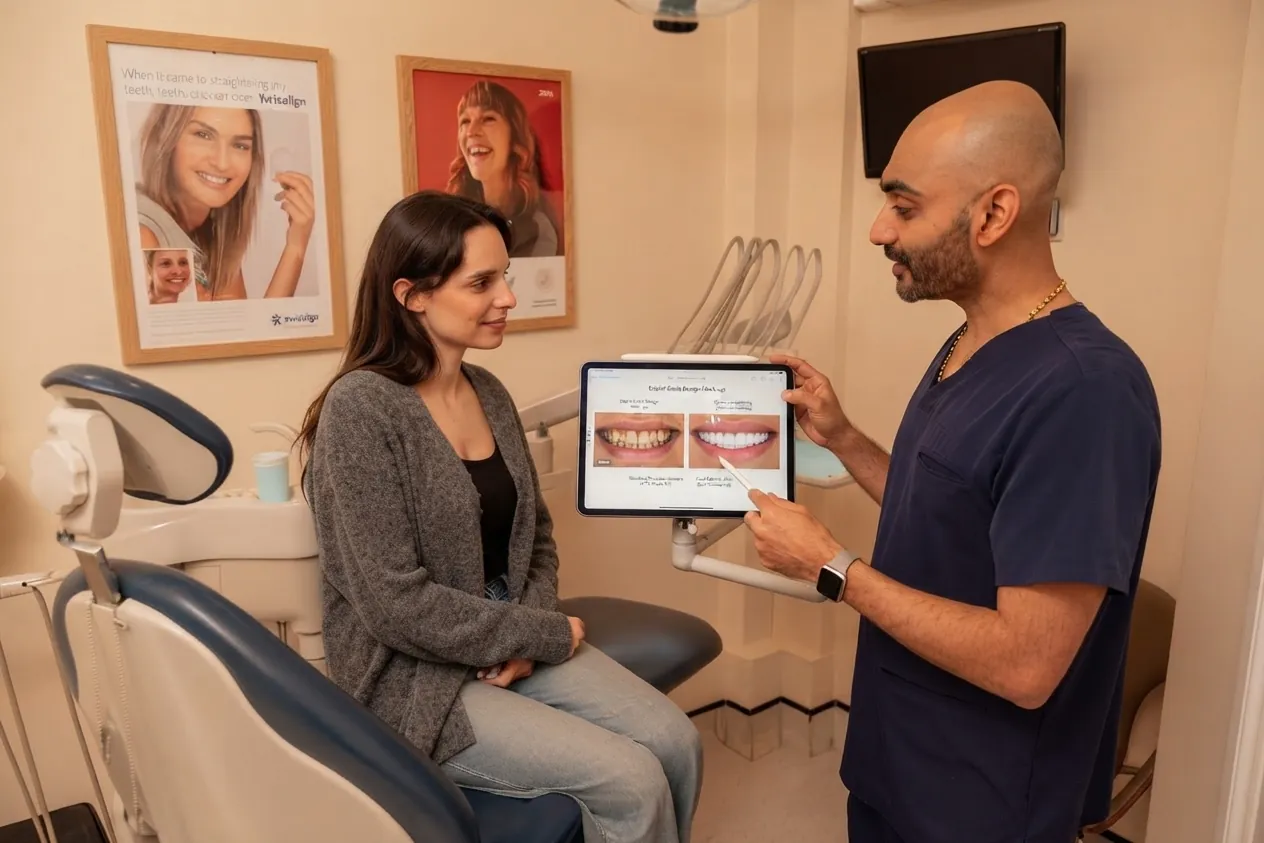
Before comparing options, one question settles most of the decision. Your tooth colour comes from two layers. The outer enamel carries surface stain — coffee, tea, red wine, tobacco — which a hygienist can often polish away with no peroxide at all. The inner dentine carries the deeper, age-related colour, and it yellows naturally over the years. Peroxide whitening works on both but earns its keep on that deeper layer, which nothing else can shift.
This matters because it tells you which option you actually need. If your problem is mostly surface stain, a hygiene appointment plus an over-the-counter maintenance habit may be all you need. If it is deep, age-related yellowing, you need real peroxide whitening — and the question becomes which delivery method. And if your "yellow" is actually a dead tooth, tetracycline banding, white spots, or old dental work, none of the routes below will fix it, and the honest answer is a different plan entirely. Spending on the wrong route is the most common whitening regret.
The five options, ranked by what they actually do
1. The combined approach — in-chair plus custom take-home
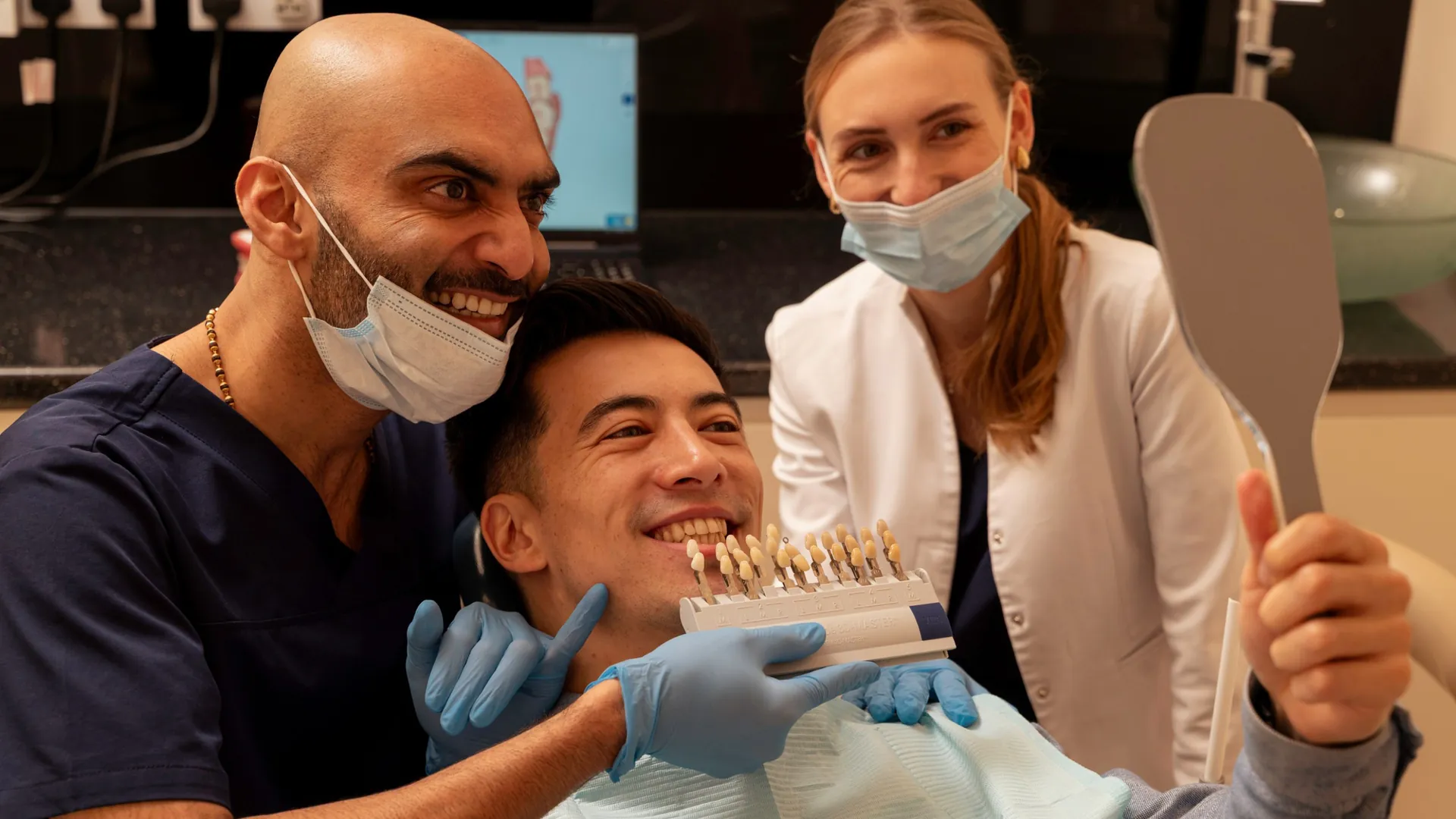
This is the option recommended most often, because it pairs a fast start with a lasting finish. A professional in-chair session gives a visible head-start under supervision; custom take-home trays then do the deep, even work and let you maintain the result later with the occasional top-up. Each stage covers the other's weakness.
Strong at: predictability, depth of result, long-term maintenance. Weak at: it costs more than a single method and asks for a short commitment. Right for: most people wanting a result that genuinely lasts. This is the gold-standard combined protocol, and at our clinic combination whitening is £780.
2. Custom take-home trays alone
Trays scanned and made to fit your teeth, worn with a gentler gel over a course of days or a couple of weeks. Done at your own pace, supervised by your dentist.
Strong at: comfort, control, gentleness on sensitive teeth, excellent value, and easy maintenance — you keep the trays. Weak at: slower to show a result; needs consistency for a couple of weeks. Right for: anyone patient, anyone with sensitivity, and anyone who wants the most economical supervised route. The fit of the trays is what makes or breaks it, which is why boil-and-bite trays from a kit are not the same thing.
3. In-chair (laser / light) whitening alone
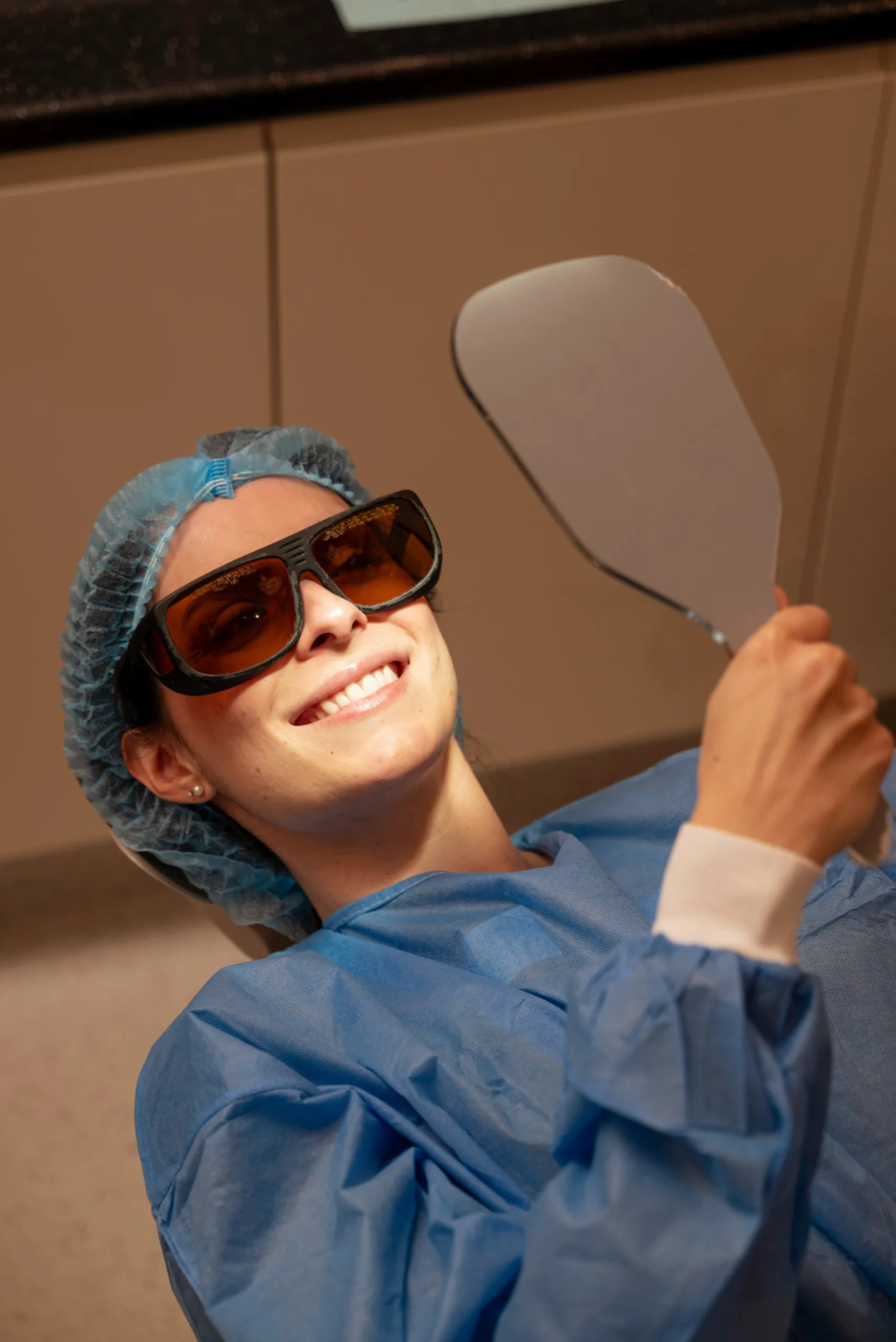
A single professional-strength session in the surgery, gums protected, with a visible same-day change. The "laser" or "light" element does less than the marketing implies — the gel does the work — but the supervised, high-strength application is real.
Strong at: speed and the satisfaction of an immediate change before an event. Weak at: it relapses faster than combined whitening because there is no maintenance phase, and it can cause more short-term sensitivity. Right for: someone who needs a quick lift and will likely add take-home trays later anyway. On its own it is the least durable of the supervised options.
4. Over-the-counter strips, pens, and whitening toothpastes
Legitimate, cheap, and genuinely useful — within strict limits. UK over-the-counter products are capped at a very low peroxide level (0.1%), so they lift light surface stain and help maintain a result, but they cannot change the deeper colour of the tooth.
Strong at: maintenance, light surface stain, low cost, convenience. Weak at: they do almost nothing for age-related yellowing, the strips fit no one's teeth precisely, and the gel pools unevenly. Right for: topping up after professional whitening, or for someone whose only issue is mild surface stain.
5. Salon and "whitening bar" whitening — the option to avoid
Non-dentist whitening offered in beauty salons, mobile services, and "whitening bars" is illegal in the UK when it uses effective-strength peroxide, and unsafe when it doesn't. In the UK, tooth whitening above 0.1% peroxide is legally a dental procedure that can only be carried out by, or on the prescription of, a registered dental professional, after an examination.
Strong at: nothing that justifies the risk. Weak at: no examination of gums, enamel, or existing dental work; ill-fitting trays that leak onto soft tissue; no one accountable if it goes wrong. Right for: no one.
How to choose — a short decision path
What is causing the colour? Surface stain → hygiene plus over-the-counter maintenance. Age-related yellowing → real peroxide whitening (options 1–3). Something else — a dead tooth, tetracycline, white spots, old dental work → an assessment for a different treatment.
How much does longevity matter? Want it to last → combined. Budget-led and patient → take-home trays. Fast lift for an event → in-chair, likely adding trays later.
How sensitive are your teeth? Sensitive → take-home trays with a desensitising, potassium-nitrate formulation, supervised, at a controlled strength.
The brands, briefly — because patients always ask
Several professional systems are used in practice: Philips Zoom, Enlighten, and Opalescence. Opalescence's fluoride-and-potassium-nitrate formulation suits sensitive patients; Enlighten suits a predictable target shade with full protocol commitment; Zoom gives an excellent in-chair head-start. The system matters less than the diagnosis, the trays, and the supervision around it.
Whitening as the conservative first step
Whitening is the least invasive cosmetic dental treatment there is. Lighten the natural teeth first, and less cosmetic work is often needed afterwards — sometimes none. A shade is chosen that suits the face and keeps the result looking like enamel, designed for how the smile will look years from now, not just the next photo.
What the options cost in London
Over-the-counter products run from a few pounds to around £40 and buy light maintenance only. The combined plan is £780 and includes the in-chair session, custom trays, gel, and review. Whitening is only provided after a dental examination (£65) confirms a fit, clean and healthy mouth, and the examination is not included in that price. Pairing whitening with a hygiene visit (£85) clears surface stain and often improves the result. Larger plans can be spread with 0% APR finance over 12 months via Tabeo, subject to status.
Frequently asked questions
What is the best teeth whitening option? The one that matches the cause of your discolouration and your sensitivity — there is no single best for everyone, which is why an assessment beats a guess.
Is professional whitening better than over-the-counter kits? For changing the actual colour of your teeth, yes, by a wide margin. Kits are good maintenance, not transformation.
How long do the different options last? Combined whitening typically holds one to three years with occasional top-ups; in-chair alone relapses faster; take-home trays last well. Coffee, tea, red wine and smoking shorten any result.
Can I whiten if I have sensitive teeth? Usually, yes — supervised take-home trays at a controlled strength with a desensitising gel suit sensitive teeth best.
Will any whitening option work on crowns or veneers? No. Every peroxide option whitens natural tooth structure only, with no effect on porcelain or composite.
A consultation, not a sales conversation
Call 020 8127 4567, WhatsApp +44 7974 910222 (8am–7pm), or email reception@dentalwellnesslondon.co.uk. 222 Essex Road, Islington, London N1 3AP, open Monday to Friday, 8am–7pm by appointment. Rated 4.7 out of 5 across 300+ reviews.
Reviewed by Dr Vishal Patel · BDS (Liverpool), MSc Aesthetic & Restorative Dentistry (Manchester), AACD member, Invisalign Diamond II Provider · GDC 103127. Last reviewed 5 June 2026.