Safe amalgam removal, and honest advice on when it is not needed
Reviewed By
Dr Vishal Patel
BDS Liverpool · MSc Aesthetic & Restorative Dentistry Manchester · GDC 103127 · AACD Member · Invisalign Diamond II Provider · IFAAS (International Fellowship in Advanced Aesthetic Science) · Facial anatomy & cadaver course, Dr Ali Pirayesh, University of Amsterdam · Harley Academy foundation training in injectable aesthetics · IBSA-trained (Profhilo) · NeoStrata-trained (skin peels) · Lynton Lasers trained, incl. ONDA
Last Updated
October 3, 2026
Mercury fillings replaced with recognised precautions when you choose removal, and a written, itemised plan before anything is booked.
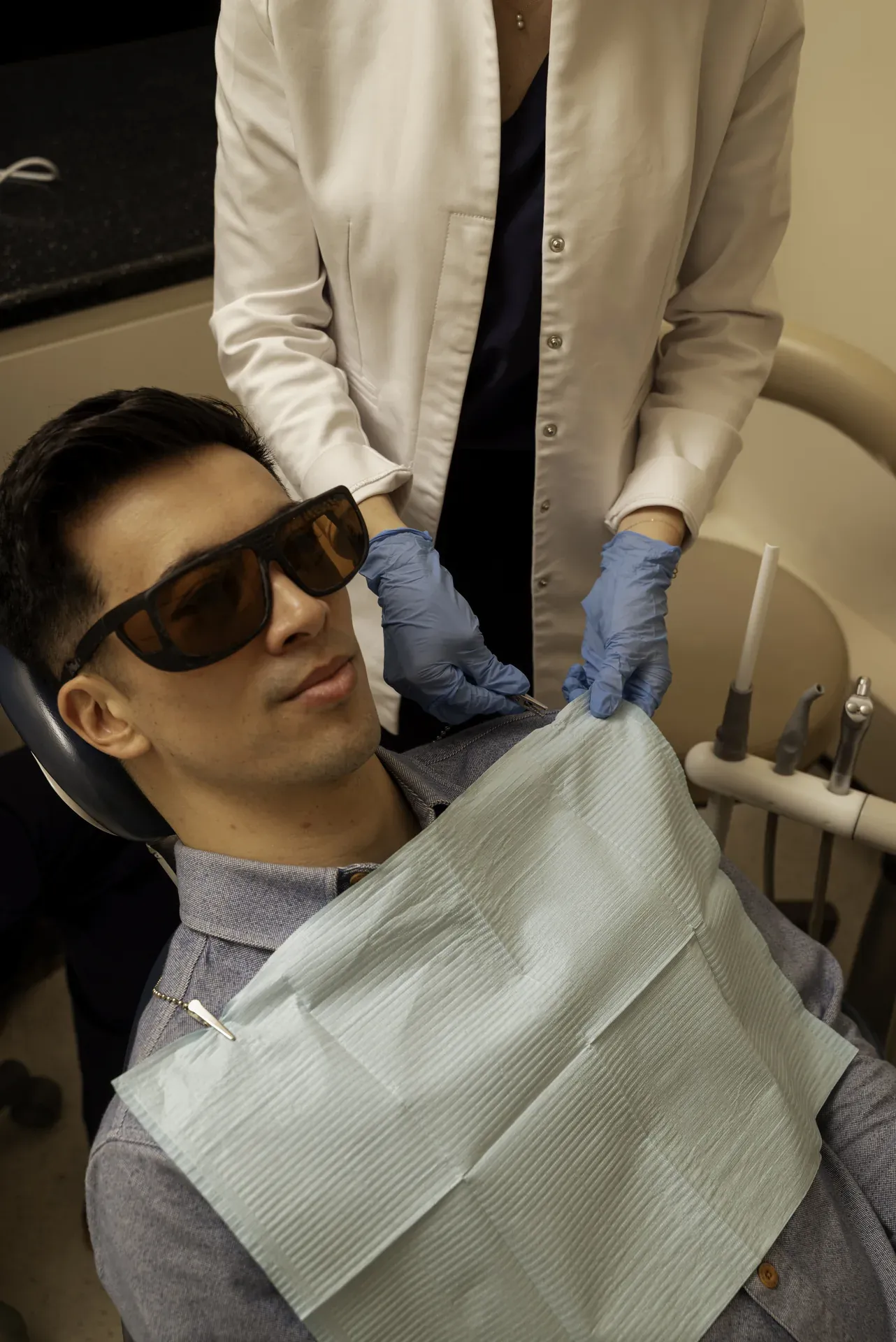
Safe amalgam removal at Dental & Wellness London in Islington means replacing mercury fillings under SMART precautions: rubber dam, high-volume suction, water cooling and sectioning. Dr Vishal Patel assesses each filling at a £65 examination; replacement with composite is quoted in writing, ceramic onlays are £850. Fillings are usually replaced one or two teeth per visit.
Heading
- Controlled replacement of mercury fillings following the recognised SMART protocol
- Precautions: rubber-dam isolation, high-volume suction, water cooling, sectioning the filling, air filtration
- Followed when a patient chooses removal
- Honest about when sound fillings are better left alone

Safe amalgam removal is the replacement of a silver (mercury) filling using precautions that limit how much mercury vapour and debris you and the clinical team are exposed to while the filling is drilled out. At Dental & Wellness London in Islington we follow the published SMART precautions whenever a patient chooses to have an amalgam replaced, and we are equally clear about when a sound filling is better left alone.
If you have arrived here because something online told you that your fillings are poisoning you and must come out at once, we would like to slow that down. The major dental and regulatory bodies regard set amalgam as safe for most adults, and they do not advise removing sound, functioning fillings for general-health reasons. We do not dispute that evidence. What we offer is narrower and entirely legitimate: an honest assessment of each filling, the choice of mercury-free materials, and, if you choose removal, a careful way of doing it.
What safe amalgam removal is, and why the method matters
Dental amalgam is a mixture of mercury with silver, tin and copper. Once set, it releases very small amounts of mercury vapour, and noticeably more at one specific moment: when it is cut out with a drill. That is the highest-exposure moment in a filling's life, for the patient in the chair and for the team in the room. Removing an amalgam carelessly can briefly increase exposure rather than reduce it, which is why "just drill it out" is the wrong approach for anyone who has decided on mercury filling removal.
"Safe" removal therefore describes a set of practical measures that contain that moment. There is nothing mystical about them. They are sensible patient and occupational safety, codified in the Safe Mercury Amalgam Removal Technique (SMART) published by the International Academy of Oral Medicine and Toxicology. We apply its precautions as our technical standard; we do not present it as a certification or a treatment for anything elsewhere in the body.
The SMART protocol, in plain terms
- Isolation. A rubber dam isolates the tooth, keeping debris and vapour away from the rest of the mouth and the airway.
- High-volume suction. Strong suction at the tooth captures particles and vapour at the source.
- Water cooling. Plenty of water keeps the filling cool as it is cut, because heat increases vapour.
- Sectioning, not grinding. The filling is cut into chunks and lifted out in pieces rather than ground into fine dust.
- Air management. Additional air filtration reduces ambient exposure in the room.
- Protection. Appropriate protective coverings for you and protective equipment for the clinical team.
Should my amalgam fillings be removed? Four questions we work through
Most amalgam removal is simply good dentistry happening on schedule. Before we replace anything, we work through four questions, in order.
- Is the filling still doing its job? Amalgams fail like any restoration: cracked margins, decay underneath, fractures in the surrounding tooth. A failing filling needs replacing whatever it is made of, and choosing a mercury-free material at that point is an uncontroversial decision.
- Is there a clinical reason? A documented reaction to amalgam (typically white, lace-like patches on the cheek or tongue beside a filling), a tooth that needs a crown anyway, or a filling so large that the tooth would be better served by a designed restoration.
- Is it an informed preference? A patient who understands the evidence and still prefers mercury-free dentistry is making a legitimate choice, for cosmetic reasons or simply because they no longer want metal in their mouth. Our role is to make sure it is informed, sequenced sensibly and costed honestly.
- If removal is chosen, how and in what order? Several amalgams are replaced in stages, tooth by tooth, with the precautions above at every appointment.
The fuller evidence picture, what the science says and what it does not, is set out in our article mercury fillings: what you should know.
Who mercury filling removal suits, and who it may not
Replacement suits people with failing or broken amalgams, people with a documented local reaction, people whose teeth need larger restorations anyway, and people who, with full information, prefer tooth-coloured restorations. It is often part of wider planning for patients interested in biological dentistry or holistic dentistry, which we practise with the same evidence-first approach.
It may not suit:
- Patients hoping removal will cure unexplained symptoms. Population research has not established sound amalgam fillings as a cause of systemic illness, and we will not attribute symptoms to your fillings to justify a procedure. Unexplained symptoms deserve a proper medical assessment with your GP.
- Pregnant or breastfeeding patients considering elective removal. Mainstream guidance is to defer non-urgent dental work, and since 2018 UK guidance has been that amalgam should not be placed for pregnant or breastfeeding women, or for children under 15, unless strictly necessary. If a filling is failing during pregnancy, we manage it conservatively.
- Teeth with sound small fillings where removal would cost healthy tooth structure for no clinical gain.
What goes back in: mercury-free options compared
The right replacement is a restorative decision about bite forces and how much tooth remains, made tooth by tooth.
- Composite (white) fillings suit most small and medium cavities and are usually completed in one visit. Our page on white fillings explains the material and technique.
- Ceramic inlays and onlays are made in a laboratory and bonded in. They suit larger cavities on back teeth that carry heavy biting forces and conserve more tooth than a crown.
- Crowns are used where a large amalgam has left the tooth weak or cracked and it needs full coverage. See crowns, onlays and inlays for how we choose between them.
Very large old amalgams sometimes reveal cracks or deep decay once they are removed. We explain this possibility beforehand, and if the plan needs to change we stop and discuss it with you rather than proceeding unasked.
The process, step by step
- Examination. A 30-minute dental examination with X-rays where needed, assessing each filling individually.
- Written, itemised plan. Which fillings need attention, which are optional, what would replace each and what each stage costs.
- Removal appointment. The tooth is numbed, the rubber dam placed and the filling sectioned out under high-volume suction and water cooling.
- Replacement. A composite is placed the same day; for an inlay, onlay or crown we take a scan, fit a temporary and bond the ceramic restoration at a second visit.
- Staging. Several amalgams are replaced across separate visits, usually one or two teeth at a time, paced around your life.
Results, longevity and aftercare
A replaced tooth behaves like any freshly restored tooth. A day or two of mild sensitivity to hot and cold is common and settles; if it persists, we review it. Our page on sensitive teeth covers the usual causes. There is no special regime to follow afterwards. Well-maintained composites and ceramics can last many years, but no restoration is permanent; longevity depends on its size, your bite, any grinding and how well the area is cleaned. If you grind your teeth, protecting new restorations matters, and we may discuss teeth grinding and bruxism with you. Regular check-ups and 30-minute hygiene appointments help restorations last.
Risks, and how we reduce them
- Exposure during removal, reduced with the SMART precautions above.
- Post-operative sensitivity, reduced by careful bonding technique and checking the bite.
- Weakening the tooth when a large filling is removed, reduced by choosing an onlay or crown where the remaining tooth needs support.
- Nerve inflammation in teeth with very deep fillings, which can occasionally lead to root canal treatment. We assess this risk on X-rays and explain it before starting.
- Over-treatment, reduced by our four-question framework. We say no often to removing healthy fillings.
Safe amalgam removal cost in Islington and London: your written, itemised quote
The cost of safe amalgam removal depends on how many fillings are involved, their size and what replaces each one. Rather than a headline figure, we provide a written, itemised quote after assessment: each tooth, each stage, what is included and what is not, before anything is booked.
- Dental examination: £65 (30 minutes, full risk assessment).
- Amalgam removal with composite replacement: quoted in writing after assessment.
- Ceramic inlay: £750. Ceramic onlay: £850.
- Crowns: porcelain-bonded £950; full-ceramic (Emax) up to £1,200.
- Finance: 0% APR finance over 12 months via Tabeo, subject to status.
Why patients choose us for amalgam replacement
Restorative planning is led by Dr Vishal Patel, BDS (Liverpool), MSc Aesthetic & Restorative Dentistry (Manchester), GDC 103127, an AACD member with around 20 years in dentistry and over 15,000 cases. Choosing between a composite, an onlay and a crown is a judgement about the long-term function of the tooth, and that is where restorative training matters most.
We have been an integrative practice since 2009, with nutritional therapy, Ayurvedic consultations and coaching under the same roof. Our wellness team supports, and does not replace, your GP's care, and none of it is presented as a "mercury detox". Our nutritional therapist is available if you would like broader support. You can read more about the philosophy on our whole-health dentistry page, or compare approaches in holistic dentist vs biological dentist.
Questions people ask about safe amalgam removal
Is safe amalgam removal necessary, or is it marketing?
The precautions are real and worth having if you choose removal, because drilling is when an amalgam releases most vapour. What is not honest is telling you that sound fillings must come out for your health. The SMART protocol is sensible safety during a procedure you have chosen; it is not, in itself, a reason to have the procedure.
Will removing mercury fillings improve my health?
Population research has not established sound amalgam fillings as a cause of general illness, and we will not promise health improvements from removal. Replacement is a reasonable choice for failing fillings, a documented local reaction, cosmetic reasons or informed preference. If you have unexplained symptoms, please see your GP for a proper medical assessment.
Can I get a written, itemised quote for amalgam removal?
Yes, and we would not start without one. After your examination we give you a written plan listing each filling, whether it needs attention or is optional, what would replace it and what each stage costs. You can take it away, think it over and decide on timing without any pressure to book.
How many amalgam fillings can be removed at once?
We usually replace one or two teeth per visit, sometimes a quadrant where the fillings are small and the plan suits it. Staging keeps each appointment comfortable, limits how many teeth are disturbed at once and lets us check how each restoration settles. A full mouth of amalgams is typically replaced over several months.
Does it hurt to have an amalgam filling removed?
The tooth is numbed with local anaesthetic, so the procedure itself should not be painful. The rubber dam can feel unfamiliar for a few minutes. Afterwards, mild sensitivity to temperature for a day or two is common and settles. Larger restorations may feel tender to bite on briefly while the tooth adjusts.
Getting here
We are at 222 Essex Road, Islington, London N1 3AP, in the same building since the practice was founded in 2009. We are open Monday to Friday, 8am to 7pm, by appointment only; we are closed at weekends and do not take walk-ins.
- By train: Essex Road station (Great Northern) is about two minutes on foot. Highbury & Islington is one stop north, and Old Street and Moorgate are a short ride south.
- By bus: the 38, 56, 73, 341 and 476 all stop on Essex Road close to the door.
- On foot from Angel: allow 15–20 minutes' walk from Angel station along Essex Road. Our Angel page has the route.
- By bike: many patients cycle or use Lime and Forest e-bikes. From Dalston it is about ten minutes by bike; see also our Highbury and Canonbury pages.
- By car: street parking on Essex Road is metered and controlled during the day. For most visits, the train, bus or bike is simpler.
SMART precautions
Four questions
Integrative approach
We do not advise removing sound amalgam fillings for general-health reasons, in line with mainstream dental evidence — we say no often to removing healthy fillings, and yes carefully, with precautions, to patients who have decided for their own reasons.
| Dental examination — 30 minutes, £65 | Unhurried assessment of each filling, a written itemised treatment plan, and discussion of options and staging. |
| Single amalgam removal & composite replacement — One appointment, quoted in writing after assessment | Tooth numbed, rubber dam placed, high-volume suction. Amalgam sectioned and lifted in pieces. Cavity cleaned. Composite resin placed and shaped. Bite adjusted. One visit. |
| Single amalgam removal with ceramic restoration — Two appointments, inlay £750 · onlay £850 · crown £950–£1,200 | First visit: numbing, dam, suction, sectioning, removal, cleaning. Impression or scan taken. Temporary placed. Second visit: temporary removed, custom ceramic inlay/onlay/crown bonded, bite adjusted. |
| Multiple amalgams — Staged across visits | Each tooth treated separately in planned sequence, typically one to two teeth per visit to ensure comfort and quality. Separate written plan for each stage. |
Our happy patients,
in their own words
Transparent pricing
Prices are set out below. Your written plan confirms the fee before any treatment begins.
| Service | Price Guide |
|---|---|
| Dental examination (30 minutes) | £65 |
| Composite replacement | Quoted in writing after assessment |
| Ceramic replacement | Inlay £750 · onlay £850 · crown £950–£1,200 |
| Finance option | 0% APR finance over 12 months via Tabeo, subject to status |
0% APR finance over 12 months via Tabeo, subject to status.
Questions
people ask
If your question isn't answered here, call reception on 020 8127 4567 or email reception.
How much does safe amalgam removal cost?
It depends on the number and size of fillings and what replaces each one, so we give a written, itemised quote after a £65 examination. Composite replacements are quoted in writing; ceramic inlays are £750, onlays £850 and crowns £950 to £1,200. 0% APR finance over 12 months via Tabeo is available, subject to status.
What is the SMART protocol?
The Safe Mercury Amalgam Removal Technique, published by the International Academy of Oral Medicine and Toxicology. It sets out precautions for removing amalgam: rubber-dam isolation, high-volume suction, water cooling, sectioning the filling in pieces, air filtration and protective coverings. We apply these precautions whenever we remove an amalgam at our Islington clinic.
Do you recommend removing all mercury fillings?
No, not as a blanket rule. We replace fillings that are failing or clinically indicated, and we support informed personal preference. We do not advise removing sound, functioning fillings for general-health reasons, in line with mainstream dental evidence, and we will tell you so plainly at your examination.
Is it safe to remove amalgam fillings during pregnancy?
Mainstream guidance is to avoid elective dental work, including non-urgent amalgam removal, during pregnancy and breastfeeding, and we follow it. If a filling is failing and needs attention while you are expecting, we manage it conservatively and plan anything elective for later. Please tell us if you are pregnant or planning a pregnancy.
What replaces a mercury filling?
Composite resin for most small and medium cavities, usually in one visit. Ceramic inlays or onlays where a larger area of a back tooth needs rebuilding, and crowns where the tooth is weak or cracked. The choice is made tooth by tooth by Dr Vishal Patel, based on bite forces and how much healthy tooth remains.
Are you an IAOMT-certified dentist?
We apply the IAOMT's SMART precautions as our technical standard, and we are careful not to claim more than that. What protects you in the chair is the set of precautions actually used on the day, so we explain each one before treatment. We would encourage you to ask any clinic exactly which measures it uses.
Can mercury fillings cause symptoms I cannot explain?
Population research has not established sound amalgam fillings as a cause of general symptoms or illness, and we will not attribute unexplained symptoms to your fillings in order to recommend a procedure. If you feel unwell, please see your GP. We can give you an honest view of what your fillings do and do not explain.
Talk through your amalgam fillings, without urgency
An unhurried assessment of each filling, then a written, itemised plan with no pressure to book. Call 020 8127 4567 or WhatsApp +44 7974 910222.
Contact US