Biological dentistry: what it means and how we practise it
Reviewed By
Dr Vishal Patel
BDS Liverpool · MSc Aesthetic & Restorative Dentistry Manchester · GDC 103127 · AACD Member · Invisalign Diamond II Provider · IFAAS (International Fellowship in Advanced Aesthetic Science) · Facial anatomy & cadaver course, Dr Ali Pirayesh, University of Amsterdam · Harley Academy foundation training in injectable aesthetics · IBSA-trained (Profhilo) · NeoStrata-trained (skin peels) · Lynton Lasers trained, incl. ONDA
Last Updated
October 3, 2026
Conservative treatment, well-tolerated materials and informed choice, grounded in mainstream dental evidence rather than claims about disease.
Biological dentistry at Dental & Wellness London in Islington means minimally invasive care, metal-free, tooth-coloured materials and informed choice, led by Dr Vishal Patel, GDC 103127. We follow mainstream evidence: sound amalgam is not removed for health reasons. Care begins with a 30-minute dental examination at £65; ceramic inlays start at £750, and other restorations are quoted in writing after assessment.
Heading
- Whole-health, minimally invasive approach
- Practising this way since 2009
- Dentistry, Ayurveda, nutrition and wellness under one roof
- Dental care led by Dr Vishal Patel, BDS, MSc, GDC 103127
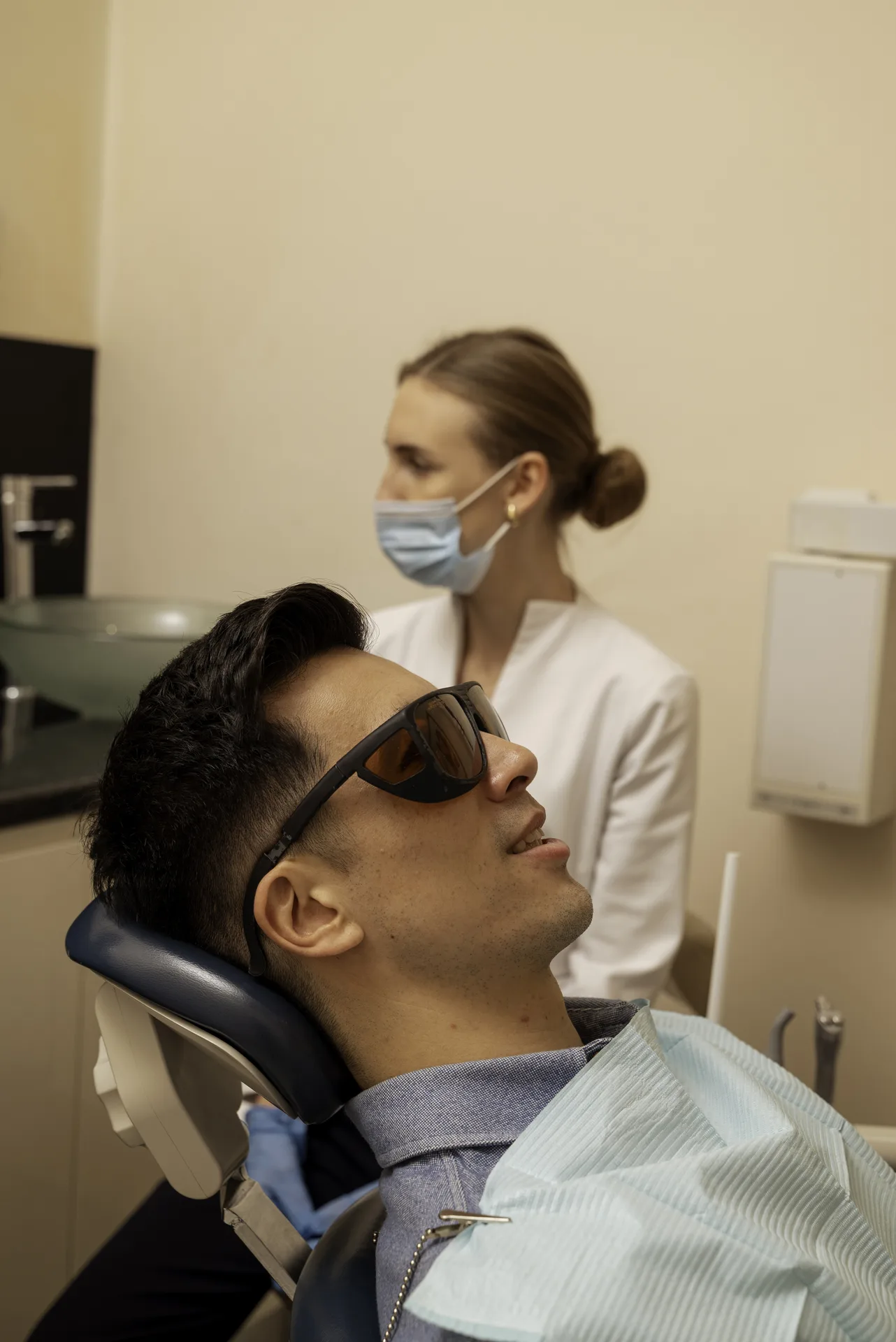
Biological dentistry is a way of practising that pays particular attention to the materials placed in the mouth, favours the most conservative treatment that will work, and considers how dental care sits within a person's general health. It is a philosophy of technique and material choice rather than a separate specialty, and it is not recognised as one by the General Dental Council. The phrase is also used to sell claims the evidence does not support, so this page sets out, carefully, what we mean by it and what we do not.
If your interest is wider than materials and technique, in how the mouth connects to stress, sleep, nutrition and the rest of you, that is the subject of our holistic dentistry page. The two overlap, but they answer different questions, and we have kept them separate on purpose.
What biological dentistry means in practice
Strip away the marketing and four sensible principles remain. None of them is controversial, and all of them are compatible with mainstream, evidence-based dentistry.
- Preserve healthy tissue. Every time a tooth is drilled it loses structure it never gets back. We intervene when there is a clear clinical reason, and choose the smallest effective restoration.
- Choose well-tolerated materials, and explain them. Modern composite resins, glass ionomers and ceramics are tooth-coloured and metal-free. We tell you what each one is, why we are suggesting it, and what the alternatives are.
- Respect informed choice. Where a patient prefers to avoid a material, we accommodate that wherever it is clinically reasonable, as a matter of preference, not because we are claiming harm.
- Think about the whole mouth over decades. A filling, a crown and a bite all behave differently over twenty years. We plan for function and longevity, not only for how a tooth looks on the day.
Where we agree with mainstream dental evidence
Many clinics using the word "biological" are vague at exactly the point where clarity matters most. We prefer to be explicit.
Amalgam fillings
The position of the NHS, the British Dental Association and other major health bodies is that dental amalgam is a safe and effective material for most people, and that sound amalgam fillings should not be removed for general-health reasons. The US Food and Drug Administration, in its 2020 guidance, suggested that certain higher-risk groups, such as pregnant women and young children, avoid new amalgam where suitable alternatives exist, while also advising against removing existing fillings that are in good condition. In the UK, amalgam has not been used for children under 15 or for pregnant or breastfeeding women since 2018, except where strictly necessary, and its use is being phased down internationally, largely for environmental reasons.
We do not claim that amalgam causes disease, and we do not claim that removing it treats any condition. What we offer is narrower and entirely legitimate: mercury-free materials for new work, and, where a patient chooses to replace old amalgam for cosmetic reasons, because a filling has failed, or simply from personal preference, a careful removal protocol. That is set out on our safe amalgam removal page.
Fluoride
The evidence that fluoride toothpaste reduces tooth decay is strong, and UK public-health guidance recommends it for adults and children. We will discuss fluoride openly if you have questions about it, and we respect your decisions, but we will not tell you it is harmful at the levels used in dentistry.
Root canal treatment
Some websites revive an early twentieth-century "focal infection" idea that root-filled teeth seed illness elsewhere. That theory was abandoned because the evidence did not support it. Root canal treatment remains a well-established way to save a tooth, and we offer it when it is the right option.
Biological dentistry options compared
Most of what patients mean by biological dentistry comes down to a choice of restorative material. Here is how the main options compare.
- Composite (white) fillings. Bonded directly to the tooth, so less healthy structure needs removing. Ideal for small to medium cavities. See our page on white composite fillings.
- Glass ionomer. Releases a little fluoride and bonds chemically to the tooth. Useful near the gum line and as a temporary or intermediate material, though less hard-wearing.
- Ceramic inlays and onlays. Made to measure for larger cavities, they replace lost structure while keeping more natural tooth than a crown. Read more about crowns, onlays and inlays.
- Full-ceramic crowns. Metal-free, for teeth that have lost too much structure for a smaller restoration.
- Amalgam. Durable and inexpensive. We do not place it in new work, but we do not remove sound amalgam on health grounds either.
Who biological dentistry suits, and who it does not
This approach suits people who want to understand what goes into their mouth, who prefer metal-free restorations, who want conservative treatment, or who have older amalgam fillings that are failing and wish to replace them carefully. It also suits patients who simply value a longer conversation before any treatment begins.
It is not the right route if you are hoping that dental work will resolve fatigue, a chronic illness or other symptoms elsewhere in the body. We cannot offer that, and we would gently advise caution towards any clinic that does. If you have unexplained symptoms, your GP is the right first port of call. If you suspect a genuine allergy to a dental material, which is rare, we will liaise with your GP or a dermatologist about appropriate testing rather than guess.
The process, step by step
- Dental examination. A thirty-minute examination with a full risk assessment, including the condition of any existing fillings, gum health and your bite.
- Discussion of materials. We explain each option, its likely lifespan and its trade-offs, and answer your questions without pressure.
- Written plan. You receive a written treatment plan with fees. Nothing is replaced simply because it is old; we prioritise what has failed or is at risk.
- Treatment. Carried out with isolation, gentle technique and the smallest effective preparation. Where amalgam is being replaced, we follow a recognised protocol of rubber dam, high-volume suction, water cooling and sectioning.
- Review and maintenance. Regular examinations and hygiene appointments keep restorations sound and gums healthy.
Results, longevity and aftercare
Well-placed composite fillings commonly last many years, and ceramic inlays, onlays and crowns often longer, though results vary with bite, grinding habits, diet and home care. The single biggest influence on how long any restoration lasts is the health of the tooth and gum around it. Thirty-minute hygienist appointments in Islington, careful brushing with fluoride toothpaste and cleaning between the teeth do more for longevity than any material choice. If you grind your teeth, a protective splint may be advised.
Risks, and how we reduce them
Any restorative treatment carries some risk: sensitivity after a filling, the need for further treatment if decay is deeper than expected, or, rarely, a tooth needing root canal treatment later. Replacing sound fillings unnecessarily removes healthy tooth structure, which is why we do not recommend it. Removing amalgam releases some mercury vapour, which is why, if you choose removal, we use rubber dam isolation, high-volume suction and water cooling to keep exposure as low as reasonably possible. If your gums are bleeding, we treat that first; see our guide to gum disease and bleeding gums.
Biological dentistry cost in London
Fees depend on the number of teeth involved and the material chosen. Our current fees are:
- Dental examination (30 minutes, full risk assessment): £65
- Hygiene appointment (30 minutes): £85; Diamond hygiene with air polish: £135
- Ceramic inlay: £750; ceramic onlay: £850; full-ceramic (Emax) crown: up to £1,200
- White composite fillings and amalgam replacement: quoted in writing after assessment
0% APR finance over 12 months via Tabeo is available, subject to status.
Common questions about biological dentistry
What is a biological dentist?
A biological dentist is a GDC-registered dentist who places particular emphasis on biocompatible, metal-free materials and minimally invasive treatment. It is not a recognised specialty in the UK, so the training behind the term varies. Ask any clinic what they actually do differently, and whether their claims are supported by evidence.
Is biological dentistry evidence-based?
Parts of it are. Minimally invasive dentistry, tooth-coloured materials and careful isolation during amalgam removal are all sound practice. Claims that fillings or root-filled teeth cause chronic illness, or that removing them cures it, are not supported by good evidence. We practise the first and do not make the second.
Should I have my amalgam fillings removed?
If your amalgam fillings are sound and you have no symptoms, UK and international guidance does not recommend removing them for health reasons, since removal costs healthy tooth structure. Replacement is reasonable when a filling has failed, for cosmetic reasons, or by informed personal preference, and we will discuss it honestly.
Is there a biological dentist near me in London?
We are at 222 Essex Road in Islington, N1, two minutes from Essex Road station and easy to reach from Angel, Highbury, Canonbury and Hackney. We have practised conservative, whole-health dentistry here since 2009, alongside nutritional therapy and Ayurvedic consultations under the same roof.
What is the difference between biological and holistic dentistry?
The terms overlap. Biological dentistry usually refers to materials and technique: what goes into the mouth and how it is placed. Holistic dentistry usually refers to the wider person: stress, sleep, nutrition and general health. Our holistic dentist vs biological dentist guide explains the distinction in more detail.
Why patients choose Dental & Wellness London
Our dental care is led by Dr Vishal Patel, BDS (Liverpool), MSc Aesthetic & Restorative Dentistry (Manchester), GDC 103127, a member of the American Academy of Cosmetic Dentistry with around twenty years in dentistry and over 15,000 cases. Restorative dentistry, the careful replacement of lost tooth structure, is the core of his postgraduate training.
We have worked this way since 2009, as part of an integrative clinic where dentistry sits alongside nutritional therapy, coaching and Ayurvedic consultations. You can read more about that philosophy on our whole-health dentistry page, and about the evidence on mercury in our article mercury fillings: what you should know. We are rated 4.7 from more than 300 Google reviews. We will always set out your options honestly, including the option to change nothing.
Getting here
Dental & Wellness London is at 222 Essex Road, Islington, London N1 3AP, on the ground floor with step-free access. Essex Road station is two minutes' walk away, and Highbury & Islington is one stop by train. Buses 38, 56, 73, 341 and 476 stop on Essex Road. From Angel it is a 15–20 minute walk; see our directions from Angel. Many patients cycle or use Lime and Forest e-bikes; from Dalston it is about 10 minutes by bike. We are open Monday to Friday, 8am to 7pm, by appointment.
Whole-health principle
Minimally invasive
Biocompatible materials
We are explicit about where we agree with mainstream dentistry: sound amalgam fillings are not removed for general-health claims we cannot support. What we offer is informed choice, not a disease-causation theory.
Our happy patients,
in their own words
Transparent pricing
Prices are set out below. Your written plan confirms the fee before any treatment begins.
0% APR finance over 12 months via Tabeo, subject to status.
Questions
people ask
If your question isn't answered here, call reception on 020 8127 4567 or email reception.
What is biological dentistry?
Biological dentistry is an approach that emphasises minimally invasive treatment, biocompatible, metal-free materials and informed patient choice, while considering how dental care fits with general health. It is not a recognised specialty in the UK. At Dental & Wellness London in Islington we practise its evidence-based core and avoid claims that dental materials cause or cure disease.
Do biological dentists remove amalgam fillings?
Many do, and so do we when a patient chooses it, using rubber dam isolation, high-volume suction and water cooling. However, UK and international guidance does not recommend removing sound amalgam fillings for general-health reasons, because removal costs healthy tooth structure. We replace amalgam when a filling has failed, for cosmetic reasons, or by informed preference.
Is mercury in fillings dangerous?
Amalgam releases very small amounts of mercury vapour, and the NHS, the British Dental Association and other major bodies consider it safe for most people. Since 2018, UK use has been limited for children under 15 and pregnant or breastfeeding women. If you have concerns, we will discuss the evidence with you calmly at your examination.
Is biological dentistry available on the NHS?
The NHS provides tooth-coloured fillings where clinically appropriate, but it does not offer biological dentistry as a distinct service. Dental & Wellness London is a private practice and does not provide NHS treatment. A private dental examination with us costs £65 and takes 30 minutes, with a full risk assessment and written plan.
What materials does a biological dentist use?
Typically composite resin for fillings, glass ionomer in some situations, and ceramics such as Emax for inlays, onlays and crowns, all metal-free and tooth-coloured. At our Islington clinic a ceramic inlay is £750, an onlay £850 and a full-ceramic crown up to £1,200. Composite fillings are quoted in writing after assessment.
Do biological dentists use fluoride?
Some avoid it. We follow UK public-health guidance, which supports fluoride toothpaste because the evidence that it reduces decay is strong. We are happy to discuss fluoride if you have questions, and we respect informed decisions, but we will not describe it as harmful at the levels used in dentistry.
How do I find a good biological dentist in London?
Check that the dentist is GDC-registered, ask what they do differently in practice, and be cautious of anyone promising that dental work will cure illness. Our clinic at 222 Essex Road, N1 3AP, two minutes from Essex Road station, has practised conservative, whole-health dentistry since 2009 and is rated 4.7 from over 300 Google reviews.
Talk through your options, without pressure
Book a 30-minute dental examination in Islington and we will explain your material options honestly, including the option to change nothing. Call 020 8127 4567.
Contact US