Vagus nerve exercises are simple practices — slow breathing, humming, gentle gargling, and a cool splash to the face — that may support the body's natural "rest and digest" response by encouraging vagal tone. At Dental & Wellness London in Islington, we take the nervous system seriously because we routinely see its effects in the mouth: clenching, grinding, and jaw tension.
Why a dental and wellness clinic is writing about the vagus nerve
We are an integrative clinic, and one of the most consistent patterns we see is the link between a nervous system that can't settle and what happens to the teeth and jaw. People who grind, clench, wake with a tight jaw, or carry tension across the face and neck are very often people whose "fight or flight" response is running too hot for too long.
What the vagus nerve is — and the honest limits of what we know
The vagus nerve is the longest of the cranial nerves, running from the brainstem into the chest and abdomen, and is the main pathway of the parasympathetic nervous system — the "rest, digest, and recover" branch. "Vagal tone" describes how readily your system can shift into that state; higher vagal tone is associated in research with better stress recovery.
Much popular advice extrapolates well beyond what the evidence shows. Simple practices can influence the parasympathetic response and may support a calmer baseline over time — but they are not a treatment for medical conditions. See also our guide to nervous system dysregulation. If you have a diagnosed condition, these practices sit alongside your medical care, never in place of it.
Is your nervous system dysregulated? The honest signs
- Wired but tired — exhausted yet unable to switch off
- A racing mind, or low-level threat that doesn't match the situation
- Jaw clenching or teeth grinding, especially at night
- Shallow, fast breathing, or frequent sighing
- Digestive upset that flares with stress
- Disturbed sleep, waking unrefreshed
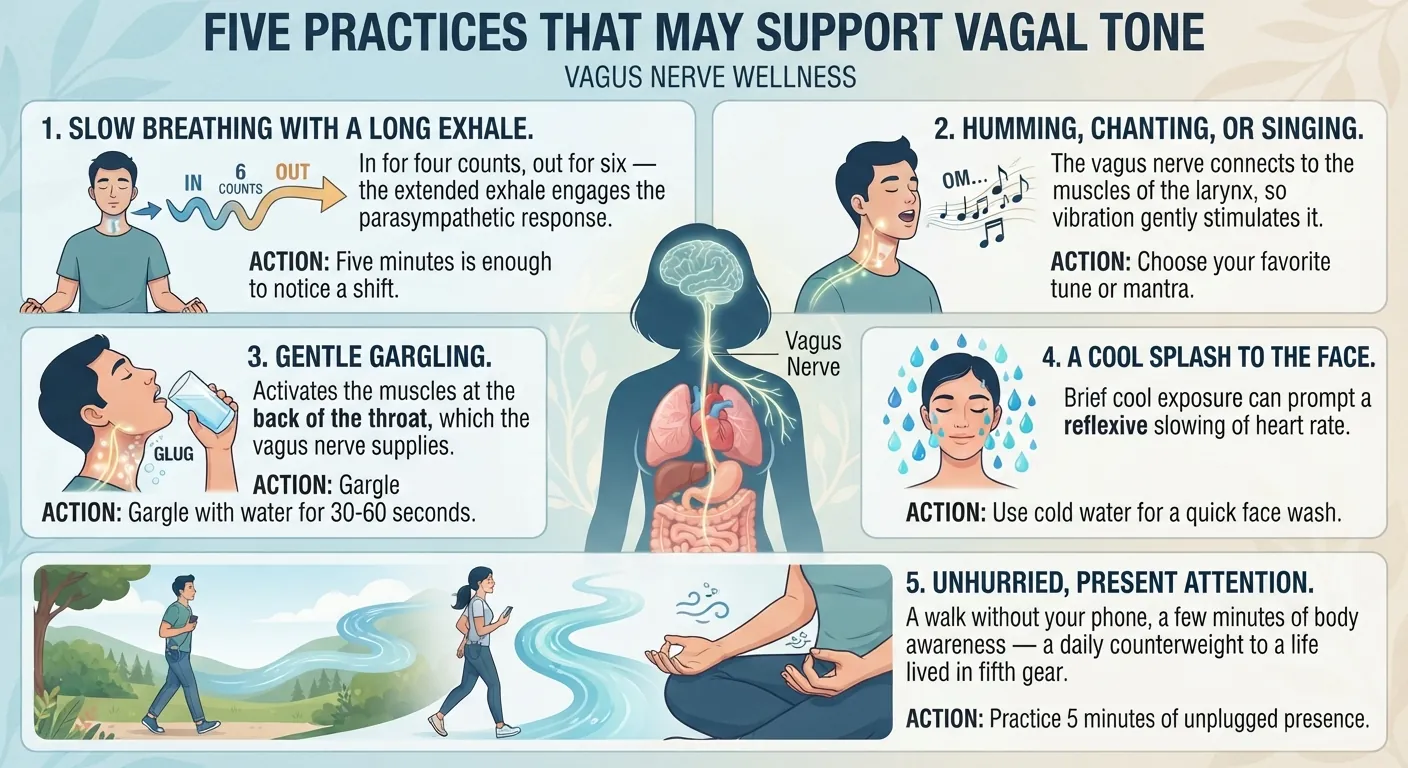
Five practices that may support vagal tone
Slow breathing with a long exhale. (Guided breathwork can help here.) In for four counts, out for six — the extended exhale engages the parasympathetic response. Five minutes is enough to notice a shift.
Humming, chanting, or singing. The vagus nerve connects to the muscles of the larynx, so vibration gently stimulates it.
Gentle gargling. Activates the muscles at the back of the throat, which the vagus nerve supplies.
A cool splash to the face. Brief cool exposure can prompt a reflexive slowing of heart rate.
Unhurried, present attention. A walk without your phone, a few minutes of body awareness — a daily counterweight to a life lived in fifth gear.
The jaw connection
When the nervous system stays alert and can't switch off, the body holds tension somewhere — for a very large number of people, that's the jaw. The masseter and temporalis muscles clench; teeth grind, often during sleep. Over time that shows up as worn enamel, cracked teeth, headaches, and TMJ discomfort. Vagal-tone practices won't fix a worn bite on their own — that may need a protective appliance — but they address the upstream driver a mouthguard alone never touches. Our piece on jaw clenching and stress explores this further.
When to look past self-help
Persistent anxiety, low mood, digestive problems, or sleep that doesn't improve deserve proper assessment from a GP or specialist, not a breathing app. If jaw pain, headaches, or tooth wear are worsening, that's a clinical sign worth having looked at.
How we work with this at the clinic
Laura-Maria Schober, MSc Applied Positive Psychology, EMCC Senior Practitioner, works with patients on self-regulation; our somatic therapy work approaches the same ground through the body. A free 20-minute discovery call is available by phone; session fees are confirmed at booking.

Frequently asked questions
Do vagus nerve exercises actually work? They may support a calmer baseline over time. They are not a cure for medical conditions.
How do I stimulate my vagus nerve at home? Slow breathing with a long exhale, humming, gentle gargling, a cool splash to the face, and unhurried attention.
How long before I notice a difference? A single session can produce noticeable settling within minutes; a durable shift in baseline comes from regular daily practice over weeks.
What does the vagus nerve have to do with teeth? A nervous system that won't switch off tends to hold tension in the jaw — clenching, grinding, worn teeth, jaw-joint discomfort.
Are these exercises safe for everyone? Low-risk for most people. They don't replace care for diagnosed conditions.
These exercises are self-directed. Where the pattern is long-standing, they work better with guidance — through somatic therapy, or breathwork if the breath is where you find it easiest to start.
An honest conversation, not a quick fix
Call 020 8127 4567 or WhatsApp +44 7974 910222. 222 Essex Road, Islington, London N1 3AP. Monday to Friday, 8am–7pm, by appointment.
Written by Laura-Maria Schober, MSc Applied Positive Psychology (Distinction, UEL), EMCC Senior Practitioner. With clinical input from Dr Reena Sohal, BDS, GDC 104355. Medically reviewed by Dr Vishal Patel, BDS, MSc Aesthetic & Restorative Dentistry, GDC 103127. Last reviewed 8 June 2026. This article is educational and does not replace individual medical advice.