Bruxism is a stress-axis phenomenon, not a dental habit
The masseter can generate clenching force at night far beyond what the patient could produce consciously. Chronic sympathetic activation drives muscle tone throughout the body, with particular concentration in the jaw and neck — the body discharging tension in the only window where conscious suppression is offline: deep sleep. Read more on teeth grinding and bruxism.
Why a night guard alone doesn't change the pattern
A splint protects enamel and cushions the joint, often reducing morning soreness within a week or two. For most patients we see whose bruxism is stress-driven, the splint changes the consequences without changing the cause. We rarely see clenching gradually reduce from splint alone; more often we see patients on their third splint after five years, the pattern unchanged. See why a Davies-technique splint differs from a night guard.
What body-mind work actually does for clenchers
Laura-Maria Schober's work focuses on three things: breath (correcting shallow, upper-chest patterns), body awareness (re-establishing the sensory channel to the jaw muscle), and conscious release of held tension. Patients typically see meaningful change over six to ten sessions across three to four months.
The combined treatment pathway
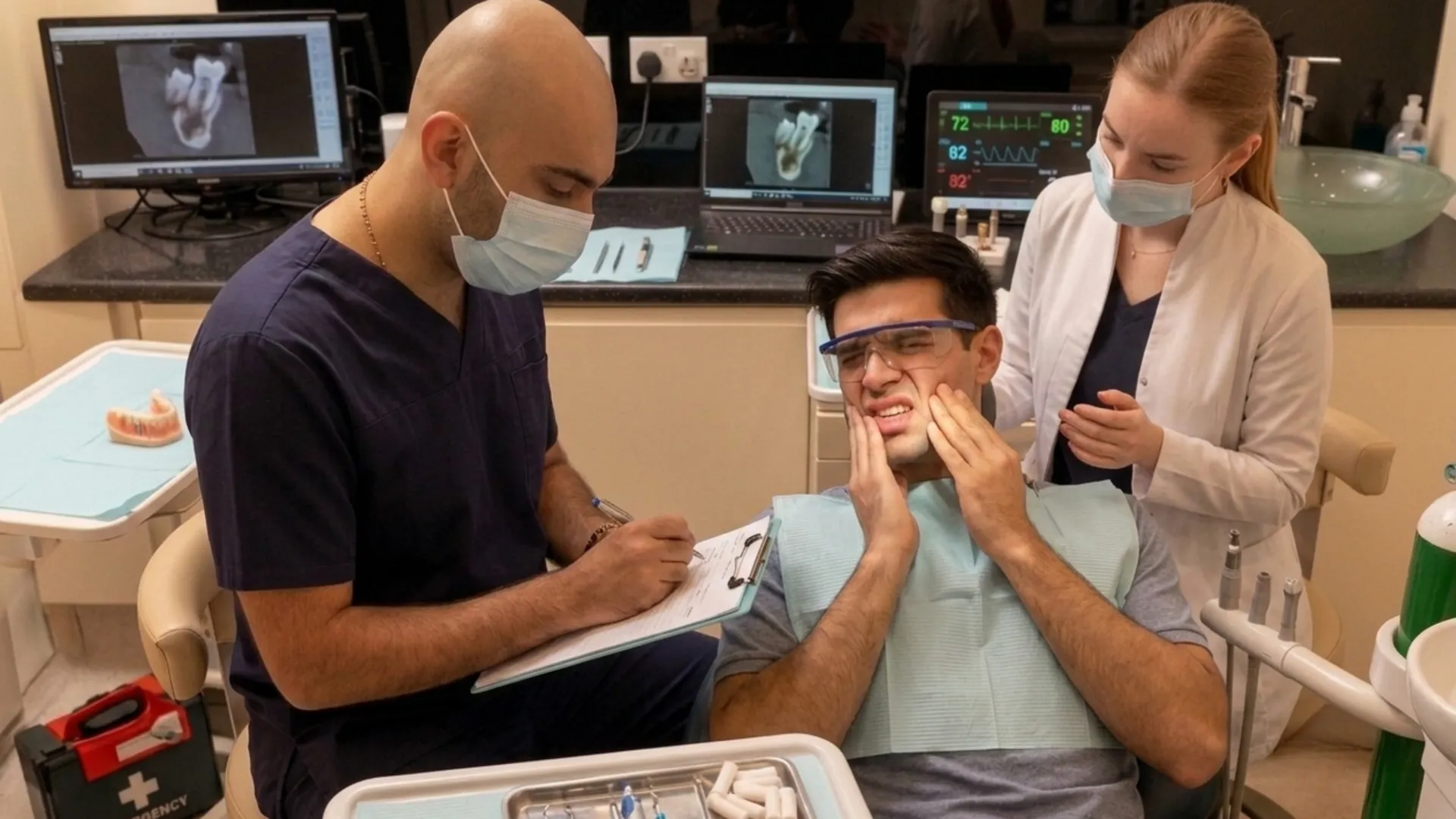
Weeks 1-2: dental assessment and splint impressions, parallel initial somatic conversation. Weeks 3-6: splint fitting plus weekly somatic sessions. Weeks 6-12: splint review, deeper release work, clenching often begins reducing. Months 4-6: masseter muscle-relaxing treatment may bridge severe cases. Months 6-12: most patients see substantial reduction in the clenching itself, not just protection from it.
Realistic timelines
Splint alone produces protection within a fortnight and headache reduction within four to six weeks but rarely resolves the pattern. Integrated treatment produces meaningful shift within three to four months and full resolution within six to twelve months for most patients. The somatic approach to TMJ tension sets out the body-mind side in detail.
How to know if this fits your case
Worth a conversation if: you've used a night guard for six months without the clenching reducing; the pattern correlates with stress; you wake with a tight jaw or morning headaches; you notice daytime jaw tightness under pressure; you have other stress signals (disrupted sleep, gut tightness, neck tension).
Book the discovery call or call reception on 020 8127 4567. 222 Essex Road, Islington.
Co-authored by Dr Vishal Patel and Laura-Maria Schober. Clinically reviewed by Dr Vishal Patel. Last reviewed: 11 May 2026.