In my first session with most patients, I ask them to feel their jaw. For most chronic clenchers, after years of operating on autopilot, this is not simple — they cannot feel whether the masseter is tight right now. Our page on jaw pain and TMJ problems covers the dental side.
What a splint does, what it does not do
Splints do their job protecting teeth from wear. For most patients I see, the clenching pattern itself continues underneath. The cause is elsewhere — usually nervous-system patterns carried for years, sometimes originating in childhood adaptations.
What body-led work for the jaw actually involves
Not massage, not physiotherapy, not talk therapy that mentions the body — body-led work using breath, awareness and conscious attention as the primary instruments. A typical 60-90 minute session moves through arrival, sensation (where is the jaw holding right now?), and release. Across six to ten sessions over three to four months, most patients report the morning jaw is softer and daytime clenching is more often noticed and released.
Why this is different from talking-only approaches
A patient can have full insight about why they hold their jaw and continue to hold it. The patterns live in the body in ways that talking does not reliably reach; the body needs to be given the conditions to stop needing to hold. This is the same principle behind our somatic therapy work more broadly.
How the combined treatment pathway works
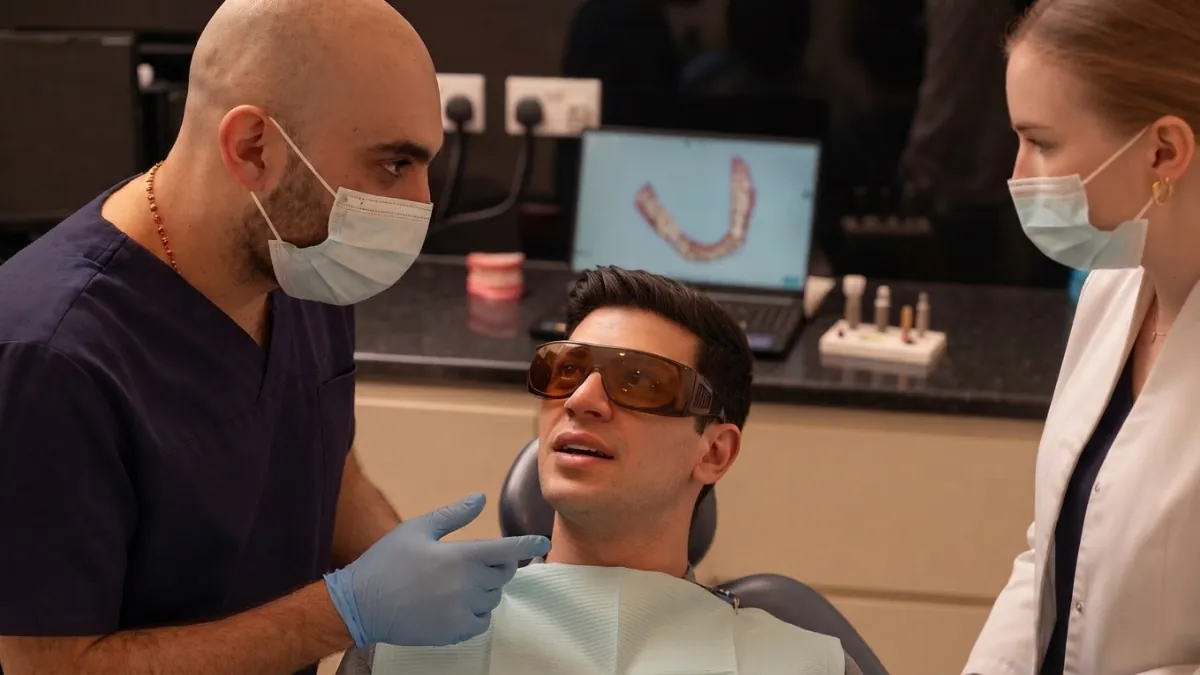
The patient meets Vee for dental assessment and splint impressions; within the same week or two, an initial 75-minute conversation with me. The dental and somatic tracks run in parallel for three to four months, with a joint mid-way review. Most complete the active phase at four to six months; the splint usually stays for ongoing protection.
Who tends to benefit most
Helps most when the clenching correlates with life stress, a splint alone hasn't reduced the clenching itself, there's body-wide holding evident, and the patient is open to working with the body as the entry point. Our integrative approach to jaw clenching and stress sets out the wider picture, and three TMJ recovery paths show how it works in practice.
Book the discovery call or call reception on 020 8127 4567. 222 Essex Road, Islington.
Written by Laura-Maria Schober — MSc Applied Positive Psychology (UEL), EMCC Senior Practitioner, Somatic Experiencing and body-psychodynamic trained. Clinically reviewed by Dr Vishal Patel. Last reviewed: 11 May 2026. Body-psychodynamic coaching is complementary to dental treatment and is not psychotherapy.