Masseter treatment in London
Reviewed By
Dr Vishal Patel
BDS Liverpool · MSc Aesthetic & Restorative Dentistry Manchester · GDC 103127 · AACD Member · Invisalign Diamond II Provider · IFAAS (International Fellowship in Advanced Aesthetic Science) · Facial anatomy & cadaver course, Dr Ali Pirayesh, University of Amsterdam · Harley Academy foundation training in injectable aesthetics · IBSA-trained (Profhilo) · NeoStrata-trained (skin peels) · Lynton Lasers trained, incl. ONDA
Last Updated
October 1, 2026
The jaw treatment most clinics sell as slimming and we assess as function first
Masseter treatment uses small amounts of a prescription muscle-relaxing medicine, often searched for as “masseter Botox”, to soften an overactive jaw muscle. It can ease clenching, grinding and jaw ache, and gradually slim a square jaw. At Dental & Wellness London, Islington, it is assessed and administered by dentist Dr Vishal Patel after consultation, from £300.
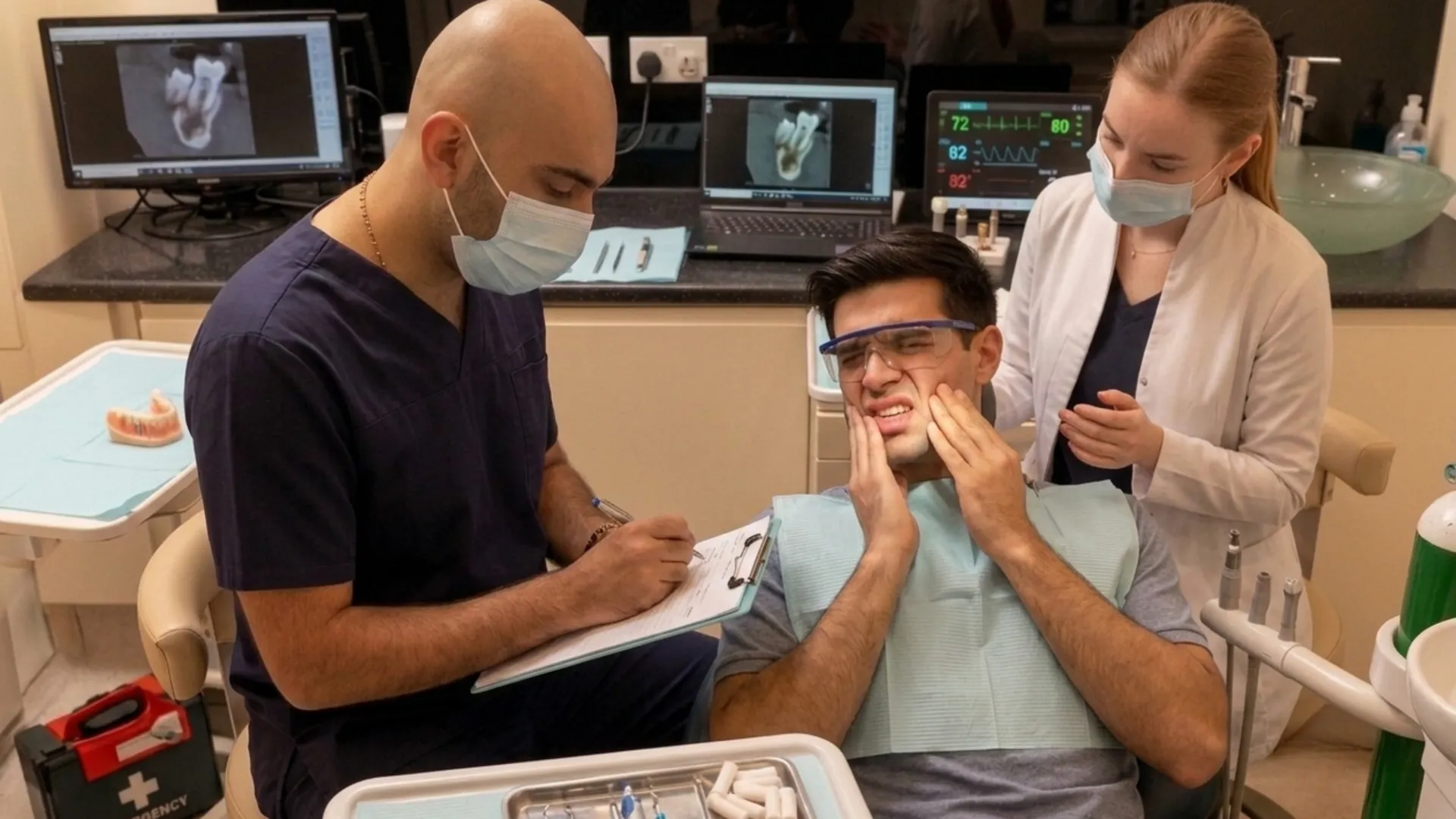
- Softens an overactive masseter muscle
- Eases clenching, grinding and jaw ache
- Gradual jaw slimming over 4 to 8 weeks
- Lasts about 4 to 6 months
- From £300 · consultation first
- Assessed by dentist Dr Vishal Patel
What masseter treatment does
The masseter is the strong muscle at the angle of the jaw that closes your mouth. You can feel it if you place your fingertips just in front of your earlobes and clench. When it is overactive, from clenching or grinding, it can cause jaw ache, tension headaches and tooth wear, and can make the lower face look square. Masseter treatment uses small amounts of a prescription muscle-relaxing medicine to soften the muscle. Many people search for this as “masseter Botox”.
Relaxing the muscle reduces the force it can produce. Over the following weeks a muscle that has been working too hard does less, and where it has become bulky from years of clenching it gradually becomes smaller. The medicine does not affect the bone of the jaw, and it does not stop you chewing, talking or smiling normally.
The problem with treating it as a slimming product
Many clinics introduce masseter treatment as jaw slimming. The silhouette is the headline, and the muscle is treated as an obstacle to it. That is not wrong so much as incomplete. An overworking masseter changes the shape of the lower face, but it also loads the teeth and the jaw joint, and it produces the ache people describe as waking up with a tired face. Treat it only as a shape and you address one of those three things. Assess it as a muscle doing too much work, and you can plan for all of them.
That is why we start with an assessment rather than a quote, and why we sometimes advise against treatment: when the width of the jaw is bone rather than muscle, or when grinding needs a night guard and a conversation about stress before it needs a medicine.
A dentist’s view of clenching and grinding
As a dentist, Dr Vishal Patel looks at the whole picture: your bite, tooth wear, the jaw joint and sleep. Masseter treatment can ease muscle overactivity, but it is not the only answer, and we may recommend a night guard such as a custom night guard or a referral where needed.
The masseter is everyday territory in dentistry in a way it rarely is for a general aesthetic injector. We see its effects every time we check a bite: flattened or chipped teeth, cracks in older fillings, scalloped edges on the tongue, tenderness at the temples and stiffness when opening wide. We feel the muscle while you clench, which tells us how much of any bulk is active muscle and where it sits. That knowledge of vital facial structures, blood vessels, nerves and muscle function is the reason a dental clinic is a sensible place for this treatment.
Grinding often happens at night and without the person knowing. Partners sometimes hear it before the patient feels it. Where symptoms suggest a sleep problem such as snoring with pauses in breathing, we will suggest you see your GP, because that needs medical assessment rather than dental or aesthetic treatment.
Three reasons people come for masseter treatment
Function: clenching and grinding
An overactive masseter can wear and chip teeth, make the jaw joint sore and start headaches at the temples. Relaxing the muscle reduces the force behind clenching. For many people that sits alongside a night guard: the guard protects the teeth, while treatment reduces the load driving the damage. We treat this as part of a jaw plan, not a standalone fix.
Shape: a square or heavy lower face
A well-developed masseter widens the lower face. Where the width is muscle, relaxing it allows the angle of the jaw to soften gradually over several weeks as the muscle reduces. Where the width is bone, no injection will change it, and we will tell you so rather than treat for a result that cannot happen. The aim is balance and facial symmetry with the rest of your face, not the narrowest possible jaw. If you are new to muscle-relaxing treatment, our guide to baby Botox in London explains a more conservative approach to dosing.
Comfort: a muscle that never switches off
Some people have no visible bulk and little tooth wear, but live with a constant low ache in the jaw. Easing that tension is a legitimate reason for treatment, and the relief is often felt within a couple of weeks.
Your assessment
Every treatment starts with a skin and aesthetic consultation, which costs £65 and is redeemable in full against treatment. Dr Patel examines the muscle at rest and while you clench, looks at your teeth for wear, checks how your jaw opens and whether the joint clicks or is tender, and asks about headaches, stress and sleep. He also considers whether width comes from muscle, bone or soft tissue. You leave with an honest recommendation and, if treatment suits you, a written plan and cost.
What to expect
- A consultation and assessment first
- About 15 minutes of treatment
- Relief from clenching often within two weeks
- Jaw slimming develops gradually over 4 to 8 weeks
- Effects usually last four to six months
A small number of fine injections are placed into the body of the masseter on each side, away from the muscles of the smile. There is no downtime and most people return to work straight away. You will not notice a change on the day. We review the result and plan the timing of any repeat treatment around how your muscle responds, rather than rebooking you on a fixed cycle.
After treatment
We give you written aftercare before you leave. For the rest of the day, avoid rubbing or massaging the jaw, strenuous exercise and lying flat for the first few hours. Eat normally, though you may prefer softer foods if your jaw feels tired in the first weeks. Over the following fortnight many people notice they wake with less jaw tension and fewer temple headaches. Change in shape comes later and more gradually, and is often easiest to see when you compare photographs from your assessment. If anything worries you, you contact the clinic and speak to us directly.
With repeat treatment, some people find the muscle settles at a lower level of activity and treatment can be spaced further apart. Others manage well with a night guard alone once the cycle of overuse is broken. We plan this with you rather than assume.
Night guards and the wider jaw plan
If you clench or grind, the muscle is usually a symptom. Relaxing it helps, sometimes considerably, but it does not explain why the muscle is overworking. For bruxism and jaw-joint symptoms we look at the bite, daytime clenching habits and the stress that often sits underneath. A custom hard night guard, the Davies splint, costs £495 and protects the teeth from the forces of grinding, whether or not you also have masseter treatment. Our teeth grinding page explains how we assess and manage bruxism.
Because we are a dental and wellness clinic, the stress side can be looked at properly too, through somatic coaching and mindfulness alongside dental care, where that would help. Masseter treatment then becomes one well-chosen tool among several, not something you are encouraged to repeat indefinitely.
Masseter treatment compared with the alternatives
- Jawline filler. These do opposite jobs. Masseter treatment reduces an overactive or bulky muscle; jawline filler adds definition to a soft jaw. The assessment establishes which, if either, suits you.
- A night guard alone. For many grinders, a guard is the first step and may be enough. Treatment can be added if muscle pain or force remains a problem.
- Doing nothing. For shape alone, this is a reasonable choice. For active grinding that is wearing teeth, doing nothing has a cost, because worn enamel does not grow back.
Cost of masseter treatment
Masseter treatment at our Islington clinic is from £300. The dose, and therefore the final cost, depends on the size and strength of your muscle, which is why we confirm it in writing after assessing you. The £65 consultation is redeemable in full against treatment. A Davies splint, where advised, is £495.
Safety
Not suitable in pregnancy or breastfeeding, or with some neuromuscular conditions. Chewing may feel slightly weaker for a few weeks, which most people notice only with very tough foods. Mild tenderness or small bruises can occur at the injection points. Results vary from person to person, and we do not promise a particular change in jaw shape.
Prescribed and administered by Dr Vishal Patel, BDS, MSc Aesthetic & Restorative Dentistry, GDC 103127, the clinic’s sole aesthetic prescriber. He has around twenty years in dentistry and ten in facial aesthetics. You can read more on Dr Patel’s profile, or about lines in the upper face on our anti-wrinkle treatment page. For wider questions about the medicine, see our guide to anti-wrinkle treatment in Islington.
Where to find us
The clinic is at 222 Essex Road, Islington, London N1 3AP, two minutes from Essex Road station and a short ride from Angel, Highbury, Canonbury, Hackney and Stoke Newington. Buses 38, 56, 73, 341 and 476 stop on Essex Road. Many patients cycle or use a Lime or Forest e-bike. Appointments are Monday to Friday, 8am to 7pm, by appointment only. If you are comparing providers, our guide to choosing a masseter clinic near you sets out what to look for.
Clinically reviewed by Dr Vishal Patel · BDS · MSc Aesthetic & Restorative Dentistry · GDC 103127. Last reviewed 1 October 2026.

Dr Vishal Patel
Clinical lead · Sole aesthetic prescriber · 10 years in facial aesthetics
BDS Liverpool · MSc Aesthetic & Restorative Dentistry (Manchester) · GDC 103127 · International Fellowship in Advanced Aesthetic Science (IFAAS) · Facial anatomy and cadaver course with Dr Ali Pirayesh, University of Amsterdam · Harley Academy · IBSA and NeoStrata trained
We will tell you when a treatment is not the right answer. That honesty is part of the treatment.
Read Dr Patel’s profile →For the full picture, including how this compares with the alternatives, see our guide to jaw pain and TMJ.
Further reading
Clenching & Grinding
Jaw Slimming
Muscle Tension Release
As a dentist, Dr Vishal Patel checks for grinding wear, bite problems and jaw joint signs before treating the masseter.
A dental assessment, first.
Consultation — £65
A skin assessment with an honest view of what will help. The fee is redeemable in full against treatment.
Treatment
About 15 minutes.
Review
We check the result and discuss night guards if useful.
Start with a consultation
- £65, redeemable in full against treatment
- Carried out by Dr Vishal Patel
- A written plan before treatment
Or call 020 8127 4567 · WhatsApp +44 7974 910222
222 Essex Road, Islington N1 3AP · Mon–Fri, 8am–7pm
Our happy patients,
in their own words
Transparent pricing
Prices are set out below. Your written plan confirms the fee before any treatment begins.
Clear prices, set out before you start.
Redeemable in full against treatment
Per session
Included
- Assessment by Dr Patel
- Review
Quoted separately
- Night guards and dental treatment, priced separately
Questions
people ask
If your question isn't answered here, call reception on 020 8127 4567 or email reception.
Is masseter treatment the same as “Botox” for the jaw?
Yes. It uses botulinum toxin, of which “Botox” is one brand, to relax the masseter muscle.
Will masseter treatment slim my jaw?
Often, gradually over 4 to 8 weeks, where a strong muscle is the cause of a square jaw.
Does it help teeth grinding?
It can reduce clenching force and ease jaw ache. A night guard may still be advised to protect your teeth.
How long does masseter treatment last?
Usually four to six months.
Is there any downtime?
No. Chewing may feel slightly weaker for a few weeks.
Who administers masseter treatment?
Prescribed and administered by Dr Vishal Patel, BDS, MSc Aesthetic & Restorative Dentistry, GDC 103127, the clinic’s sole aesthetic prescriber.