What somatic therapy actually is
Somatic therapy is a family of body-based therapeutic approaches that work directly with the nervous system rather than primarily with thoughts, beliefs, or narrative. The premise is that experience — particularly chronic stress, trauma, and sustained nervous-system activation — is stored in the body as well as the mind.
A somatic session looks different from talk therapy. The therapist works with what's happening in the body — sensations, posture, breath, autonomic patterns — alongside what's being talked about. Sessions are usually clothed, often seated, sometimes involving gentle movement or breath instruction.
Where somatic therapy sits — the honest framing
Somatic therapy has moderate evidence for specific applications — treatment-resistant trauma, chronic anxiety where talk-based CBT has plateaued, conditions with prominent body-level components. It isn't first-line treatment for most conditions; it's second-line or adjunctive. It isn't a replacement for primary mental-health care for moderate-to-severe conditions.
The five major somatic modalities
Somatic Experiencing (SE). Developed by Peter Levine, working with completion of incomplete sympathetic activation. Three-year certification.
Sensorimotor Psychotherapy. Developed by Pat Ogden, integrating attachment theory with body-aware practice, strong for complex developmental trauma.
Hakomi Method. Mindfulness-based somatic psychotherapy using present-moment body awareness.
Body Psychotherapy. Broader category including Bioenergetic Analysis, Body-Mind Centering, and body-psychodynamic work.
Trauma-Sensitive Mindfulness. A framework for delivering mindfulness without retraumatising vulnerable practitioners.
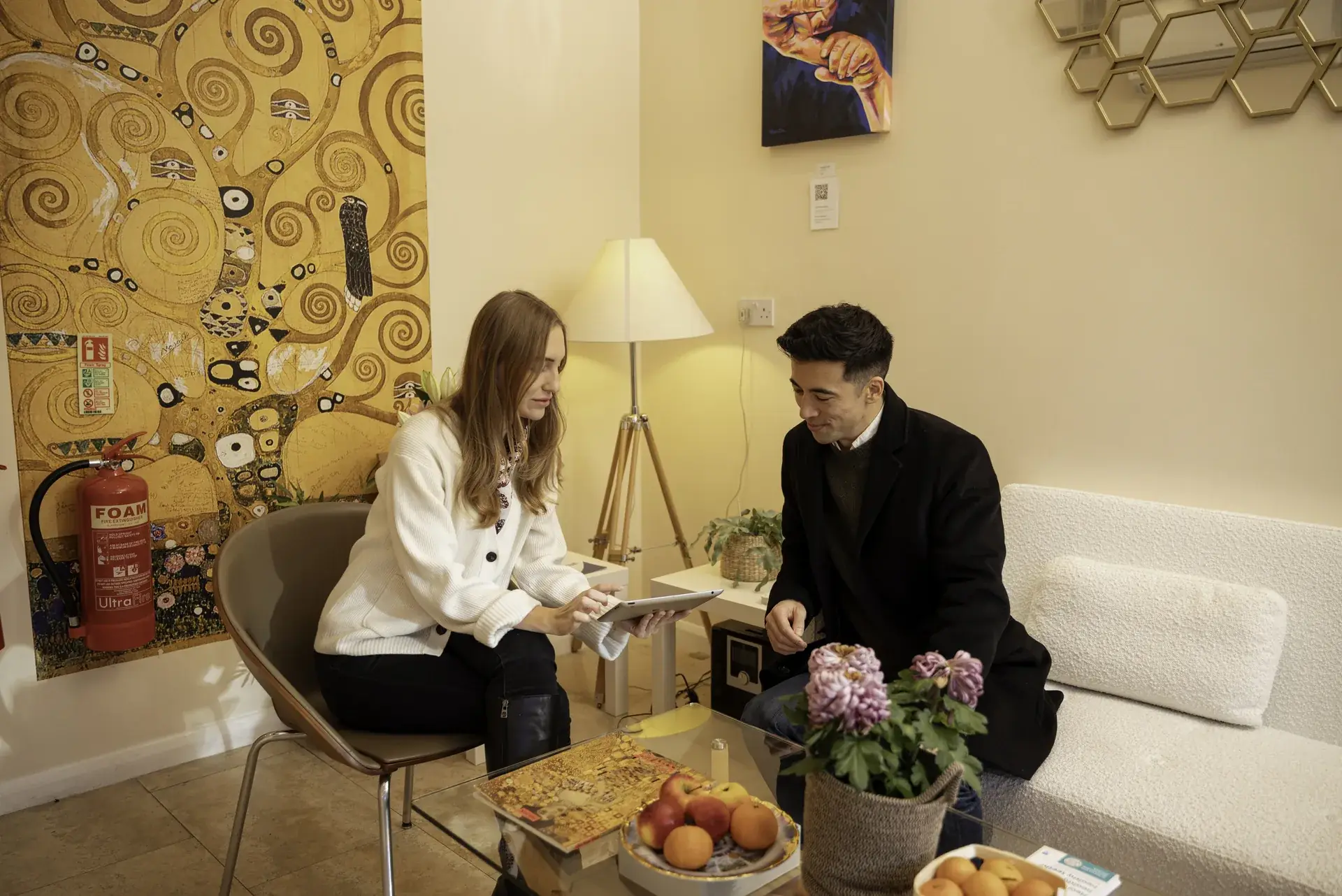
Somatic therapy vs talk therapy
Talk therapy operates through language, insight, and the thought-belief-behaviour loop. A somatic therapist works one layer beneath — tracking what the body is doing while you think, since some response patterns live below conscious thought in the autonomic nervous system. Sessions are less about analysis and more about noticing and letting the body shift state in real time. CBT gives the cognitive map; somatic work shifts the physiological pattern the map keeps pointing at.
When somatic therapy is appropriate
First-line: significant body-level activation — chronic muscle tension, jaw clenching, hypervigilance, panic with physical symptoms not resolved by talk-based intervention.
Adjunctive: ongoing mental-health treatment that's plateaued on the cognitive dimension.
Not appropriate: active suicidal ideation, active psychosis or severe dissociation, acute substance use as primary issue, severe untreated PTSD needing trauma-focused CBT or EMDR first, or general "personal growth" without a specific clinical concern.
What the evidence base actually shows
PTSD: moderate evidence — a 2017 RCT of Somatic Experiencing showed symptom reduction comparable to standard trauma treatment, though the overall base is smaller than trauma-focused CBT or EMDR (NICE first-line).
Chronic anxiety: moderate evidence as adjunctive; less as primary versus CBT.
Chronic pain: emerging evidence for body-based approaches in comprehensive pain management.
Complex developmental trauma: growing evidence base for Sensorimotor Psychotherapy specifically.
The honest framing throughout: "may support" rather than "treats."
How a somatic session actually looks
Opening check-in (5-10 min), body-orienting awareness (10-15 min), the working phase — tracking sensations, gentle movement, breath work, pendulation (20-30 min), and closing integration (5-10 min). Total 50 minutes.
What a typical course looks like
Acute work (8-12 sessions) for specific trauma processing, weekly. Sustained work (3-12 months) for complex patterns, tapering to monthly. Maintenance — some patients continue quarterly for ongoing regulation. Sessions are booked individually; if nothing is shifting within 4-6 sessions, that gets discussed honestly.

Frequently asked questions
Is somatic therapy real therapy? Yes — an evidence-supported family of approaches with formal training and professional bodies, though not NICE first-line for most conditions.
How is it different from massage? Massage is physical intervention; somatic therapy is psychological work with body-awareness components. Sessions are usually clothed.
Can it replace medication? No — medication decisions are made by GPs and psychiatrists. Somatic work sits alongside medical care.
Will I have to relive traumatic memories? Modern somatic therapy specifically aims to avoid retraumatisation, using techniques like titration and pendulation to keep the nervous system from being overwhelmed.
How long until I notice changes? Acute work can show change within 4-6 sessions; sustained patterns typically shift over 2-3 months.
Somatic work at the clinic is delivered as somatic therapy sessions, and often alongside breathwork — which reaches the same nervous-system pathways through the breath rather than through the body directly.
Book an initial somatic consultation
Initial consultation £65 with Laura-Maria Schober, free 20-minute initial chat available. Call 020 8127 4567 or WhatsApp +44 7974 910222.
Reviewed by Laura-Maria Schober · MSc Applied Positive Psychology (UEL) · EMCC Senior Practitioner. Clinical content reviewed by Dr Vishal Patel · GDC 103127. Last reviewed 2026-06-03.
Important: For active mental-health crises, suicidal ideation, or severe symptoms, contact your GP or NHS 111 (or 999 in an emergency).