Bone graft for dental implants: when is it actually needed?
Reviewed By
Dr Rishil Patel
BDS (Hons) · MClinDent Implantology · MJDF · GDC 154292
Last Updated
October 3, 2026
Some clinics graft by default. We decide from a 3D scan, and graft only when your bone genuinely requires it.
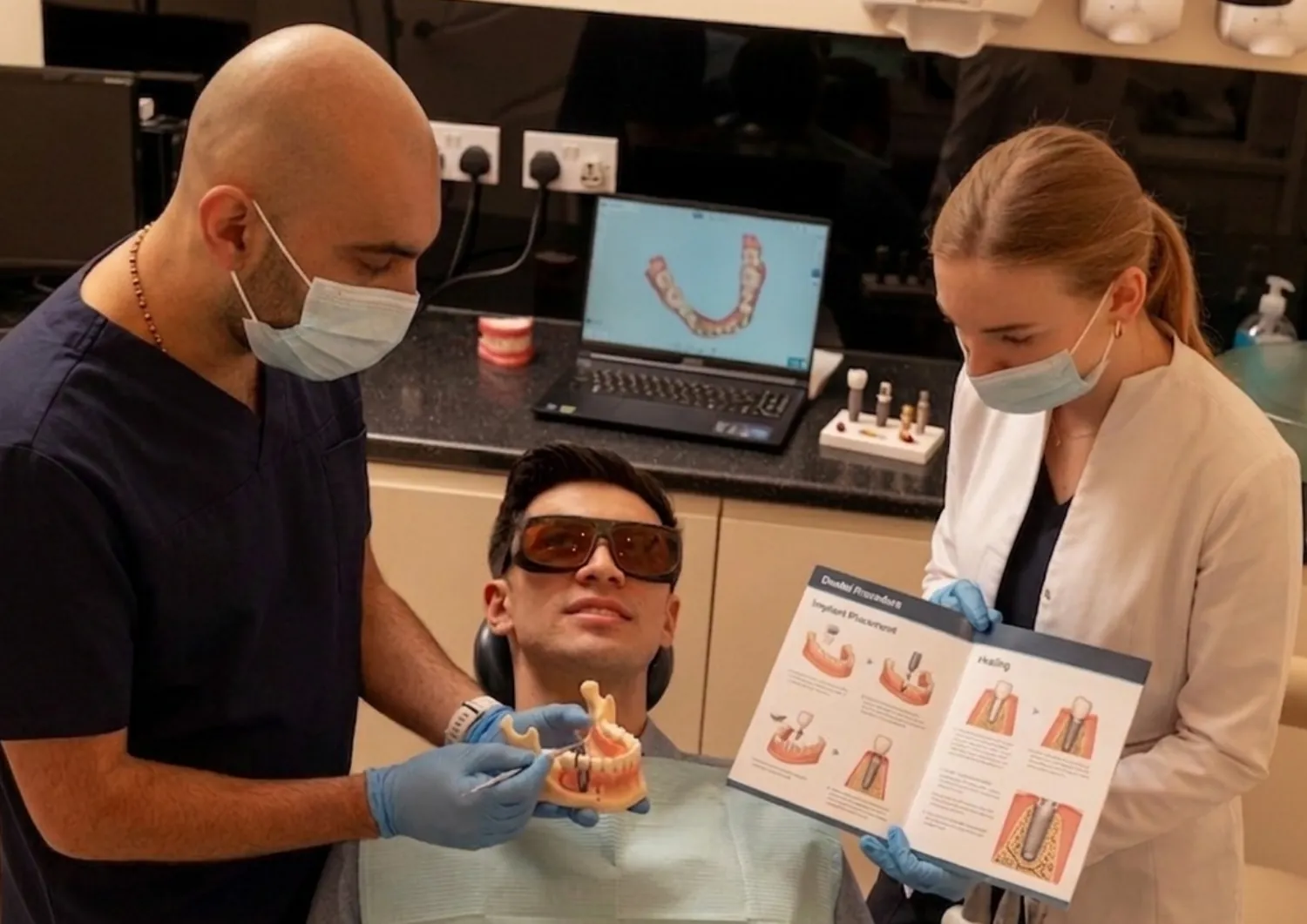
Bone grafting at Dental & Wellness London in Islington rebuilds jawbone where there is not enough to hold an implant safely. Dr Rishil Patel, our implant dentist, decides from a 3D scan whether a graft, a sinus lift, an angled or a shorter implant is right. Grafts are quoted in writing after assessment; implants are from £2,200 including the crown. Healing takes three to six months.
Heading
- If the scan shows enough bone, no graft is needed — we'll say so plainly
- Angled placement or a shorter implant can often avoid a graft entirely
- Three graft categories when needed: socket preservation, ridge augmentation, sinus lift
- Most grafts use processed graft material, not bone taken from elsewhere in your body
3–6 months graft healing before implant placement
"You will need a bone graft" is a phrase that lands harder than it deserves. People hear major surgery, bone taken from the hip and months of discomfort, and some abandon the idea of implants altogether. Most of that fear is misplaced. A bone graft for dental implants is usually a modest procedure, often done in the same appointment as the implant, using prepared graft material rather than your own bone. And some grafting that is recommended is not strictly necessary. This guide explains when a graft is needed, the types, the process, the risks and the cost.
The honest position cuts both ways. Bone grafting makes implants possible where they otherwise would not be. It is also, in some clinics, a default rather than a decision. The way to tell the difference is not a feeling. It is a 3D scan.
Why bone is lost, and why implants need it
An implant is a titanium post that sits in the jawbone and fuses with it. To do that reliably, it needs enough bone height and width around it, typically at least a millimetre or two of bone on every side. Without it, the implant may not integrate, the gum may recede over it, or the crown may look long and unnatural.
Bone is lost for predictable reasons:
- Time after extraction. Bone needs the load of a tooth root to maintain itself. After a tooth is lost, the ridge shrinks, most quickly in the first year.
- Gum disease. Periodontitis destroys the bone that holds teeth in place; see gum disease and bleeding gums.
- Infection or trauma, including long-standing abscesses and difficult extractions.
- Anatomy. In the upper back jaw, the sinus often sits close above the roots, leaving little height once the teeth are lost.
- A long-worn denture, which presses on the ridge without stimulating the bone.
Bone graft for dental implants: do I need one?
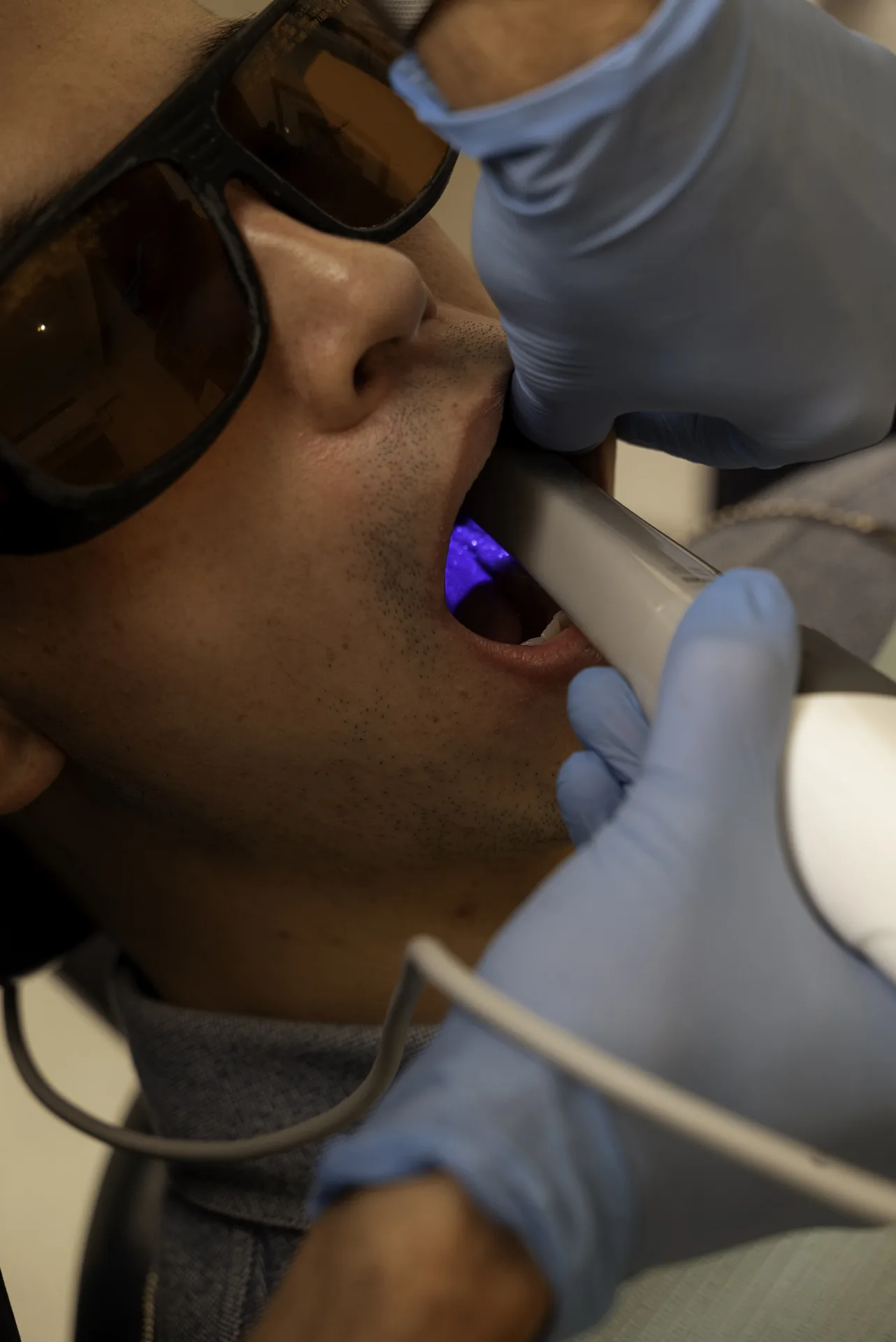
Not necessarily. Many people who are told they have "lost bone" still have enough for an implant in the right position. The answer comes from measuring, not guessing. A 3D (CBCT) scan shows the height and width of the bone at the planned site, the position of the sinus and nerve, and the bone quality. From that, there are four broad answers.
- Enough bone. No graft is needed, and we say so plainly.
- Slightly short of bone. A shorter or narrower implant, or a slightly angled position, may avoid grafting entirely.
- A small deficiency. A minor graft placed at the same time as the implant fills the gap, with little effect on the timeline.
- A significant deficiency. The bone is rebuilt first, allowed to heal, and the implant placed later.
For a full arch, angled implants are central to All-on-4 dental implants, which are designed to use the denser bone at the front of the jaw and often avoid grafting at the back.
Types of bone graft compared
Socket preservation
When a tooth is removed, graft material is placed into the empty socket and covered with a membrane. This limits the shrinkage that would otherwise follow, keeping the ridge in better shape for an implant later. It is the simplest form of grafting and is often done at the extraction appointment.
Ridge augmentation
Where the ridge has already narrowed or lost height, graft material is added to the side or top of the bone and held with a membrane. Small augmentations are often done at the same time as the implant; larger ones are done first, with the implant placed several months later.
Sinus lift
In the upper back jaw, the floor of the sinus can be gently raised and graft material placed beneath it, creating height for an implant. A smaller lift can sometimes be done through the implant site itself, at the same appointment; a larger lift is done from the side and needs a longer healing period.
Graft materials
Most grafts use prepared graft material, either a processed natural bone mineral or a synthetic substitute, which acts as a scaffold that your own bone grows into. Taking bone from elsewhere in your body, such as the hip, is now reserved for a small number of major reconstructions, and is not part of routine implant work.
The bone grafting process, step by step
- Consultation and scan. Dr Rishil Patel examines your mouth, reviews your medical history and assesses a 3D scan of the site. You receive a written plan explaining whether a graft is needed, which type, and why.
- Preparing the site. Any infection or active gum disease is treated first.
- The graft. Under local anaesthetic, the gum is opened, the graft material placed and covered with a membrane, and the gum stitched closed. A socket graft takes minutes; a larger augmentation or sinus lift takes longer.
- Healing, typically three to six months. The graft is gradually replaced by your own bone. Small grafts placed with the implant heal alongside it.
- Implant placement. Once the bone has matured, the implant is placed, and later restored with a crown or bridge.
Our article on the dental bone graft procedure and recovery describes each stage in more detail, and the question of timing is covered in immediate versus delayed implants.
Results, longevity and aftercare
A successful graft becomes part of your jawbone. Once an implant is in place and loaded, the bone around it is maintained in the same way as bone around a natural root. Long-term results depend on the same things as any implant: cleaning, regular maintenance and not smoking. Results vary between patients, and not every graft takes.
After grafting:
- Expect some swelling and bruising for several days, usually managed with ordinary pain relief.
- Keep to soft foods on the other side for the first week or two; our guide to foods to eat after a tooth extraction applies well here.
- After a sinus lift, avoid blowing your nose hard, flying and strenuous exercise for the period we advise.
- Do not smoke. Smoking is one of the strongest predictors of graft failure.
- Attend the review visits so that healing can be checked before the implant stage.
Risks, and how we reduce them
- The graft not taking. Some or all of the material may fail to integrate. Careful case selection, a stable membrane and avoiding smoking reduce the risk; a failed graft can often be repeated.
- Infection, reduced by treating gum disease first and by sterile technique.
- Sinus membrane perforation during a sinus lift, which is usually repaired at the time or allowed to heal before a second attempt.
- Exposure of the membrane or graft through the gum, which needs review and sometimes a minor procedure.
- A longer overall timeline, which is why we graft only when the scan shows it is needed.
Bone graft cost in London
The cost of a bone graft depends on its type and size: a socket graft at extraction is a very different procedure from a large ridge augmentation or a lateral sinus lift. For that reason we do not publish a range. Grafting is quoted in writing after assessment, once the scan shows exactly what is needed, and the quotation sits alongside the implant cost so you see the full picture.
- Implant consultation: £120.
- Single implant: from £2,200, including the crown.
- Bone graft or sinus lift: quoted in writing after assessment.
- Finance: 0% APR finance over 12 months via Tabeo, subject to status.
If you are comparing clinics, ask for the graft to be itemised separately and ask why it is needed. A clear answer, based on measurements from a scan, is a good sign.
Why choose Dental & Wellness London for implant grafting
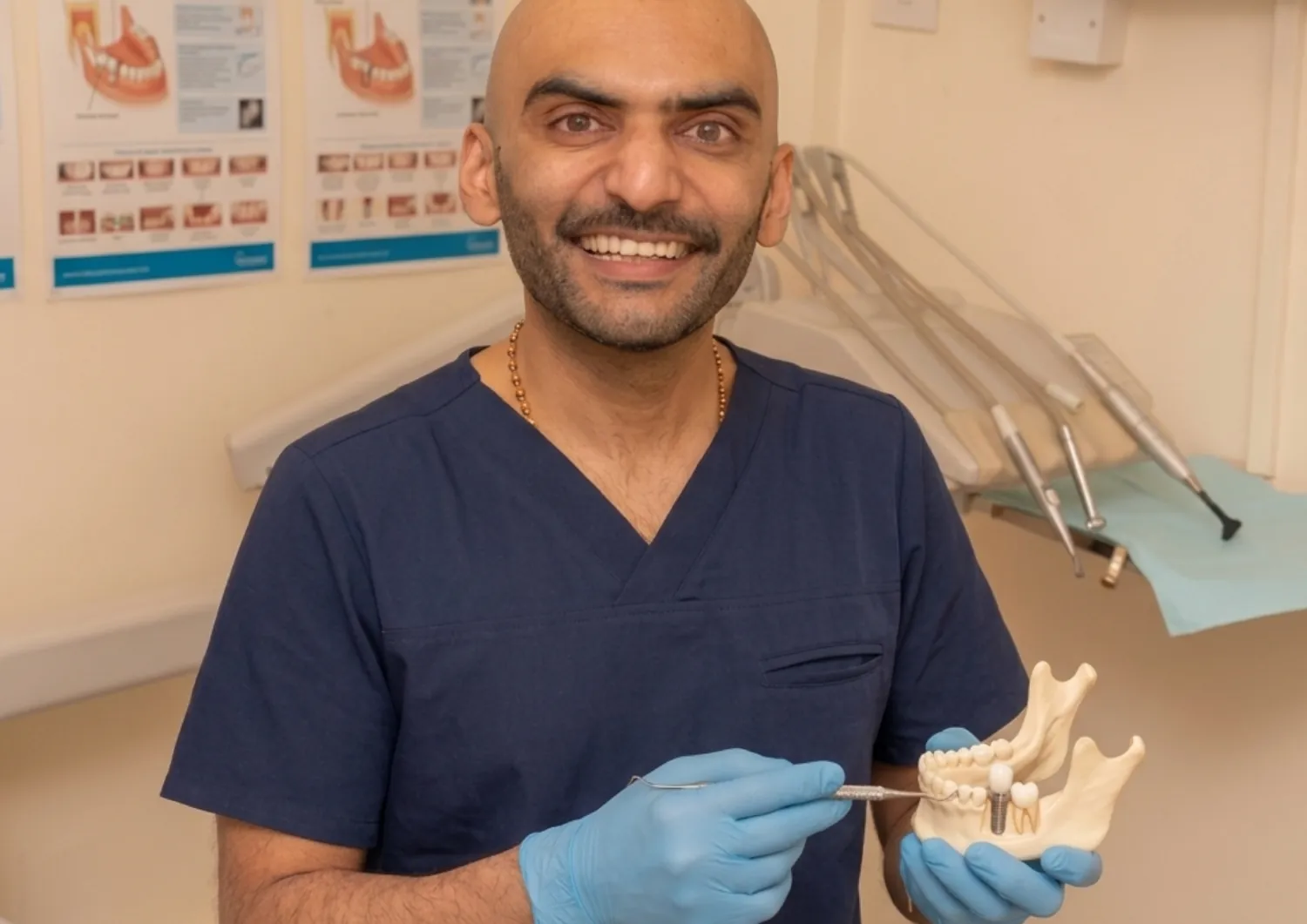
Grafting and implants are assessed and carried out by Dr Rishil Patel, BDS (Hons) King's College London (2008), MClinDent in Implantology, MJDF, GDC 154292. His postgraduate training is in implant dentistry, and he plans each case from the first scan to the final crown.
The practice was founded in 2009 and is rated 4.7 stars from more than 300 Google reviews. Our approach is proportionate: we do not add a procedure, a cost or a healing delay that your anatomy does not require. For the wider picture, see our dental implants guide, or our dental implants Islington page if you live locally. Where implants are not suitable, removable dentures and the options in our tooth replacement guide remain good choices.
Questions patients ask about bone grafts
Is a bone graft painful?
The graft is placed under local anaesthetic, so you should feel pressure rather than pain during the procedure. Afterwards, soreness, swelling and some bruising are common for a few days and usually settle with ordinary pain relief. Small socket grafts are often barely noticeable beyond the extraction itself; larger augmentations and sinus lifts take a little longer.
How long after a bone graft can I have an implant?
Typically three to six months, depending on the size and type of graft. Small grafts are often placed at the same time as the implant, so there is no separate wait. Larger ridge augmentations and lateral sinus lifts need the longer healing period before the implant goes in. Your review scan confirms readiness.
Can you have dental implants without a bone graft?
Often, yes. Where the scan shows enough bone, no graft is needed. Where bone is slightly short, a shorter or angled implant can sometimes avoid grafting. For full arches, the angled design of All-on-4 is intended to use the denser bone at the front of the jaw for the same reason.
What is a sinus lift?
A sinus lift creates height for an implant in the upper back jaw by gently raising the sinus floor and placing graft material beneath it. A small lift can be done through the implant site at the same appointment. A larger lift is done from the side and needs several months of healing before the implant.
Where does the graft material come from?
Most implant grafts use prepared material: a processed natural bone mineral or a synthetic substitute, which acts as a scaffold for your own bone. Bone taken from elsewhere in your body is reserved for a small number of major reconstructions. We explain the material proposed, and the reason for it, at consultation.
Further reading
- Full Mouth Dental Implants: Procedure, Treatment Options and Cost
- All-on-4 Dental Implants: What to Expect Before and After Treatment
- Dental Implants UK Cost: A Comprehensive Guide to Expenses and Fees
- Dental Implants Cost in London: What You're Actually Paying For
Getting here
We are at 222 Essex Road, Islington, London N1 3AP, in the same building since the practice was founded in 2009. We are open Monday to Friday, 8am to 7pm, by appointment only; we are closed at weekends and do not take walk-ins.
- By train: Essex Road station (Great Northern) is about two minutes on foot. Highbury & Islington is one stop north, and Old Street and Moorgate are a short ride south.
- By bus: the 38, 56, 73, 341 and 476 all stop on Essex Road close to the door.
- On foot from Angel: allow 15–20 minutes' walk from Angel station along Essex Road. Our Angel page has the route.
- By bike: many patients cycle or use Lime and Forest e-bikes. From Dalston it is about ten minutes by bike; see also our Highbury and Canonbury pages.
- By car: street parking on Essex Road is metered and controlled during the day. For most visits, the train, bus or bike is simpler.
Bone deficiency confirmed by CBCT
Angled or shorter implant suffices
Socket preservation, ridge augmentation, sinus lift
We do not add a procedure, a cost, or a healing delay your anatomy does not require — the smallest intervention that gives a long-term result, confirmed by CBCT before any graft is recommended.
| Bone Graft Maturation — 3–6 months | The grafted bone must heal and integrate before an implant can be placed. Socket preservation at extraction adds little to the overall timeline; larger augmentations or sinus lifts add a defined healing window. |
Our happy patients,
in their own words
Transparent pricing
Prices are set out below. Your written plan confirms the fee before any treatment begins.
| Procedure | Standard (DWL Pricing) |
|---|---|
| Implant Consultation | £120 |
| Bone Graft | Quoted in writing after assessment |
| Sinus Lift | Quoted in writing after assessment |
| Single Implant incl. Crown | From £2,200 |
| Finance | 0% APR over 12 months via Tabeo, subject to status |
0% APR finance over 12 months via Tabeo, subject to status.
Questions
people ask
If your question isn't answered here, call reception on 020 8127 4567 or email reception.
Do I need a bone graft for a dental implant?
Not necessarily. A 3D scan measures the height and width of bone at the planned site. If there is enough, no graft is needed. If it is slightly short, a shorter or angled implant may avoid grafting. A graft is recommended only when the scan shows the implant would otherwise lack secure support.
How much does a bone graft for implants cost?
Grafting costs depend on the type and size, from a small socket graft to a lateral sinus lift, so we quote in writing after assessment and itemise it alongside the implant. A single implant is from £2,200 including the crown, the consultation is £120, and 0% APR finance over 12 months via Tabeo is available, subject to status.
How long does a bone graft take to heal?
Most grafts take three to six months to mature before an implant can be placed. Small grafts are often placed with the implant, so they heal together. Discomfort from the procedure itself usually settles within a week. We check healing at review visits before moving to the implant stage.
Is a bone graft a major operation?
Usually not. Most implant grafts are minor procedures under local anaesthetic, often done at the same appointment as an extraction or implant. They use prepared graft material rather than bone from your hip. Larger ridge augmentations and lateral sinus lifts are more involved, and we explain exactly what yours involves beforehand.
What is a sinus lift for dental implants?
A sinus lift adds bone height in the upper back jaw, where the sinus often sits close above the old tooth roots. The sinus floor is gently raised and graft material placed beneath it. Smaller lifts can be done through the implant site; larger ones need several months of healing first.
Can a bone graft fail?
Yes, occasionally. Some or all of the graft may not integrate, most often because of infection, smoking or movement of the material during healing. Careful planning, treating gum disease first and avoiding smoking reduce the risk. A failed graft can often be repeated once the area has healed.
Where can I have a bone graft assessment in Islington?
Assessments take place at Dental & Wellness London, 222 Essex Road, Islington, London N1 3AP, two minutes from Essex Road station. Buses 38, 56, 73, 341 and 476 stop nearby, and Angel is a 15–20 minute walk. Dr Rishil Patel reviews your scan and explains the options in writing.
Get a clear answer before you worry
Told you need a graft, or that implants are not possible? A scan-based assessment with Dr Rishil Patel gives a measured answer. Call 020 8127 4567.
Contact US