The myth this page is here to correct
The dental industry has trained everyone to believe the same thing: hygienist, every six months, forever. It is tidy, it is easy to remember — and for a lot of patients it is wrong in both directions.
Some people genuinely need the hygienist every three months, and stretching them to six quietly lets gum disease progress between visits. Others have stable, healthy gums and excellent home care, and booking them in twice a year is habit, not clinical need. We say no often in this practice, and that includes saying no to appointments that aren't earning their place. The honest answer to "how often?" is not a number — it is a risk band. This page explains the three signals that set yours. Our dental hygienist appointments are set around exactly this risk-based approach.
The three signals that set your interval
Signal one — how your gums respond
Bleeding when the hygienist works, or when you brush and floss at home, is the single most useful signal in gum health. Healthy gums don't bleed. Gums that bleed are inflamed, and inflammation is gum disease in its earliest, most reversible stage. A patient whose gums bleed at every visit needs a shorter interval and better-targeted home care; a patient whose gums stay firm and quiet between visits has earned a longer one. If charting shows established gum disease, the conversation changes from routine hygiene to active treatment — we map it properly first with initial periodontal charting (£195) and set a closer recall until it is stable.
Signal two — how fast you build deposits
Tartar (calculus) is plaque that has hardened, and once hardened it cannot be brushed off — only professionally removed. People mineralise plaque at genuinely different rates: diet, saliva chemistry, and crowding all play a part. Someone who arrives at six months with heavy deposits behind the lower front teeth builds faster than someone who arrives nearly clean. The hygienist can see your rate directly, which is why the interval should come from what is actually found in your mouth, not from the diary.
Signal three — what your life is loading onto your gums
This is the signal most practices skip, and the one an integrative practice weighs heavily. Smoking roughly doubles to triples gum disease risk while masking the bleeding that would normally warn you. Diabetes and gum disease drive each other in both directions. Pregnancy hormones make gums more reactive to the same plaque. High stress shows up in the mouth as grinding and neglected routines — and persistent gum inflammation feeds back into the body's wider inflammatory load, with established associations to cardiovascular health and, through the oral microbiome, to gut health. Braces and aligners create new plaque traps overnight. When your life changes, your interval should be reviewed — not left on autopilot.

So which band are you in?
BandTypically fitsIntervalActive careDiagnosed gum disease · smokers · poorly controlled diabetes · heavy fast depositsEvery 3 monthsStandardMild bleeding · moderate deposits · pregnancy · braces or aligners · most adultsEvery 6 monthsMaintenanceNo bleeding · slow deposits · excellent home care · stable for 2+ yearsEvery 9–12 months
Two honest caveats. First, the band is a starting point — your dentist or hygienist confirms it from what they actually find, and it should move as your mouth and life change. Second, the hygiene visit does not replace the dental examination: the hygienist manages plaque, tartar, and gum health, while the examination screens teeth, bite, soft tissues, and oral cancer. They are different appointments answering different questions, even when booked on the same day.
Why we'd rather right-size your visits than maximise them
A practice taking a long-term smile view has no interest in selling you appointments you don't need. Gum health is the foundation everything else stands on — there is little point designing dentistry for optimal function and long-term functional outcomes on gums that are quietly inflamed. So we put the effort into getting the foundation right: a 30-minute hygiene appointment at £85 that includes a deep clean, proper assessment and tailored home-care coaching, at an interval your mouth has actually earned. Patients in the maintenance band hear it from us directly: you're stable — come less often. That candour is also why patients trust us when we say the opposite.
Frequently asked questions
Is every six months a rule?
No — it is a reasonable default, not a prescription. UK practice follows risk-based recall: anywhere from three months for active gum disease to around twelve months for consistently stable, low-risk mouths. The same logic applies to how often you should have a dental check-up. The right interval is the one set from your bleeding, your deposit rate, and your risk factors.
What happens if I skip the hygienist for a year or two?
For a low-risk mouth, often not much — which is exactly why low-risk patients can earn longer intervals. For anyone with bleeding gums, fast tartar, or risk factors like smoking or diabetes, gaps are where early, reversible gum inflammation quietly becomes established gum disease, which can no longer be cured — only managed. If it has been a while, book an examination first so nothing is missed.
Do I still need the hygienist if I brush and floss well?
Mostly yes, though perhaps less often than you think. Even excellent home care misses areas, and hardened tartar cannot be removed at home with any brush or floss. Good home care is what earns you a longer interval — it doesn't replace professional removal entirely.
Does a hygiene appointment hurt?
It shouldn't be painful, though it can feel scratchy or sensitive where gums are inflamed — and that sensitivity itself is information. Tell the hygienist; pacing and technique can be adjusted, and as your gum health improves, visits become noticeably more comfortable.
Is the hygienist the same as a check-up?
No. The hygiene visit cleans and manages gum health; the dental examination assesses teeth, bite, and soft tissues and screens for oral cancer. You can read what each involves in our check-up guide — many patients book both together.
My gums bleed when I brush — should I wait for my next routine visit?
No. Bleeding gums are an early warning, not a cosmetic nuisance, and early gum disease is the reversible kind. Book in sooner — start with our gum disease and bleeding gums guide to understand what is happening, then have it assessed properly.
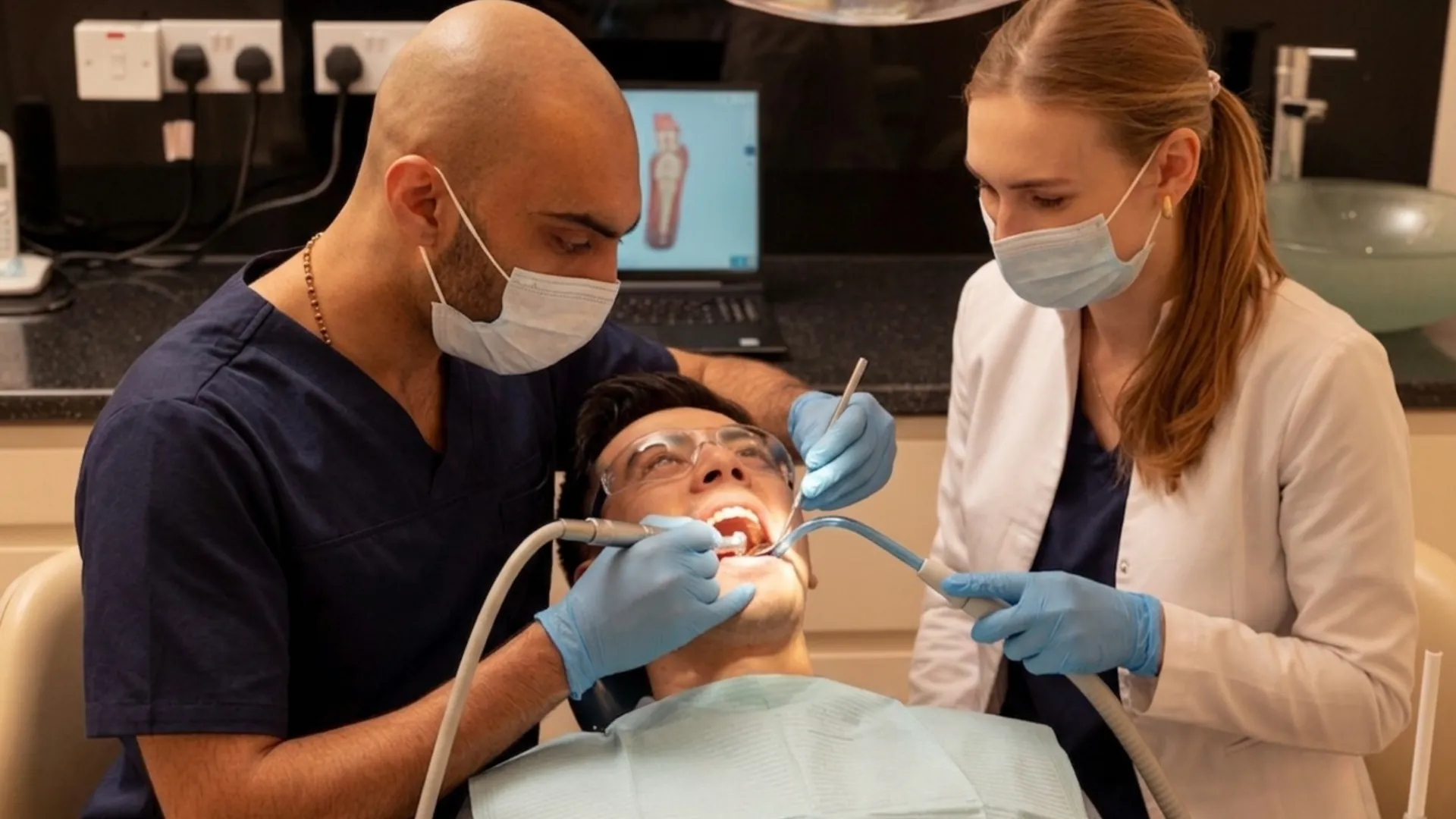
Find your interval
If you don't know which band you are in — or you have been on six-monthly autopilot for years — the quickest way to find out is one properly assessed visit.
Hygiene appointments (30 minutes) are £85 at our practice, or £135 for Diamond hygiene — see our dental hygienist page for what is included. Call 020 8127 4567 or WhatsApp +44 7974 910222 (8am–7pm) to book at 222 Essex Road, Islington, London N1 3AP. Appointments Monday–Friday, 8am–7pm, by appointment.
Reviewed by Dr Vishal Patel · BDS Liverpool · MSc Aesthetic & Restorative Dentistry (Manchester) · GDC 103127 · AACD member · Invisalign Diamond II provider. Whole-health and integrative review by Dr Reena Sohal · BDS Liverpool · GDC 104355. Last reviewed 2026-06-05.
Important: This article is general information, not a diagnosis. Recall intervals are clinical decisions made for each patient. If your gums bleed persistently, feel loose teeth, or notice gums pulling away from teeth, book an assessment promptly — and if you have a sore, ulcer, or lump that hasn't healed in three weeks, see a dentist or your GP.