What do realistic mewing before-and-afters actually look like?
A genuine adult mewing "after," compared fairly with the "before" — same lighting, same neutral head position, same camera distance — is undramatic. You might see a slightly tidier resting profile, a little less puffiness around the lower face from better nasal breathing, and lips that close more naturally at rest. That is a realistic result, and it is worth having.
What you will not see, in a fair comparison, is a remodelled jaw, sharper cheekbones, or a structurally different face. The bones of an adult face are essentially set, so a posture habit cannot move them. When a side-by-side appears to show exactly that, the change is almost always coming from somewhere other than the tongue. Our guide to mewing, explained by a dentist, covers the technique itself.
Adult mewing timeline — what to expect at 3, 6, 12 and 24 months
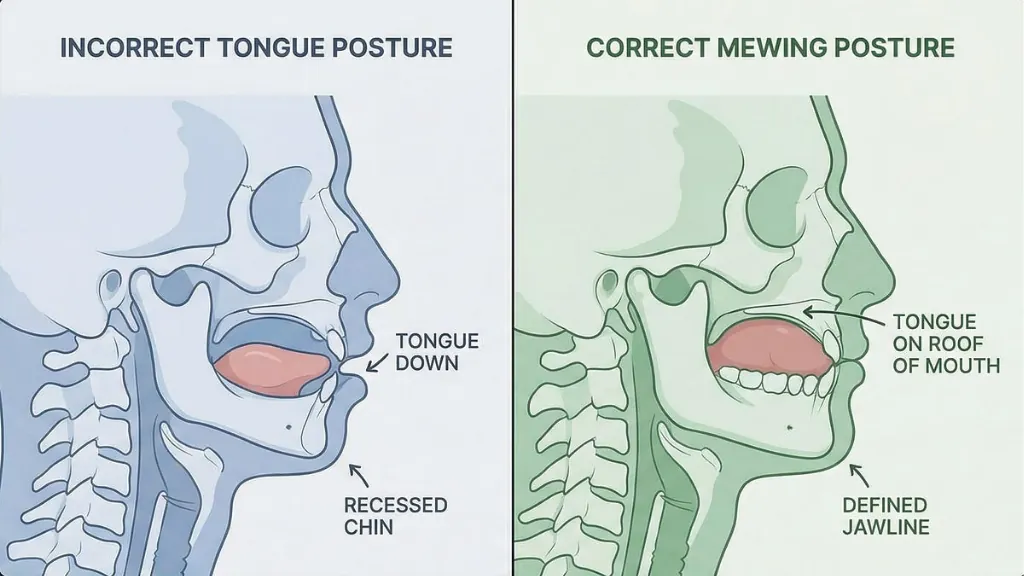
At three months, the most likely change is a habit, not a face. If you've genuinely shifted to resting the tongue on the palate and breathing through the nose, you may notice a drier mouth less often and lips that sit closed without effort. Photographically, expect little to nothing.
At six months, soft-tissue and muscle tone may begin to feel different — the resting position becomes automatic, and some people report the lower face feeling firmer. Any visible difference is subtle and easily confused with day-to-day variation in sleep, hydration and weight.
At twelve to twenty-four months, a committed adult may notice a modestly cleaner resting profile — the upper end of what's realistic, still measured in subtlety, not transformation. None of it is bone. Reset any expectation of dramatic month-by-month edits now — those timelines are not credible for an adult.
Children versus adults — why the difference matters
In a child, the jaws are still growing, and oral posture, nasal breathing and a mature swallow can plausibly influence the direction of that growth — the legitimate clinical territory mewing borrowed from, which is why airway-aware dentistry and myofunctional therapy take posture seriously in growing patients. A child's before-and-after, over years and under proper guidance, can show genuinely visible developmental change.
In an adult, the same habit produces far less, because there's no growth left to guide. Adults are working with soft tissue, muscle tone and breathing — real, useful, but not structural. The long-term smile view matters more than a held pose today: how the bite, airway and smile function and age over decades.
How to spot a fake mewing before-and-after — five signs
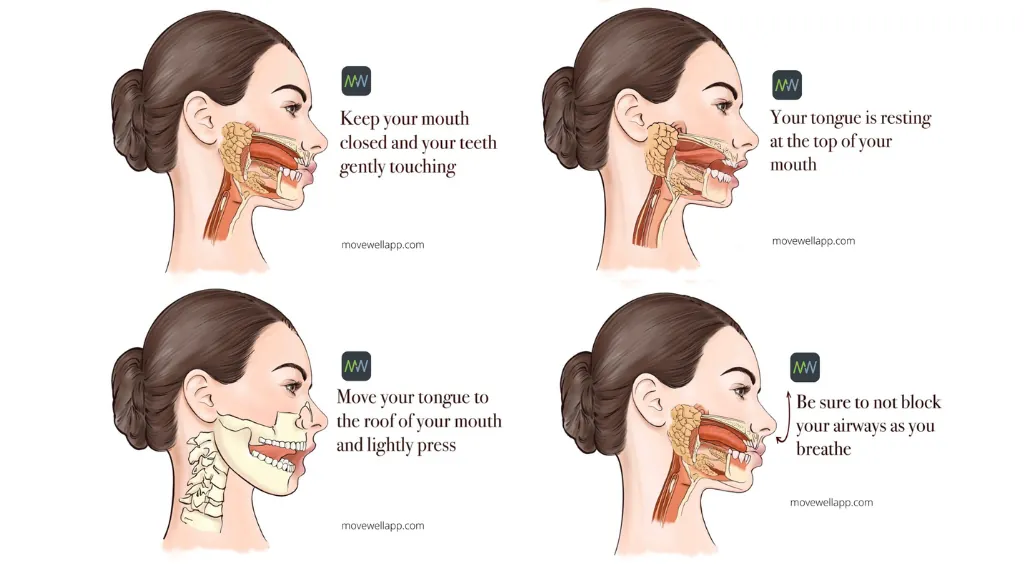
1. The chin position changes — "before" tucked or pushed down, "after" lifted and pushed forward. That alone redraws a jawline with no change in posture.
2. The lighting and angle move — flat overhead light flattens a face; light from below sharpens it.
3. Obvious weight loss between the two images, which changes the lower face independently of the tongue.
4. The camera distance differs — a closer lens distorts proportion.
5. The subject is a teenager or young adult whose face is still maturing anyway, so age alone explains the change.
If one image is selling and the other is neutral, treat the pair as marketing, not evidence.
The factors that actually change face shape — besides mewing
Weight change is the big one: the lower face and jawline respond visibly to even a few kilograms. Overall posture — standing tall with shoulders back and chin level — changes how the whole jaw reads. Hydration and sleep affect facial puffiness day to day. Reduced mouth-breathing genuinely can reduce that puffiness over time, which is the one place mewing's underlying principle earns real credit. In younger people, simple age progression continues to define the face regardless of any technique. None of these require a tongue trick, and most of them are doing the work in the photos that get shared.
Real-world expectations versus social-media promises
Social media offers a new jawline in weeks; the honest clinical picture offers better breathing and a subtly tidier profile over many months, with no structural change in an adult. Many people sharing transformations genuinely believe the technique caused them, but a side-by-side photo cannot separate posture from lighting, and it certainly cannot prove that bone moved. The considered, conservative, never-rushed position is to value the habit for what it does — breathing, comfort, oral health — and ignore the transformation pitch entirely.
What clinical support adds to a mewing practice
Myofunctional therapy is the clinical discipline that trains the resting posture, swallow and breathing patterns mewing gestures at — guided, measured, and matched to what your anatomy can actually do. For some people the more pressing question turns out to be a tongue-tie in adulthood, chronic mouth-breathing or an airway issue, none of which a self-taught posture habit will resolve.
When mewing won't work for you — the red flags
If you have noticeably crowded, protruding or shifting teeth, a bite that feels wrong or is changing, ongoing jaw pain or clicking, snoring or disturbed sleep, or persistent mouth-breathing and nasal congestion, those are clinical questions with proper, evidence-based answers. Mewing is not a substitute for orthodontics, and not an alternative to surgery. Where the picture points to a genuine sleep or breathing condition, that's a referral to sleep-medicine specialists working alongside dental care.
Book an airway-aware dental assessment
Airway-aware dental consultation: £65. By appointment only. 222 Essex Road, Islington, London N1 3AP.
Call 020 8127 4567 · WhatsApp +44 7974 910222. Mon-Fri 8am-7pm. Rated 4.7★ from 300+ Google reviews.
FAQs
What do realistic mewing before-and-afters look like?
Subtle — a slightly tidier resting profile and less puffiness from better nasal breathing, in a fair, same-lighting comparison. Not a remodelled jaw.
How long does mewing take to show results?
For breathing and comfort, within weeks. For any visible appearance change in an adult, twelve to twenty-four months, subtly. Rapid online transformations are not credible for an adult.
Why do mewing transformation photos look so dramatic?
A side-by-side photo cannot separate posture from lighting, camera angle, weight loss, hydration or age. Chin lift and lighting change alone can redraw a jawline with no posture change at all.
Can adults get real results from mewing?
Real but modest: better nasal breathing, a healthier mouth, slightly better muscle tone and a subtly cleaner profile over many months. No structural bone change.
How can I tell if a before-and-after is fake?
Look for a changed chin position, different lighting or angle, visible weight loss, a different camera distance, or a young subject whose face is still maturing.
Is mewing a substitute for braces, Invisalign or surgery?
No. Mewing cannot correct crowding, bite problems or skeletal issues — those need proper clinical assessment.