Why this is harder than "just close your mouth"
We see this constantly. A patient knows they breathe through their mouth — a partner has pointed it out, or they wake with a dry mouth every morning — and the advice they've found online amounts to "just breathe through your nose instead." If it were that simple, they would have fixed it already.
Adult mouth breathing is rarely a pure habit. Far more often it's the visible end of a chain: the nose is partly blocked, so the body defaults to the path of least resistance, and over months or years the mouth-open pattern becomes wired in. You cannot will yourself into nose breathing if your nose physically cannot move enough air. That's why the first half of this guide is about ruling out the cause, and only the second half is about retraining the habit.
Step one — find out why you breathe through your mouth
Nasal obstruction. The single most common reason. A deviated septum, enlarged turbinates, nasal polyps, or chronic congestion can make nose breathing feel like breathing through a straw. This needs a GP or ENT assessment.
Allergies and rhinitis. Year-round or seasonal allergies keep the nasal lining swollen. Many adults who "have always been mouth breathers" are simply chronically congested and have stopped noticing — often very treatable.
Long-standing habit. Sometimes the original cause has resolved, but the mouth-open pattern persists out of pure habit. This is the group for whom retraining alone genuinely works.
Structural and postural factors. A high, narrow palate, a low resting tongue posture, forward head posture, or a tongue-tie can all keep the mouth-breathing pattern locked in — territory an airway-focused dentist is well placed to assess.
If your nose is blocked, the most important step is getting the obstruction assessed and, where possible, treated. A clear nose makes everything that follows easy. A blocked nose makes all of it pointless.
Step two — rule out sleep-disordered breathing first
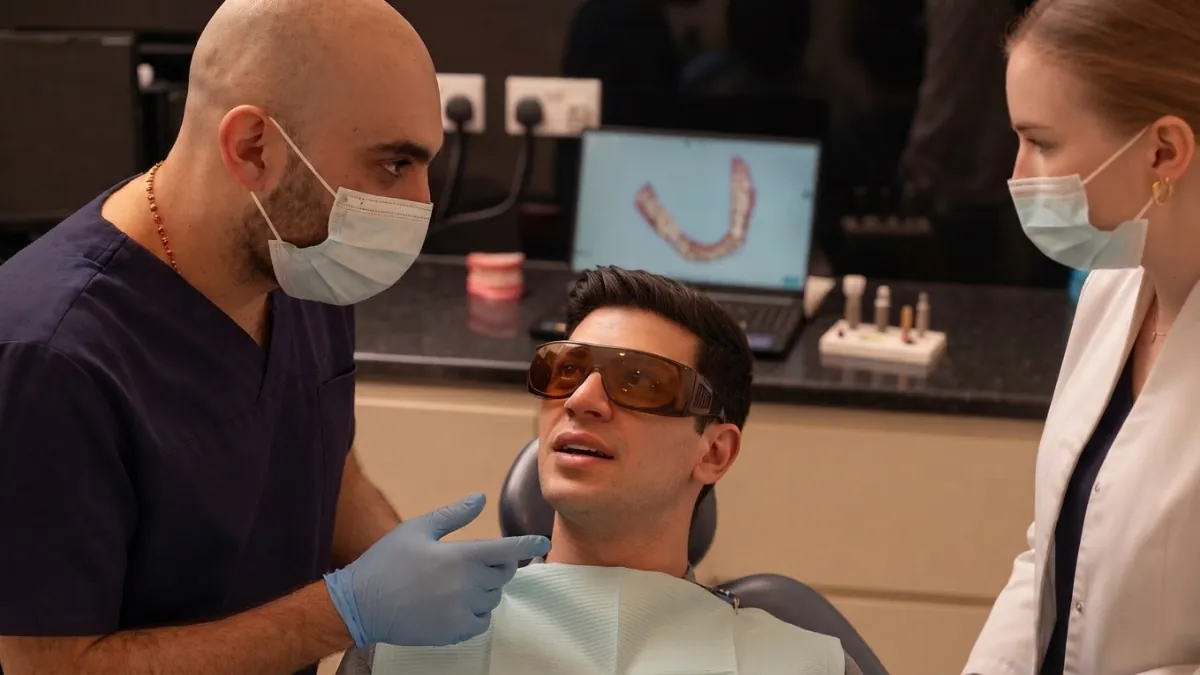
If you mouth-breathe at night and you snore, wake unrefreshed, feel sleepy during the day, or your partner has noticed you stop breathing or gasp in your sleep, speak to your GP before doing anything else. These can be signs of obstructive sleep apnoea — a medical condition diagnosed with a sleep study and managed within medical care, not by a breathing exercise or a strip of tape. Where dental treatment has a role in snoring, it's a custom anti-snoring oral appliance that works alongside, not in place of, proper medical assessment.
The order matters: GP first, sleep study if indicated, and then — once anything serious is ruled out or managed — the retraining below is safe to pursue. Anyone telling you to tape your mouth shut to "cure" sleep apnoea is giving you dangerous advice.
Step three — clear the nose so nose breathing is possible
Saline rinsing. A daily saline nasal rinse clears mucus and allergens and reduces congestion for many people — cheap, safe, effective.
Treat the allergy. A steroid nasal spray or antihistamine, discussed with your GP or pharmacist, can change how much air the nose moves. This single step resolves the mouth-breathing problem for a meaningful share of adults.
ENT review where needed. If saline and allergy treatment don't open the nose, a deviated septum or enlarged turbinates may be the issue — an ENT can advise on whether a minor procedure would help.
The principle: make the nose the easy path, and the body will start to prefer it.
Step four — retrain daytime nose breathing
Conscious nose breathing. Through the day, keep lips lightly closed and breath moving through the nose. Anchor the habit to routine cues — desk, messages, red lights.
Tongue to the palate (tongue posture explained). Rest the tongue gently against the roof of the mouth, tip just behind the upper front teeth. This naturally encourages lip closure and nose breathing.
Nasal breathing during light exercise. Walking while breathing only through the nose trains the airway and tolerance for slightly higher carbon dioxide, making nose breathing feel more comfortable at rest.
Be patient with the timeline. A pattern wired in over years doesn't unwire in a weekend. Most adults notice daytime nose breathing becoming default over several weeks of consistent practice.
Step five — address night-time mouth breathing
Fix the daytime pattern first. Once daytime nose breathing is genuinely automatic, the night often follows.
Optimise the sleep environment. A humidifier, an allergen-reducing pillow protector, and avoiding alcohol close to bedtime (which relaxes airway muscles and worsens mouth breathing) all help.
Sleep position. Side-sleeping reduces the tendency for the tongue and soft tissues to fall back and the mouth to drop open.
Mouth taping — with caution and only after clearance. Some adults use skin-safe tape to encourage lip closure overnight. Reasonable only once sleep apnoea and nasal obstruction have been ruled out, and genuinely unsafe in some people — read our full assessment of mouth taping before trying it.
When the problem is structural — where a dentist comes in
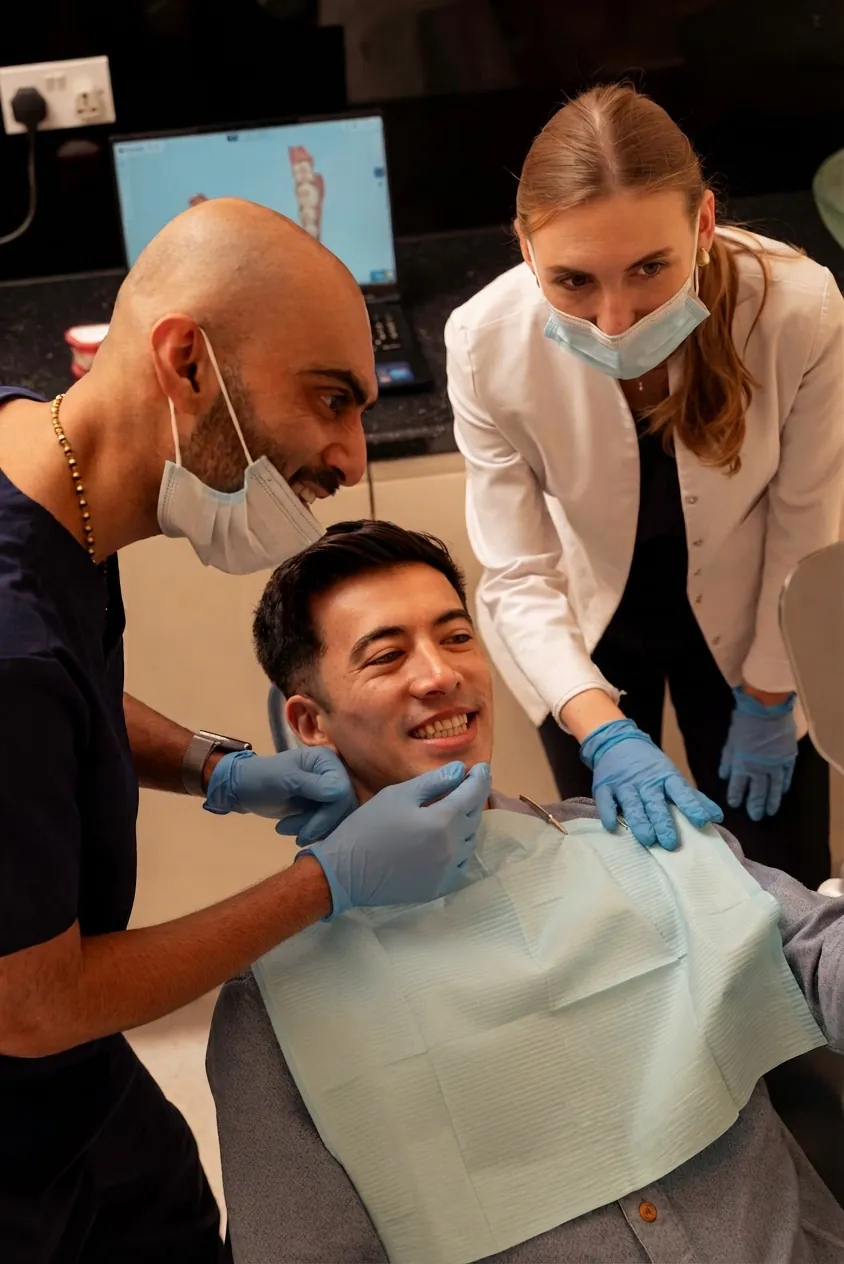
If you've cleared the nose, treated allergies, ruled out sleep apnoea, and practised nose breathing diligently, and the mouth still falls open, the issue is likely structural. Myofunctional therapy retrains the tongue, lips, and orofacial muscles. Arch expansion and orthodontics can widen a narrow palate in suitable adults, part of our non-extraction philosophy. Tongue-tie assessment is relevant if a restrictive tongue-tie keeps the tongue low. Integrated airway assessment brings airway, posture, jaw position and bite into one picture.
Dental treatment here may support better breathing by changing the structures involved. It does not "cure" mouth breathing in isolation, and sits alongside medical care, never instead of it.
How we approach it at Dental & Wellness London
We start with the question of why — nose, allergies, sleep, posture, structure — because the answer determines everything that follows. Considered, conservative, never rushed. Sometimes the most useful thing we can do is point you to your GP or an ENT first.
FAQs
Can adults really stop mouth breathing?
Yes, provided the underlying cause is addressed. If the nose is clear and there's no untreated sleep disorder, consistent retraining works.
How long does it take?
Awareness is immediate. Daytime nose breathing usually becomes default over several weeks of consistent practice; night-time follows and can take longer.
Is mouth breathing actually bad for me?
Habitual mouth breathing is associated with dry mouth, more decay and gum problems, disturbed sleep, and snoring.
Should I tape my mouth shut at night?
Only after ruling out sleep apnoea and nasal obstruction, ideally after speaking to a clinician.
How do I know if my mouth breathing is from sleep apnoea?
You can't know for certain without assessment. Warning signs: loud snoring, waking unrefreshed, daytime sleepiness, witnessed pauses or gasping. See your GP about a sleep study if any apply.
Will fixing my nose stop the mouth breathing on its own?
Often it's the decisive step — clearing obstruction or treating allergic rhinitis removes the reason the mouth opens, though a long-standing habit may need a few weeks of conscious retraining on top.
Can a dentist help with mouth breathing?
An airway-focused dentist can assess tongue posture, palate width, tongue-tie, and bite, offering myofunctional therapy, appliances or arch-expansion orthodontics — complementing, not replacing, GP/ENT/sleep-medicine care.
What's the single most effective thing I can do?
Make nose breathing physically easy first (clear the nose, treat allergy), then practise conscious daytime nose breathing relentlessly.