What mouth taping actually is
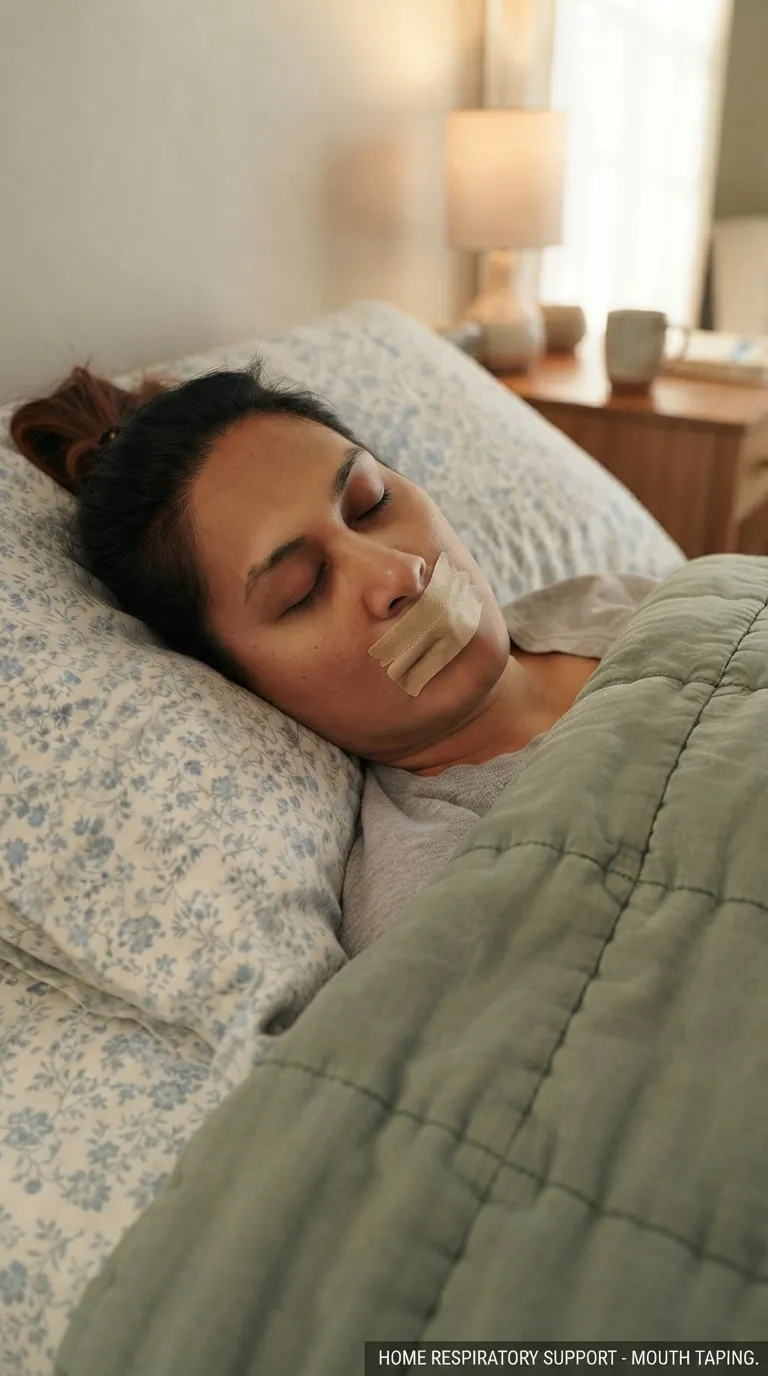
Mouth taping is exactly what it sounds like: a strip of tape placed over the lips at night to hold the mouth gently closed, aiming to force the breath through the nose instead. It moved from a niche breathing-practitioner technique into a mainstream wellness trend through social media.
The logic is sound on the surface. Nose breathing is, for most healthy people, the better default — it filters, warms, and humidifies the air and delivers nitric oxide to the lungs, none of which the mouth does. If keeping the lips shut redirected a habitual mouth breather to their nose all night, the reasoning goes, you'd capture those benefits while you sleep.
The problem is the logic skips a step. Taping treats the symptom — the open mouth — without asking why the mouth is open in the first place. In some people, that open mouth is the body's only available airway. Sealing it can be the wrong thing to do. This is the part the trend rarely emphasises, and it's the part that matters most.
Does mouth taping actually work? — what the evidence shows
What the studies show. A small number of studies have looked at mouth taping, mostly in people with mild snoring or mild sleep-disordered breathing. Some found modest reductions in snoring intensity and time spent mouth breathing. A frequently cited 2022 study found a porous mouth patch reduced snoring and mild obstructive sleep apnoea severity in a subset of patients. These are real signals, but from small samples, short durations, and selected groups — not large, long-term trials in the general population.
What that means in practice. For a healthy adult who's a habitual nighttime mouth breather, has a clear nose, and has been checked to rule out sleep apnoea, mouth taping may help nudge the breath toward the nose and modestly quieten snoring. That's the honest ceiling of the evidence: a plausible, modest aid for the right person, not a proven intervention.
What it does not do. It doesn't open a blocked nose. It doesn't treat sleep apnoea. It doesn't reshape an adult face. And it doesn't address the underlying reason the mouth falls open, which is usually structural or nasal and needs finding rather than taping over.
The fair summary: mouth taping is a small, early-evidence aid for a narrow group of people, and a genuine risk for several others. Which one it is for you depends entirely on why your mouth opens at night.
The boundary we will not soften — sleep apnoea
If you snore loudly, wake unrefreshed, feel sleepy through the day, or a partner has noticed you stop breathing or gasp in your sleep, do not tape your mouth. See your GP first.
Those are possible signs of obstructive sleep apnoea — a medical condition in which the airway repeatedly narrows or closes during sleep. In apnoea, an open mouth is sometimes the body's compensatory route to air. Taping it shut can, in the wrong person, make oxygen levels worse, not better. Sleep apnoea is diagnosed with a sleep study and managed within medical care — CPAP, oral appliances, lifestyle measures — not by a strip of tape bought online.
We are dentists, not sleep-medicine specialists. Where dentistry has a legitimate role in snoring, it's a custom anti-snoring oral appliance that works alongside, not in place of, proper medical assessment. Keep the order right: rule out apnoea, then consider whether breathing aids have a place.
When mouth taping is genuinely unsafe
Beyond apnoea, mouth taping is contraindicated in several situations — not an exhaustive medical list, and not a substitute for individual advice:
- Suspected or diagnosed obstructive sleep apnoea — the central contraindication.
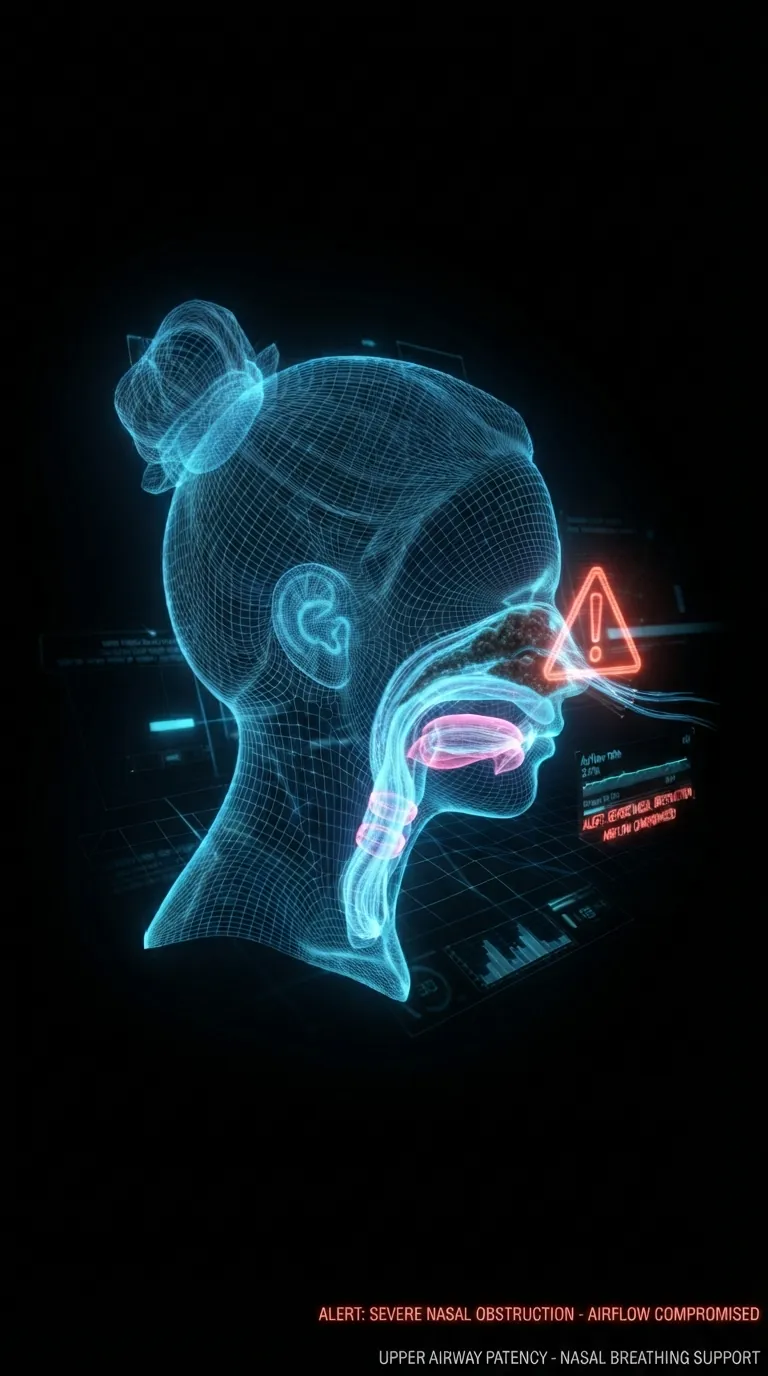
- A blocked or congested nose — from allergies, a heavy cold, a deviated septum, sinus problems, or enlarged turbinates. If the nose can't move enough air, sealing the mouth leaves nowhere for the breath to go.
- After alcohol, sedatives or sleeping tablets — anything that blunts the arousal reflexes that would normally wake you if breathing became difficult.
- Nausea, reflux, or any tendency to vomit in sleep — a sealed mouth is a clear hazard.
- Children — mouth breathing in children should be assessed by a clinician, never managed at home with tape.
- Certain neurological or muscular conditions, or anything affecting your ability to remove the tape quickly if needed.
The common thread: mouth taping is only ever reasonable when the nose is clearly working and apnoea has been ruled out. If there's any doubt about either, the tape stays in the drawer and the conversation moves to your GP.
A safer way to think about nose breathing
The goal — breathing through the nose at night — is a good one. The tape is just one tool, and not the first to reach for. The more useful sequence addresses the cause.
Clear the nose first. Saline rinsing, and treating any allergy or congestion, often removes the very reason the mouth opens.
Build the daytime habit. Conscious nose breathing through the day carries into the night far more reliably than forcing the issue while unconscious.
Support the resting posture. Tongue gently to the palate, lips together — the posture that naturally accompanies nose breathing. See our tongue posture exercises.
Find the structural ceiling. If the nose is clear, apnoea has been excluded, and the mouth still falls open, the cause may be structural — a narrow palate, low tongue posture, or a tongue-tie. This is where airway-focused dentistry has something specific to offer.
Taping addresses the last 5% in a person who's already done the first 95%. For most people who ask us about it, the first 95% is where the real change lives.
If you have decided to try it anyway
For the right person, with the cautions above genuinely met, it's a low-cost experiment. If that's you: use a product designed for the purpose (a porous, skin-safe strip, not duct tape or anything occlusive); never use it after alcohol or sedatives; stop immediately if you wake anxious, breathless, or with a racing heart; and stop and see your GP if snoring or daytime tiredness persist. If in any doubt at all, do not start.
How we approach it at Dental & Wellness London
We start with the question of why the mouth opens at night — nose, allergies, sleep, posture, structure — because the answer decides everything that follows. Considered, conservative, never rushed. Where the airway picture warrants it, we may suggest myofunctional therapy, an airway assessment, or — within proper medical management — a custom anti-snoring appliance. Sometimes the most useful thing we do is point you to your GP or an ENT first.
FAQs
Does mouth taping actually work?
The evidence is limited and early. Small studies suggest it may modestly reduce snoring and nighttime mouth breathing in some people with mild symptoms — a plausible, minor aid for a healthy adult with a clear nose who's had sleep apnoea ruled out, not a proven treatment.
Is mouth taping safe?
Only in the right person. Genuinely unsafe with undiagnosed sleep apnoea, a blocked nose, or after alcohol or sedatives, among other situations. Speak to your GP before trying it, especially if you snore or wake unrefreshed.
Can mouth taping treat sleep apnoea?
No. Sleep apnoea is diagnosed with a sleep study and managed within medical care. Using tape instead of proper apnoea care is the central danger of the trend.
What are the side effects?
Skin irritation around the lips, anxiety or a feeling of being unable to breathe, disrupted sleep, and in the wrong person, worsened oxygen levels overnight. Stop and see your GP if you wake breathless or anxious.
What kind of tape should I use?
If you proceed at all, a porous, skin-safe strip designed for the purpose — never duct tape or anything that fully seals the lips. Clearing the nose and ruling out apnoea matter far more than the tape choice.
Is there a better alternative?
Usually, yes — address the cause. Clear the nose, build a daytime nose-breathing habit, support tongue-to-palate posture, and where the cause is structural, have an airway-focused dentist assess it.
Can mouth taping help snoring?
It may modestly help mild cases driven by mouth breathing with a clear nose. Loud or persistent snoring, especially with daytime tiredness, can signal sleep apnoea and should be checked by your GP first. Our guide on how to stop snoring covers when it is medical.