Wisdom tooth removal is the extraction of one or more third molars — the last teeth to erupt, usually between ages 17 and 25. At Dental & Wellness London in Islington, removal is recommended only when a wisdom tooth causes infection, decay, cysts, or damage to neighbouring teeth. Many healthy, well-positioned wisdom teeth are safely left in place and monitored.
The myth that costs people teeth they could have kept
There are two stories the public has been told about wisdom teeth, and both are wrong.
The first is that everyone needs them out — that removal is a rite of passage. The second, a backlash against the first, is that wisdom teeth should never be touched.
Neither reflexive answer serves you. We remove a wisdom tooth when there is a clear reason to, and leave it alone — under observation — when there isn't. More wisdom teeth stay in than come out. Removing healthy bone-anchored teeth carries real risk, and good surgery is as much about knowing when not to operate as knowing how.
What wisdom teeth are, in one paragraph
Your third molars are evolutionary leftovers. Modern jaws are smaller, so third molars frequently arrive late to a mouth that has run out of space. When there's room and they come up straight, they're useful teeth. When there isn't, they get stuck — impacted — at an angle, half-buried, or pressed against the tooth in front.
The four-question test: does this tooth actually need to come out?
Is it causing infection?
The most common genuine reason for removal is pericoronitis — infection of the gum flap over a partly erupted wisdom tooth. Repeated episodes are a strong case for removal.
Is it decaying — or decaying its neighbour?
A wisdom tooth tilted against the second molar in front creates a trap that no toothbrush reaches. Losing a healthy second molar to a wisdom tooth that was never going to be useful is one of the outcomes worth preventing.
Is there a cyst or other pathology?
Occasionally a fully buried wisdom tooth develops a fluid-filled cyst that can hollow out bone over time — the reason for a proper radiograph rather than guessing.
Is it damaging the bite or the gum?
Sometimes over-eruption traumatises the opposite gum, or the angle pushes on the molar in front. These cases need judgement, not a reflex.
If none of these four apply, the evidence supports leaving wisdom teeth be.
Why we image before we decide
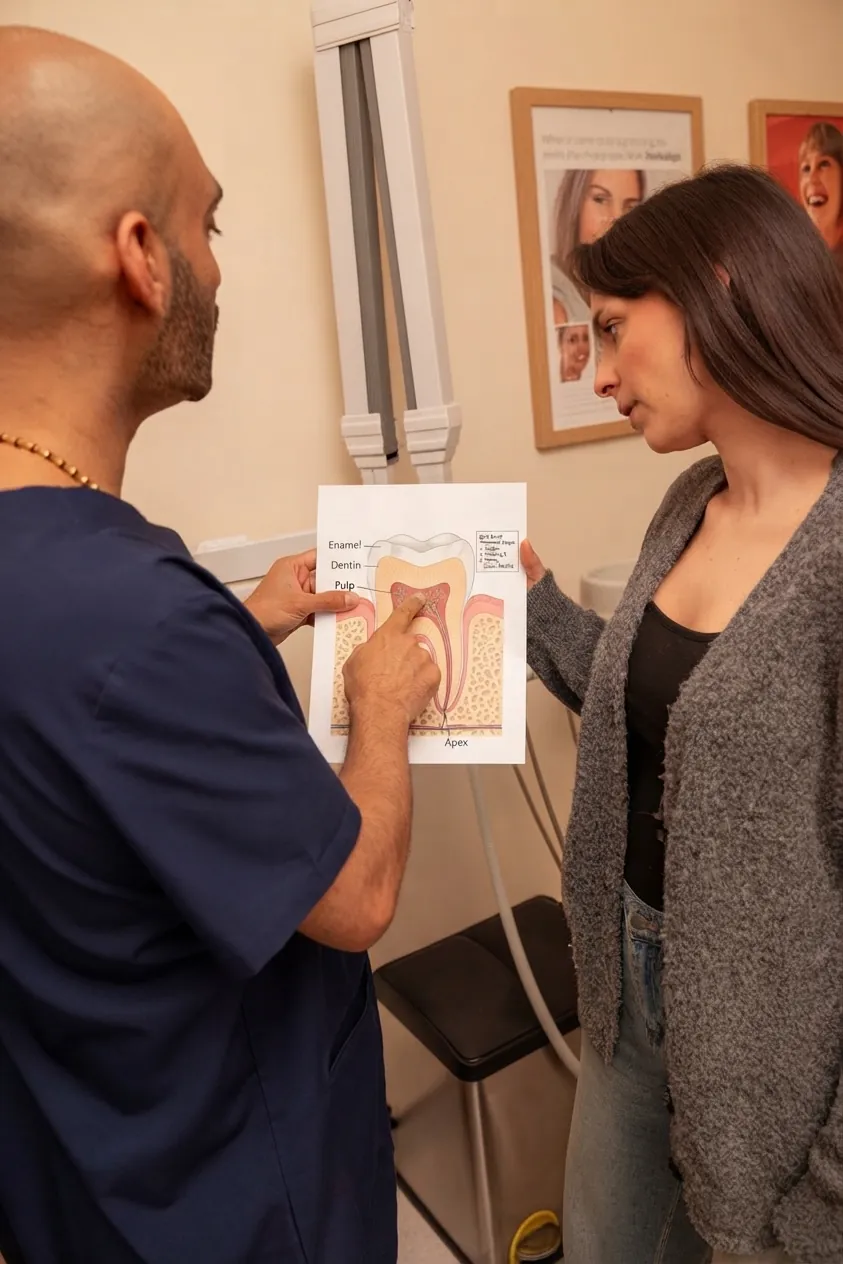
The lower third molar sits near the inferior alveolar nerve, supplying feeling to the lower lip and chin. Complex or nerve-proximate cases are assessed with a panoramic radiograph, and a CBCT 3D scan where the relationship to the nerve needs to be seen precisely. Dr Rishil Patel, who trained in oral and maxillofacial surgery at Barts & The London, carries out oral surgery at the practice.
What the procedure actually involves
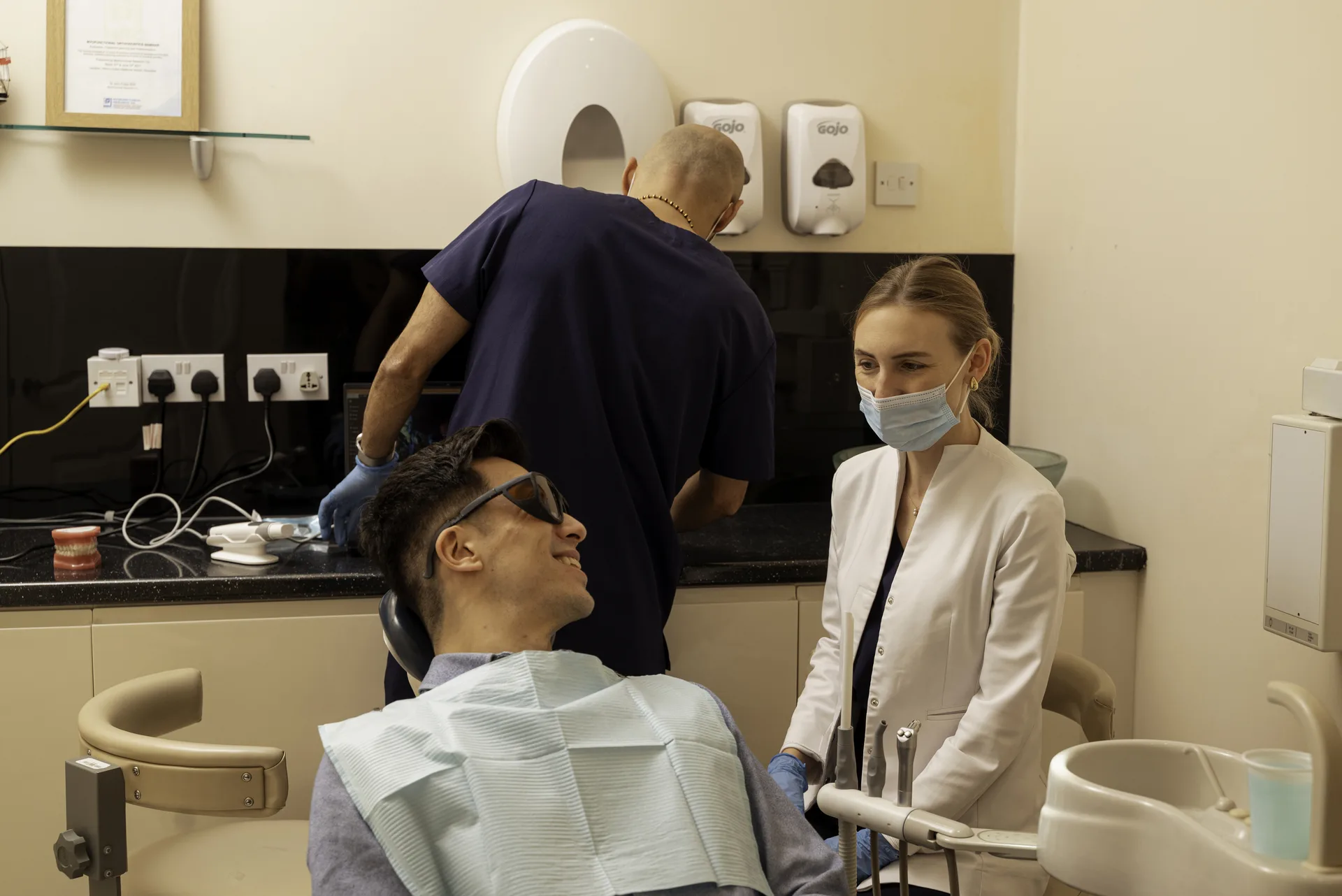
A straightforward, fully erupted upper wisdom tooth removal can be quick, under local anaesthetic. An impacted lower wisdom tooth is minor oral surgery — the gum eased back, the tooth often sectioned into pieces, the site cleaned and closed with dissolving stitches. Thirty to sixty minutes depending on complexity. Sedation can be arranged for anxious patients.
Recovery, honestly, day by day
The first 24 hours. Numbness wears off; mild bleeding is normal. No rinsing, smoking, or straws.
Days two and three. Usually the peak — cheek swelling and jaw stiffness. Cold packs and simple painkillers manage it well.
Days four to seven. Swelling recedes, eating returns to normal gradually.
Beyond a week. The socket takes weeks to fill in, though you won't feel it happening.
Protect the clot — vigorous rinsing, smoking, and straws in the first days can dislodge it and cause a dry socket. Keep the area clean from day two with gentle salt-water rinses.
What it costs, and why we put it in writing
Wisdom tooth removal is quoted in writing after assessment, once the anatomy has been seen. An assessment appointment for a dental problem is £75. We offer 0% APR finance over 12 months via Tabeo, subject to status.
Frequently asked questions
Do wisdom teeth always need to be removed? No. Healthy, cleanable, erupted wisdom teeth are best left in place and monitored.
How do I know if my wisdom tooth is impacted? Signs include pain, swelling, a gum flap trapping food, or difficulty opening fully — confirmed by a radiograph.
Does wisdom tooth removal hurt? Local anaesthetic means pressure, not pain. Discomfort peaks at days two to three and is manageable with simple painkillers.
How long does recovery take? Most people are through the worst by the end of the first week.
Is it safe to leave a wisdom tooth in? Often, yes, provided it's monitored at regular check-ups.
An honest consultation, not a sales conversation
Call 020 8127 4567 or WhatsApp +44 7974 910222. 222 Essex Road, Islington, London N1 3AP. Monday to Friday, 8am–7pm by appointment.
Medically reviewed by Dr Vishal Patel, BDS, MSc Aesthetic & Restorative Dentistry, GDC 103127. Last reviewed 30 September 2026.