Laser skin resurfacing aftercare
Reviewed By
Dr Vishal Patel
BDS Liverpool · MSc Aesthetic & Restorative Dentistry Manchester · GDC 103127 · AACD Member · Invisalign Diamond II Provider · IFAAS (International Fellowship in Advanced Aesthetic Science) · Facial anatomy & cadaver course, Dr Ali Pirayesh, University of Amsterdam · Harley Academy foundation training in injectable aesthetics · IBSA-trained (Profhilo) · NeoStrata-trained (skin peels) · Lynton Lasers trained, incl. ONDA
Last Updated
October 1, 2026
A day-by-day guide to recovery after laser resurfacing, and how to protect your result.
After laser resurfacing, expect redness and a rough, warm feel, then peeling over the following days. Lighter treatments settle in two to five days; deeper treatment heals in about 10 to 14 days. Keep the skin clean and moisturised, do not pick, avoid heat and active skincare for two weeks, and use SPF 50 daily for at least six weeks.

- Lighter treatments: 2 to 5 days of redness
- Deeper treatment: surface heals in 10 to 14 days
- Do not pick; keep skin clean and moisturised
- No heat, exercise or active skincare for about 2 weeks
- SPF 50 daily for at least 6 weeks
- Call us with any sign of infection
Aftercare after laser resurfacing
Recovery after laser resurfacing
How you look after laser resurfacing depends on the depth of treatment. Lighter treatments mean a day or two of redness; deeper treatment means several days of redness, swelling and peeling, and pinkness that can linger for weeks. Good aftercare speeds healing, reduces the risk of infection and pigment change, and protects your result.
Laser resurfacing works by creating controlled micro-injury in the skin, which triggers renewal and new collagen. In the days after treatment your skin is doing exactly what we asked of it: repairing. Your part is to give it the conditions to repair well. This guide sets out what to expect and what to do, day by day, after treatment at our Islington clinic. It does not replace the written instructions we give you on the day, which are tailored to your skin and the depth of your treatment.
The first 24 to 48 hours
Straight after treatment, skin feels hot and tight, much like sunburn, and looks red. After deeper work there may be some swelling, often most noticeable around the eyes and the morning after.
- Keep the skin clean and leave it alone; avoid touching, rubbing or scratching
- Use only the aftercare products we recommend, applied gently with clean hands
- A cool (not ice-cold) compress wrapped in a clean cloth can ease heat and discomfort
- Sleep with your head slightly raised on an extra pillow if you have swelling
- Avoid make-up until we advise, and do not apply anything perfumed
- Avoid alcohol, hot drinks held close to the face, and very spicy food if they make your skin flush
Days three to seven
As the treated surface renews, skin often becomes dry, rough and tight, sometimes with a sandpaper feel, a bronzed look or fine flaking. After deeper treatment, peeling can be more obvious. This is the old surface shedding to reveal new skin underneath.
- Cleanse gently with lukewarm water and a mild, non-foaming cleanser, patting dry with a clean towel
- Keep the skin moisturised with a bland, fragrance-free moisturiser as often as it feels dry
- Let flaking skin come away on its own; do not peel, pick or scrub it
- Avoid swimming pools, saunas, steam rooms, hot yoga and heavy exercise until the skin has settled
- Stay out of direct sun completely
Picking at peeling skin is the single most common cause of avoidable marks after resurfacing. If flakes bother you, apply moisturiser rather than removing them.
How long does it take to heal completely?
After lighter treatments, most people look normal within two to five days. After deeper treatment, the surface usually heals within 10 to 14 days, with pinkness fading over the following weeks. Collagen continues to rebuild for three to six months.
It helps to think of healing in two stages. The first is the surface: redness, dryness and peeling, which settle over days. The second is beneath the surface, where new collagen gradually changes the texture and firmness of the skin. That second stage is slower and quieter, and it is where much of the lasting benefit comes from.
Sun protection: the most important part of aftercare
Newly treated skin is more vulnerable to the sun, and sun exposure during healing is one of the main causes of pigment change after laser treatment. Strict sun protection is needed for several weeks.
- Once the surface has healed and we have confirmed it is ready, use a broad-spectrum sunscreen of SPF 50 every day, whatever the weather
- Reapply through the day if you are outdoors, and after sweating
- Wear a wide-brimmed hat and seek shade; sunscreen alone is not enough on bright days
- Avoid sunbeds and deliberate tanning entirely
- Postpone beach or ski holidays until well after treatment, and tell us if travel is planned
This matters for every skin type, and particularly for darker skin, which is more prone to post-inflammatory darkening. A few weeks of care protects months of collagen renewal. Our page on melasma explains why pigment-prone skin needs particular care.
Returning to your usual skincare
Keep your routine simple until the skin has fully healed. Avoid retinoids, exfoliating acids, scrubs, cleansing brushes, toners containing alcohol and other active products until we advise that the skin is ready, usually once redness and flaking have settled. Make-up can usually be reintroduced once the surface is intact, starting with clean brushes and simple products. When you restart active skincare, reintroduce one product at a time so that any irritation is easy to trace. If you would like guidance on a longer-term routine, we can advise at your review, and our pharmacy partner can supply medical-grade skincare where appropriate. If you have also had light-based treatment, our IPL aftercare guide covers that recovery.
What is normal, and what is not
Normal after laser resurfacing:
- Redness and warmth that ease day by day
- Mild swelling, especially in the first two mornings
- Tightness, dryness, a sandpaper feel and flaking
- Mild itching as the skin renews
- Pinkness that lingers for some weeks after deeper treatment
Less usual, and worth calling us about:
- A cluster of small, painful blisters, particularly around the lips, which may be a cold sore flare
- Patches that darken or lighten as the skin heals
- Areas that stay raw, weep or crust well after the rest of the skin has settled
When to contact us
Please call us straight away if you notice increasing pain, warmth, pus, blistering, or redness that is getting worse rather than better. These can be signs of infection and need prompt review.
Recovery should move in one direction: steadily better. Anything that moves the other way deserves a call rather than a wait. If you are unwell outside our opening hours and cannot reach us, contact NHS 111 or your GP, and let us know afterwards so that we can see you.
Planning around work and social plans
Most people who live or work around Islington and central London want to know how visible recovery will be. After lighter settings, many return to work the next day or the day after, with skin that looks flushed or slightly rough rather than obviously treated. After deeper work, it is sensible to keep the first week clear of important meetings, photographs and events, and to allow a further margin before anything you would not want to attend with pinkness. If you have a wedding, holiday or presentation coming up, tell us at consultation and we will time treatment around it, rather than the other way round.
The months after treatment
Once the surface has healed, the work continues quietly. Collagen remodelling carries on for three to six months, and this is when texture, fine lines and scarring gradually soften. Protecting the skin from the sun, sleeping well, not smoking and keeping a steady, gentle routine all support that process. There is nothing extra you need to do, but there is a great deal you can undo by tanning or by restarting harsh products too soon. For gentler maintenance later, this comparison of HydraFacial vs microdermabrasion vs chemical peel may help.
Is one session enough?
Sometimes. Many people see a clear improvement after one session, while deeper lines or scarring may need a short course. We plan this with you at consultation. See our laser resurfacing page.
Where a course is planned, the skin needs to recover fully between sessions, and we review it each time before deciding whether to continue at the same settings. We judge the result at the review after your skin has had time to rebuild collagen, rather than in the first few weeks, when redness can hide the change. If you are weighing resurfacing against gentler options, our laser rejuvenation page sets out the alternatives.
Your follow-up review
We see you after treatment to check healing, answer questions and compare your skin with the photographs taken on the day. This is also when we talk about keeping your result: daily sun protection, a sensible skincare routine, and whether complementary treatments such as skin boosters or microneedling might help in future. Laser resurfacing at our clinic uses the Lynton fractional laser and is from £195, and we confirm the cost of any further session before it is booked.
Why have it with us
Dr Vishal Patel is Lynton Lasers trained and oversees every laser plan, from the first consultation through to your follow-up. You can read more on Dr Patel’s profile.
The clinic is at 222 Essex Road, Islington, London N1 3AP, two minutes from Essex Road station and a short ride from Angel, Highbury, Canonbury, Hackney and Stoke Newington. Buses 38, 56, 73, 341 and 476 stop on Essex Road. Many patients cycle or use a Lime or Forest e-bike. We are open Monday to Friday, 8am to 7pm, by appointment.
Clinically reviewed by Dr Vishal Patel · BDS · MSc Aesthetic & Restorative Dentistry · GDC 103127. Last reviewed 1 October 2026.
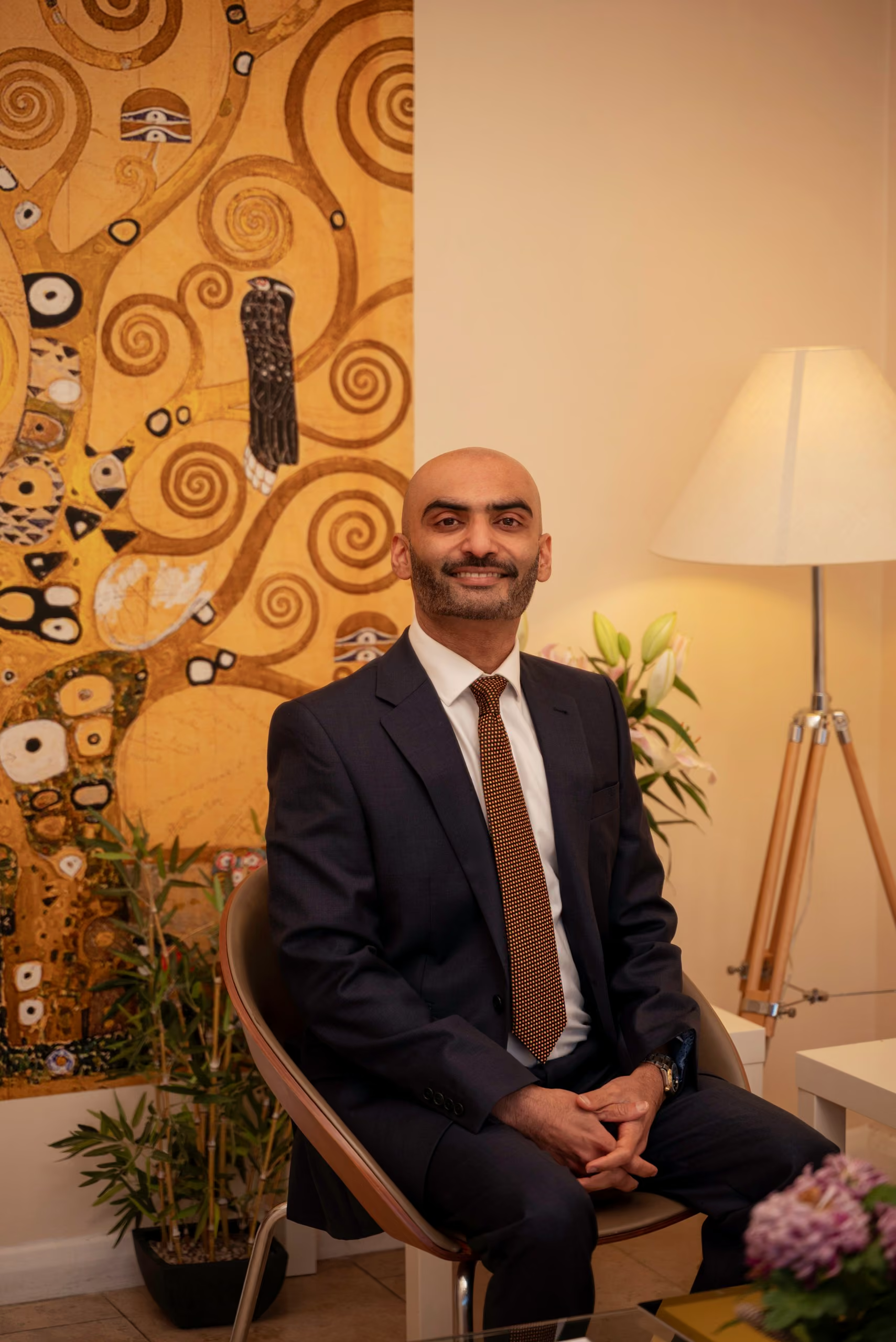
Dr Vishal Patel
Clinical lead · Lynton Lasers trained, including ONDA
BDS Liverpool · MSc Aesthetic & Restorative Dentistry (Manchester) · GDC 103127 · Lynton Lasers trained, including ONDA · International Fellowship in Advanced Aesthetic Science (IFAAS) · 10 years in facial aesthetics
We will tell you when a treatment is not the right answer. That honesty is part of the treatment.
Read Dr Patel’s profile →Treatment type determines aftercare
Non-ablative laser
- Mild redness 24-48 hours
- Minimal peeling
- Normal activity resumed immediately
- Sun protection still critical
Deeper resurfacing (mild to medium)
- Redness and swelling 3-5 days
- Peeling and crusting days 3-7
- Healing complete by day 10-14
- Sun protection for 6 weeks
Fully ablative laser (general information; not offered at DWL)
- Substantial redness and swelling 5-7 days
- Open skin healing 7-14 days
- Pink/red appearance lingering weeks to months
- Strict sun protection for 6+ weeks
Day-by-day for deeper resurfacing (typical case)
Day 0-2 — significant redness, swelling, occasional bleeding. Cool compresses. Sleep elevated. Avoid touching.
Day 3-5 — peeling and crusting begins. Don't pick. Gentle cleansing with prescribed cleanser.
Day 6-10 — peeling completes. New skin revealed. Pink/red appearance.
Day 11-14 — healing essentially complete. Mild redness can persist.
Weeks 2-6 — strict sun protection essential. SPF 50+ daily. New skin highly photosensitive.
What to avoid
- Sun exposure (4-6 weeks minimum)
- Picking or scratching
- Aggressive cleansers
- Active skincare ingredients (retinoids, AHA/BHA) for 2 weeks
- Heat (sauna, hot yoga) for 2 weeks
- Aesthetic treatments in area for 4 weeks
What to do
- Cool compresses for swelling
- Prescribed aftercare cream
- Sleep elevated for first 3 nights
- Gentle cleansing with prescribed product
- SPF religiously after healing
When to contact us
- Signs of infection (increasing pain, warmth, pus)
- Unusual prolonged redness
- Pigmentation changes
- Healing not progressing as expected
Call reception immediately for any concerning symptoms.
Our happy patients,
in their own words
Transparent pricing
Prices are set out below. Your written plan confirms the fee before any treatment begins.
Questions
people ask
If your question isn't answered here, call reception on 020 8127 4567 or email reception.
How long does it take to heal completely after laser resurfacing?
Lighter treatments settle in two to five days. After deeper treatment, the surface heals in about 10 to 14 days, and pinkness fades over the following weeks.
Can I wear make-up after laser resurfacing?
Wait until the skin has stopped peeling and is fully closed, usually 5 to 10 days depending on depth. Mineral make-up is gentlest at first.
When can I exercise after laser resurfacing?
Avoid heavy exercise, saunas and hot yoga for about two weeks, or until your skin has healed.
How long do laser resurfacing results last?
Improvements in texture and fine lines can last for years with daily SPF and good skincare, although skin continues to age naturally.