Microneedling in London
Reviewed By
Dr Vishal Patel
BDS Liverpool · MSc Aesthetic & Restorative Dentistry Manchester · GDC 103127 · AACD Member · Invisalign Diamond II Provider · IFAAS (International Fellowship in Advanced Aesthetic Science) · Facial anatomy & cadaver course, Dr Ali Pirayesh, University of Amsterdam · Harley Academy foundation training in injectable aesthetics · IBSA-trained (Profhilo) · NeoStrata-trained (skin peels) · Lynton Lasers trained, incl. ONDA
Last Updated
October 1, 2026
Medical-grade microneedling uses controlled micro-injury to stimulate collagen production and improve skin texture, pigmentation, fine lines, and scarring. Multi-session protocols. Modest downtime.
Microneedling uses a medical device with fine needles to stimulate new collagen, improving texture, enlarged pores, fine lines, mild pigmentation and acne scarring. Most people have 3 to 6 sessions, four to six weeks apart, with a day or two of pinkness. At Dental & Wellness London, Islington, microneedling is from £160 per session; PRP can be added (£250).
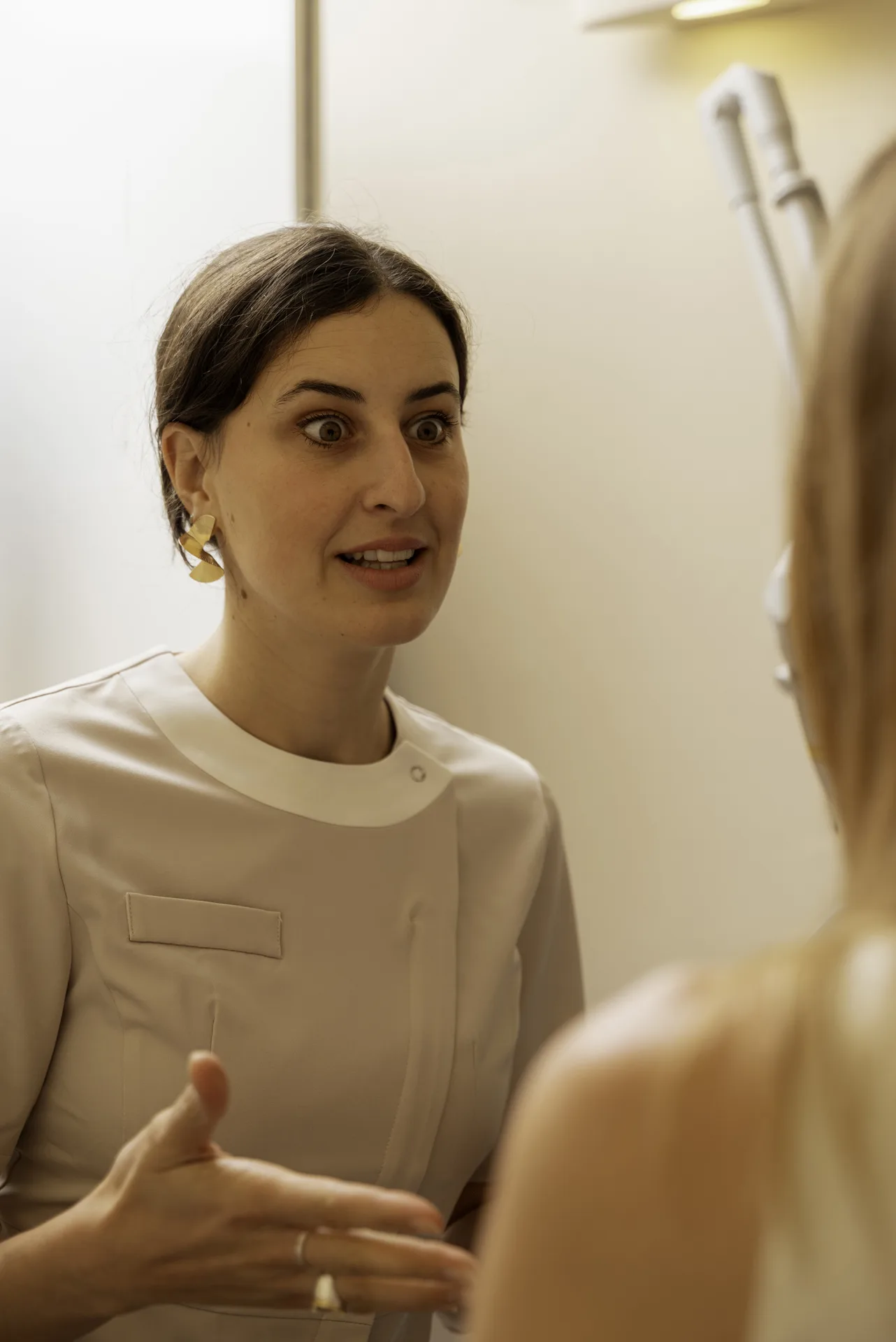
- Medical microneedling device
- For texture, pores, fine lines and acne scarring
- Suits most skin types, including darker skin
- 3 to 6 sessions, 4 to 6 weeks apart
- 1 to 2 days of pinkness
- From £160 per session · PRP add-on £250
Microneedling at our Islington clinic
What microneedling does
Microneedling, also called collagen induction therapy, uses a medical device with very fine needles to create tiny, controlled channels in the skin. The skin’s repair response stimulates new collagen and elastin over the following weeks, improving texture, enlarged pores, fine lines, mild pigmentation and acne scarring. It can be combined with PRP for an added boost.
The principle is controlled injury for guided healing. The channels are deep enough to switch on the skin’s regenerative response, and shallow enough that the surface heals within days. Blood flow to the area increases, growth factors are released and cell turnover speeds up. Over a course of sessions, the cumulative collagen response refines skin quality, softens textural irregularity and reduces the appearance of fine lines and surface scarring.
Medical microneedling is not the same as home rolling
The word microneedling covers everything from inexpensive home rollers to clinical treatment, and they are not comparable. Medical microneedling at our Islington clinic uses a motorised device with a sterile, single-use cartridge, an adjustable needle depth and a consistent puncture rate. It is carried out after a skin consultation, with preparation beforehand and aftercare afterwards.
Home rollers work at a fixed, shallow depth and are difficult to keep sterile after the first use. They can help skincare absorb a little better, but they do not reach the layer of the skin where meaningful collagen remodelling happens. Salon skin needling varies widely in training and equipment. If you want a real change in acne scarring, texture or fine lines, clinical treatment is the appropriate route.
Three things decide the result: the needle depth, chosen for each area and concern; the quality and sterility of the device; and how well the skin is prepared before treatment and protected afterwards. Depth is set more shallowly around the eyes and more deeply for established scarring, and choosing it well depends on knowing the anatomy of the face.
What microneedling treats well
- Texture and pores. Rough or uneven texture and enlarged pores respond well, with smoother skin that reflects light more evenly.
- Acne scarring. Depressed scars, particularly rolling and boxcar types, are one of the strongest reasons to choose microneedling. Scarring usually needs more sessions than texture alone.
- Fine lines. Early lines around the eyes, mouth and forehead soften as collagen builds.
- Mild pigmentation. Marks left behind after spots often improve. Melasma behaves differently and needs careful assessment, because some skins worsen with stimulation.
- Older scars and stretch marks. Scars more than six months old, and stretch marks, can improve gradually over a longer course.
What microneedling will not do
We are clear at consultation about where microneedling is not the right tool. It does not meaningfully tighten loose skin; laser lifting or skin tightening may suit that better. It does not soften deep expression lines caused by muscle movement, which respond to anti-wrinkle treatment. It does not restore lost volume in the cheeks, temples or under the eyes, which is a question for filler or a skin booster. And it is not a quick fix: one session gives a modest improvement, while visible change builds across a course.
Is microneedling worth it?
For texture, pores and acne scarring, microneedling is one of the most effective treatments with modest downtime, and it suits most skin types, including darker skin, where some lasers carry more risk. Results build over a course.
That suitability across skin tones matters in a part of London as varied as Islington, Hackney and Stoke Newington. Because microneedling relies on mechanical stimulation rather than heat or light, the risk of pigment changes in deeper skin tones is lower than with many energy-based treatments, provided the depth and aftercare are right.
Is 40 too old for microneedling?
No. Microneedling works at any adult age, because it relies on the skin’s natural repair. Older skin may respond more gradually, and is often treated alongside skin boosters or laser tightening.
In our forties and beyond, collagen production slows and skin becomes thinner and drier. Microneedling helps by restarting some of that repair, while a booster such as Sunekos or Profhilo improves hydration from within. We plan the order and spacing so the treatments support each other rather than overload the skin.
Who microneedling suits, and who should wait
Microneedling suits adults with texture concerns, enlarged pores, early lines or settled acne scarring who are willing to commit to a course and to careful sun protection. We ask you to wait, or recommend a different approach, if you have:
- active acne, a cold sore or any infection in the treatment area
- active eczema or dermatitis on the area
- a tendency to keloid scarring, which we assess individually
- taken isotretinoin acne tablets within the last six months
- recent sunburn or a deep tan
- a pregnancy or are breastfeeding
- a bleeding disorder or take blood-thinning medication
- had recent surgery on the area
Where a skin condition needs medical treatment first, we refer you to your GP or a dermatologist.
The consultation and the treatment
Every course begins with a skin consultation. We examine your skin, photograph it for your record, and go through your medical history, current skincare and any previous treatments. We then explain whether microneedling is the right tool, at what depth, how many sessions are realistic, and what else might work better alongside or instead. If another treatment would serve you better, we say so.
Before treatment we may suggest preparing the skin with suitable products for a few weeks. On the day, the skin is cleansed and numbing cream is applied for 20 to 30 minutes. A sterile single-use cartridge is fitted, the depth is set, and the device is passed over the area in overlapping patterns. Most people feel warmth, vibration and a light scratching sensation rather than pain. Soothing hyaluronic acid is applied straight afterwards, followed by mineral sunscreen.
How many sessions do I need?
Most people have 3 to 6 sessions, four to six weeks apart. Four sessions is a common starting course for texture and pores; scarring often needs more. Skin looks pink for a day or two after each session.
The spacing gives collagen time to form between sessions. Improvement continues for several weeks after the final treatment, and results from a completed course generally hold well, with occasional maintenance sessions to keep skin quality where you want it. Remodelled scar tissue tends to stay improved. Results vary from person to person.
Recovery and aftercare
- The first day. Skin looks pink and feels warm, similar to mild sunburn. Many people return to work.
- Days two to five. Colour fades, and light flaking follows as the old surface sheds.
- Weeks one to twelve. Collagen builds and texture improves gradually.
Avoid make-up for 12 to 24 hours, use a gentle cleanser and mineral sunscreen, and pause retinol, acids and vitamin C for five to seven days. Avoid swimming, saunas and hard exercise for 48 hours, and do not pick at flaking skin. Aftercare is part of the treatment: skin that heals well between sessions responds better at the next one.
Side effects are usually mild: redness, swelling and tightness for a day or two, and occasional pinpoint bleeding that stops within minutes. Less commonly, acne-prone skin can break out briefly, or darker skin can develop temporary pigmentation, which careful depth selection and sun protection help to prevent. Infection is rare with sterile single-use cartridges.
Microneedling compared with other skin treatments
Microneedling is gentler than laser resurfacing, with less downtime and a lower risk of pigment change in darker skin. Laser may give a stronger result on some deeper scarring or pigmentation, and the two can be used in separate sessions within one plan. A HydraFacial cleanses and hydrates the surface with no downtime but does not remodel collagen. Skin boosters work on hydration from within. Chemical peels and LED can alternate with microneedling across a plan, though not usually on the same day.
Combining treatments in the right order often gives the most balanced result. Compressing too many into a short time rarely helps the skin.
Microneedling prices
- Microneedling: from £160 per session
- PRP: £250
- Skin and aesthetic consultation: £65, redeemable in full against treatment
We confirm the number of sessions and the total cost in writing before you start. Finance is available at 0% APR over 12 months.
Why have it with us
Every skin plan is overseen by Dr Vishal Patel, who has ten years of experience in facial aesthetics. He holds a BDS from Liverpool and an MSc in Aesthetic & Restorative Dentistry from Manchester (GDC 103127), and his aesthetic training includes the International Fellowship in Advanced Aesthetic Science, a facial anatomy and cadaver course with Dr Ali Pirayesh at the University of Amsterdam, and NeoStrata training in peels and skincare. A dental background means working every day around the vessels, nerves and muscles of the face, and that anatomical care carries into how we set depth and plan skin treatment.
The clinic is at 222 Essex Road, Islington, London N1 3AP, two minutes from Essex Road station and a short ride from Angel, Highbury, Canonbury, Hackney and Stoke Newington. Buses 38, 56, 73, 341 and 476 stop on Essex Road. Many patients cycle or use a Lime or Forest e-bike. We see patients Monday to Friday, 8am to 7pm, by appointment, and have been rated 4.7 stars from more than 300 Google reviews.
Clinically reviewed by Dr Vishal Patel · BDS · MSc Aesthetic & Restorative Dentistry · GDC 103127. Last reviewed 1 October 2026.
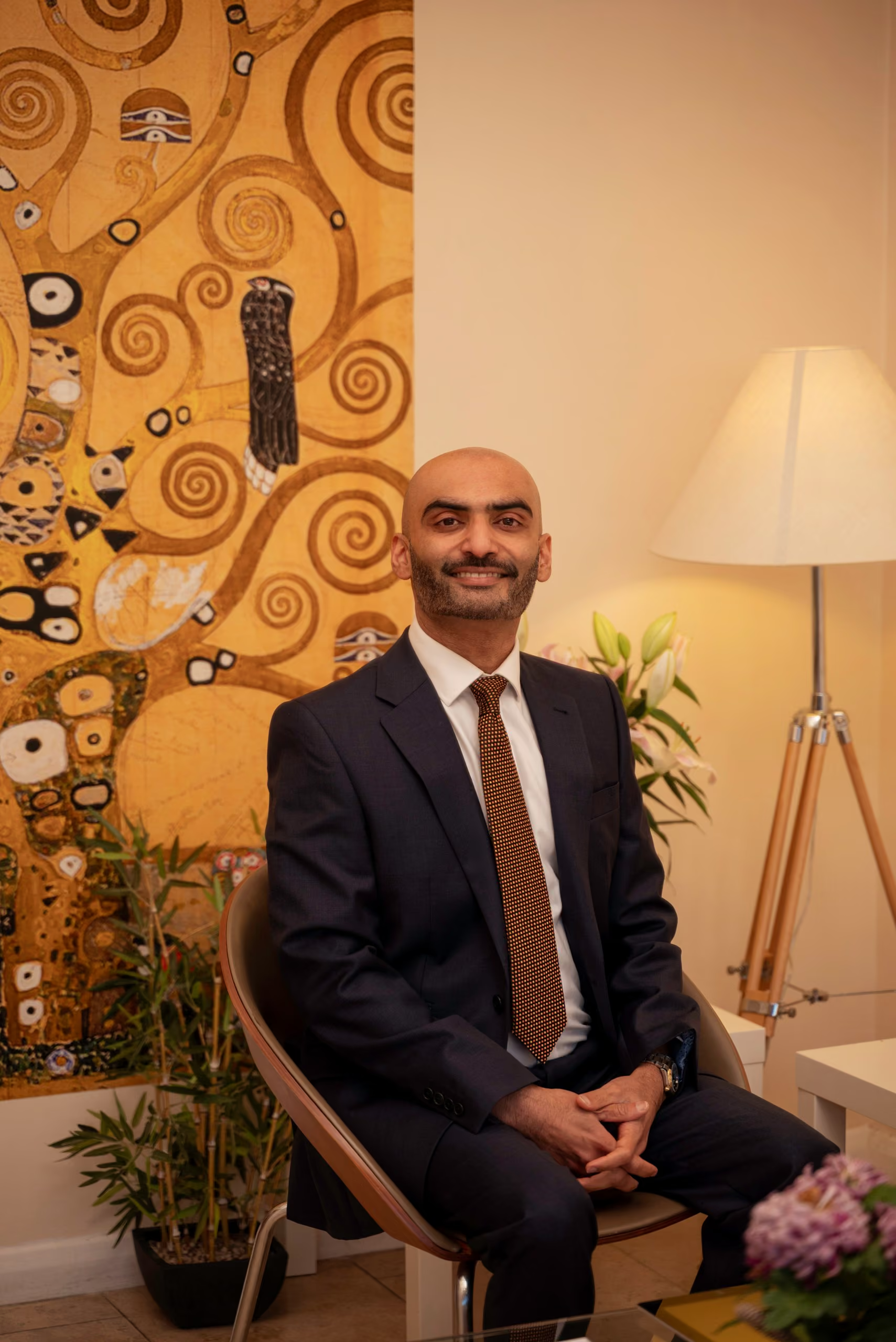
Dr Vishal Patel
Clinical lead · Sole aesthetic prescriber · 10 years in facial aesthetics
BDS Liverpool · MSc Aesthetic & Restorative Dentistry (Manchester) · GDC 103127 · International Fellowship in Advanced Aesthetic Science (IFAAS) · Facial anatomy and cadaver course with Dr Ali Pirayesh, University of Amsterdam · Harley Academy · IBSA and NeoStrata trained
We will tell you when a treatment is not the right answer. That honesty is part of the treatment.
Read Dr Patel’s profile →Skin treatments: more in this group
- HydraFacial
- HydraFacial cost
- HydraFacial vs microdermabrasion vs chemical peel
- Chemical peels
- Medical-grade facials
- Illumi facial
- Laser skin resurfacing
- Laser resurfacing aftercare
- Laser rejuvenation
- Morpheus8 alternatives
- Acne
- Acne scarring
- Dull skin
- HydraFacial vs microdermabrasion
Related: IPL photofacial, skin boosters.
Smoother skin, built over a course.
Consultation — £65
A skin assessment with an honest view of what will help. The fee is redeemable in full against treatment.
Treatment
About 45 minutes, after numbing cream.
Your course
3 to 6 sessions, 4 to 6 weeks apart.
Start with a consultation
- £65, redeemable in full against treatment
- Suits most skin types
- Optional PRP add-on
Or call 020 8127 4567 · WhatsApp +44 7974 910222
222 Essex Road, Islington N1 3AP · Mon–Fri, 8am–7pm
Collagen builds over months.
Like mild sunburn, settling within a day or two.
Skin often looks brighter.
Texture, pores and scarring improve over the course.
Our happy patients,
in their own words
Transparent pricing
Prices are set out below. Your written plan confirms the fee before any treatment begins.
Clear prices, set out before you start.
Per session
Per session
Redeemable in full against treatment
Included
- Numbing and aftercare advice
- A written course plan
Quoted separately
- Skincare products, priced separately
Questions
people ask
If your question isn't answered here, call reception on 020 8127 4567 or email reception.
How much does microneedling cost in London?
At Dental & Wellness London, Islington, microneedling is from £160 per session. PRP can be added for £250.
Is microneedling even worth it?
For texture, pores and acne scarring, yes. It is one of the most effective treatments with modest downtime, and results build over a course.
Is 4 microneedling sessions enough?
Four is a common course for texture and pores. Acne scarring often needs more, and we plan this with you.
Is 40 too old for microneedling?
No. Microneedling works at any adult age, although older skin may respond more gradually.
Does microneedling hurt?
Numbing cream is applied first, so most people feel only mild discomfort.
Microneedling vs laser: which is better?
It depends on your skin. Microneedling suits most skin types, including darker skin. Laser can be more targeted for some concerns. We recommend the best fit.