HydraFacial vs Microdermabrasion | Honest Skin Treatment Comparison | DWL Islington
Reviewed By
Dr Vishal Patel
BDS Liverpool · MSc Aesthetic & Restorative Dentistry Manchester · GDC 103127 · AACD Member · Invisalign Diamond II Provider · IFAAS (International Fellowship in Advanced Aesthetic Science) · Facial anatomy & cadaver course, Dr Ali Pirayesh, University of Amsterdam · Harley Academy foundation training in injectable aesthetics · IBSA-trained (Profhilo) · NeoStrata-trained (skin peels) · Lynton Lasers trained, incl. ONDA
Last Updated
October 2, 2026
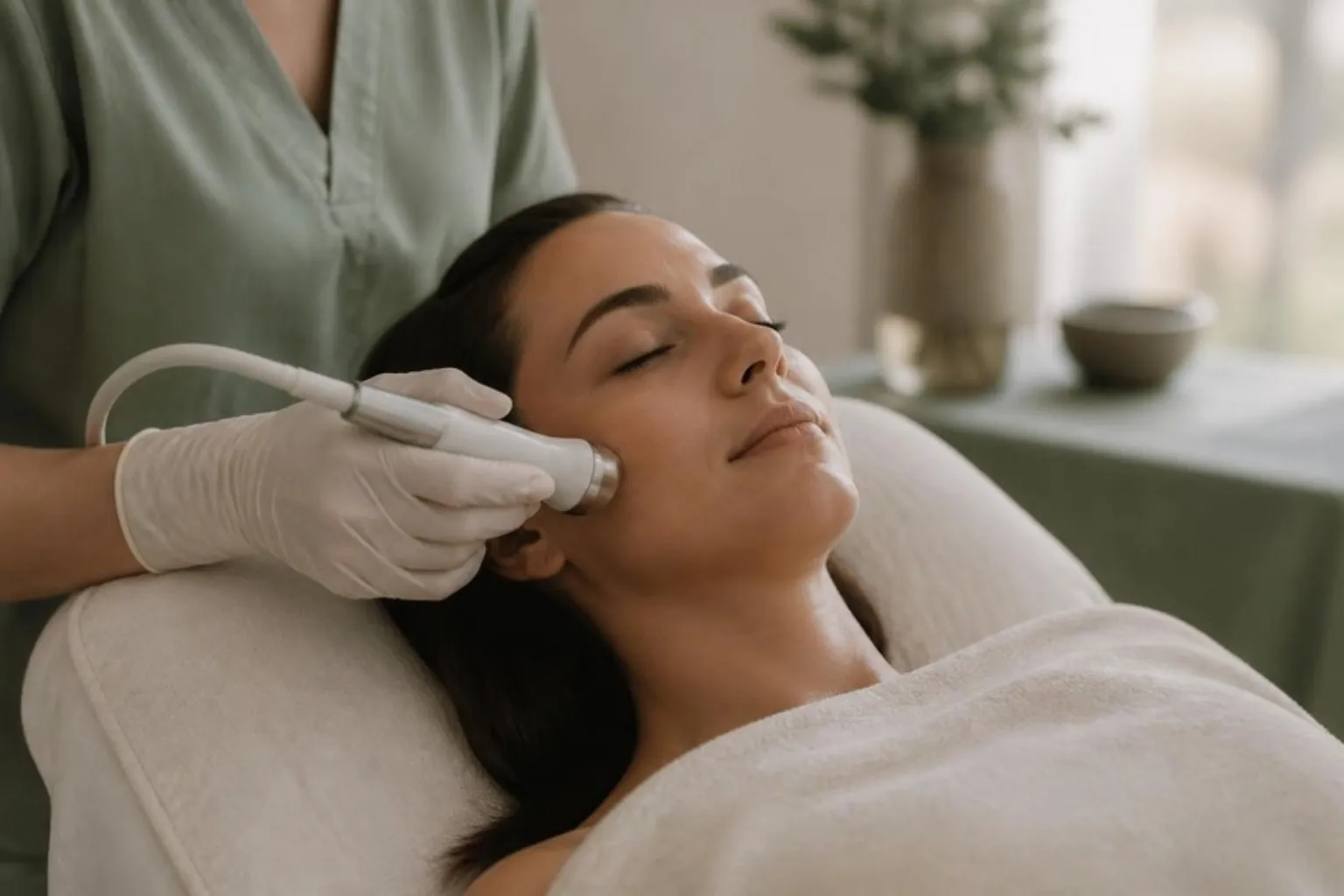
Two ways to refresh the skin's surface
HydraFacial and microdermabrasion are both non-invasive treatments that work on the outermost layer of the skin, where dead cells, congestion and dehydration make the complexion look dull or uneven. They are often presented as alternatives, and in a sense they are, but they reach their result by different routes and suit different skin.
HydraFacial uses a specialised tip with vortex suction. In one session it cleanses and gently exfoliates the skin, extracts congested pores, then infuses hydrating serums. Because exfoliation and hydration happen together, the skin usually looks brighter and feels more comfortable straight away, with little or no recovery time.
Microdermabrasion is a controlled physical exfoliation. A fine abrasive tip, with light suction, removes the outermost layer of dead cells to reveal smoother skin underneath. It does one thing and does it directly. There is no serum step; we apply a soothing moisturiser and sun protection afterwards. Mild redness for a day or two is common.
The key difference
- HydraFacial is exfoliation plus extraction plus hydration, at a gentler level of exfoliation.
- Microdermabrasion is exfoliation alone, at a more direct mechanical level.
That difference is why skin type tends to decide the choice. Dehydrated, congested or more reactive skin often does better with HydraFacial; resilient, thicker or oilier skin with rough texture can respond well to microdermabrasion. Neither is a treatment for active acne, melasma, scarring or broken capillaries, which need a different approach. If acne scarring is the concern, our page on acne scarring sets out the options.
How to read this page
The table compares the two on mechanism, suitability, downtime, results, frequency, risk and cost at DWL. The sections that follow describe who tends to suit each, and how we decide in practice. For a wider view that includes peels, see our chemical peels page. Results vary from person to person. For a three-way view, see HydraFacial vs microdermabrasion vs chemical peel.
Further reading
Both treatments refresh the surface of the skin, but in different ways. HydraFacial combines cleansing, gentle exfoliation, extraction and hydrating serums in one session, so it often suits dehydrated, congested or more reactive skin. Microdermabrasion is a focused physical exfoliation that suits resilient, thicker skin with rough texture. Neither involves significant downtime. At our Islington clinic both start from £160, and your skin type decides.
The verdict at a glance
| HydraFacial | Microdermabrasion | |
|---|---|---|
| Mechanism | Vortex suction through a specialised tip, used with gentle acid exfoliation and serum infusion | Controlled physical exfoliation of the outermost layer of skin with a fine abrasive tip and light suction |
| Steps in a session | Cleanse and exfoliate, extract congested pores, then infuse hydrating serums | Exfoliation only; a soothing moisturiser and sun protection are applied afterwards |
| Best for | Dehydrated, congested, dull or more reactive skin; a refresh with hydration built in | Resilient, thicker or oilier skin with rough texture or a build-up of dead cells |
| Not suitable for | Active infection, open wounds, sunburn; active rosacea flares need assessment first | Active inflammatory acne, rosacea flares, very thin or sensitised skin, recent use of oral acne medication |
| Session time | Usually under an hour | Usually around 30 minutes |
| Downtime | Little or none; occasional mild pinkness for a few hours | Mild redness or tightness for a day or two is common |
| Results onset | Skin usually looks brighter and more hydrated straight away | Smoother texture after the first session, with clearer change over a course |
| How long results last | A few weeks; maintained with regular sessions | A few weeks; maintained with regular sessions |
| Frequency | Often every four to six weeks as maintenance, adjusted to the skin | Often every four to six weeks, with spacing set by how the skin responds |
| Risks | Temporary redness or sensitivity; rarely, irritation from a serum | Redness, sensitivity and, if over-treated, irritation or uneven pigment in some skin types |
| Cost at DWL | From £160 per session; course of six £800 | From £160 per session |
| Offered at DWL? | Yes | Yes |
Which one is right for you
HydraFacial tends to suit people whose skin needs hydration as much as exfoliation, or whose skin does not tolerate stronger mechanical treatment well.
- Dehydrated or dull skin, where the serum step makes a visible difference to comfort and brightness.
- Congested skin with blackheads and enlarged-looking pores, where the extraction step is useful.
- More reactive or mature skin, which often finds the gentler exfoliation easier than abrasion.
- People who need no visible downtime, for example before work or an event a few days away.
It is usually repeated every four to six weeks as maintenance. A course of six is available at DWL for £800. HydraFacial is not a treatment for active rosacea flares, inflammatory acne or pigmentation such as melasma; in those cases we assess the skin first and may suggest a more targeted route. You can read more on our HydraFacial page, or see a medical-grade facial if you would like a tailored alternative.
Microdermabrasion tends to suit people with resilient skin and a texture concern, where a direct physical exfoliation is well tolerated and the main aim is smoothness.
- Thicker or oilier skin with a build-up of dead cells that makes it look rough or uneven.
- Mild textural irregularity, where a short course can make the surface feel smoother.
- A simple, focused treatment for people who want exfoliation without the serum and extraction steps.
- Preparing skin for home skincare, since a cleaner surface can help well-chosen products work more comfortably.
It is less suitable for thin, sensitised or rosacea-prone skin, and it should be avoided during active inflammatory acne or after recent oral acne medication. Mild redness or tightness for a day or two is normal, so for an event we suggest booking at least a week ahead. Where texture concerns are deeper, such as acne scarring, microneedling or another targeted approach may be more appropriate, and we will say so.
In my practice, the choice between these two is mostly a question of skin type, and occasionally a question of whether either is the right treatment at all. Both are good maintenance treatments. Neither is a correction for a medical skin condition, and we try to be clear about that from the start.
When someone's skin is dehydrated, congested or reactive, I generally recommend HydraFacial, because the exfoliation is gentler and the hydration step addresses what the skin is short of. When the skin is resilient and the concern is mainly rough texture, microdermabrasion is often a proportionate, straightforward option. Some people do well alternating the two at sensible intervals.
Where I see active acne, melasma, rosacea or scarring, I am more likely to recommend a different plan, such as a peel, laser or prescription-led skincare, or to suggest seeing a GP or dermatologist where medical treatment is needed. We say no to treatments that would not help, even when they have been booked. Results vary, and I will explain what is realistic for your skin before you decide.
The first step is a skin and aesthetic consultation (£65, redeemable in full against treatment). You can contact us to book, or read about my background. We are at 222 Essex Road, Islington, London N1 3AP, about two minutes from Essex Road station. Buses 38, 56, 73, 341 and 476 stop on Essex Road, and many patients arrive on Lime or Forest e-bikes.
Frequently
asked questions
Wellness dentistry combines traditional dental care with whole-body health — treating the mouth as a window to overall wellbeing.
View all FAQs →Is HydraFacial better than microdermabrasion?
Neither is better in the abstract. HydraFacial combines exfoliation, extraction and hydration, so it often suits dehydrated, congested or more reactive skin. Microdermabrasion is a focused physical exfoliation that suits resilient skin with rough texture. The better choice is the one that matches your skin type and goal, which is what we assess at consultation.
Which is gentler on sensitive skin?
HydraFacial is generally the gentler of the two, because the exfoliation is lighter and the session ends with hydrating serums. Microdermabrasion is more abrasive and can leave reactive skin red or tight for a day or two. If your skin is sensitised or prone to flushing, we assess it first and may suggest waiting until it has settled.
How often should I have each treatment?
For most people, every four to six weeks works well as maintenance for either treatment, adjusted to how the skin responds. Some people have a short course to begin with and then space sessions out. We would rather agree a realistic rhythm with you than recommend more sessions than your skin needs.
Can I alternate HydraFacial and microdermabrasion?
Yes, for the right skin. Some people alternate, using microdermabrasion for texture and HydraFacial for hydration and congestion. We keep sensible intervals between them so the skin is not over-exfoliated, and we adjust the plan if there is any sign of sensitivity. It is a decision made at consultation rather than a fixed package.
Which is better for acne-prone skin?
For congested skin with blackheads and enlarged pores, HydraFacial's extraction step is often the more useful of the two. Microdermabrasion should be avoided during active inflammatory acne. Neither is a treatment for acne itself; where acne is active or scarring, we discuss targeted options or, where appropriate, recommend seeing your GP or a dermatologist.
Is there any downtime?
Very little for either. After HydraFacial most people return to normal activities straight away, sometimes with mild pinkness for a few hours. After microdermabrasion, mild redness or tightness for a day or two is common. For an event, we usually suggest booking microdermabrasion at least a week ahead and HydraFacial a few days ahead.
How much do HydraFacial and microdermabrasion cost in Islington?
At our Essex Road clinic, HydraFacial is from £160 per session, or £800 for a course of six. Microdermabrasion is from £160 per session. The skin and aesthetic consultation is £65 and redeemable in full against treatment. Interest-free finance at 0% APR over 12 months is available on eligible plans.
Not sure which fits your case?
Book a consultation and we'll assess honestly — no default recommendation.
Book free consultation