Hydrafacial uses a three-step combination of mild exfoliation, vortex extraction, and hydration infusion — the gentlest of the three, with no downtime. Microdermabrasion is mechanical exfoliation only — useful for texture but with no hydration phase. A chemical peel uses controlled acid to drive deeper skin renewal — the most pronounced, but with downtime and skin-type considerations. The right choice depends on skin type, goals, and downtime tolerance.
The six-axis comparison
Mechanism: Hydrafacial combines mild acid exfoliation, vortex extraction and hydrating infusion. Microdermabrasion is purely mechanical buffing. A chemical peel provokes deeper renewal via controlled acid.
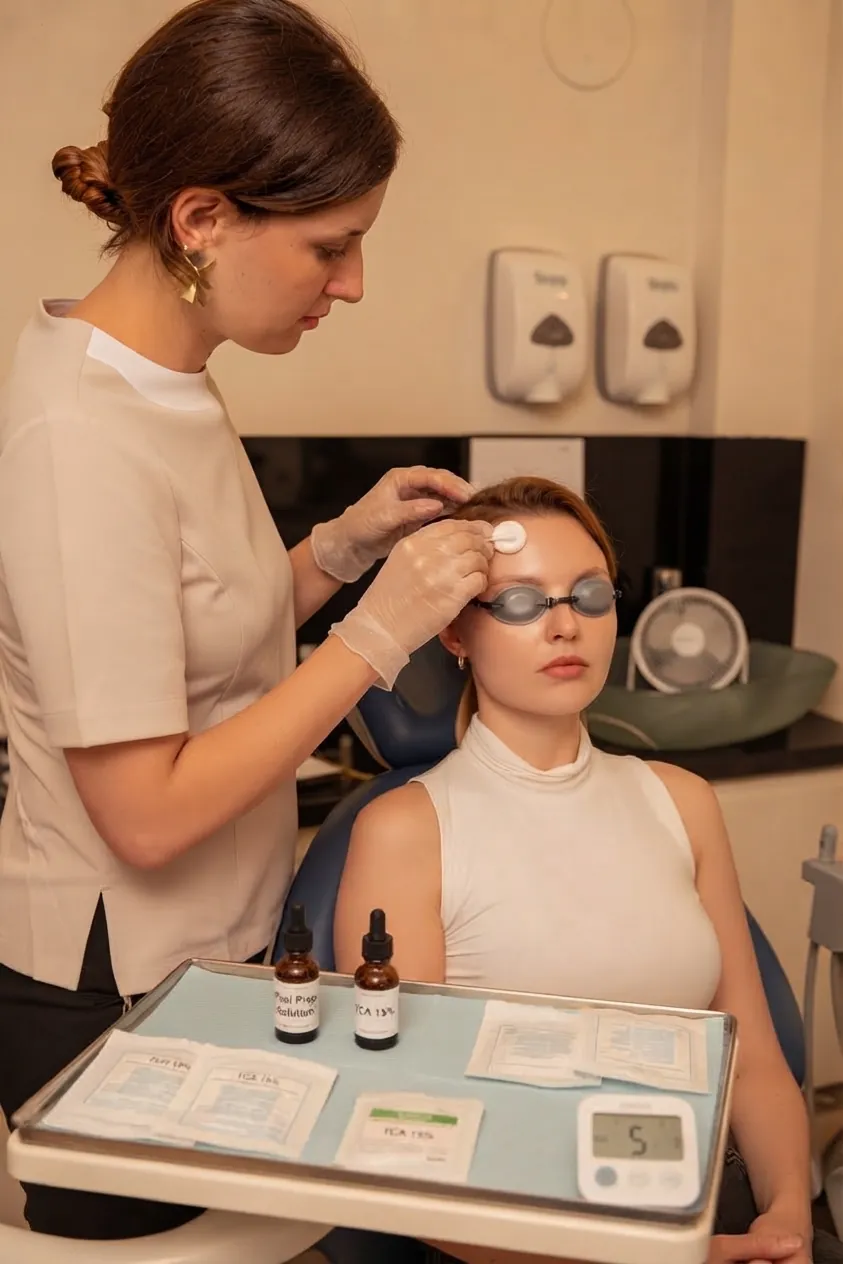
Depth: Microdermabrasion and Hydrafacial both work at the surface; a peel can be dialled from superficial to medium depth, reaching pigmentation and finer lines.
Downtime: Hydrafacial has effectively none. Microdermabrasion leaves brief pinkness. A peel gives a day or two of mild flaking (superficial) to several days of shedding (medium depth).
Comfort: Hydrafacial is genuinely comfortable via suction extraction. Microdermabrasion is more abrasive. Peels carry a transient sting that settles quickly.
Cost: Hydrafacial from £160, microdermabrasion from £160, skin peel from £160, with the final figure set by depth and product. The cheapest session isn't always the best value if it misses the actual problem; see our Hydrafacial cost guide.
Skin suitability: Sensitive skin does best with Hydrafacial. Oily/congested skin often suits microdermabrasion or salicylic peel. Pigmentation usually points to a chemical peel — but the wrong skin type can worsen pigmentation, needing a clinician's assessment.

When each is the right answer
Hydrafacial for radiance and hydration with no downtime. Microdermabrasion for purely textural concerns. Chemical peel for genuine renewal reaching pigmentation or fine lines, where downtime can be accommodated. Our Hydrafacial and microdermabrasion comparison goes into more detail.
The combined route
A common pattern layers a chemical peel for periodic renewal with Hydrafacial sessions for maintenance between peels. None of these treatments addresses volume loss or deep static lines — for that, Profhilo or microneedling is the honest answer. See microneedling for how that works.
Frequently asked questions
Which is best for sensitive skin? Usually Hydrafacial, since it infuses hydration rather than only abrading.
Which is best for acne-prone skin? Often a salicylic peel or microdermabrasion, sometimes paired with Hydrafacial.
Which has the least downtime? Hydrafacial, by a clear margin.
Can I have them in combination? Yes, often the better plan, costed as one transparent figure.
Which is cheapest? Microdermabrasion per session, but not necessarily the best value.
An honest assessment, not a menu
Dental & Wellness London · 222 Essex Road, Islington, London N1 3AP. Phone 020 8127 4567 · WhatsApp +44 7974 910222.
Reviewed by Dr Vishal Patel · BDS, MSc Aesthetic & Restorative Dentistry, GDC 103127. Last reviewed 5 June 2026.