PRP facial in London
Reviewed By
Dr Vishal Patel
BDS Liverpool · MSc Aesthetic & Restorative Dentistry Manchester · GDC 103127 · AACD Member · Invisalign Diamond II Provider · IFAAS (International Fellowship in Advanced Aesthetic Science) · Facial anatomy & cadaver course, Dr Ali Pirayesh, University of Amsterdam · Harley Academy foundation training in injectable aesthetics · IBSA-trained (Profhilo) · NeoStrata-trained (skin peels) · Lynton Lasers trained, incl. ONDA
Last Updated
October 1, 2026
Platelet-rich plasma prepared from your own blood, to support skin quality, fine lines and under-eye crepiness.
A PRP facial uses platelet-rich plasma prepared from a small sample of your own blood, injected into the skin or applied with microneedling, to support skin quality, fine lines, under-eye crepiness and mild scarring. Most plans are three sessions, four to six weeks apart. At Dental & Wellness London, Islington, PRP is £250 per session, carried out by Dr Vishal Patel.
- Platelet-rich plasma from your own blood
- For skin quality, fine lines, under-eyes and mild scarring
- Usually 3 sessions, 4 to 6 weeks apart
- Mild redness or bruising for a day or two
- £250 per session
- Carried out by Dr Vishal Patel
PRP facial at our Islington clinic
What PRP is
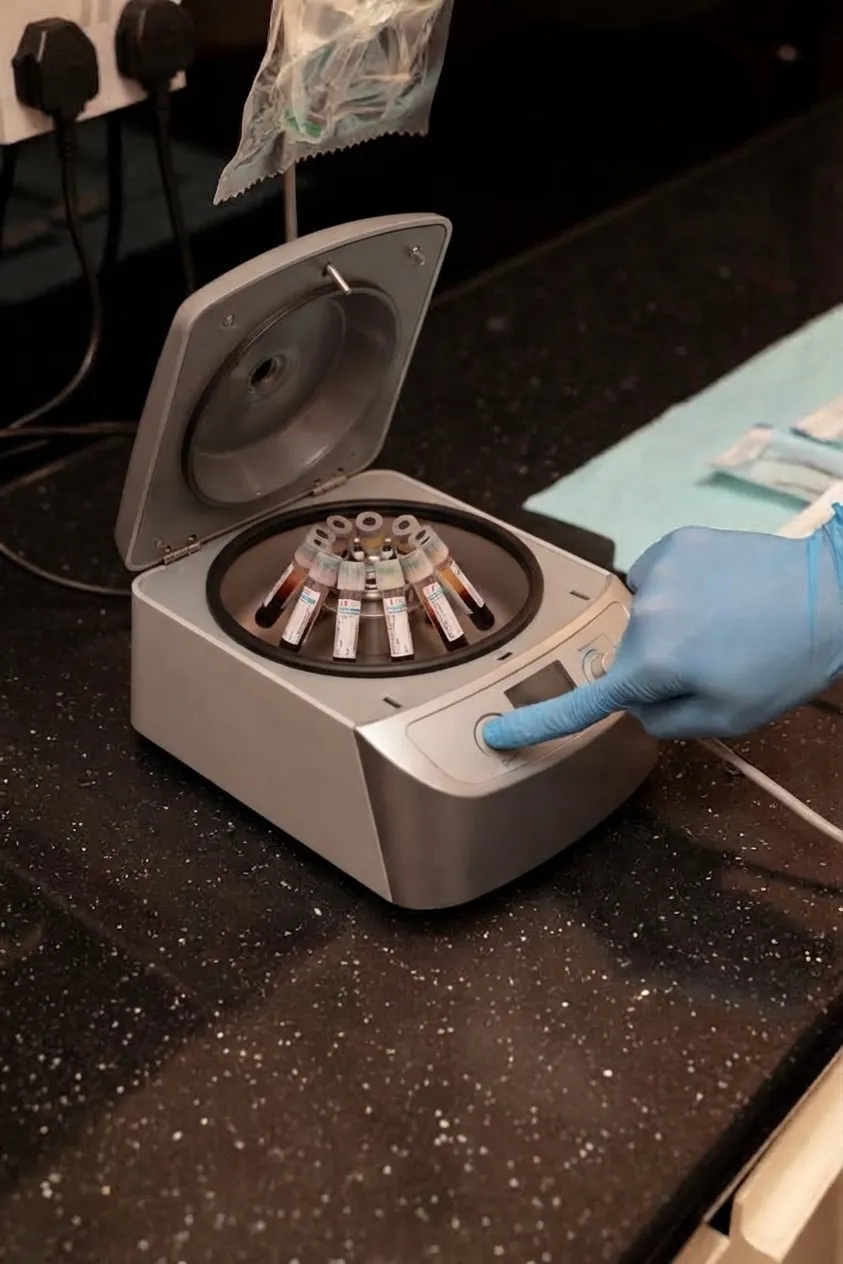
Platelet-rich plasma, or PRP, is a concentrate prepared from a small sample of your own blood. The blood is spun in a centrifuge to separate the platelet-rich part, which contains growth factors involved in repair. It is then injected into the skin, or applied during microneedling, to support skin quality, texture and fine lines.
Because it comes from your own blood, there is no risk of an allergic reaction to the product itself. PRP combined with microneedling is sometimes called a “vampire facial”.
Platelets are best known for their role in clotting, but they also release signalling proteins that help direct the body’s repair processes. When that concentrate is placed in the skin, the aim is to encourage the skin’s own regenerative activity, including new collagen, so that texture, tone and fine lines improve gradually. It is a regenerative treatment rather than a filling one: PRP does not add volume or change the shape of the face, and it does not relax muscles.
How a PRP facial works
There are two main ways we use PRP on the face, and the choice depends on your skin and what you want to improve.
- Injected PRP. Small amounts are placed with a fine needle into specific areas, such as the skin under the eyes, the cheeks or the fine lines around the mouth. This targets particular concerns more precisely.
- PRP with microneedling. The skin is treated with a medical microneedling device and PRP is applied over and into the tiny channels created. This spreads the effect across the whole face and is often the better route for texture and mild acne scarring.
In some plans we use both in the same session. We explain the reasoning for your skin at consultation rather than offering a single standard protocol.
Who it suits
- Dull, tired skin and early fine lines
- Crepey skin under the eyes
- Mild acne scarring, usually with microneedling
- People who prefer a treatment made from their own blood
PRP tends to appeal to people who want a gradual improvement in skin quality and who would rather avoid adding any external product. It can also suit people who have had other skin treatments and want to support the skin’s repair alongside them. For deeper texture concerns, our laser rejuvenation page describes the light-based options.
It is less suitable if you are looking for a lift, a change of contour or a quick visible result, because PRP works slowly and subtly. Deeper scarring, marked laxity and pronounced hollowing usually need other treatments, sometimes alongside PRP. For firmness concerns, our guide to Morpheus8 alternatives sets out the options.
Who should not have PRP
PRP is not suitable with some blood disorders, during pregnancy, or with active skin infection. We also take care with people who take medicines that affect clotting, who have certain long-term conditions, or who have recently been unwell, and we may ask you to check with your GP first. We go through your full medical history at consultation. If PRP is not right for you, we will explain why and what we would suggest instead.
What to expect
A session takes about an hour, including the blood draw and preparation. Numbing cream is applied first. Mild redness, swelling or small bruises can last a day or two. Most plans are three sessions, four to six weeks apart, and improvement builds gradually over several months.
- Consultation and plan. We assess your skin, discuss your goals and agree the approach, the areas and the number of sessions.
- Numbing. Numbing cream is applied to the treatment area while we prepare the PRP.
- Blood sample. A small sample of blood is taken from your arm, similar to a routine blood test.
- Preparation. The sample is spun in a centrifuge, and the platelet-rich plasma is separated and drawn up under sterile conditions.
- Treatment. The PRP is injected into the planned areas, applied during microneedling, or both.
- Aftercare. We go through aftercare and give you written guidance to take home.
Preparing for your appointment
A little preparation helps the day go smoothly. Drink plenty of water the day before and on the morning of treatment, as being well hydrated makes the blood sample easier to take. Eat normally beforehand. Let us know about any medicines or supplements you take, as some affect bleeding and bruising, but do not stop anything prescribed without speaking to your GP. Avoid strong active skincare, such as retinoids and exfoliating acids, for a few days before, and come with clean skin if you can. If you have a cold sore, a skin infection or are feeling unwell, contact us and we will move the appointment.
Aftercare and downtime
Most people return to normal activities the same or next day. For the first day, keep the skin clean, avoid touching it more than necessary, and leave off make-up where you can. For a few days, avoid strenuous exercise, saunas, steam rooms and swimming, and keep active ingredients such as retinoids and strong acids out of your routine until the skin has settled. Daily broad-spectrum SPF matters throughout the course and afterwards. If you have had microneedling as well, the skin may feel warm and look pink, similar to mild sunburn, for a day or two.
Results, and how many sessions
PRP works with your skin’s own repair processes, so change is gradual. Most people notice skin that looks fresher and a little smoother in the weeks after each session, with the fuller effect developing over several months as collagen remodels. Most plans are three sessions, four to six weeks apart. Results vary between individuals, and depend on age, skin condition, lifestyle and sun exposure. Many people choose an occasional maintenance session once the course is complete.
Because PRP supports the skin’s own processes, the habits around it matter. Daily sun protection, not smoking, sleep and a consistent home routine all help a course of PRP go further. We will suggest a simple skincare routine that suits your skin rather than a long list of products.
Is PRP worth it?
For some people, yes, particularly as part of a wider skin plan. The evidence is more variable than for some other treatments, so we will be honest about what it can do for your skin and compare it with alternatives such as Profhilo or polynucleotides.
Part of the variability comes from PRP itself. The concentration of platelets differs between people and between preparation methods, and treatment protocols differ between clinics, which makes studies harder to compare. We would rather set realistic expectations than overstate the result.
PRP compared with the alternatives
- Polynucleotides are a regenerative skin booster made from purified DNA fragments, and are often our first suggestion for the under-eye area. Skin boosters start from £250.
- Profhilo spreads through the skin to improve hydration and elasticity, and suits laxity and dryness across the face and neck. It is £350, or £625 for two sessions.
- Microneedling alone stimulates collagen without the blood draw, and suits many texture and scarring concerns. It starts from £160.
- Other skin boosters, such as Sunekos, Volite and Restylane Skinboosters, each have a slightly different emphasis, from hydration to fine crepiness.
If you are weighing these up, the consultation is the place to do it. For lighter facial options, see how HydraFacial vs microdermabrasion vs chemical peel compare. We often find that the right answer is a combination rather than a single treatment.
PRP facial cost in Islington
PRP treatment is £250. Where microneedling is part of the plan, microneedling starts from £160. Your consultation is £65, redeemable in full against treatment, and we confirm the full cost of your course in writing before you book. Where it helps, 0% APR over 12 months is available.
Why have it with us
Prescribed and administered by Dr Vishal Patel, BDS, MSc Aesthetic & Restorative Dentistry, GDC 103127, the clinic’s sole aesthetic prescriber. Dr Patel has ten years of experience in facial aesthetics and his training includes the International Fellowship in Advanced Aesthetic Science and a facial anatomy and cadaver course at the University of Amsterdam. Every stage, from the blood sample to the treatment, is carried out under sterile conditions in our clinic, and you will see the same clinician at each visit. You can read more on Dr Patel’s profile.
Dental & Wellness London has been on Essex Road since 2009 and is rated 4.7 stars from more than 300 Google reviews.
Getting here
The clinic is at 222 Essex Road, Islington, London N1 3AP, two minutes from Essex Road station and a short ride from Angel, Highbury, Canonbury, Hackney and Stoke Newington. Many patients cycle or use a Lime or Forest e-bike. Buses 38, 56, 73, 341 and 476 stop on Essex Road. We are open Monday to Friday, 8am to 7pm, by appointment.
Clinically reviewed by Dr Vishal Patel · BDS · MSc Aesthetic & Restorative Dentistry · GDC 103127. Last reviewed 1 October 2026.
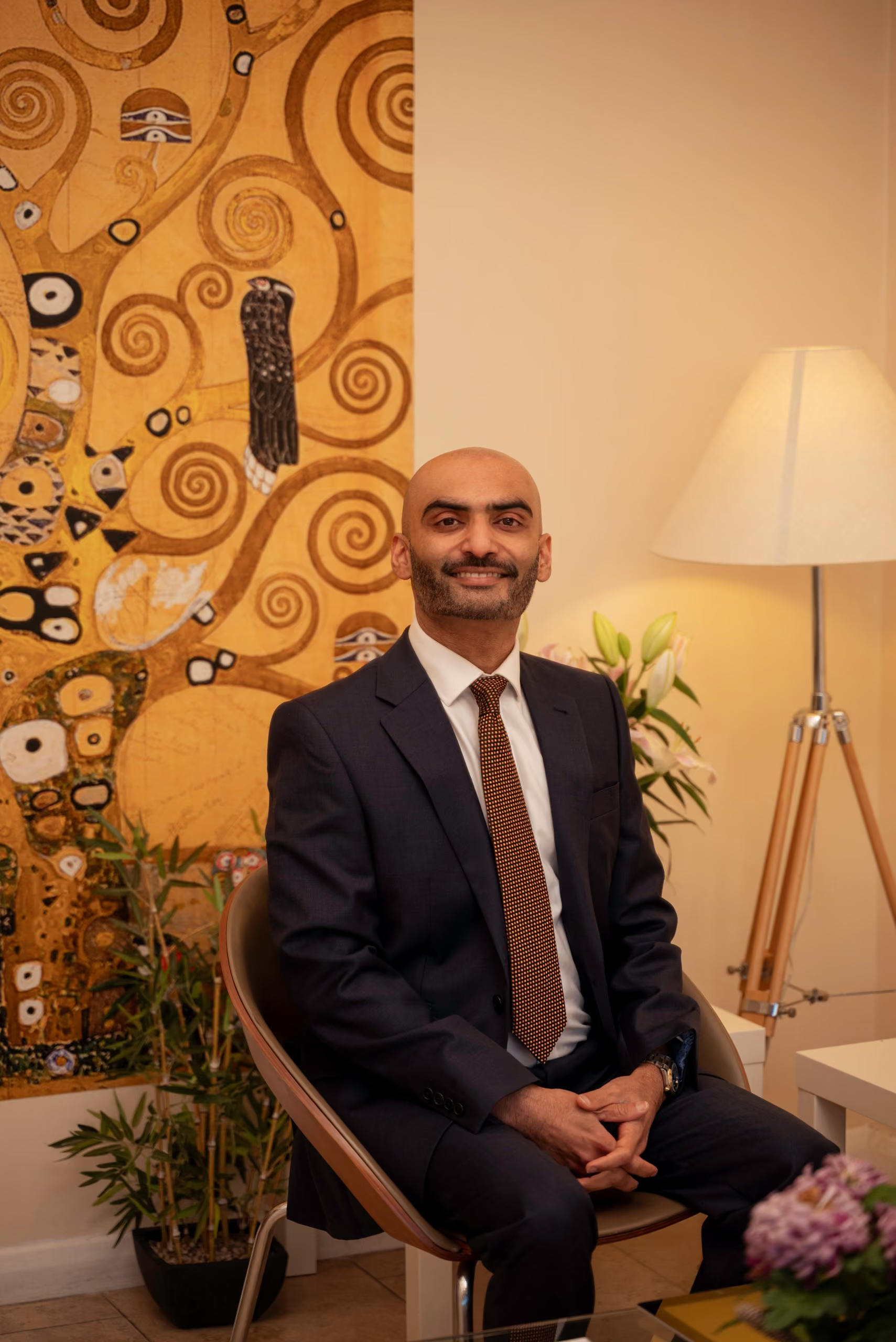
Dr Vishal Patel
Clinical lead · Sole aesthetic prescriber · 10 years in facial aesthetics
BDS Liverpool · MSc Aesthetic & Restorative Dentistry (Manchester) · GDC 103127 · International Fellowship in Advanced Aesthetic Science (IFAAS) · Facial anatomy and cadaver course with Dr Ali Pirayesh, University of Amsterdam · Harley Academy · IBSA and NeoStrata trained
We will tell you when a treatment is not the right answer. That honesty is part of the treatment.
Read Dr Patel’s profile →Your own blood, working for your skin.
Consultation — £65
A skin assessment with an honest view of what will help. The fee is redeemable in full against treatment.
Blood draw and preparation
A small sample is taken and spun to separate the platelet-rich plasma.
Treatment
PRP is injected or applied with microneedling, after numbing cream.
Course
Usually three sessions, four to six weeks apart.
Start with a consultation
- £65, redeemable in full against treatment
- Honest view of what PRP can do
- Carried out by Dr Patel
Or call 020 8127 4567 · WhatsApp +44 7974 910222
222 Essex Road, Islington N1 3AP · Mon–Fri, 8am–7pm
Our happy patients,
in their own words
Transparent pricing
Prices are set out below. Your written plan confirms the fee before any treatment begins.
Clear prices, set out before you start.
Redeemable in full against treatment
Per session
If combined, priced in your plan
Included
- Blood draw and preparation
- A written plan before treatment
Quoted separately
- Other treatments, priced separately
Questions
people ask
If your question isn't answered here, call reception on 020 8127 4567 or email reception.
Is the vampire facial the same as PRP?
“Vampire facial” is a popular name for PRP combined with microneedling. PRP can also be injected on its own. We recommend whichever suits your skin.
How much is a PRP facial in London?
At Dental & Wellness London, Islington, PRP is £250 per session. Most plans are three sessions. The consultation is £65, redeemable in full.
Does PRP hurt?
Numbing cream is applied first, so most people feel only mild discomfort. The blood draw is like a routine blood test.
When will I see results from PRP?
Skin often looks fresher within a few weeks, and improvement builds over two to three months after a course.