Nasolabial fold filler
Reviewed By
Dr Vishal Patel
BDS Liverpool · MSc Aesthetic & Restorative Dentistry Manchester · GDC 103127 · AACD Member · Invisalign Diamond II Provider · IFAAS (International Fellowship in Advanced Aesthetic Science) · Facial anatomy & cadaver course, Dr Ali Pirayesh, University of Amsterdam · Harley Academy foundation training in injectable aesthetics · IBSA-trained (Profhilo) · NeoStrata-trained (skin peels) · Lynton Lasers trained, incl. ONDA
Last Updated
October 1, 2026
HA dermal filler for the deep lines from nose to mouth · sole prescriber Dr Vee Patel · precision from oral surgery experience.
Nasolabial fold filler uses hyaluronic acid filler to soften the lines from the nose to the corners of the mouth, often alongside support in the cheeks for a more natural result. Results last 9 to 12 months and can be reversed. At Dental & Wellness London, Islington, it is carried out by Dr Vishal Patel; dermal filler is from £350.

Treatment at a glance
- Softens nose-to-mouth lines
- Cheek support often gives a more natural result
- Lasts 9 to 12 months; reversible
- Dermal filler from £350
- Carried out by Dr Vishal Patel
Nasolabial fold filler at our Islington clinic
What nasolabial fold filler does
The nasolabial folds run from the sides of the nose to the corners of the mouth. They deepen with age as the mid-face loses volume. Filler can soften them directly, but often the better approach is to restore support in the cheeks, which lifts the folds more naturally. We assess both.
Everyone has nasolabial folds, often called smile lines or laugh lines; they are a normal part of facial anatomy. They become more prominent over time for several reasons working together: volume loss and descent of the cheek fat pads, changes in the ligaments that hold the mid-face in place, loss of collagen and elastin in the skin, and decades of facial expression etching the crease a little deeper. People often tell us the change makes them look tired or stern when they do not feel it.
Treating the cause, not chasing the line
Hyaluronic acid dermal filler can work in two ways in this area.
- Direct softening: a small amount of filler placed in or beside the fold itself softens the visible depression.
- Structural support: filler placed in the mid-cheek restores the support that has been lost, lifting the tissue that is contributing to the fold.
Filling only the fold can, over time, create heaviness around the mouth and a look that is not quite natural. Where the fold is mainly the result of cheek volume loss, restoring that support first usually gives a softer, more proportionate result, and sometimes means little or no filler is needed in the fold itself. Many plans combine the two. Product choice matters as well: softer gels suit fine surface correction, firmer ones suit deeper structural placement, and we choose at consultation according to your anatomy and skin.
Who it suits
- Mild to moderate nasolabial folds that make the face look tired
- Folds linked to early mid-face volume loss
- People who want a natural, conservative softening rather than an erased line
- Not during pregnancy or breastfeeding, with active infection or cold sores near the area, with a history of severe reaction to hyaluronic acid filler, or with some autoimmune conditions
Very deep folds with significant skin laxity may be better addressed by other approaches, or may simply have a limited response to filler. We will tell you honestly at consultation if we think filler is not the right answer.
Filler or Profhilo?
They do different jobs: filler restores lost volume, while Profhilo improves skin quality. Many people benefit from a combination.
Profhilo and other skin boosters, such as polynucleotides, improve hydration, texture and firmness and can indirectly soften fine lines around the folds, though more slowly and without restoring volume. Polynucleotides are also used beneath the eyes; see our guide to dark circles. Thread lifting (PDO threads from £600 for a single area; the Korean V Lift mono-thread lift is £1,600) offers a mechanical lift for selected patients and has more downtime. A surgical facelift remains the definitive option for marked tissue descent and is outside what we offer. For most mild to moderate nasolabial folds, carefully placed filler is a sensible, conservative starting point.
What to expect
- About 20 to 30 minutes, with numbing
- Swelling for 24 to 72 hours; bruising is common
- Results last 9 to 12 months
- Reversible with hyaluronidase (£180)
Consultation and planning
We start with what bothers you and why, then look at the whole face, at rest and in expression, in good light. We review your medical history, agree the plan and the product, and mark the injection points. Nothing is decided by a fixed number of syringes; the amount used is the amount your face needs.
The treatment
Numbing cream is applied, and most fillers also contain a local anaesthetic for comfort. The filler is placed with a fine needle or a blunt cannula at the planned points in the cheek, the fold or both, in small amounts and methodically. The area is gently moulded and checked against the plan before you leave.
Recovery and results
The improvement is visible straight away, with some swelling. Most of that swelling settles within two to three days, and the result is fully settled at around two weeks, when we can review you and make any small adjustment needed. Office work is usually fine the same day, though bruising is common in this area, so we would not plan treatment just before an important event. Avoid make-up over the injection points, strenuous exercise, alcohol and heat such as saunas for twenty-four to forty-eight hours. The filler gradually breaks down over nine to twelve months, and some people maintain their result with smaller top-ups at longer intervals. Results vary from person to person.
Safety in a complex area
The area beside the nose is one of the more vascularly complex zones of the face. The facial artery and its branches, including the angular artery, run close to the fold, and the infraorbital nerve emerges nearby. Filler placed into or against a blood vessel can block it, which is the most serious risk of any filler treatment. It is rare, but it is the reason anatomical knowledge is not optional here.
Common, short-lived effects are swelling, bruising and tenderness. Less common are asymmetry, which can usually be corrected at review, lumps, migration of filler and infection. Because we use hyaluronic acid filler, it can be dissolved with hyaluronidase if needed, which is £180. We keep hyaluronidase on site and follow established protocols for managing complications. HA filler has a long and well-documented safety record when used responsibly, and it does not cause permanent structural change to the face.
Common misconceptions about smile line filler
"More filler gives a better result"
It rarely does. The aim is to soften the fold, not erase it. A face without any nasolabial fold looks unnatural, particularly when you smile, and overfilling the area is one of the most common reasons treated faces look heavy around the mouth. We would rather use less and review at two weeks than overshoot.
"Filler will make my folds worse over time"
Responsibly placed hyaluronic acid filler breaks down naturally and does not stretch the skin or deepen the folds when it wears off. What changes over the years is the ageing process itself, which continues whether or not you have treatment. Regular reassessment means the plan adapts as your face does.
"The fold is the problem, so the fold is where the filler goes"
Often the fold is the symptom, and the cause sits higher in the cheek. Treating the cause can look more natural and age better, which is why we look at the whole mid-face before deciding where any filler should go.
"Any injector can treat this area"
Many can, but the area near the nose is one where anatomy, technique and the ability to manage a complication matter most. It is worth asking any clinic who will treat you, what their training is, and how they would respond if something went wrong.
Cost of nasolabial fold filler in Islington
Dermal filler at our clinic starts from £350. The total depends on how much product your plan needs, and whether we treat the folds alone or combine them with cheek support. Your written plan sets out the treatment and cost before you commit. A skin and aesthetic consultation is £65 and is redeemable in full against treatment. Profhilo is £350 for one session or £625 for two, if a skin quality treatment is part of your plan.
Why have it with us
Prescribed and administered by Dr Vishal Patel, BDS, MSc Aesthetic & Restorative Dentistry, GDC 103127, the clinic’s sole aesthetic prescriber. His training includes the International Fellowship in Advanced Aesthetic Science, a facial anatomy and cadaver course with Dr Ali Pirayesh at the University of Amsterdam, and IBSA training.
Dr Patel has around twenty years in dentistry and ten years in facial aesthetics. A dental surgical background means daily work around the same arteries, nerves and muscles of the mid-face and mouth that matter in nasolabial treatment, and a dentist’s training in facial proportion shapes how we plan: conservative amounts, placed for balance and symmetry, so that the result looks like you on a good day rather than treated. He has also trained with Harley Academy and is an AACD member. You will see the same clinician from consultation to review; read more on Dr Patel’s profile and on our dermal fillers in Islington page.
The clinic is at 222 Essex Road, Islington, London N1 3AP, two minutes from Essex Road station and a short ride from Angel, Highbury, Canonbury, Hackney and Stoke Newington. Many patients cycle or use a Lime or Forest e-bike; Dalston is around ten minutes by bike. Buses 38, 56, 73, 341 and 476 run along Essex Road. We have cared for patients in N1 since 2009, are rated 4.7 stars from more than 300 Google reviews, and see patients Monday to Friday, 8am to 7pm, by appointment.
Clinically reviewed by Dr Vishal Patel · BDS · MSc Aesthetic & Restorative Dentistry · GDC 103127. Last reviewed 1 October 2026.
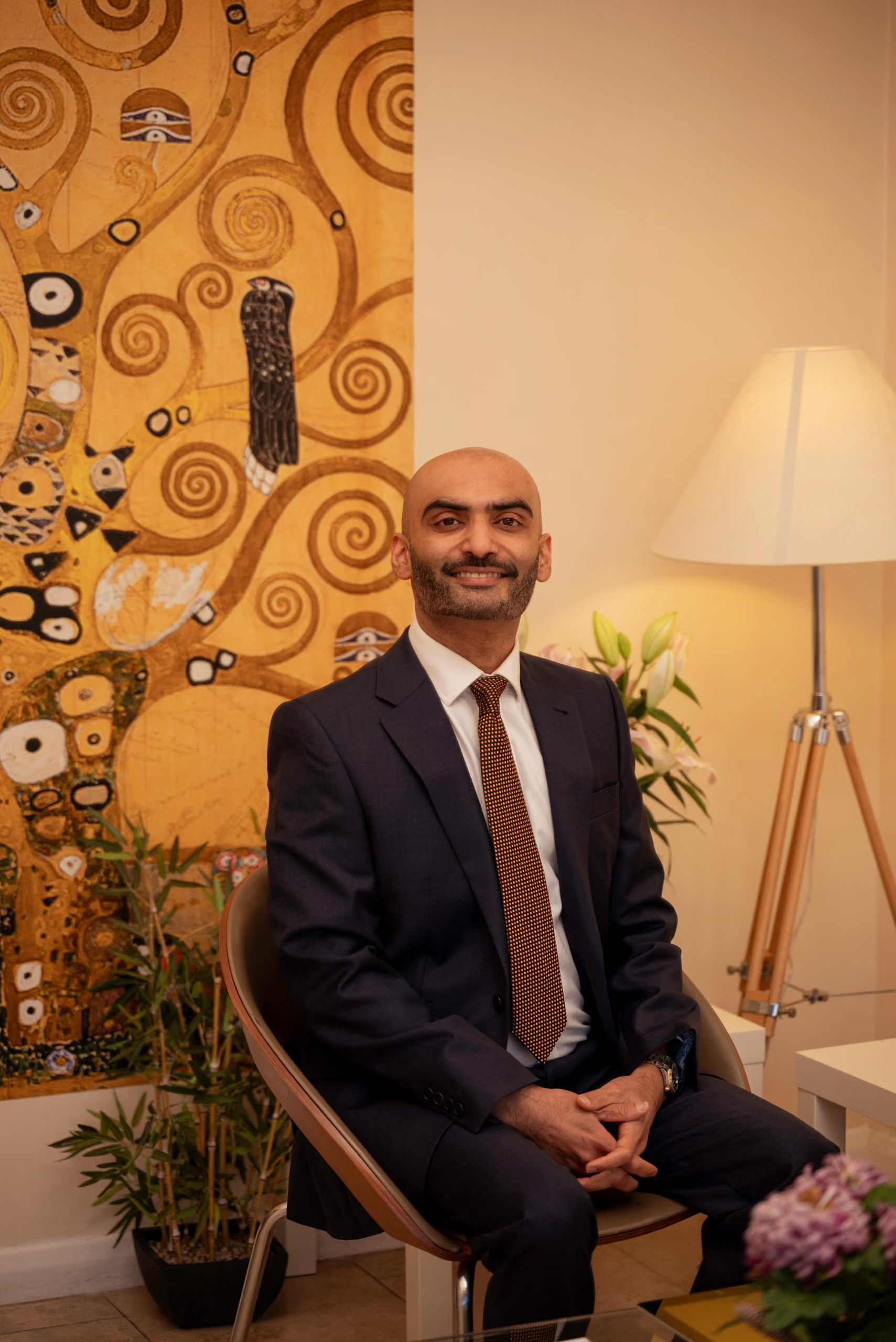
Dr Vishal Patel
Clinical lead · Sole aesthetic prescriber · 10 years in facial aesthetics
BDS Liverpool · MSc Aesthetic & Restorative Dentistry (Manchester) · GDC 103127 · International Fellowship in Advanced Aesthetic Science (IFAAS) · Facial anatomy and cadaver course with Dr Ali Pirayesh, University of Amsterdam · Harley Academy · IBSA and NeoStrata trained
We will tell you when a treatment is not the right answer. That honesty is part of the treatment.
Read Dr Patel’s profile →If you are still weighing up your options, our overview of dermal fillers brings them together in one place.
Further reading
Anatomy Depth
Oral Surgery
Ethical Aesthetics
Where a fold is driven by lost cheek support, we treat the cheek first; filling the line on its own tends to look heavy.
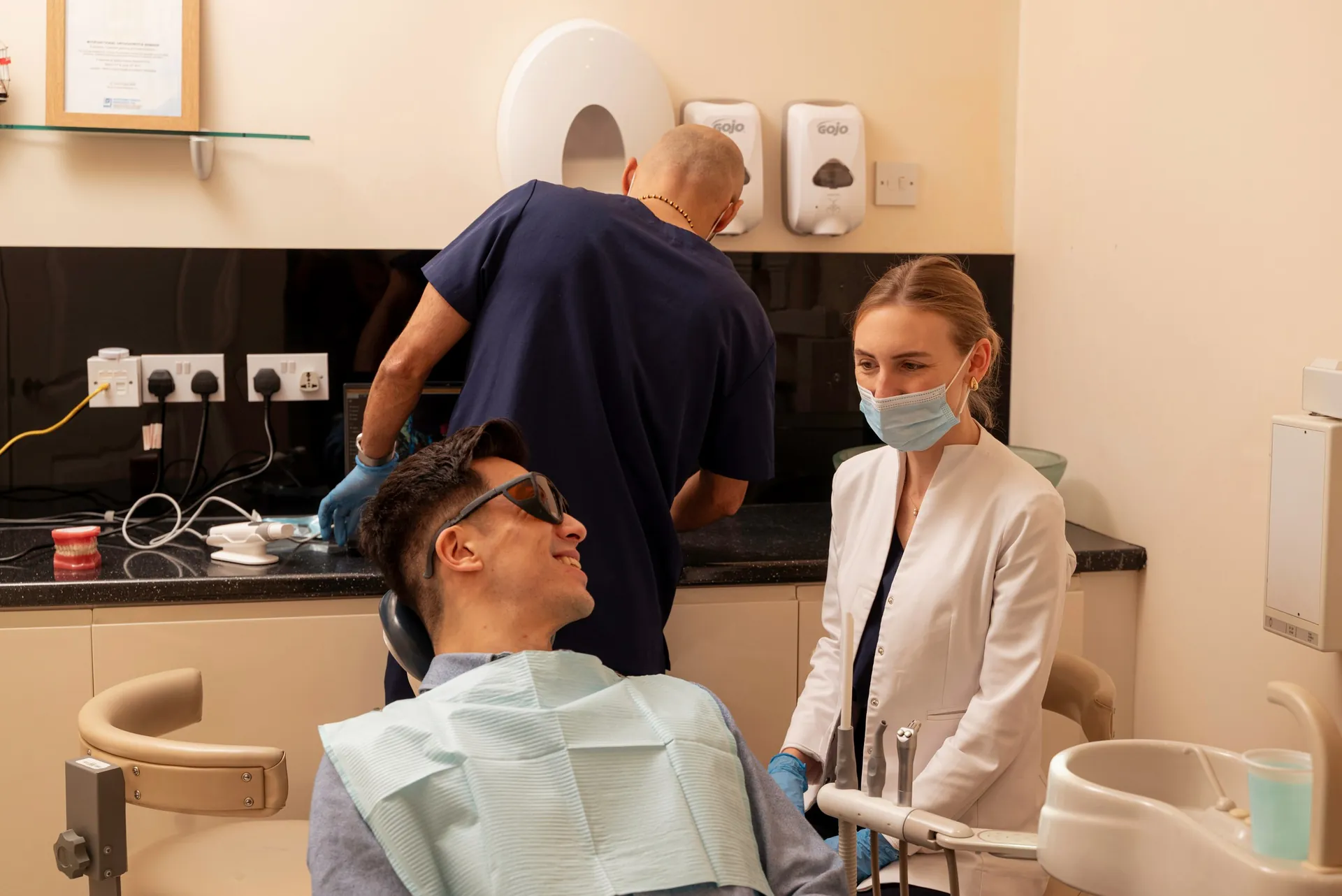
Softer lines, naturally.
Consultation — £65
A skin assessment with an honest view of what will help. The fee is redeemable in full against treatment.
Treatment
About 20 to 30 minutes.
Review at two weeks
We check the result once swelling settles.
Start with a consultation
- £65, redeemable in full against treatment
- Carried out by Dr Vishal Patel
- A written plan before treatment
Or call 020 8127 4567 · WhatsApp +44 7974 910222
222 Essex Road, Islington N1 3AP · Mon–Fri, 8am–7pm
Our happy patients,
in their own words
Transparent pricing
Prices are set out below. Your written plan confirms the fee before any treatment begins.
Clear prices, set out before you start.
Redeemable in full against treatment
Final fee depends on amount
Included
- Assessment by Dr Patel
- Two-week review
Quoted separately
- Dissolving with hyaluronidase, if ever needed: £180
Questions
people ask
If your question isn't answered here, call reception on 020 8127 4567 or email reception.
How long does nasolabial fold filler last?
Typically 9 to 12 months.
Is it painful?
Mild discomfort; numbing cream is applied first.
Will there be swelling?
Yes, for 24 to 72 hours. Bruising is common in this area.
Can I have it if I am pregnant?
No. We postpone filler during pregnancy and breastfeeding.
How much filler will I need?
Usually 1 to 2ml, sometimes with cheek support instead.
When can I return to work?
The same day for most people.
Can filler make my folds worse over time?
No. Hyaluronic acid is gradually reabsorbed.
Should I have Profhilo or filler for nasolabial folds?
Filler restores volume; Profhilo improves skin quality. Many people benefit from both.
Is it reversible?
Yes, with hyaluronidase (£180).
How much does nasolabial fold filler cost?
Dermal filler is from £350 at Dental & Wellness London, Islington.