Skin Tightening vs Thread Lifts · Honest Comparison · DWL Islington
Reviewed By
Dr Vishal Patel
BDS Liverpool · MSc Aesthetic & Restorative Dentistry Manchester · GDC 103127 · AACD Member · Invisalign Diamond II Provider · IFAAS (International Fellowship in Advanced Aesthetic Science) · Facial anatomy & cadaver course, Dr Ali Pirayesh, University of Amsterdam · Harley Academy foundation training in injectable aesthetics · IBSA-trained (Profhilo) · NeoStrata-trained (skin peels) · Lynton Lasers trained, incl. ONDA
Last Updated
September 16, 2026
Skin tightening vs thread lifts — energy-based tightening vs a PDO thread lift, and which suits your face.
Skin tightening uses energy to stimulate collagen gradually; a thread lift physically lifts tissue straight away. At our Islington clinic we offer Lynton laser tightening, PDO thread lifts (from £600 for a single area) and the Korean V Lift, a mono-thread lift (£1,600). Which approach for which face/neck goal. Honest case-by-case framing from a cosmetic dentist trained in facial proportion.
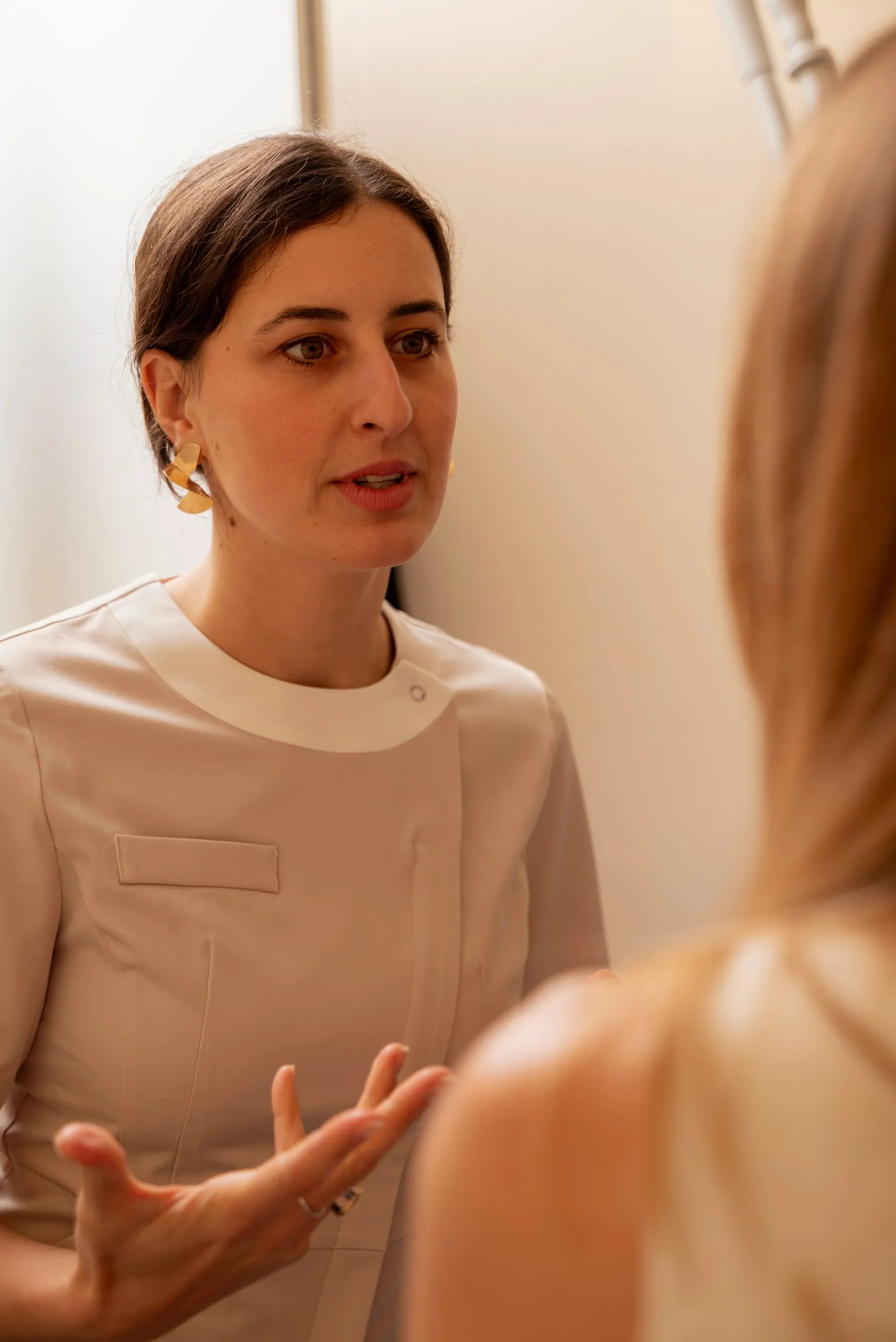
- Two different mechanisms — energy-based skin tightening (Lynton laser at DWL) vs thread lifts (PDO threads, or the Korean V Lift mono-thread lift)
- Skin tightening: gradual collagen stimulation, no downtime, results over 3-6 months
- Thread lifts: immediate visible lift, 2-7 days recovery, results last 9-15 months
- Laser lift & tighten from £195 · PDO thread lift from £600 (single area) · Korean V Lift (mono-thread lift) £1,600
- Neither is a substitute for a surgical face/neck lift in the right candidate
- We say no to non-surgical treatment when patient expectations exceed what's realistic
This page is part of our wider guide to non-surgical face lift, which sets out every option we offer side by side.
Further reading
Two very different mechanisms, often confused
Patients comparing 'non-surgical face lift' options frequently bundle skin tightening and thread lifts together because both promise lift without surgery. The mechanisms are completely different, and the right choice depends on what your specific face needs.
Energy-based skin tightening delivers focused energy into the skin and underlying tissue. The energy causes immediate collagen contraction (modest) and triggers a wound-healing collagen-stimulation response (substantial) over the following 3-6 months. Result is gradual, progressive, with no downtime. At our clinic this means Lynton laser lift and tighten. Other clinics use HIFU, Morpheus8 or radiofrequency systems; we do not offer those.
PDO thread lifts physically place dissolvable threads (polydioxanone) under the skin. The threads have small cogs or barbs that grip tissue. The clinician pulls the threads to physically suspend the tissue in a lifted position. The threads dissolve over 6-9 months but the collagen they stimulate during dissolution holds the lift longer. Result is immediate, visible, with 2-7 days of recovery.
Different timescales. Different surgical-recovery profiles. Different price points. Different ideal indications.
When skin tightening is the better answer
Generalised mild-to-moderate skin laxity without specific drop points. The kind of overall 'softening' of skin tone and texture that benefits from gradual collagen stimulation across a broad area.
Patient wants no downtime. Energy-based treatments leave at most mild redness for 24-48 hours.
Patient wants progressive natural-looking result. Gradual improvement across months looks like 'aging better' rather than 'had something done.'
Body areas — abdomen, thighs, arms — where skin tightening modalities can be applied broadly. Threads are typically face-and-neck only.
Younger patients (30s-40s) with early-stage laxity. Collagen stimulation works best when the skin still has good responsive capacity.
Combined-modality plans where skin tightening is the foundation and other treatments (Profhilo, skin boosters, fillers) layer on top.
When thread lifts are the better answer
Specific drop points — jowls, jawline drop, brow ptosis, neck banding. Areas where physical suspension of tissue produces immediate visible benefit that energy can't achieve as quickly.
Patient wants immediate visible result. You leave the appointment looking lifted. Skin tightening can't deliver this — it works over weeks.
Specific anatomical features that need elevation. Drooping brow, marionette lines, jowl drop — threads physically address the geometry.
Older patients (50s-70s) with more established laxity where collagen stimulation alone may not be sufficient and physical lift is needed.
Bridge before surgery — patients who'll eventually have surgical face lift but want intermediate intervention.
Targeted vs broad — thread lifts excel at specific areas; skin tightening at broad coverage.
Combined plans are often the right answer
For many cases, combining modalities produces better outcomes than either alone:
Threads for the structural lift + skin tightening for surface quality and collagen support. Threads handle the geometry; skin tightening optimises tissue quality where threads will hold.
Skin tightening as maintenance after threads. Thread lifts last 9-15 months. Periodic skin tightening between thread renewals maintains the collagen benefit.
Pre-thread skin prep with skin tightening. Some clinicians prep with collagen-stimulating treatments before threading for better tissue integration.
Surface and structural in one plan. Profhilo (skin quality) + Lynton laser tightening + the Korean V Lift (structural lift) creates a layered approach, quoted in writing at consultation.
Downtime comparison
Skin tightening: Mild redness 24-48 hours. Normal activity immediately. Makeup the same or next day.
PDO thread lifts: 2-7 days of visible bruising, swelling, occasional asymmetry while threads settle. Avoid significant facial movement, dental work, sleeping flat for first week.
Surgical face lift: 2-4 weeks visible recovery. Substantial restriction on activity.
Cost comparison
Energy-based skin tightening:
- Laser lift & tighten from £195 per session
- Skin tightening from £225 per session
- Onda Coolwaves £300 per session (body areas only)
- Course of 3-6 sessions typical
Thread lifts:
- PDO thread lift: £600 single area · £1,200 mid-face and jowl · £1,800–£2,400 full face
- Korean V Lift (mono-thread lift): £1,600
- Single procedure or staged across appointments
Combined plans: quoted in writing at consultation
Surgical face lift: we do not perform surgery; we refer where it is the right answer
Cost-per-year-of-result comparison favours skin tightening for maintenance, threads for immediate impact.
How DWL's combined dental + aesthetic lens informs this decision
Dr Vishal Patel's MSc in Aesthetic & Restorative Dentistry includes substantial training in facial proportion, golden-ratio aesthetics, and how the lower face structure (jaw position, occlusion, dental aesthetic) affects overall facial harmony.
For patients considering non-surgical face lift options, this lens matters. The threads-vs-skin-tightening decision isn't just about which modality lifts which area — it's about which approach restores the proportional balance you actually need.
Sometimes a patient comes for jowl lift and the assessment reveals that addressing the bite (jaw position from a Davies splint, for example) or refining the smile (composite bonding, Invisalign) does more for facial harmony than either thread lift or skin tightening alone.
Vee's training includes a facial anatomy and cadaver course with Dr Ali Pirayesh at the University of Amsterdam, which matters for the safety of thread placement around vascular and neural structures.
When we say no
We say no to both modalities when:
- Patient expectations exceed what either treatment can deliver
- Active inflammatory skin conditions
- Significant medical contraindications
- Pregnancy or breastfeeding
- Recent (within 6 months) significant cosmetic surgery in the area
- Patient is genuinely a candidate for surgical face lift and would be better served by surgical referral
We say yes to combined plans when the case genuinely benefits from layered modalities. We don't push individual modalities for revenue when the case calls for combination or referral.
Our happy patients,
in their own words
Transparent pricing
Prices are set out below. Your written plan confirms the fee before any treatment begins.
| Service | Price |
|---|---|
| Laser lift & tighten (per session) | from £195 |
| Skin tightening (per session) | from £225 |
| Onda Coolwaves, body areas (per session) | £300 |
| PDO thread lift, single area | £600 |
| PDO thread lift, mid-face and jowl | £1,200 |
| PDO thread lift, full face | £1,800–£2,400 |
| Korean V Lift (mono-thread lift) | £1,600 |
| Surgical face/neck lift (reference) | Referred out — not offered at DWL |
Questions
people ask
If your question isn't answered here, call reception on 020 8127 4567 or email reception.
When is skin tightening better than thread lifts?
Skin tightening is better for generalised mild-to-moderate skin laxity, body areas, younger patients with responsive collagen, no-downtime preference, and progressive natural-looking results. It works best on broad coverage rather than specific drop points.