Why this question deserves a real answer
Most clinics either underplay staining ("bonding stains hardly at all") or overplay it ("bonding will discolour quickly"). Neither serves the patient. The honest position is in the middle — bonding does stain, the staining is mostly surface and reversible, and the rate depends on factors mostly within your control. This page covers all of them, alongside what we do for patients of our composite bonding service in Islington.
What causes bonding to stain
Three factors drive staining on composite bonding:
Chromogenic foods and drinks
Pigmented compounds in coffee, tea (particularly green and black tea), red wine, turmeric, soy sauce, balsamic vinegar, beetroot, blueberries, blackberries, and curry sit on the bonded surface and slowly impregnate the resin matrix. The longer the contact, the deeper the staining. Sipping a coffee through the morning gives ~3 hours of continuous exposure; drinking it in one go and rinsing gives ~10 minutes. Same coffee, different staining outcome.
Smoking
Tar from cigarettes and the heated compounds in vaping liquid bind to composite resin more aggressively than to enamel. Smokers see visible staining on bonding within 6–12 months even with otherwise good hygiene. We can polish this out at the 12-month appointment but the underlying cause continues unless smoking stops.
Surface degradation
Whitening toothpastes are abrasive. Over time they scratch the polished surface of composite resin, creating microscopic roughness that traps stain particles. This is why we tell every bonding patient to avoid whitening toothpaste permanently — not just initially.
Surface staining vs interface staining
This distinction matters because the two are managed differently.
Surface staining sits on top of the bonded surface. It accumulates over months from food, drink, and smoking. It responds well to professional polishing at 12-18 months — we use composite-specific polishing burs and pastes that remove the stained surface layer without damaging the underlying resin. After polish the bonding looks close to original. Polishing is carried out within a hygiene appointment (£85).
Interface staining sits at the boundary between the bonding and the natural tooth. It happens when the original bonding placement left a microscopic gap at the margin, or when the margin has degraded over years. Interface staining can't be polished out — it requires partial re-layering of the bonding at the affected margin. More involved than a polish; quoted in writing after assessment, depending on extent.
The difference matters because surface staining is normal and expected; interface staining is a sign of placement quality or significant age. Well-placed bonding rarely develops interface staining within the first 7 years. We cover longevity in is composite bonding permanent.

What you can do at home
The protocol I give every bonding patient:
- Rinse with water after coffee, tea, red wine, or any pigmented food
- Brush within 30 minutes of staining foods (not immediately — give saliva time to neutralise acid)
- Use a non-abrasive toothpaste — standard fluoride toothpaste, not whitening
- Floss daily to keep margins clean (interface staining often starts at plaque-accumulated margins)
- Drink dark liquids through a straw where practical (cold drinks more than hot)
- Hygienist every 6 months — they remove the surface staining that home brushing can't reach
- Quit smoking — this is the single largest controllable factor
None of these are heroic. Patients who follow them keep their bonding looking close to original for the full 5–7 year average. More in our composite bonding aftercare guide.
Why whitening toothpaste damages bonding specifically
This deserves a dedicated paragraph because patients ask about it constantly. Whitening toothpastes work by mild abrasion — they contain particles (silica, calcium carbonate) that physically scrub the enamel surface to remove surface stain. They're designed for enamel, which is the hardest substance in the body and tolerates this well over years.
Composite resin is softer than enamel. The same abrasive particles that polish enamel scratch composite. Over 12–24 months of twice-daily use, these microscopic scratches degrade the polished surface, dull the appearance, and trap stain particles in the new surface roughness. The bonding starts looking duller and stains faster than it should.
Use a standard fluoride toothpaste — Sensodyne Pronamel, Colgate Total, Oral-B Pro-Expert (in the non-whitening formulation). If your goal is whiter teeth, the right approach is professional whitening of your natural teeth before bonding placement, then matching the bonding to the whitened shade. Whitening with us follows a dental examination (£65) to confirm a fit, clean and healthy mouth, and whitening prices do not include it; see teeth whitening in Islington. Trying to whiten teeth that already have bonding doesn't work — the bonding doesn't respond to whitening agents and you end up with darker bonding against lighter natural teeth.
When polish vs when refresh
The decision framework at each maintenance appointment:
Surface staining only · 12-18 months interval · polish within a hygiene appointment (£85)
- Polish removes accumulated coffee/tea/wine staining
- Surface returns close to original finish
- Continues the 5–7 year average lifespan track
Surface staining + early margin staining · 3-5 years · quoted in writing
- Polish plus minor margin refinement
- Catches interface staining before it becomes structural
- Common at year 3–4 review
Interface staining or shape change · year 5-7 · quoted in writing
- Partial re-layering of affected teeth
- Combined with overall polish of the rest
- Extends the cluster for another several years
Full refresh · year 7-10 · per-tooth pricing
- Where the bonding has done its job and the cosmetic case justifies new work
- New per-tooth pricing applies (£175 simple · £350 complex)
- Sometimes the conversation shifts to converting to veneers if the patient's goals have evolved
What this looks like in practice
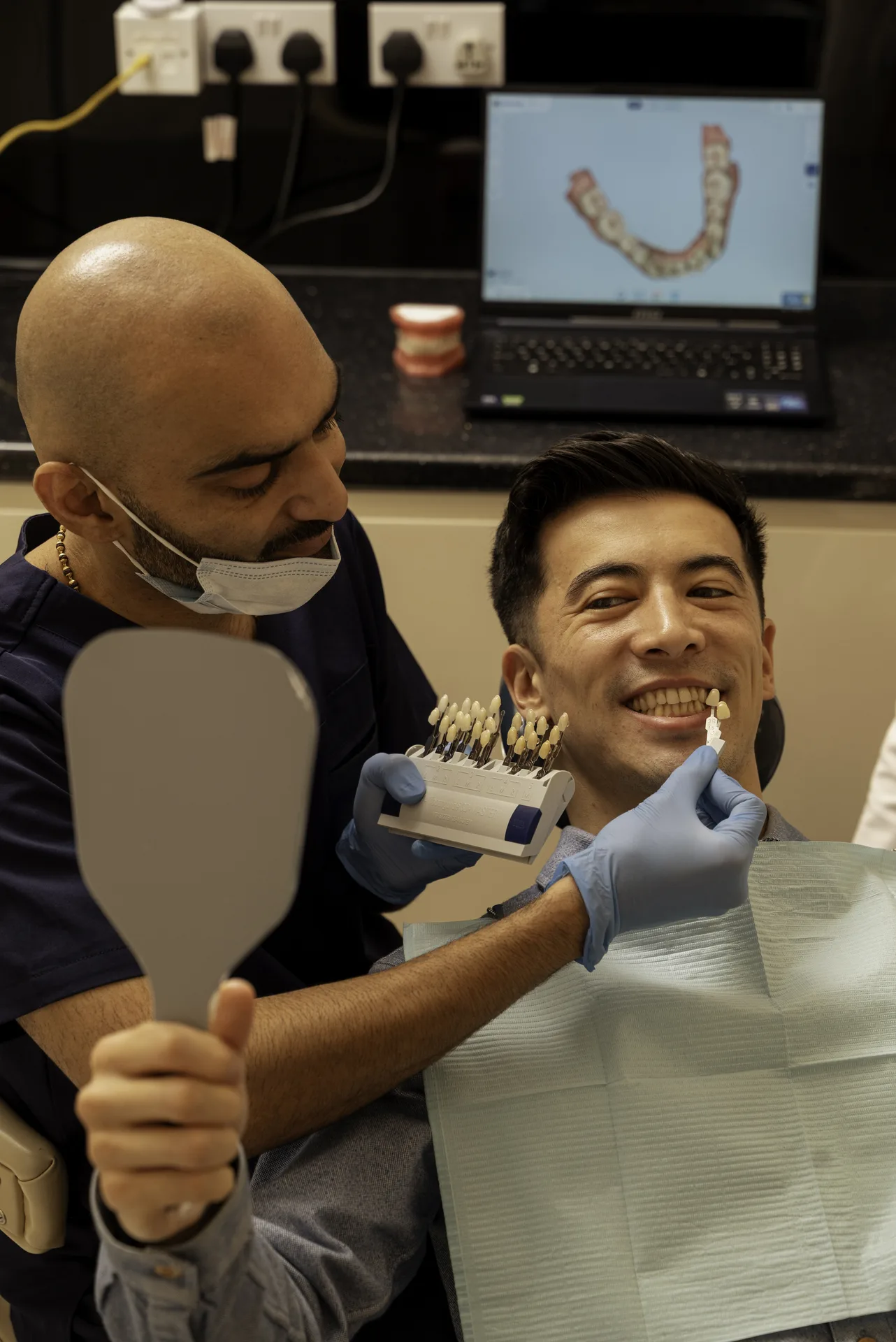
The pattern I see most often: patient has bonding placed, attends polish at 12 months (looks like new), polish at 24 months (still good), polish at 36 months (good, maybe a hint of dullness in the upper centrals from coffee). At year 4 we discuss whether a minor re-layer would lift the overall finish or whether another polish will keep them happy. By year 6 most patients have had one partial re-layer of 1–2 teeth and are still in their original bonding case.
That's a normal trajectory. The patients who deviate from it are usually grinders without a splint (who chip rather than stain) or heavy coffee drinkers without rinse-and-brush habits (who stain faster than polish can address). Both are addressable in consultation — and we say no often to over-treatment when proportionate maintenance is enough.
The bottom line
Bonding stains. The staining is mostly cosmetic, mostly surface, mostly polishable. The single biggest factor in keeping bonding looking new is the 12–18 month polish appointment — patients who attend keep their finish close to original; patients who skip don't. A polish is carried out within a 30-minute hygiene appointment (£85).
We design with your future in mind. The bonding maintenance schedule is part of that future, and the price of looking like the first day is small and predictable. The long-term smile view considers how your teeth support your smile across decades — and a properly maintained composite case ages gracefully when the patient and clinician keep to the appointment rhythm.
Frequently asked questions
Why is my bonding looking yellow?
Most likely surface staining from coffee, tea, red wine, or other pigmented foods accumulated since placement. This is normal and expected if it's been 6+ months since last polish. The fix is a professional polish within a 30-minute hygiene appointment (£85), which removes surface staining and returns the finish close to original. If the staining persists after polish, that suggests interface staining or deeper resin degradation — assessable at the same appointment.
Can stained bonding be whitened?
Not in the way natural teeth can. Bonding doesn't respond to peroxide-based whitening agents — these only affect the natural enamel and dentine, not composite resin. The right approach for stained bonding is professional polish (for surface staining) or partial re-layering (for deeper staining). If you want a brighter overall smile, whiten your natural teeth before placing or refreshing bonding so the bonding can be matched to the brighter shade.
Will whitening toothpaste damage my bonding?
Yes, over time. Whitening toothpastes are abrasive — they contain particles that physically scrub enamel to remove stain. Enamel handles this; composite resin doesn't. Twice-daily use over 12–24 months scratches the polished bonding surface, dulls the finish, and traps stain in the new roughness. Use standard fluoride toothpaste like Sensodyne Pronamel or non-whitening Colgate Total instead. This applies long-term, not just initially.
Does bonding stain more than my natural teeth?
In most cases yes, but the difference is smaller than patients expect. Composite resin is more porous than enamel so it picks up surface staining faster from chromogenic foods. But natural enamel also stains over years from the same foods, and shows it more in colour shift than in surface dullness. The practical difference: bonding needs polish every 12–18 months; natural teeth benefit from hygiene every 6 months but don't need the dedicated polish appointment.
How often does bonding need polishing?
Every 12–18 months for most patients, more often for heavy coffee drinkers or smokers. The polish is carried out within a routine 30-minute hygiene appointment (£85), avoiding an extra trip. Polishing on schedule keeps the finish close to original across the 5–7 year average lifespan. Skipping the polish doesn't damage the bonding but does mean staining accumulates and visibility increases.
Can stained bonding be repaired or do I need full replacement?
Repair almost always — full replacement is rare. Surface staining responds to polish; interface staining responds to partial re-layering of the affected margins; even significant cosmetic decline at year 7+ usually responds to per-tooth refresh of the worst-affected teeth rather than full smile redo. We assess at each maintenance appointment and recommend the smallest intervention that achieves the goal.
Book a polish or assessment
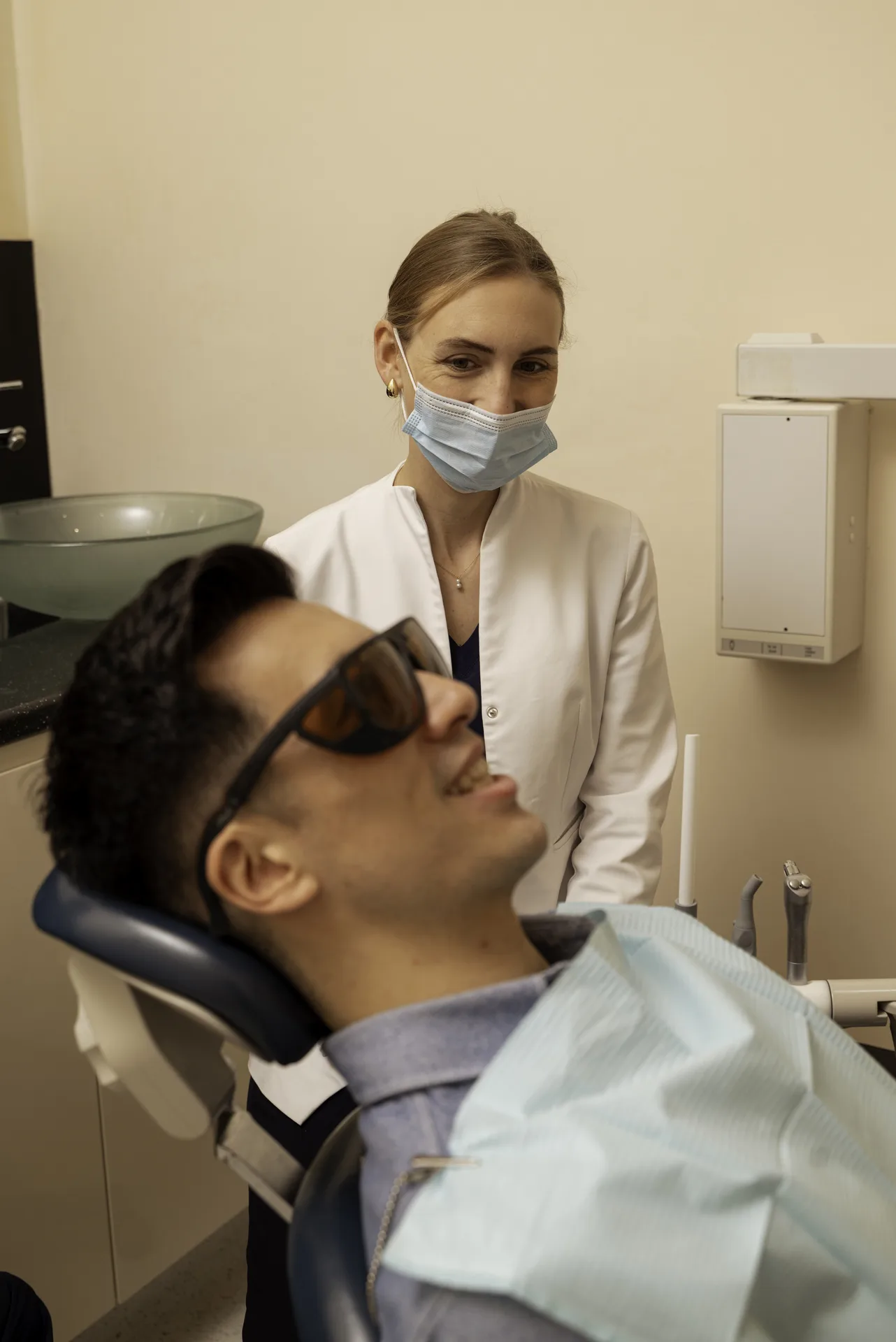
If your bonding is looking duller than it should, the right starting point is a 30-minute hygiene appointment (£85) that includes a bonding polish. We assess for surface vs interface staining at the same appointment and recommend the smallest intervention that returns the finish close to original.
Hygiene appointment with bonding polish £85. Call 020 8127 4567 or WhatsApp +44 7974 910222. Appointments Monday-Friday 8am-7pm by appointment.
Reviewed by Dr Vishal Patel · BDS Liverpool · MSc Aesthetic & Restorative Dentistry (Manchester) · GDC 103127 · AACD Member · Invisalign Diamond II Provider. Last reviewed 2026-06-03.