Composite bonding is not permanent in the sense that veneers or crowns are — but it is long-lasting. At Dental & Wellness London bonding typically lasts 5–7 years before needing a polish or touch-up, with some cases holding 10 years. It is reversible because no enamel is removed in most cases. The bonding can be repaired or refreshed without replacing the whole restoration. If you are in or near Islington, see composite bonding in Islington.
What "permanent" actually means in dentistry
The word permanent gets used differently across treatment types and the precision matters. In dental terms:
- Permanent restorations (veneers, crowns, implants) — placed once, intended to function for decades, require permanent alteration to the underlying tooth or jaw structure. Removal damages or destroys the natural structure underneath.
- Long-term restorations (composite bonding, white fillings) — placed once, function for years, generally don't require permanent alteration. Removal returns the underlying tooth close to its original state.
- Temporary restorations — placed briefly while permanent work is fabricated, typically weeks at most.
Composite bonding sits in the long-term category, not the permanent one. The distinction is important because it changes the decision you're making.
Why bonding isn't permanent
The composite resin used in bonding has a typical functional lifespan of 5–7 years before the surface dulls, edges chip, or staining sets in. Some cases hold 10+ years; some need refresh at 3–4. The variable factors — bite force, oral hygiene, diet, resin quality, dentist experience — are covered in the dedicated lifespan article.
What this means practically: at year 5–7 most patients have one or more of these conversations: polish to refresh the finish (£85), partial re-layering of worn or stained teeth, or refresh of the whole case (bonding is £175 per tooth for simple and £350 for complex work; any refresh is quoted after assessment). None of this is replacement in the catastrophic sense; it's maintenance and refinement that extends the cosmetic outcome indefinitely.
Why bonding is reversible
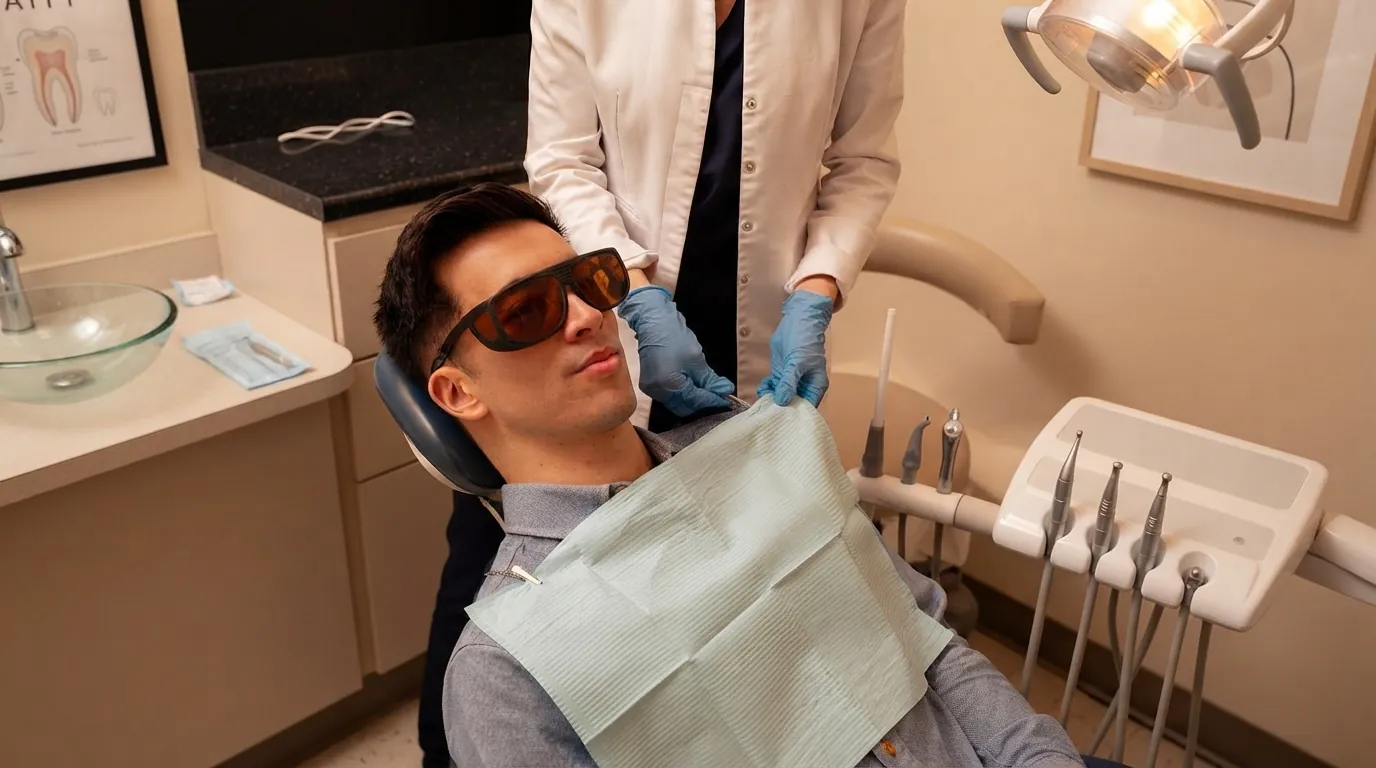
In most cases bonding is placed without significant enamel removal. The tooth surface is mildly etched (microscopically roughened) so the resin adheres, but no drilling or carving of the underlying tooth happens. If you decide in five years that you no longer want the bonding, it can be removed and the underlying tooth returns close to its original state.
There may be slight surface roughness where the enamel was etched — this is microscopic and not visible to the eye. There is no permanent shape change.
This is the single most important difference between bonding and veneers. Veneers require permanent enamel removal — typically 0.3–0.5mm per tooth — before they're placed. Once enamel is removed, it doesn't grow back. A patient who has veneers placed and decides in five years they don't want them faces an irreversible decision: either replace with new veneers, or live with prepared teeth that need some form of restoration.
What "long-lasting" looks like at DWL
Patients who follow the maintenance protocol — Davies-technique splint if they grind, hygiene every 6 months, polish every 12–18 months, non-abrasive toothpaste — routinely keep their original bonding for 7–10 years before any meaningful refresh. Some hit 12+ years on the original bonding before considering replacement.
Patients who don't follow the protocol typically see 3–5 years before significant intervention is needed. The variable is not bonding quality; it's care.
The framework for the decision
If you're asking whether bonding is permanent because you want a one-and-done cosmetic solution, the answer is: it's not designed that way. Bonding is a long-term cosmetic step with ongoing low-level maintenance. Plan for the polish appointment every 12–18 months and the refresh conversation around year 5–7.
If you're asking because you want maximum permanence and longevity, the conversation should turn to porcelain veneers — 15–20 years average lifespan but irreversible.
If you're asking because you want a reversible cosmetic step you can change your mind on, bonding is exactly the right answer. The reversibility is one of its biggest under-discussed advantages.
We design with your future in mind. Choosing bonding because it's reversible is choosing the long arc — and we say no often when patients ask for proportionate treatment that simply doesn't justify the irreversibility of veneers.
Frequently asked questions
How long does bonding actually last?
Average 5–7 years at DWL before any meaningful refresh; some cases hold 10+ years; heavy grinders without splint protection sometimes only 3 years. The dominant factors are bite force at night, the precision of original placement, oral hygiene, and resin quality. We give realistic estimates per case at consultation based on what we see in your specific mouth.
Can it be removed if I don't like it?
Yes in most cases. Because no significant enamel is removed for bonding placement, the resin can be removed and the underlying tooth returns close to its original state. There may be slight surface roughness microscopically but no visible permanent change. This makes bonding genuinely reversible in a way that veneers are not.
Will I need to redo it every few years?
Not every few years for most patients — but you will need maintenance every 12–18 months (£85 polish) and a refresh conversation around year 5–7 (per-tooth pricing depending on what's needed). Maintenance is small and predictable; refresh is per-band priced. Compared to veneers which are replace-only, bonding's ongoing maintenance model often works out cheaper over a 15–20 year horizon.
Is it cheaper to maintain bonding than veneers?
Often yes, over a 15–20 year horizon. Bonding annual maintenance: £85 polish + £85 hygiene (which you'd have anyway) = approximately £85–£170/year, of which £85 is bonding-specific. Veneers don't need polish but when they fail at year 15–20 the full per-tooth replacement cost applies. Bonding's incremental refresh model spreads cost; veneers' replace-only model concentrates it. The right answer depends on your priorities, not just the maths.
What affects bonding longevity most?
Three factors dominate: bite force at night (grinders without a Davies splint at £495 are the single largest risk), the precision of the original placement (under-prepared enamel debonds early), and the quality of the resin used. Diet, hygiene, and maintenance compliance matter at the margins. Patients who tick all three primary boxes routinely get 8–10 years; patients who don't typically get 3–5.
Book a consultation
If you're weighing bonding against veneers, the reversibility question is one we discuss honestly at consultation. We'll tell you when bonding is the right answer, when veneers are, and when neither is — sometimes the proportionate treatment is something else entirely.
Consultation £65. Call 020 8127 4567 or WhatsApp +44 7974 910222. Appointments Monday-Friday 8am-7pm by appointment.
Reviewed by Dr Vishal Patel · BDS Liverpool · MSc Aesthetic & Restorative Dentistry (Manchester) · GDC 103127 · AACD Member · Invisalign Diamond II Provider. Last reviewed 2026-06-03.