Porcelain veneers: lab-made ceramic, planned for the long term
Reviewed By
Dr Vishal Patel
BDS Liverpool · MSc Aesthetic & Restorative Dentistry Manchester · GDC 103127 · AACD Member · Invisalign Diamond II Provider · IFAAS (International Fellowship in Advanced Aesthetic Science) · Facial anatomy & cadaver course, Dr Ali Pirayesh, University of Amsterdam · Harley Academy foundation training in injectable aesthetics · IBSA-trained (Profhilo) · NeoStrata-trained (skin peels) · Lynton Lasers trained, incl. ONDA
Last Updated
October 3, 2026
Thin ceramic veneers made in a dental laboratory and bonded over two visits. Planned conservatively by Dr Vishal Patel, and recommended only where simpler options will not do.
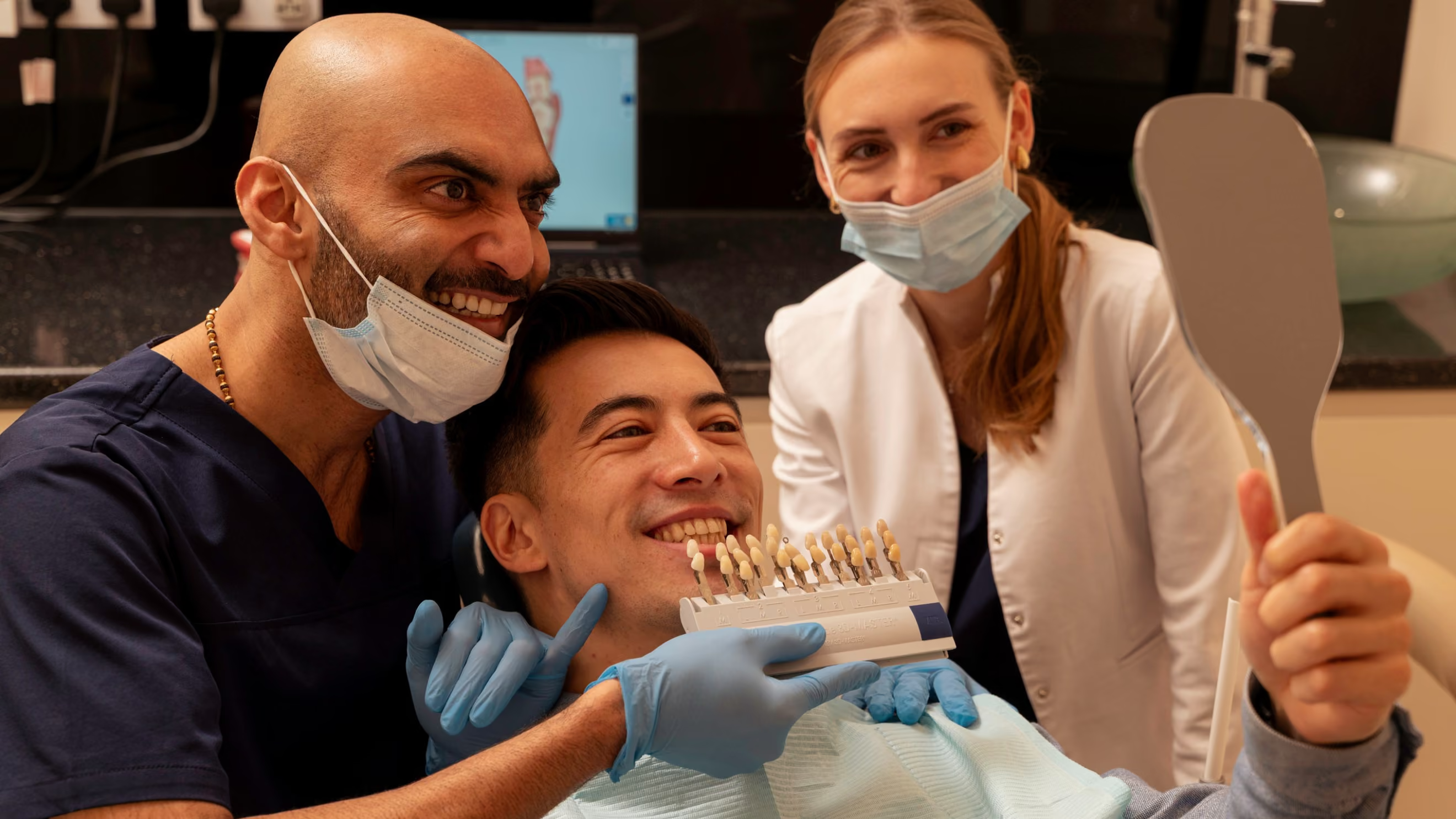
Porcelain veneers at Dental & Wellness London in Islington are thin, lab-made ceramic facings bonded to the front of the teeth to change colour, shape and proportion. They are planned and fitted by Dr Vishal Patel over two visits about two to three weeks apart. Porcelain veneers cost £750 to £1,050 per tooth, Emax £1,050 to £1,500, and often last 10 to 15 years or more.
Heading
- Ultra-thin ceramic shells custom-fabricated in a dental lab
- For chips, gaps, stains, alignment, and proportion
- 2 visits over 2–3 weeks with lab fabrication in between
- Porcelain £750–£1,050 per tooth · Emax £1,050–£1,500 per tooth
- Often 10–15 years or more with good care; results vary
- Consultation £65 · 0% APR finance over 12 months via Tabeo, subject to status
- Dr Vishal Patel — BDS, MSc Aesthetic & Restorative Dentistry (Manchester), GDC 103127, AACD member
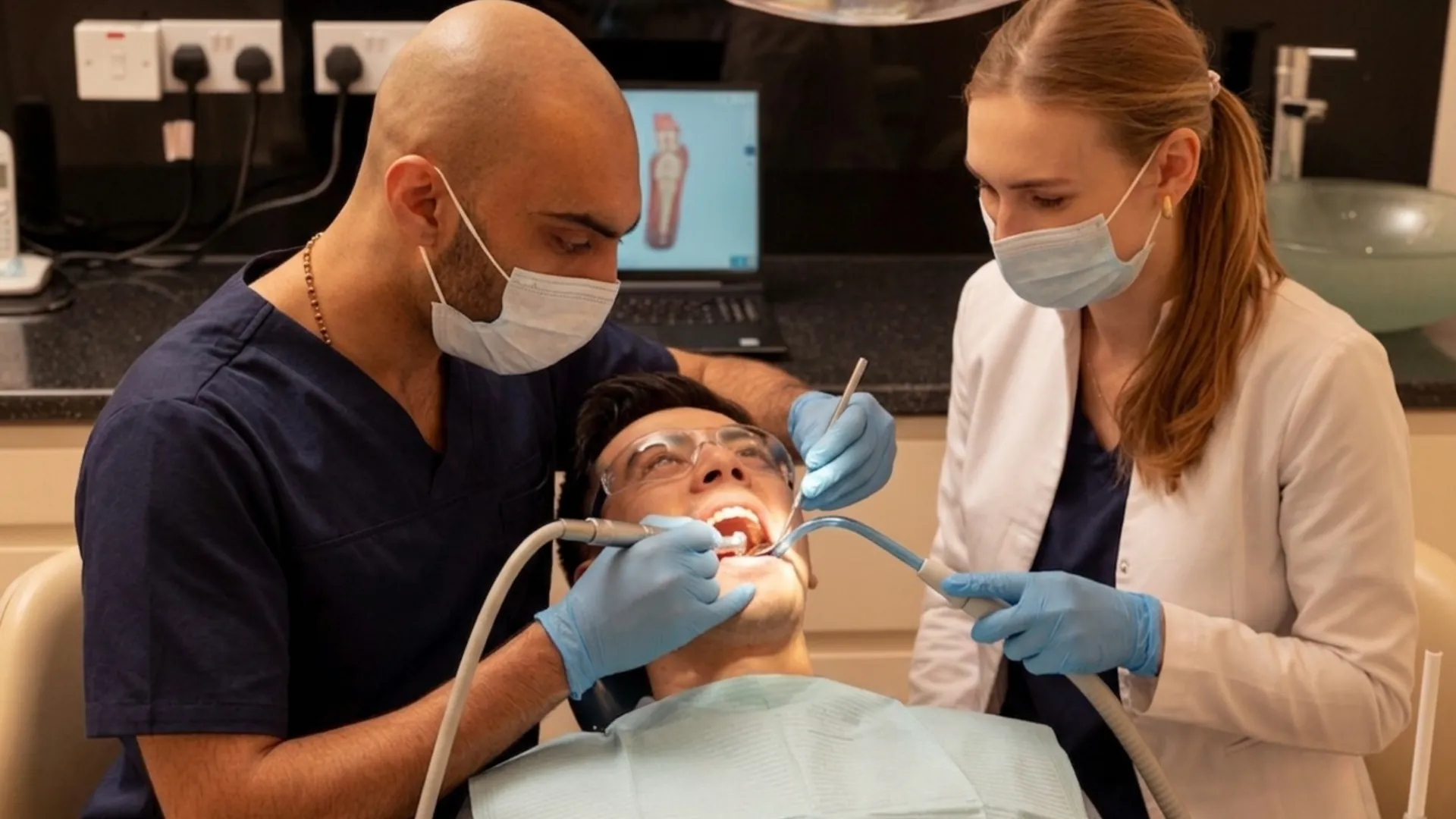
Porcelain veneers are thin, laboratory-made ceramic facings bonded to the front of the teeth to change their colour, shape, length or proportion. At Dental & Wellness London in Islington they are planned and fitted by Dr Vishal Patel, and they sit at the long-lasting end of the cosmetic range. They are also irreversible, which is why we plan them slowly and recommend them less often than you might expect.
This page sets out how porcelain veneers work, who they suit and who they do not, how standard porcelain compares with Emax, what the two-visit process involves, how long porcelain veneers last, what the risks are and what they cost. If you are still weighing up materials more broadly, our veneers guide covers every option side by side.
What are porcelain veneers and how do they work?
A porcelain veneer is a shell of dental ceramic, usually between 0.3mm and 0.7mm thick, made by a dental technician from a digital scan of your prepared teeth. It is bonded to the enamel with a resin cement, and once bonded the ceramic and tooth behave as a single unit. Ceramic reflects and transmits light in a way that closely resembles natural enamel, and it is highly resistant to staining, which is why a well-made porcelain veneer still looks right years after it was fitted.
To make room for the ceramic, a thin layer of enamel is usually removed from the front of each tooth. How much depends on the plan: where teeth are already slightly small or set back, preparation can be very minimal; where teeth are crowded forward or heavily discoloured, more is needed. That enamel does not grow back. Once a tooth has been prepared for a veneer, it will always need a veneer or similar restoration.
Standard porcelain and Emax
We use two broad categories of ceramic. Layered or pressed porcelain gives excellent translucency and suits most straightforward cases. Emax, a lithium disilicate ceramic, is stronger and allows thinner veneers with very good optical depth; we tend to choose it for more complex shape changes, for teeth under heavier load and where the case asks for the finest possible finish. Both are bonded in the same way. The difference is in strength, thickness and the work involved at the laboratory, and that is reflected in the price. Our article on Emax veneers versus porcelain veneers goes into the trade-offs in more detail.
Who porcelain veneers suit, and who they do not
Porcelain veneers tend to suit adults with healthy gums and sound teeth who want a lasting change to several front teeth. Typical reasons include:
- discolouration that whitening cannot lift, such as tetracycline staining or a darkened tooth after trauma (see discoloured teeth);
- worn, chipped or uneven edges across the smile;
- teeth that are small, short or out of proportion with each other;
- old composite work that has stained or chipped repeatedly;
- a wish for a result that will not need frequent polishing or repair.
They are not the right first step for everyone. If your teeth are crowded or rotated, aligning them with Invisalign first often means far less preparation, or no veneers at all. If the concern is colour alone, teeth whitening is usually the more conservative answer. A single chip is generally better repaired with composite bonding. Untreated decay or gum disease has to be resolved before any cosmetic work, and heavy grinding needs to be managed first, because it is the most common reason ceramic fractures (see teeth grinding and bruxism).
Porcelain veneers compared with the alternatives
Most people considering porcelain veneers are choosing between three or four approaches. In broad terms:
- Composite veneers (£350 to £500 per tooth) are sculpted directly onto the teeth in one visit, with little or no enamel removed. They are more reversible and less costly, but they stain and chip more readily and usually need polishing or repair within five to seven years. Our composite veneers page compares them in depth.
- Porcelain veneers (£750 to £1,050 per tooth) are made in a laboratory over two visits. They are colour-stable and hard-wearing and often last 10 to 15 years or more with good care.
- Emax veneers (£1,050 to £1,500 per tooth) offer greater strength and finer optical detail for complex or high-load cases.
- Crowns cover the whole tooth and are reserved for teeth that are heavily broken down or root-filled. If that applies, our page on crowns, onlays and inlays explains the options.
Neither composite nor porcelain is universally better. The choice depends on the condition of the teeth, the bite, your budget and how you feel about reversibility. We set the options out in writing so you can decide without pressure.
The porcelain veneers process, step by step
- Consultation (£65). We examine your teeth, gums and bite, take photographs and a digital scan, and discuss what you would like to change. If another treatment would serve you better, we say so at this stage.
- Smile design and preview. We plan the proposed shape and length and, where helpful, create a mock-up so you can see the proposed result in your own mouth before any tooth is touched.
- Preparation. Under local anaesthetic, the minimum necessary enamel is removed and a precise scan is sent to the laboratory. Temporary veneers are fitted the same day.
- Laboratory work. The ceramic is made over roughly two to three weeks.
- Try-in and bonding. We check fit, colour and shape with you before anything is bonded, adjust the bite, then bond each veneer permanently.
- Review. A follow-up appointment confirms the bite, the gum response and your comfort, and we discuss a night guard if you clench or grind.
How long do porcelain veneers last?
With good care, porcelain veneers often last 10 to 15 years, and many last considerably longer. Results vary, and the main factors are the health of the underlying teeth, the quality of the bond, your bite, whether you grind and how consistently you keep up with hygiene. The ceramic itself does not stain, but the edges where it meets the tooth need the same care as natural teeth. Our article on how long porcelain veneers last explains the five variables that matter most.
Aftercare
Brush twice daily with a non-abrasive toothpaste, clean between the teeth every day, and keep regular hygienist appointments (30 minutes, £85). Avoid biting on very hard objects such as ice or pen lids, and wear a night guard if we advise one. Tell us promptly about any chip, sensitivity or change in the bite rather than waiting for the next check-up.
Risks, and how we reduce them
Porcelain veneers are a well-established treatment, but there are risks you should understand before you commit:
- Irreversibility. Prepared enamel cannot be replaced. We keep preparation to the minimum the plan allows and, where alignment would reduce it further, recommend orthodontics first.
- Sensitivity. Some temporary sensitivity to cold is common after preparation and usually settles within a few weeks.
- Chipping or debonding. Uncommon with good bonding technique, but more likely with grinding or a heavy bite. We assess the bite carefully and protect it where needed.
- Gum irritation. Poorly finished margins can inflame the gum. We place margins carefully and review the gums after fitting.
- Colour mismatch over time. Ceramic does not change colour, but neighbouring natural teeth can. Where whitening is planned, we do it before the shade is chosen.
Porcelain veneers cost in London and Islington
At our Islington clinic, porcelain veneers cost £750 to £1,050 per tooth, and Emax veneers £1,050 to £1,500 per tooth. Composite veneers, for comparison, are £350 to £500 per tooth. The consultation is £65. The total for your case depends on the number of teeth involved, the ceramic chosen and any preparatory hygiene, whitening or alignment; we confirm every figure in a written plan before treatment begins. 0% APR finance over 12 months via Tabeo is available, subject to status.
When comparing porcelain veneers cost across London, check what is included: the consultation, the mock-up, temporaries, laboratory fees and the review. Our prices include the planning, temporaries and review appointment for the veneers themselves.
Why choose Dental & Wellness London for porcelain veneers
Your porcelain veneers are planned and fitted by Dr Vishal Patel, BDS (Liverpool), MSc Aesthetic & Restorative Dentistry (Manchester), GDC 103127. Vee is a member of the American Academy of Cosmetic Dentistry and an Invisalign Diamond II provider, in the top 1% of UK Invisalign providers, which matters here because alignment is often the step that reduces how much tooth a veneer case needs. He has been in dentistry for around 20 years, with over 15,000 cases behind him.
We work to what we call the long-term smile view: the plan we recommend is the one that should still look and function well in 15 years, not the one with the largest number of veneers. Sometimes that means fewer teeth, sometimes composite instead of porcelain, sometimes no veneers at all. You can see more of the wider range on our cosmetic dentistry page, and if you are local, our cosmetic dentist in Islington page sets out how we work for patients in N1.
Common questions about porcelain veneers
How much do porcelain veneers cost per tooth?
At Dental & Wellness London, porcelain veneers cost £750 to £1,050 per tooth and Emax veneers £1,050 to £1,500 per tooth. The exact figure depends on the ceramic, the complexity of the shape change and the number of teeth. Everything is confirmed in a written plan after your £65 consultation.
Do porcelain veneers ruin your teeth?
No, when they are planned conservatively, but they do change them permanently. A thin layer of enamel is usually removed, and that tooth will always need a veneer afterwards. We keep preparation minimal, recommend alignment first where it would reduce it, and advise against veneers on healthy teeth where a simpler treatment would achieve the same result.
Are Emax veneers better than porcelain veneers?
Emax is a stronger ceramic that allows thinner veneers and very fine optical detail, so it suits complex shape changes and teeth under heavier load. Standard porcelain gives excellent results for many straightforward cases at a lower cost. Neither is better for every mouth; we recommend the ceramic that fits your teeth, bite and goals.
Can porcelain veneers be whitened?
No. Ceramic does not respond to whitening gel, and its colour is fixed when it is made. If you would like your natural teeth lighter, we whiten them before the veneer shade is chosen so that everything matches. That is why whitening is often the first stage of a porcelain veneer plan rather than an afterthought.
How many porcelain veneers do I need?
It depends on your smile line, not a set number. Some people need only two to four upper front teeth; others show eight or ten teeth when they smile and need more for a balanced result. We assess your smile width in photographs and recommend the smallest number that gives a natural, consistent result.
Further reading
- Emax Veneers: The Honest Guide to the Premium Porcelain Option
- Temporary veneers — the UK dentist's honest guide (vs DIY alternatives)
- Veneers: What Are They and Are They Right for You?
- Composite Bonding vs Porcelain Veneers — Which Is Right for You?
Getting here
Dental & Wellness London is at 222 Essex Road, Islington, London N1 3AP, on the ground floor and wheelchair accessible. Essex Road station (Great Northern line) is two minutes' walk away, and Highbury & Islington is one stop north. Buses 38, 56, 73, 341 and 476 stop on Essex Road close to the door. From Angel it is a 15 to 20 minute walk up Essex Road.
Many patients cycle or use Lime and Forest e-bikes; from Dalston it is about ten minutes by bike. We are open Monday to Friday, 8am to 7pm, by appointment only, with no walk-ins and no weekend sessions, so every appointment has the time it needs.
For patients walking down from the Angel side, our Angel page has more detail on the route.
Longevity vs reversibility
e.max the workhorse
Long-term change
Planned with the long-term smile view — where composite would deliver a comparable result with less irreversible intervention, we say so.
| Consultation & smile design | Clinical examination, digital photographs, and discussion of shade and shape. |
| Tooth preparation | Minimal reduction of the front tooth surface under local anaesthetic, then a digital impression is taken. |
| Temporary veneers | Fitted while the final ceramic shells are lab-fabricated over 2–3 weeks. |
| Fitting & bonding | Temporaries removed, final porcelain veneers tried in, adjusted for bite, and permanently bonded. |
| Review | A follow-up check to confirm fit, bite, and comfort. |
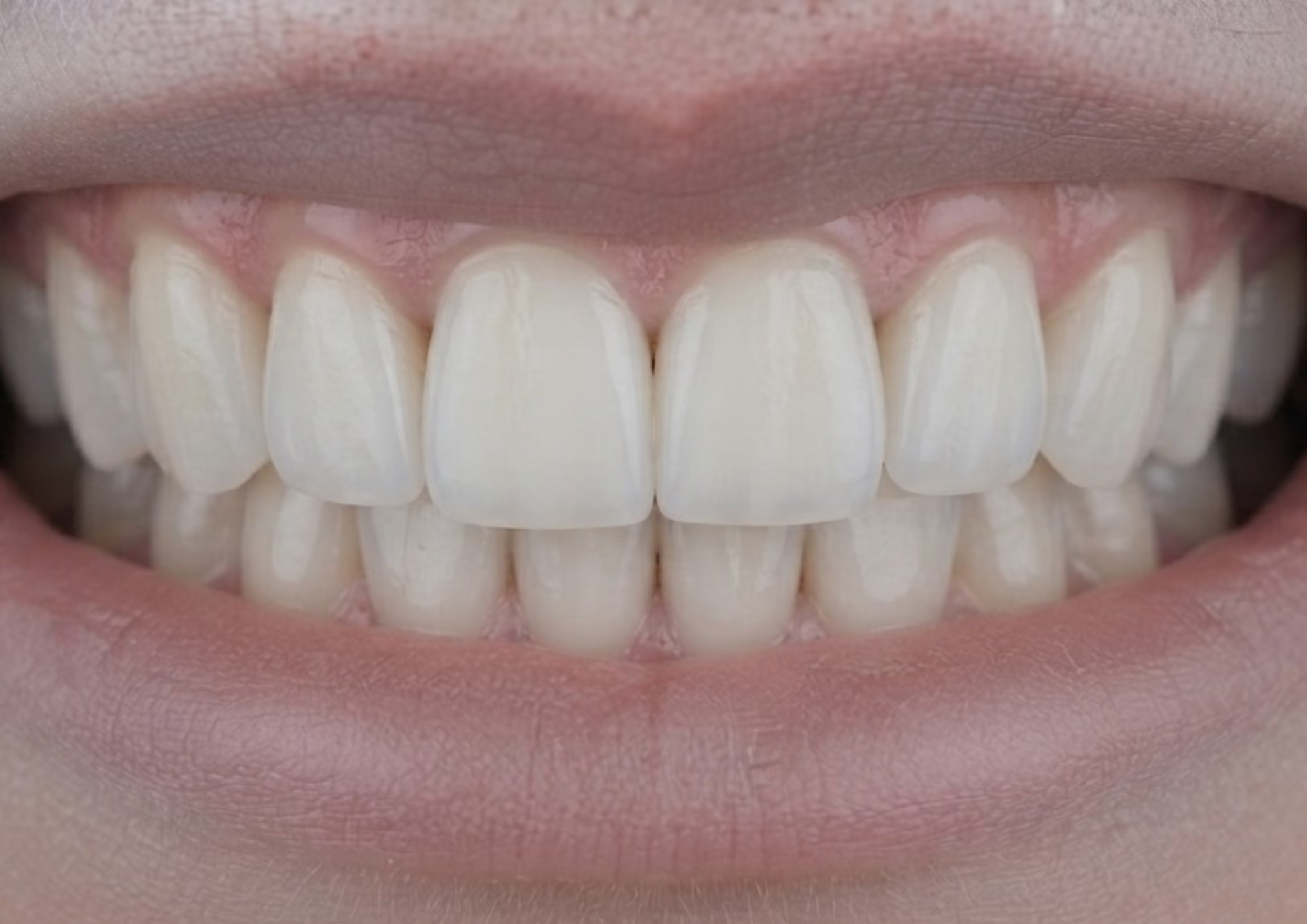
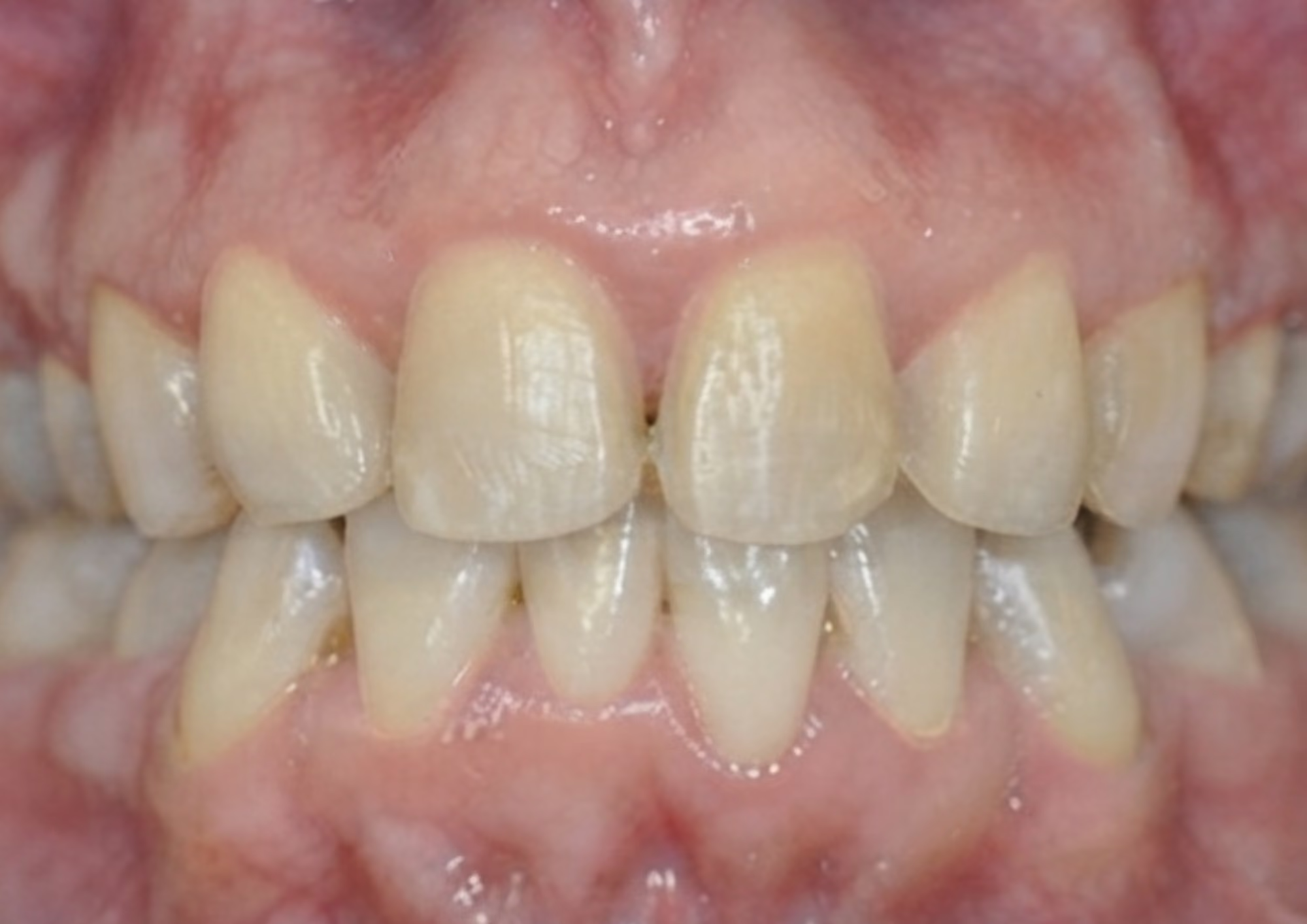
Before and After

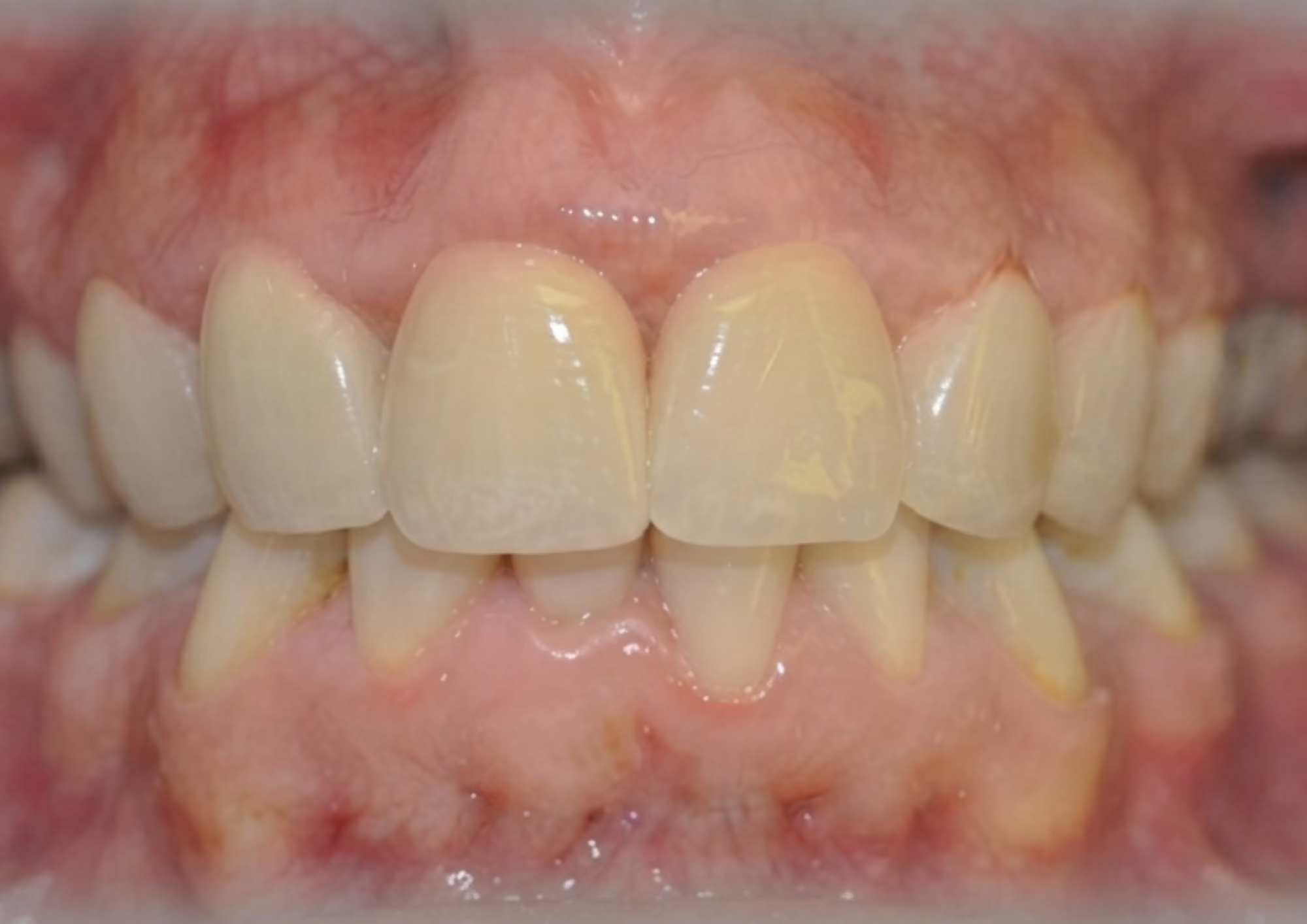
Our happy patients,
in their own words
Transparent pricing
Prices are set out below. Your written plan confirms the fee before any treatment begins.
| Service | Price |
|---|---|
| Consultation | £65 |
| Porcelain veneer | £750–£1,050 per tooth |
| Emax veneer (complex shape change) | £1,050–£1,500 per tooth |
| Multi-tooth smile plan | Quoted in writing after assessment |
| Finance | 0% APR over 12 months via Tabeo, subject to status |
0% APR finance over 12 months via Tabeo, subject to status.
Questions
people ask
If your question isn't answered here, call reception on 020 8127 4567 or email reception.
How much do porcelain veneers cost in London?
At our Islington clinic, porcelain veneers cost £750 to £1,050 per tooth and Emax veneers £1,050 to £1,500 per tooth. The total depends on how many teeth are involved and whether whitening or alignment is needed first. Every figure is confirmed in a written plan after your £65 consultation, and 0% APR finance over 12 months via Tabeo is available, subject to status.
How long do porcelain veneers last?
Porcelain veneers often last 10 to 15 years, and many last longer. Results vary with the health of the underlying teeth, the bond, your bite and whether you grind. Twice-daily brushing, cleaning between the teeth, regular 30-minute hygiene visits and a night guard where advised all help them last.
Do porcelain veneers hurt?
Preparation is carried out under local anaesthetic, so most people feel pressure rather than pain. Some sensitivity to cold is common for a few days to a few weeks afterwards, while the teeth settle under the temporaries and new veneers. If sensitivity persists or the bite feels high, we see you to adjust it.
What is the difference between porcelain and composite veneers?
Porcelain veneers are made in a laboratory over two visits, resist staining and often last 10 to 15 years or more. Composite veneers are sculpted directly in one visit, with little or no enamel removed, cost £350 to £500 per tooth and usually need maintenance within five to seven years. We explain which suits your teeth at consultation.
Can you get porcelain veneers if you grind your teeth?
Sometimes, but grinding must be assessed and managed first, because it is the most common cause of chipped or debonded ceramic. We look at wear patterns and the bite, may recommend a stronger ceramic such as Emax, and usually provide a night guard to protect the veneers while you sleep.
Are porcelain veneers reversible?
No. A thin layer of enamel is usually removed to make room for the ceramic, and that enamel does not grow back, so the tooth will always need a veneer or similar restoration. That is why we keep preparation minimal and suggest more conservative options, such as whitening, bonding or alignment, wherever they would meet your goals.
How many appointments do porcelain veneers take?
Usually two main treatment visits about two to three weeks apart, after an initial consultation. At the first, teeth are prepared, scanned and fitted with temporaries; at the second, the final veneers are tried in, checked with you and bonded. A short review appointment follows to confirm the bite and gum health.
Send three Photos - get an honest answer with in a day.
Free Smile AssessmentBook a porcelain veneers consultation
A £65 consultation with Dr Vishal Patel, at 222 Essex Road, N1 3AP. Call 020 8127 4567.
Contact US