Composite Veneers: Cost, Process and Composite vs Porcelain
Reviewed By
Dr Vishal Patel
BDS Liverpool · MSc Aesthetic & Restorative Dentistry Manchester · GDC 103127 · AACD Member · Invisalign provider since 2014 · Spark, 32Co, Six Month Smiles and Fastbraces provider · Myobrace certified · IFAAS (International Fellowship in Advanced Aesthetic Science) · Facial anatomy & cadaver course, Dr Ali Pirayesh, University of Amsterdam · Harley Academy foundation training in injectable aesthetics · IBSA-trained (Profhilo) · NeoStrata-trained (skin peels) · Lynton Lasers trained, incl. ONDA
Last Updated
October 3, 2026
Hand-sculpted resin veneers placed in a single visit, usually with little or no drilling. We explain when composite is the right choice and when porcelain is.
Composite veneers at Dental & Wellness London in Islington are thin layers of tooth-coloured resin sculpted over the front of your teeth in a single visit, usually with little or no drilling. Dr Vishal Patel plans and places every case. They cost £350–£500 per tooth, take around one to one and a half hours per tooth, and typically last five to seven years before refinement.
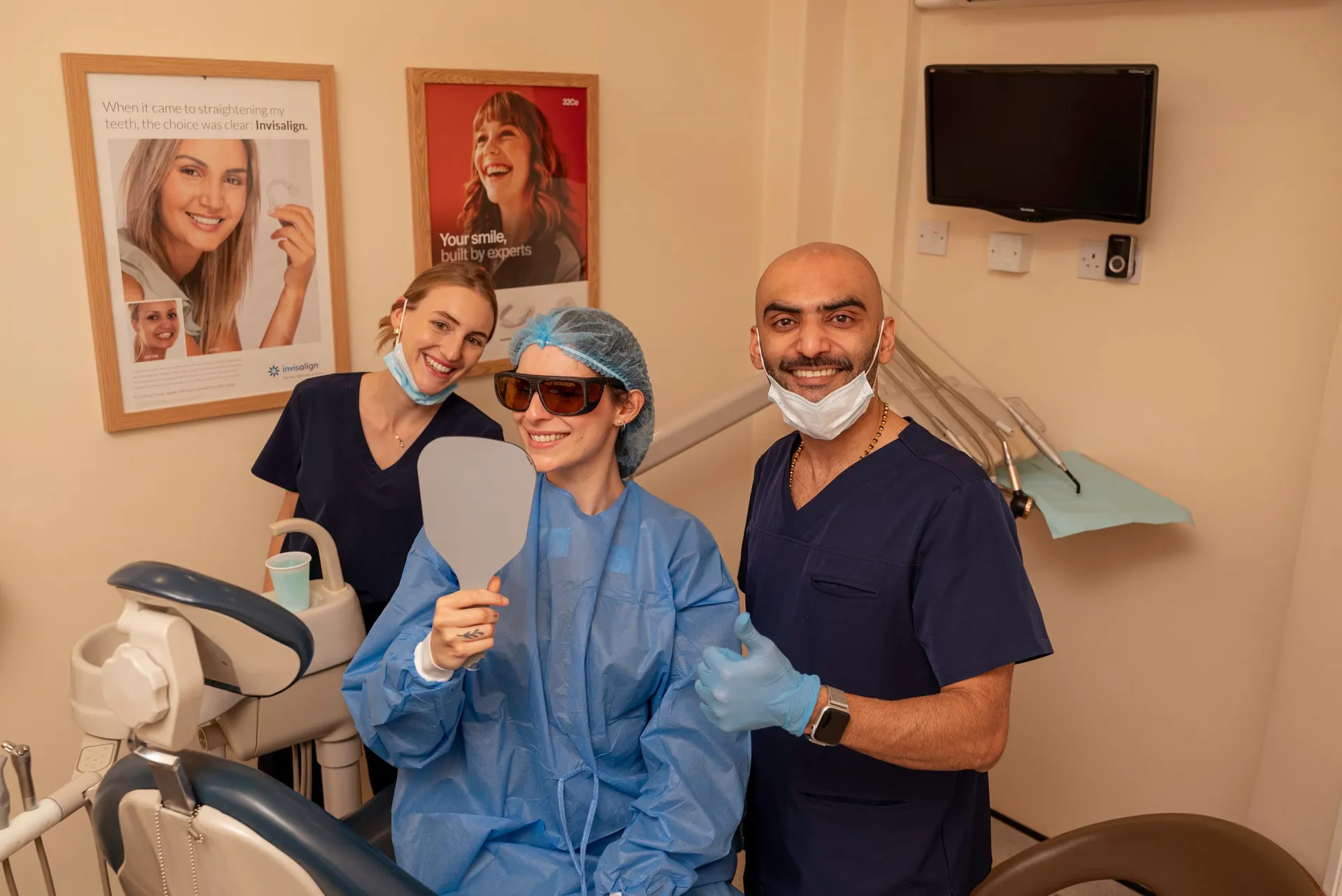
Composite Veneers
- £350–£500 per tooth
- Single visit — 60–90 min per tooth
- Reversible in most cases
- Lasts 5–7 years before refinement
- Consultation £65
Composite veneers are thin layers of tooth-coloured resin sculpted by hand over the whole visible front surface of a tooth. They change colour, shape and proportion together, are usually placed in a single visit, and in most cases need little or no drilling. For many people they sit in a useful middle ground: more change than simple bonding, less tooth removal and lower cost than porcelain.
This page explains how composite veneers work, who they suit, how they compare with porcelain, what the process involves and what composite veneers cost at our clinic. If you are still deciding between materials, our main veneers page compares every option side by side.
What are composite veneers and how do they work?
A composite veneer is made from the same resin used in composite bonding: a polymer filled with very fine glass and ceramic particles. The difference is scope. Bonding treats part of a tooth, such as a chip or a gap. A composite veneer covers the entire front surface, so the whole tooth can be made lighter, more even or better proportioned.
The enamel is cleaned and lightly conditioned, an adhesive is applied, and composite is built up in thin layers of different shades. Each layer is hardened with a blue curing light. The final layers are shaped, contoured and polished so the surface reflects light the way natural enamel does. Because the veneer is built directly on the tooth in the chair, there is no laboratory stage and no temporary veneers.
Who composite veneers suit, and who they don't
Composite veneers tend to suit adults with healthy teeth and gums who want a more noticeable change than bonding can give, for example:
- teeth that remain discoloured after whitening, including grey or patchy teeth (see discoloured teeth);
- several small gaps, uneven edges or worn teeth across the smile (see gappy teeth);
- teeth that look too small, narrow or short for the face;
- patients who want to avoid removing enamel, or who would like to try a change before considering porcelain.
They are less suitable where:
- teeth are crowded or rotated. Veneers over misaligned teeth become bulky. Straightening first with Invisalign often gives a better, more conservative result;
- you grind or clench heavily. Composite can chip under heavy forces, and porcelain or protection may be wiser;
- teeth are heavily filled or broken. A crown or onlay is often stronger;
- gums are inflamed or there is active decay. These need treating first.
Composite vs porcelain veneers
This is the question we are asked most. Neither material is better in every case; they suit different priorities.
- Tooth preparation: composite veneers usually need little or no enamel removal and are largely reversible. Porcelain veneers normally need a thin layer of enamel prepared and are not reversible.
- Appointments: composite is built in one visit. Porcelain needs a preparation visit, a laboratory stage and a fitting visit.
- Appearance: both can look natural in skilled hands. Porcelain holds its gloss and colour better over time; composite needs periodic polishing.
- Longevity: composite veneers typically last five to seven years before refinement. Porcelain veneers often last 10–15 years or more.
- Repairs: a chipped composite veneer can usually be repaired in the chair. Porcelain usually has to be replaced.
- Cost: composite veneers are £350–£500 per tooth; porcelain veneers £750–£1,050 and Emax veneers £1,050–£1,500 per tooth.
Our article on composite bonding vs porcelain veneers looks at the trade-offs in more depth, and how long can veneers last? covers lifespan across materials.
The composite veneers process, step by step
- Consultation. A 30-minute appointment with Dr Vishal Patel to examine your teeth, gums and bite, take photographs and talk through the change you want. You receive a written plan and quotation.
- Preparation. Any decay or gum problems are treated first. A hygiene visit gives a clean surface for bonding. If you want lighter teeth, teeth whitening comes first, because composite does not whiten.
- Design. For multi-tooth cases we plan the shape and proportion with photographs and a mock-up, so you can see the proposed outline before anything is bonded.
- Placement. The teeth are cleaned and conditioned, adhesive applied and composite layered and cured tooth by tooth. A single veneer usually takes one to one and a half hours; six teeth is typically a half-day appointment.
- Finishing. We contour each veneer, refine the contacts between teeth, check your bite and polish to a natural lustre.
- Review. We see you again within a couple of weeks to check the bite and make any small refinements.
Results, longevity and aftercare
Composite veneers look finished on the day. Teeth can feel slightly fuller for a few days while your lips and tongue adjust. There is no healing period, although we suggest avoiding strongly coloured food and drink for the first 48 hours.
With good care, composite veneers typically last around five to seven years before they need refinement, and often longer. Refinement is usually a polish or partial repair rather than a full replacement. Results vary, and lifespan depends mainly on habits: grinding, nail-biting, smoking and heavy tea, coffee or red wine all shorten it.
- brush twice daily with a non-abrasive fluoride toothpaste and clean between the teeth;
- keep up regular hygiene appointments;
- wear a night guard if you grind or clench;
- avoid biting hard objects such as pens, ice or packaging;
- return for a maintenance polish every year or two.
Risks, and how we reduce them
- Chipping: we check your bite carefully, keep edges a sensible thickness and recommend a night guard where needed. Most chips can be repaired in one short visit.
- Staining and loss of gloss: a high final polish and regular maintenance keep the surface fresh.
- Bulky-looking teeth: usually the result of veneering teeth that should have been moved first. We plan alignment before material.
- Gum irritation: margins near the gum are finished smooth and checked at review.
- Sensitivity: uncommon, because little or no enamel is removed, and usually short-lived when it occurs.
Composite veneers cost at Dental & Wellness London
Composite veneers at our clinic cost £350–£500 per tooth. Where a tooth sits within that range depends on how much shape change is needed and how many shades are layered to match the surrounding teeth. Most smiles involve between four and ten teeth, and every plan is priced tooth by tooth and set out in writing before you commit.
- Composite veneers: £350–£500 per tooth.
- Consultation: £65.
- Hygiene beforehand, if needed: £85 for a 30-minute appointment.
- Teeth whitening beforehand, if wanted: from £450.
We offer 0% APR finance over 12 months via Tabeo, subject to status. If you need only a chip or gap treated, simple composite bonding at £175 per tooth may be enough, and we will tell you so.
Why patients choose us for composite veneers
Composite veneers are sculpted freehand, so the result depends on the clinician as much as the material. At our clinic, every case is planned and placed by Dr Vishal Patel: BDS (Liverpool), MSc Aesthetic & Restorative Dentistry (Manchester), GDC 103127, AACD member and Invisalign Diamond II provider. He has around twenty years in dentistry and over 15,000 cases.
His orthodontic experience shapes how we plan veneers. Where moving a tooth would give a better long-term result than covering it, we say so. Where porcelain would serve you better, we say that too. Larger cases are often planned as part of a wider smile makeover within our cosmetic dentistry service.
Composite veneers: common questions
How long do composite veneers last?
With good care, composite veneers typically last five to seven years before they need refinement, and often longer. Refinement is usually a polish or partial repair rather than full replacement. Grinding, nail-biting, smoking and staining drinks shorten their life, while regular hygiene visits, a night guard and an occasional polish help them last. Results vary.
Do composite veneers damage your teeth?
Composite veneers usually need little or no enamel removal, because the resin is bonded to the lightly conditioned surface of the tooth. Your natural tooth is largely preserved underneath, which is why they can normally be polished away later. Damage is more likely from poor planning or neglected maintenance than from the treatment itself.
Are composite veneers worth it?
For many people, yes: they give a noticeable change in colour and shape in one visit, at well under the cost of porcelain, without committing enamel. They are less worthwhile for heavy grinders, crowded teeth or those who want the longest possible lifespan, where porcelain or straightening first may serve better.
Can composite veneers be removed?
In most cases, yes. Because composite veneers are bonded to the enamel with little or no preparation, they can usually be polished off later, leaving the natural tooth broadly intact. Some patients later replace composite with porcelain, and the conservative start keeps that option open. We confirm before treatment whether your case needs any tooth shaping.
Do composite veneers stain?
Composite is more prone to surface staining than porcelain. Coffee, tea, red wine, turmeric and smoking are the usual culprits. Avoiding strong colours for the first 48 hours, a careful final polish and a maintenance polish every year or two keep most composite veneers looking fresh. Porcelain is the better choice if stain resistance is your priority.
Further reading
- Composite Resin Veneers: Everything You Need to Know
- How Much Do Veneers Cost? UK 2026 Guide
- What is composite bonding? A complete UK patient guide
Getting here
We are at 222 Essex Road, Islington, London N1 3AP, in the same building since 2015. We are open Monday to Friday, 8am to 7pm (Tuesday from 9am), by appointment only; we are closed at weekends and do not take walk-ins.
- By train: Essex Road station (Great Northern) is about two minutes on foot. Highbury & Islington is one stop north, and Old Street and Moorgate are a short ride south.
- By bus: the 38, 56, 73, 341 and 476 all stop on Essex Road close to the door.
- On foot from Angel: allow 15–20 minutes' walk from Angel station along Essex Road. Our Angel page has the route.
- By bike: many patients cycle or use Lime and Forest e-bikes. From Dalston it is about ten minutes by bike; see also our Highbury and Canonbury pages.
- By car: street parking on Essex Road is metered and controlled during the day. For most visits, the train, bus or bike is simpler.
We are a private dentist in Islington, N1, at 222 Essex Road, two minutes from Essex Road station. Directions from Angel, Highbury, Canonbury, Hackney and Shoreditch.
Hand-sculpted, single visit
Same material, different scope
Where each is the right choice
Composite veneers are planned against the long-term smile view — where orthodontic work would deliver a better long-term result, we say so rather than disguise position with material.
| Consultation and shade match | A 30-minute consultation (£65) with Dr Vishal Patel: clinical examination, photographs, smile design preview, shade selection. |
| Surface preparation | In most cases no drilling required. |
| Etch and bond | A mild acid gel creates a rough surface for the bonding resin. |
| Hand-sculpt the composite | Resin placed in layers and hand-sculpted into the planned veneer form — the craft step where results are measured in tenths of a millimetre. |
| Cure with the light | Each layer hardened with high-intensity blue light. |
| Polish to natural lustre | A graduated polishing sequence gives the composite natural enamel's light-reflecting character. A single veneer takes 60–90 minutes; a six-tooth case a half-day to full day. |
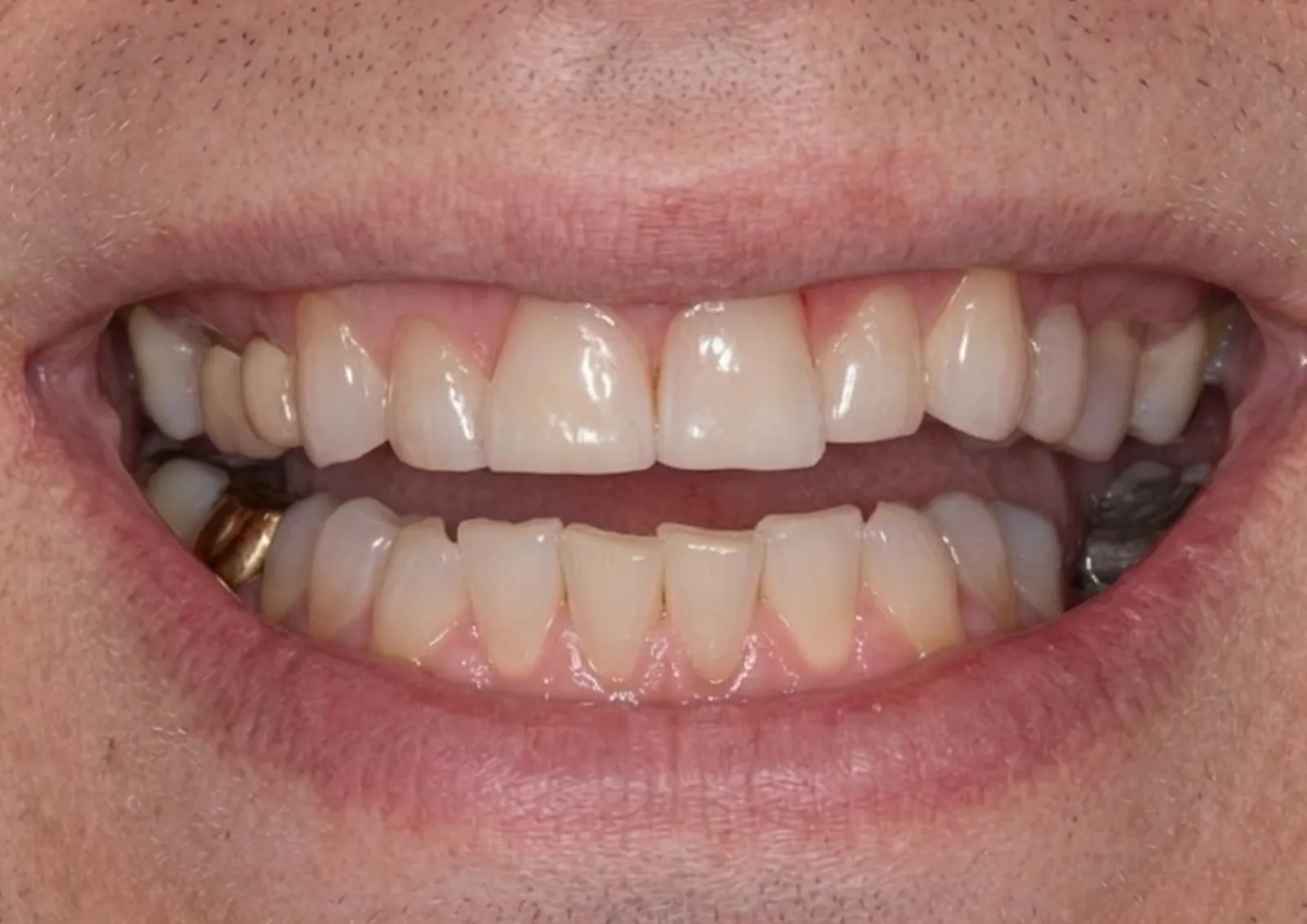
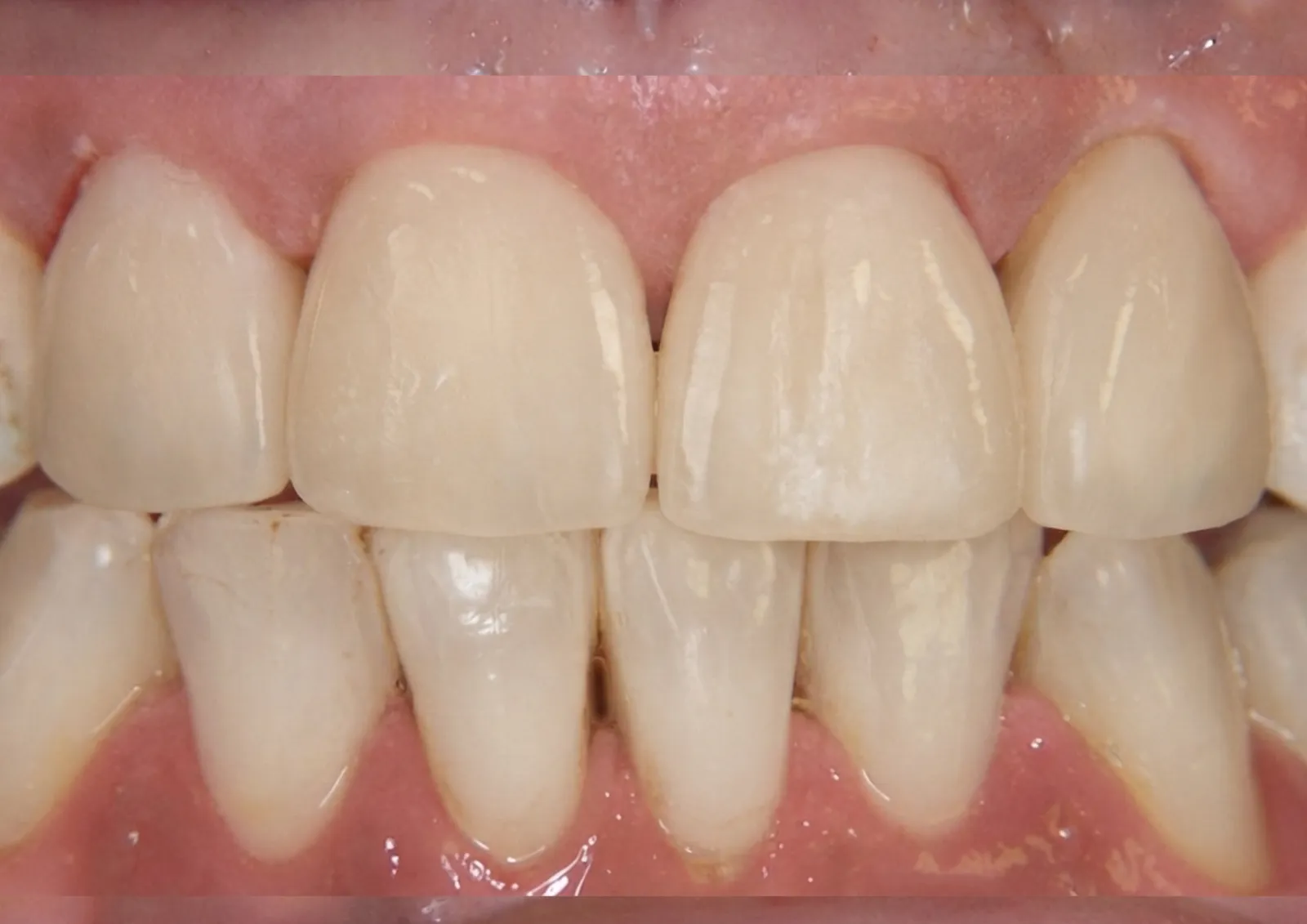
Before and After
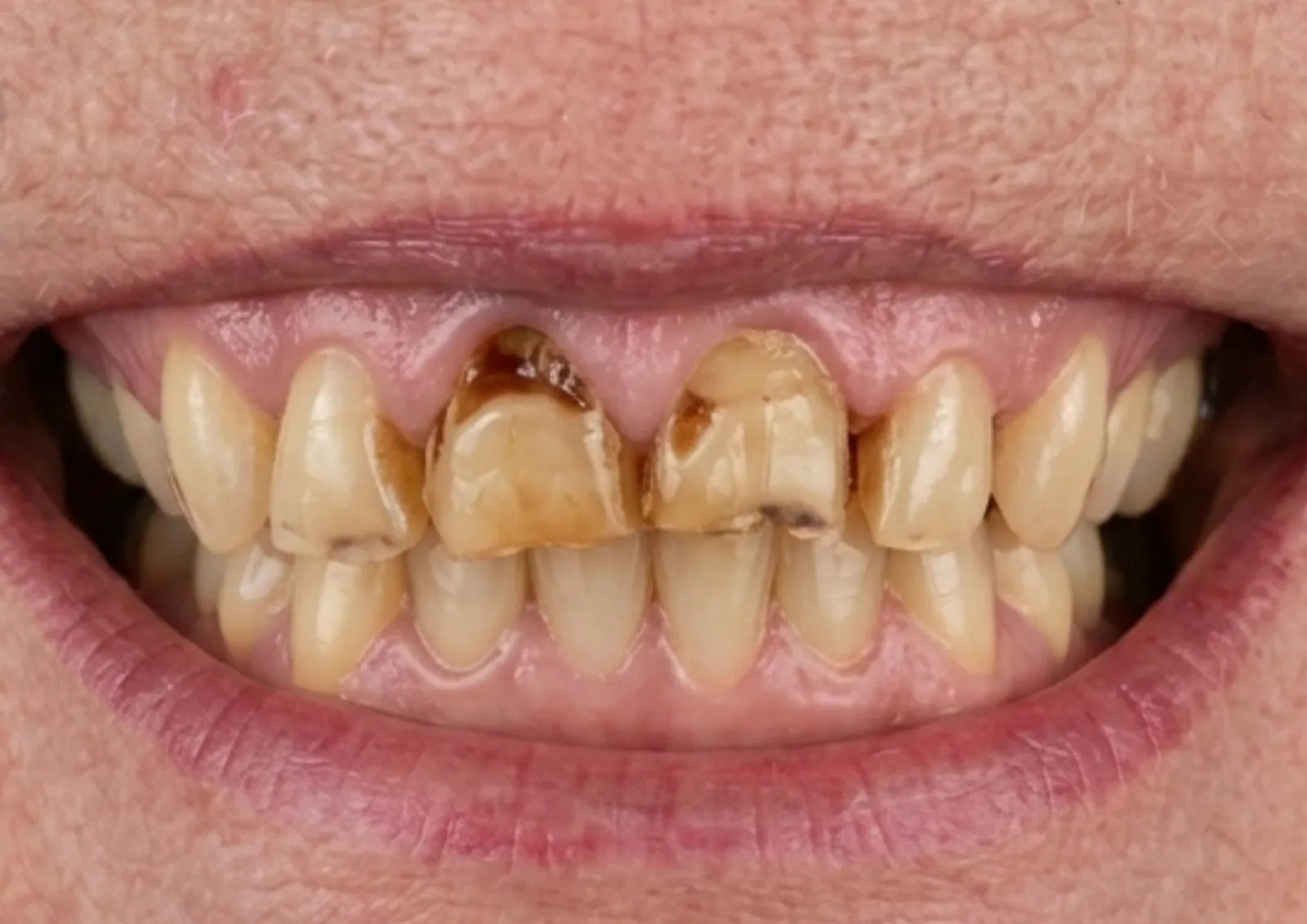
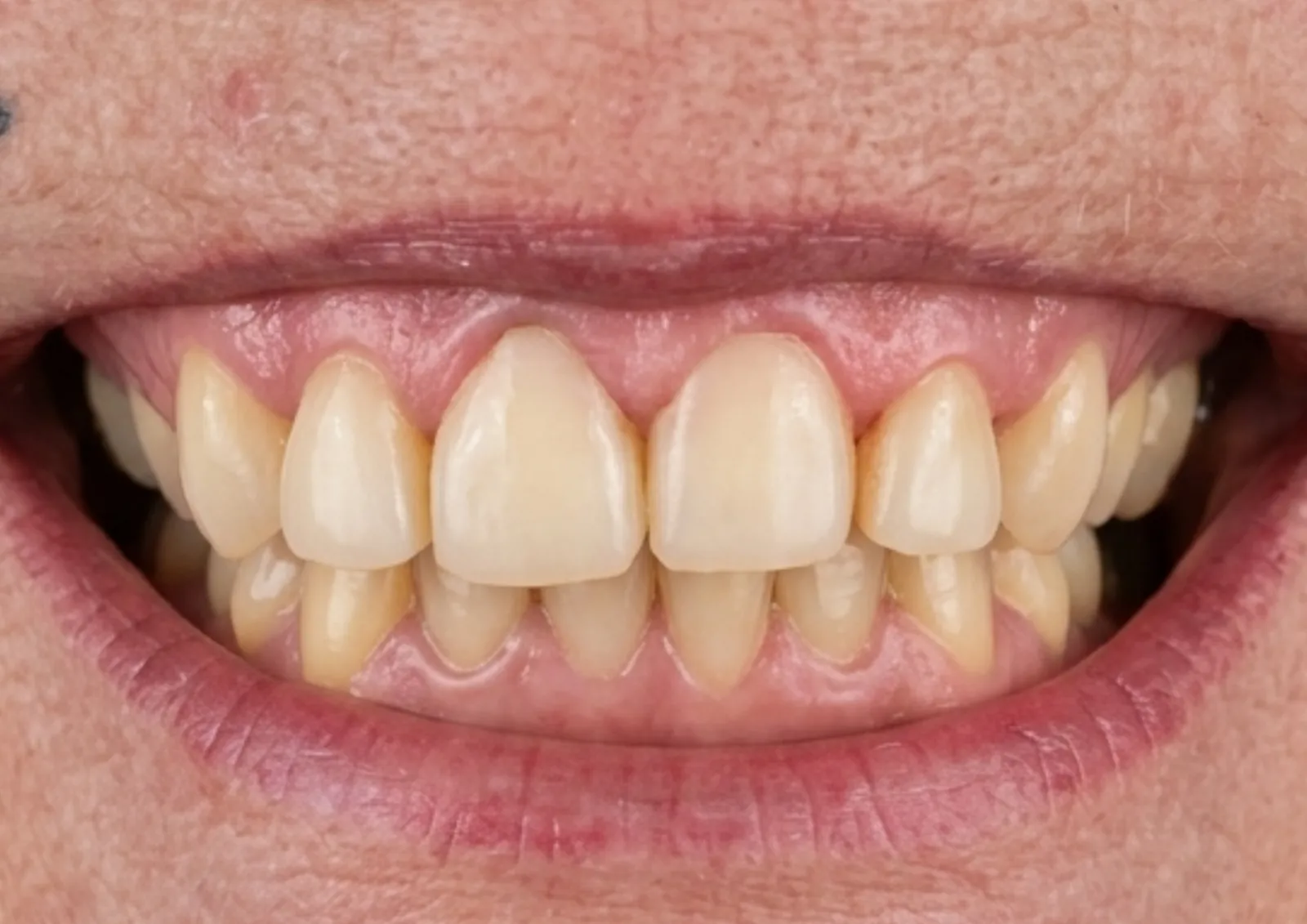
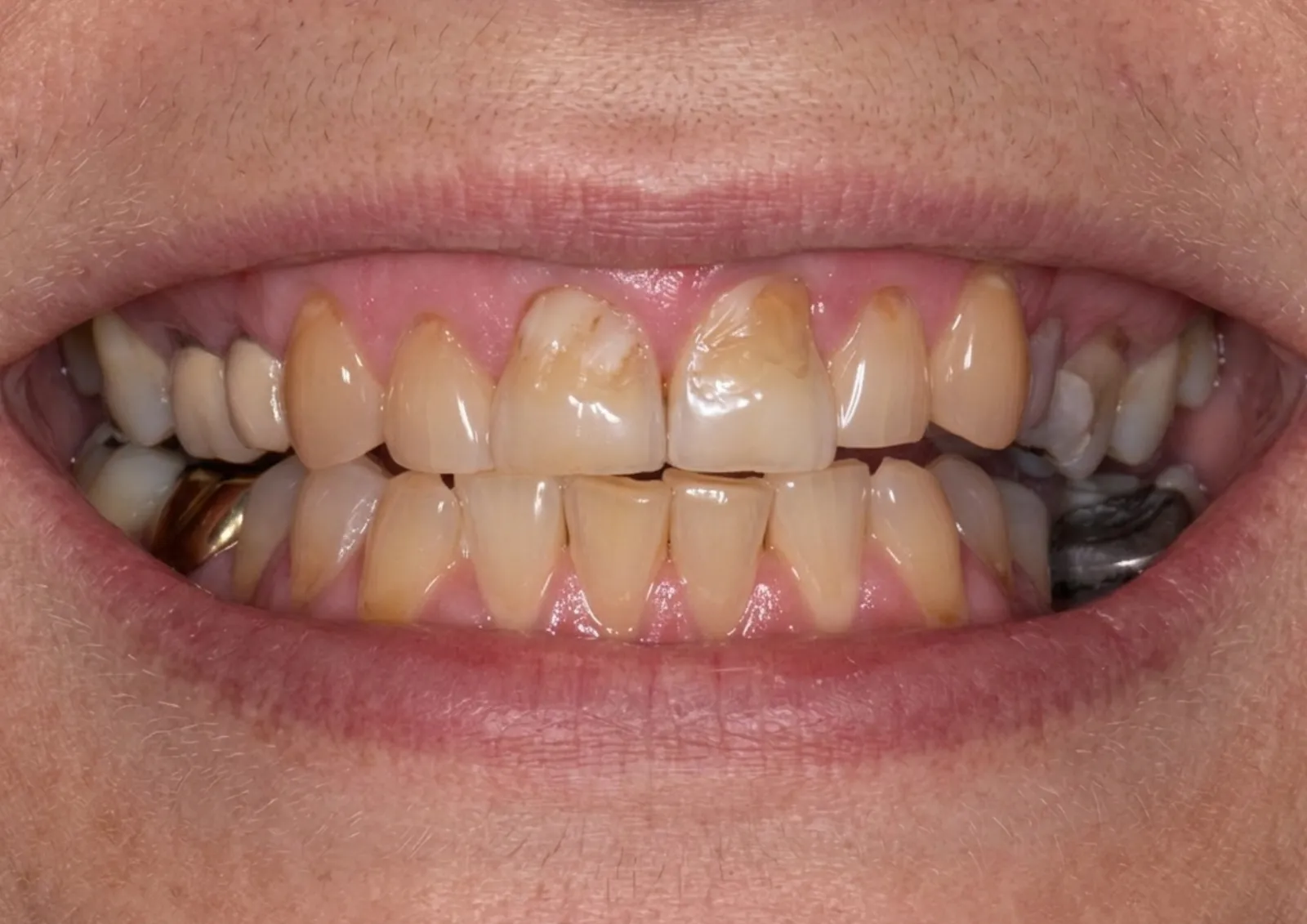

Our happy patients,
in their own words
Transparent pricing
Prices are set out below. Your written plan confirms the fee before any treatment begins.
| Service | Dental & Wellness London (Price) |
|---|---|
| Simple aesthetic refresh | £350 per tooth |
| Complex shape change / multi-shade | £500 per tooth |
| Multi-tooth smile (6–10 teeth) | £350–£500 per tooth, quoted in writing after assessment |
| Consultation | £65 |
| Finance | 0% APR over 12 months via Tabeo, subject to status |
0% APR finance over 12 months via Tabeo, subject to status.
Questions
people ask
If your question isn't answered here, call reception on 020 8127 4567 or email reception.
How much do composite veneers cost in London?
At Dental & Wellness London, composite veneers cost £350–£500 per tooth, depending on how much shape change and shade layering each tooth needs. The consultation is £65. Every plan is priced tooth by tooth in writing, and 0% APR finance over 12 months via Tabeo is available, subject to status.
What is the difference between composite and porcelain veneers?
Composite veneers are sculpted directly onto the tooth in one visit, usually with little or no enamel removal, and can be repaired in the chair. Porcelain veneers are made in a laboratory over two visits, usually need some enamel preparation, resist staining better and often last longer. Composite costs £350–£500 per tooth; porcelain £750–£1,050.
What is the difference between composite veneers and composite bonding?
They use the same material. Composite bonding adds resin to part of a tooth, such as a chip or small gap. A composite veneer covers the whole visible front surface, so colour, shape and proportion all change together. Bonding is £175 or £350 per tooth; composite veneers are £350–£500 per tooth.
Do composite veneers hurt?
Most patients find the appointment comfortable. Because little or no enamel is removed, many cases need no injection at all. You may feel pressure while the composite is shaped and some coolness during drying. If a veneer extends close to the gum or the tooth is sensitive, we numb the area first.
Can composite veneers be whitened?
No. Whitening gel does not change the colour of composite. If you want lighter teeth, we whiten first, wait around two weeks for the shade to stabilise, and then match the veneers to the new colour. If your natural teeth darken later, the veneers can be polished, refreshed or re-layered to match.
Can a chipped composite veneer be repaired?
Usually, yes. One of the advantages of composite is that a small chip can be repaired by adding fresh composite to the existing veneer in a short appointment, without replacing the whole thing. If chips keep recurring, we look at your bite and grinding habits, and may suggest a night guard to protect the veneers.
Where can I get composite veneers near Islington?
Our clinic is at 222 Essex Road, Islington, London N1 3AP, two minutes from Essex Road station and served by the 38, 56, 73, 341 and 476 buses. Angel is a 15–20 minute walk, and Highbury & Islington is one stop by train. Appointments run Monday to Friday, 8am to 7pm (Tuesday from 9am).
Send three photos and get a reply within three working days.
Free Smile AssessmentBook a composite veneers consultation
Start with a 30-minute consultation with Dr Vishal Patel, £65, to see if composite veneers suit you. Call 020 8127 4567.
Contact us